 Lynden Siding
 Deck Replacement Built for Wiser Lake's Damp, Shaded Lots
Wiser Lake sits just west of Lynden, and the homes around it deal with a set of conditions that a typical Whatcom County deck doesn't always face. Mature tree cover, still lake air, and lots that stay shaded well into the afternoon mean decks here hold moisture longer than decks out in open farmland closer to town. Add in the marine air that pushes inland off the Salish Sea, the region's long stretch of driving rain from fall through spring, and a moss season that can run half the year, and you've got a structure that's under constant, low-grade attack even when it looks fine from the porch door.
A deck replacement in this setting isn't just about swapping old boards for new ones. It's about correcting the drainage, framing, and material choices that let the last deck fail in the first place, so the new one actually holds up to what a lake-adjacent lot throws at it year after year.
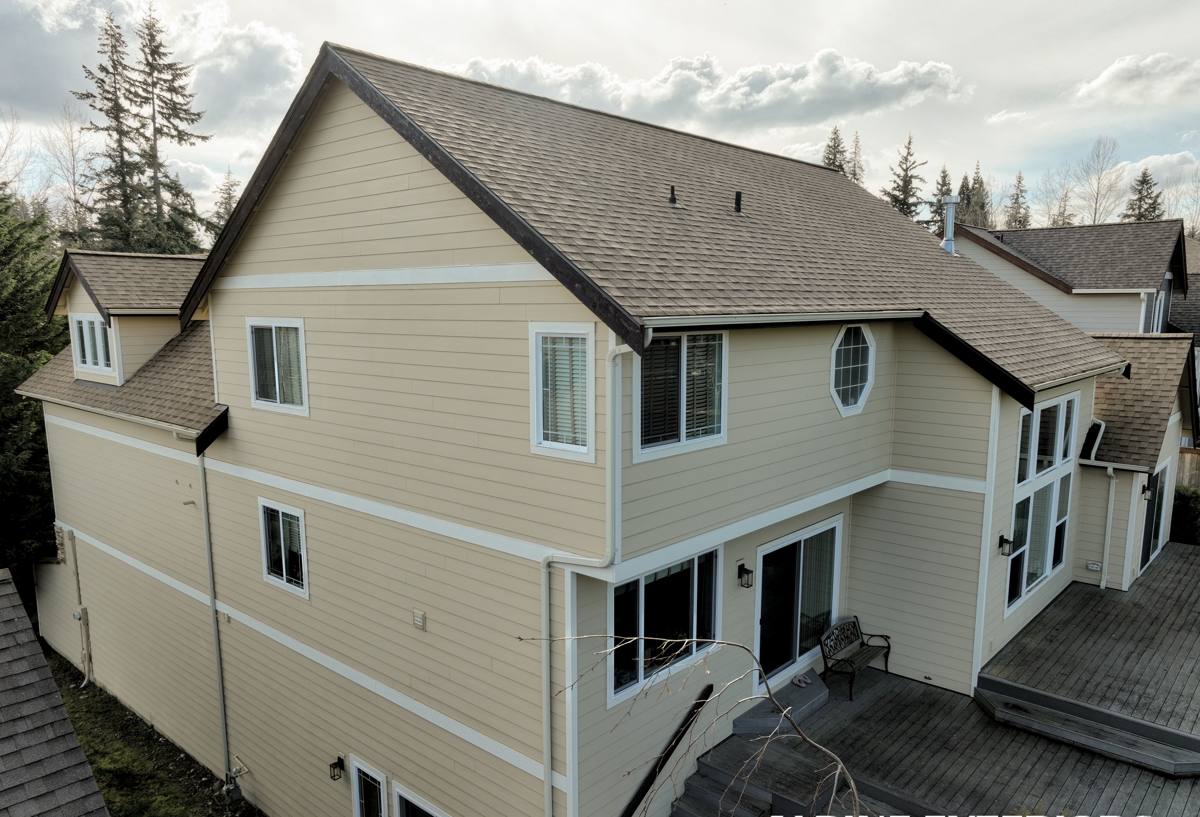
Why Decks Near Wiser Lake Wear Out Faster Than Homeowners Expect
Most deck failures we find near the lake trace back to moisture that never had a chance to leave. Shade from surrounding trees keeps the deck surface and the framing underneath from drying out between rain events. Lake humidity adds to that load even on days it isn't raining. And moss doesn't just look bad — it holds water against wood fibers and fastener heads, which accelerates rot and rust in exactly the spots you can't see from above.
The result is a pattern we see over and over: decking boards that look serviceable on top but are soft or delaminating underneath, ledger boards pulling away from the house where flashing was never installed correctly, and joists with rot concentrated at the ends where water pools against end grain. None of that shows up in a quick visual inspection, which is why so many Wiser Lake decks get "re-decked" once and then need a full structural replacement a few years later.
Signs You're Looking at Replacement, Not Repair
- Boards that feel spongy, spring back slowly, or have visible splitting along the grain
- Persistent moss or black-green staining that comes back within weeks of cleaning
- Any softness when you probe the ledger board or the rim joist with a screwdriver
- Railing posts that wiggle at the base, which usually means the post attachment or the framing behind it has rotted
- Fasteners with rust bleed or heads that have pulled through the decking
- A deck more than 15-20 years old built with untreated fasteners or no visible flashing at the house connection
- Standing water or slow drainage after rain, which tells you the original slope was never cut in correctly
If you're only seeing one or two of these, repair might still make sense. Once you're seeing several, or once the framing itself is in question, replacement is almost always the cheaper option over a 10-year horizon — repeated patch repairs on a failing substructure rarely buy you more than a season or two.
What a Correct Deck Replacement Involves
A deck replacement done right in this climate goes well below the decking surface. The parts that actually determine whether the new deck lasts are the parts you won't see once it's finished.
Footings and Framing
Footings need to sit below frost depth and bear on undisturbed soil — on lake-adjacent lots with softer or wetter ground, that sometimes means larger or deeper footings than the original build used. Framing lumber should be pressure-treated rated for ground contact where it's near soil or moisture, with joist spacing tight enough to support the decking material you're choosing, not just whatever spacing the old deck happened to use.
Ledger Attachment and Flashing
The ledger board — where the deck ties into the house — is the single most common failure point we find on older decks in this area. It needs proper flashing that sheds water away from the house sheathing, not just caulk over lag bolts. This is also where a deck contractor and a siding contractor's perspective overlap: get the flashing wrong here and you're not just risking the deck, you're risking rot in the wall framing behind your siding.
Drainage and Slope
Decking should be sloped slightly away from the house so water doesn't pool at the ledger. On shaded, lake-humid lots, we also pay attention to airflow underneath the deck — skirting or landscaping that blocks cross-ventilation traps moisture underneath and speeds up joist rot even when the top surface looks dry.
Fasteners and Hardware
Every piece of hardware — joist hangers, screws, structural connectors — should be rated for the treated lumber and moisture exposure it's going into. Mismatched or standard-grade fasteners corrode faster in damp, shaded conditions and are a routine cause of premature failure we find when we tear out old decks.
Decking Material Options for Wiser Lake Properties
Material choice matters more here than on a sunny, open lot, because whatever you choose is going to spend more time wet and more time growing moss. Here's how the common options actually perform under those conditions:
| Material | Moss & Moisture Behavior | Maintenance Needed | Realistic Lifespan Near the Lake |
|---|---|---|---|
| Pressure-treated wood | Absorbs moisture readily; needs to dry out between rains to resist rot | Annual cleaning and re-sealing/staining | 10-15 years with upkeep, less in heavy shade |
| Cedar | Naturally rot-resistant but still needs airflow to shed lake humidity | Periodic cleaning and finish maintenance | 15-20 years with proper care |
| Composite decking | Doesn't rot, but can still grow surface moss/algae in constant shade | Occasional washing, no sealing or staining | 25-30 years, backed by manufacturer warranty |
| PVC decking | Fully moisture-resistant surface; best resistance to staining and moss adhesion | Lowest maintenance of the group | 25-30+ years |
We don't push one material on every job. A shaded, near-lake lot with heavy moss history is exactly the situation where composite or PVC decking earns its higher upfront cost — the maintenance burden of a wood deck in that specific microclimate is real, and it's fair to weigh that honestly against the lower material cost of wood. On lots with better sun exposure and airflow, a well-maintained cedar or treated-wood deck can still make sense.
What Drives the Cost of a Deck Replacement
Every deck is different, so we won't quote a number without seeing the site, but these are the factors that move the price up or down on a typical Wiser Lake project:
| Cost Factor | Why It Matters |
|---|---|
| Framing condition | Reusable framing keeps cost down; rotted joists, ledger, or footings add rebuild scope |
| Decking material | Composite and PVC cost more up front than wood but reduce long-term maintenance cost |
| Deck size and height | Larger decks and multi-level decks require more framing, footings, and labor hours |
| Site access | Lake-adjacent lots with limited equipment access can add time for material handling |
| Railing and stairs | Code-compliant railing systems and stair runs are priced separately from the deck surface itself |
| Permit requirements | Whatcom County permitting adds time and a fee but is required for most structural deck work |
Railing, Stairs, and Code Considerations
Any deck replacement is a chance to bring railings and stairs up to current code, which matters both for safety and for resale. Guard height, baluster spacing, and stair rail requirements have all been tightened over past code cycles, so a deck built decades ago is very likely non-compliant even if it looks structurally fine. We handle the Whatcom County permitting and inspection process as part of the replacement rather than leaving it to the homeowner to sort out — for lake-adjacent properties, that also means confirming there are no setback or shoreline-related restrictions that affect the footprint before we finalize a plan.
How Our Process Works
- On-site assessment: We inspect the existing deck's framing, ledger connection, and footings — not just the surface boards — to confirm whether repair or full replacement is the honest recommendation.
- Written estimate: You get a clear scope and price before any work starts, including material options and their trade-offs for your specific lot's sun and shade exposure.
- Permitting: We pull the required Whatcom County permits and schedule inspections so the work is documented and code-compliant.
- Demolition and disposal: The old deck comes out, including any rotted framing or footings that need replacing, with the site cleaned up as we go.
- Rebuild: Footings, framing, ledger flashing, decking, and railing are installed in that order, with drainage and airflow addressed at each stage, not left for the end.
- Final walkthrough: We go over the finished deck with you, including basic maintenance guidance specific to the material you chose.
Maintaining a New Deck Near Wiser Lake
Even the best-built deck needs some seasonal attention in this climate. A short annual routine goes a long way toward getting the full lifespan out of whatever material you chose:
- Sweep debris and fallen leaves off the surface regularly through fall to prevent trapped moisture spots
- Wash the deck surface at least once a year to remove early moss and algae growth before it takes hold
- Check the ledger flashing and house connection annually for any gaps or caulk failure
- Keep landscaping and skirting from blocking airflow underneath the deck
- For wood decking, re-seal or stain on the manufacturer's recommended schedule rather than waiting until it visibly needs it
- Check railing post connections yearly for any looseness
Why It Matters That We Already Work Wiser Lake
A deck built to a generic spec sheet doesn't account for a shaded, lake-humid lot's actual moisture load. We work throughout Lynden and the surrounding Whatcom County area, including properties around Wiser Lake, so we've already seen how decks fail here specifically — where moss takes hold first, which ledger details actually keep water out under sustained marine-air dampness, and which materials are worth the extra cost on a lot that never fully dries out. That local pattern recognition is the difference between a deck that looks good for one season and one that's still solid in fifteen years.
If your deck is showing its age, or you just want an honest opinion on repair versus replacement, we're happy to take a look. Reach out for a free, no-pressure estimate using the form below.