 Lynden Siding
 Deck Repair for Deming Homes Near Lynden
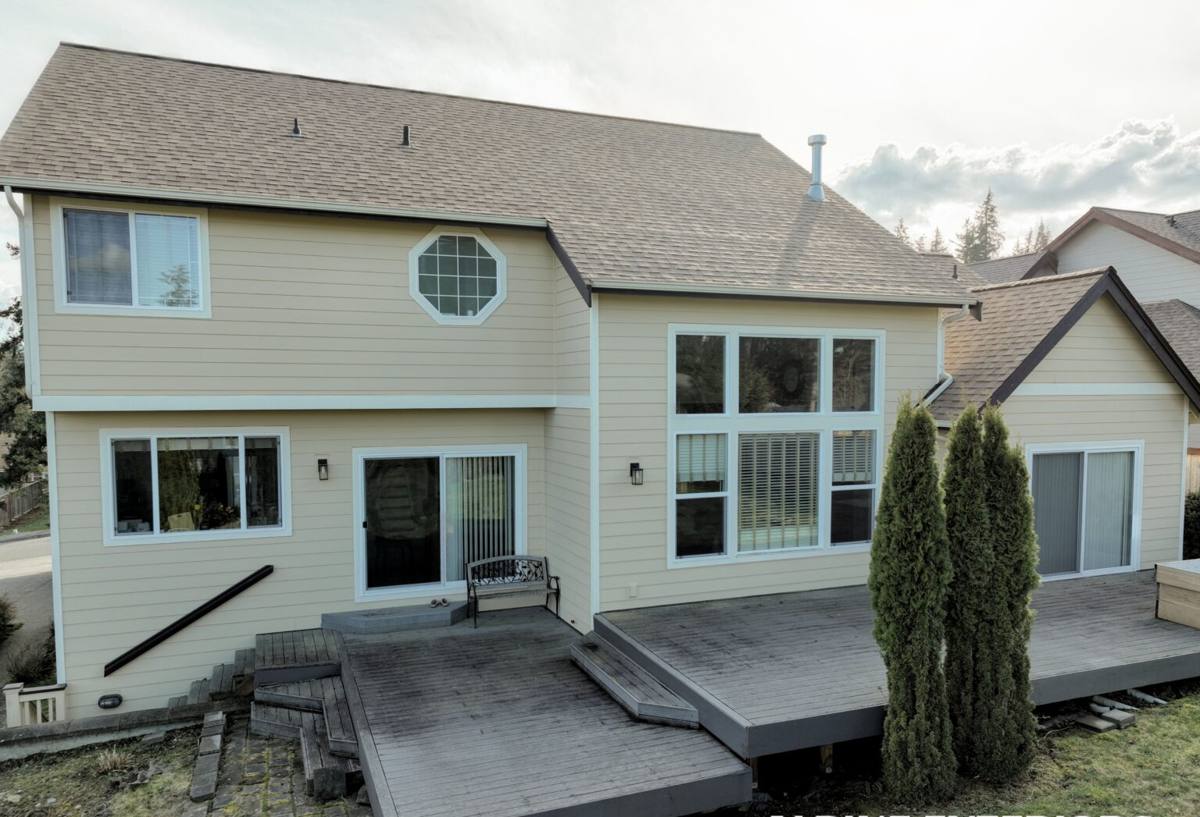
Deming sits back against the foothills east of Lynden, close enough to the Nooksack that damp ground-level air lingers longer than it does out on the flats. Decks out here take a different kind of beating than a deck in town. Tree cover keeps them shaded and wet for hours after a storm passes, moss gets a head start every fall, and the freeze-thaw swings that roll off the mountains in January and February work their way into any joint that wasn't sealed right the first time. We repair decks in Deming as part of our regular Whatcom County route, and the failures we see out here are consistent enough that we can usually tell what's wrong before we finish walking the perimeter.
This page covers deck repair specifically — not new deck construction. If your deck is structurally sound but showing its age, or if one section has gone soft while the rest is fine, repair is almost always the right call before replacement.
Why Deming's Climate Is Hard on Decks
Whatcom County gets a lot of rain, but the specific combination that hurts decks in Deming is rain plus shade plus cool temperatures that don't dry things out quickly. A deck in full sun sheds moisture fast. A deck tucked under fir or cedar cover — common on Deming lots — can stay damp for days after a rain event, and that's exactly the environment moss, algae, and wood rot need to get established.
- Moss and algae growth: Shaded, north-facing decking holds moisture and grows a moss mat that traps even more water against the wood surface.
- Freeze-thaw cycling: Water that gets into a crack or a loose fastener hole freezes, expands, and widens the opening — repeated every cold snap through the winter.
- Ledger board exposure: The board where the deck attaches to the house is often the last place water drains from, and it's the least visible from ground level.
- Fastener corrosion: Older decks built with standard (non-coated) screws or nails rust and weaken well before the boards themselves fail.
None of this means a Deming deck is doomed — it means the maintenance and repair schedule needs to account for a longer wet season than a homeowner might expect coming from a drier climate.
What a Correct Deck Repair Actually Involves
A lot of deck "repair" done cheaply is really just cosmetic — replace the board that looks bad and move on. That approach misses what's underneath. Our process starts with the structure, not the surface.
Structural Inspection First
Before we touch a single board, we check the framing: joists, beams, posts, and — critically — the ledger board where the deck ties into the house. A soft or spongy spot on the decking surface is often a symptom of a joist underneath that's been absorbing water for years. Replacing the visible board without addressing the joist just buys a season or two before the same spot fails again.
Fastener and Hardware Condition
We check joist hangers, ledger flashing, and structural screws for rust and pull-through. Corroded hardware is one of the most common hidden failures we find on older decks, and it's cheap to fix compared to the alternative if it's left until a board or a railing actually gives way.
Moisture Path Behind the Ledger
If the deck attaches to the house, we look at how water is (or isn't) being flashed away from that connection. A ledger board without proper flashing is a slow leak point that can affect the house's siding and framing, not just the deck.
Board-Level Repair
Once the structure checks out, we address the decking and railing surface: replacing rotted or split boards, resetting fasteners that have worked loose, and dealing with moss and algae staining so the repair doesn't look patched.
Common Deck Problems We Find in Deming
| Symptom | Likely Cause | Typical Fix |
|---|---|---|
| Soft or bouncy spot in decking | Rotted joist or beam underneath | Sister or replace the framing member, then re-deck that section |
| Green or black film on boards | Moss/algae from shade and slow drying | Clean, treat, and improve airflow/drainage where possible |
| Loose or wobbly railing | Corroded or pulled fasteners at posts | Replace hardware with corrosion-resistant fasteners, re-secure posts |
| Staining or gap at house wall | Ledger board flashing failure | Pull decking, correct flashing, reattach |
| Splitting or cupping boards | Repeated wet-dry cycling over years | Selective board replacement, not always full re-deck |
Repair vs. Replace: How We Decide
Homeowners often assume a rough-looking deck needs a full tear-off. That's sometimes true, but not usually. We look at three things to make the call:
- Framing condition. If the joists, beams, and posts are solid, repair is almost always worth it. If the framing itself is compromised in multiple places, replacement starts to make more sense.
- Extent of the damage. One or two problem sections is a repair. Rot or fastener failure spread across most of the deck is a sign the whole structure is past its useful life.
- Age and material. An older deck built with untreated or lower-grade lumber may be closer to the end of its service life even if it's only showing damage in one spot right now.
We'll tell you honestly which category your deck falls into. There's no reason to sell a full replacement when a targeted repair will hold up for years, and no reason to patch something that's going to need the same fix again next winter.
Our Process for a Deming Repair
Because we already work this side of Lynden regularly, we're not learning the local conditions on your job — we already know what a deck that's been through several Whatcom County winters typically looks like underneath.
- Walk the deck and check the structure from below where accessible, not just the surface.
- Identify every problem area, not just the one that prompted the call — a soft board is rarely the only issue.
- Give a clear, honest scope: what needs structural repair, what's cosmetic, and what can wait.
- Match materials and fasteners to the specific exposure of that section — shaded and ground-level areas get different attention than open, sunny sections.
- Correct the moisture source, not just the symptom, wherever the repair touches a flashing or drainage issue.
- Leave the deck safe and sound before we leave the site — no cosmetic-only patches over structural problems.
What to Have Ready Before We Come Out
- Rough age of the deck, if known, and whether it's been repaired before.
- Specific spots that feel soft, bounce, or have visibly changed color or texture.
- Whether the deck is attached to the house or freestanding.
- Any history of standing water, ice buildup, or persistent moss in certain areas.
Cost Factors for Deck Repair
Every deck repair quote depends on what we actually find once the structure is exposed, but a few factors consistently drive cost up or down:
| Factor | Why It Matters |
|---|---|
| Extent of framing damage | Sistering a joist is far less work than replacing a beam or multiple posts |
| Accessibility | Ground-level decks with little clearance underneath take longer to inspect and repair than raised decks |
| Ledger/flashing involvement | Correcting a flashing failure at the house connection adds scope beyond the deck itself |
| Material matching | Matching existing decking (especially older or discontinued profiles) can add cost versus a uniform re-deck |
| Railing and code compliance | Older railings sometimes need updating to meet current spacing and height requirements during repair |
We give a straight, itemized quote after the inspection — not a vague number based on square footage alone, since a deck's real cost driver is almost always what's happening in the framing, not the visible boards.
Why Hire a Crew That Already Works Deming
A contractor who only occasionally makes it out toward Deming doesn't have the same feel for how quickly moss reestablishes on a shaded deck, or how the ledger connection on an older home typically fails in this area. We route through this part of Whatcom County regularly, which means we're not guessing at material choices or drainage solutions — we've already seen the pattern on similar homes nearby. That familiarity shows up in fewer surprises during the repair and a scope that's accurate the first time, not revised twice after we start pulling boards.
Maintenance That Extends the Life of a Repair
A good repair only holds up if the deck is kept up afterward. In a climate like this, that means being realistic about the wet season rather than treating deck care as a one-time summer project.
- Clear leaves, needles, and debris from between boards before they trap moisture through the fall and winter.
- Address moss as soon as it appears rather than letting it establish across a season.
- Check railings and stair connections annually — these take more direct stress than flat decking and loosen first.
- Keep gutters and downspouts near the deck clear so runoff isn't draining directly onto or under it.
- Reseal or refinish on the manufacturer's recommended schedule, not just when it looks faded — sealant failure invites water in long before it's visually obvious.
If you're in Deming and dealing with a deck that's gone soft, spongy, mossy, or just doesn't feel right underfoot, we're glad to take a look. Reach out for a free, no-pressure estimate using the form below.