 Lynden Siding
 Why Roofs in Deming Wear Differently Than You'd Expect
Deming sits inland from Lynden along the Nooksack River valley, closer to the tree line and the foothills leading up toward Mount Baker. That geography changes how a roof ages. Properties here tend to sit under heavier tree cover than open lowland lots around Lynden proper, which means more shade, slower drying times after a storm, and a longer window each year for moss and moss-adjacent lichen to take hold. Add in the driving rain that comes through this corner of Whatcom County off the Strait of Georgia, plus the salt-laden air that reaches well inland on a windy day, and you've got a combination that eats away at fasteners, flashing, and shingle granules faster than most homeowners expect.
None of that means a Deming roof is doomed to constant problems. It means the repair work has to account for moisture that lingers longer, metal components that corrode a bit faster, and moss that will come back if it isn't actually dealt with rather than just knocked off the surface.
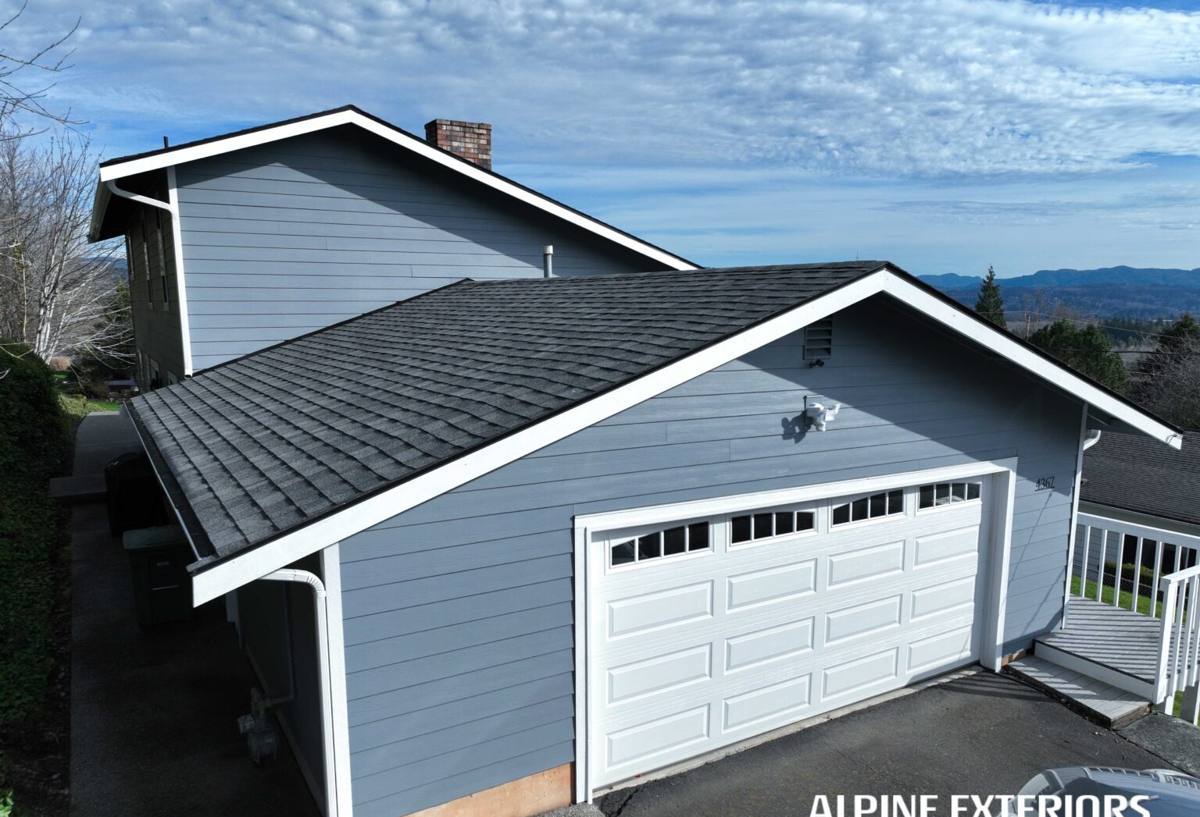
What "Roof Repair" Actually Covers
Roof repair is targeted work — fixing a specific failure point rather than replacing the whole roof system. That distinction matters because a lot of roof problems in this area look worse than they are, and a lot of small problems get ignored until they aren't small anymore. A proper repair starts with figuring out exactly what's failing and why, not just patching whatever is visibly leaking.
The Usual Suspects Around Deming and Lynden
- Moss and lichen colonies lifting shingle edges and holding moisture against the roof deck
- Clogged valleys and gutters causing water to back up under shingles instead of running off
- Flashing failures around chimneys, skylights, and roof-to-wall transitions, often where sealant has dried out
- Ridge cap and hip shingle wear from wind-driven rain working underneath the cap over time
- Granule loss and algae staining on north-facing or heavily shaded slopes
- Nail pops and fastener corrosion, more common here because of salt-air exposure combined with persistent damp
Repair or Replace? How We Make That Call
Homeowners in Deming and Lynden often call about "a leak" and end up needing to know whether it's a repair job or the first sign the roof is past the point of spot-fixing. There's no single rule — it depends on the roof's age, how localized the damage is, and what we find once we're actually up there.
| Factor | Repair Usually Makes Sense | Replacement Usually Makes Sense |
|---|---|---|
| Roof age | Under 15-18 years, materials still have life left | Approaching or past the manufacturer's expected lifespan |
| Extent of damage | Isolated to one area — a valley, a flashing point, a section of moss damage | Multiple failure points across different slopes |
| Decking condition | Solid, no soft spots or rot found during inspection | Soft decking, visible sagging, or water staining spread across the attic |
| Moss/algae coverage | Limited to specific shaded sections | Widespread across most of the roof, with granule loss underneath |
| Leak history | First or second reported leak, clear single cause | Recurring leaks in different spots over multiple seasons |
We'll tell you honestly which category your roof falls into. If a repair will genuinely hold for several more years, that's what we recommend — there's no reason to sell a full replacement when a targeted fix does the job.
Our Repair Process
Inspection
We get on the roof, not just in the attic looking up. That means checking the deck condition at the repair site, tracing water stains back to their actual source (which is often several feet from where the stain shows up inside), and checking surrounding areas — valleys, penetrations, ridge lines — for related wear that could turn into the next call.
Diagnosis and a Written Scope
Before any work starts, you get a plain-English explanation of what's actually wrong, what we're going to do about it, and what it will cost. No vague line items. If the repair turns out to be more involved once we open things up — say, rotten decking under a flashing failure — we tell you before we proceed, not after.
The Repair Work
This is where matching matters. Shingles, flashing metal, and fasteners all need to match or be compatible with what's already on the roof, both for appearance and for how water is meant to move across the surface. We remove damaged material back to sound decking rather than layering a patch over a weak spot, replace or repair the decking if it's compromised, and rebuild flashing and valley details to actually shed water instead of just covering the hole.
Cleanup and Follow-Up
We clear debris, check gutters and downspouts near the repair area are running clear, and walk the finished work with you before we call it done. If moss removal was part of the job, we explain what was done to slow regrowth and what maintenance on your end will keep it that way.
Materials and Methods We Use — and Why
A repair is only as good as what's underneath it. In a climate that keeps roofs damp longer than most of the country, a few things matter more here than they would somewhere drier:
- Ice-and-water membrane in valleys and around penetrations — these are the spots where driving rain and moss-related backup cause the most damage, so they get extra protection, not just a shingle overlap.
- Corrosion-resistant fasteners and flashing — standard hardware degrades faster with salt-air exposure and near-constant moisture; we use materials rated for it.
- Proper ventilation checks — trapped moisture under the roof deck accelerates rot from the inside, which is easy to miss if you only look at the outside of the roof.
- Zinc or copper strips where moss is a recurring issue — a preventive measure that reduces regrowth without relying on repeated chemical treatments.
We don't treat power-washing or a tube of roofing sealant as a repair. Pressure washing can strip granules and force water under shingles if it's done wrong, and sealant over a flashing problem just hides the symptom for a season or two. Our standard is to fix what's actually failing, even if that takes longer than the shortcut version.
Preventing the Next Repair Call
A roof repair should buy you years, not months. Whatcom County's wet season is long enough that a little seasonal attention goes a long way toward not needing us back sooner than expected.
Homeowner Maintenance Checklist
- Clear gutters and valleys before the fall rains set in, and again after leaves finish dropping
- Trim back tree limbs that overhang the roof — less shade means faster drying and less moss
- Look at north-facing and shaded slopes each spring for early moss or lichen growth
- Check attic ventilation isn't blocked by insulation or debris
- Have flashing around chimneys and skylights checked every few years, since sealant and metal both degrade over time
- Address small leaks as soon as they show up — a stain the size of a dinner plate is cheaper to fix than the rot it becomes if ignored through another wet season
Why It Matters to Hire a Crew That Already Works This Area
Roof repair isn't identical everywhere in Whatcom County, and a crew that mostly works drier, more open areas can miss things that are routine knowledge for anyone who works Deming and Lynden regularly. Knowing which slopes on a heavily treed lot hold moisture longest, how far salt-air corrosion reaches inland on a given property, and what a Whatcom County roof needs to actually last through a normal wet season isn't guesswork — it's pattern recognition from doing this work locally, season after season. That local familiarity also means faster response when a leak shows up mid-storm, and a crew that already understands local permitting and inspection expectations if the scope of work requires it.
What to Expect: Timeline and Investment
Most straightforward repairs — a flashing rebuild, a valley fix, localized moss and shingle damage — are a one-day job once the scope is confirmed. More involved repairs, especially ones that turn up deck damage once we open things up, can run longer. Costs vary widely depending on what's actually wrong, but as a general guide: small, isolated repairs (a section of flashing, a minor leak source) commonly run in the few-hundred-dollar range, while more involved repairs covering multiple areas or requiring deck replacement can run into the low thousands. We'll never give you a number without inspecting the roof first — anything quoted sight unseen isn't a real estimate.
Ready When You Are
If you're dealing with a leak, visible moss damage, or just want a second opinion on whether your roof needs a repair or something more, we're happy to take a look. Reach out for a free, no-pressure estimate using the form below — we'll walk the roof, tell you honestly what we find, and lay out your options in plain terms.