 Lynden Siding
 Why Ferndale Homes Wear Out Siding Faster Than You'd Expect
Ferndale sits close enough to the water that salt air is a daily fact of life for the siding on your home, not an occasional nuisance. Add in Whatcom County's long stretch of driving rain each fall and winter, plus the shaded, damp conditions that let moss and algae take hold on north-facing walls, and you've got a climate that is genuinely hard on exterior materials. Homeowners who moved here from drier parts of the state are often surprised at how much faster paint fades, caulk fails, and lower-grade siding starts to show wear compared to what they were used to.
None of this means Ferndale homes need something exotic. It means the siding needs to be matched to the actual conditions: material that doesn't absorb moisture, a finish that holds color and doesn't chalk, and an installation that keeps water moving away from the wall instead of trapping it. That's the whole job, and it's worth getting right the first time, because re-siding a house is not something most people want to do twice in a decade.
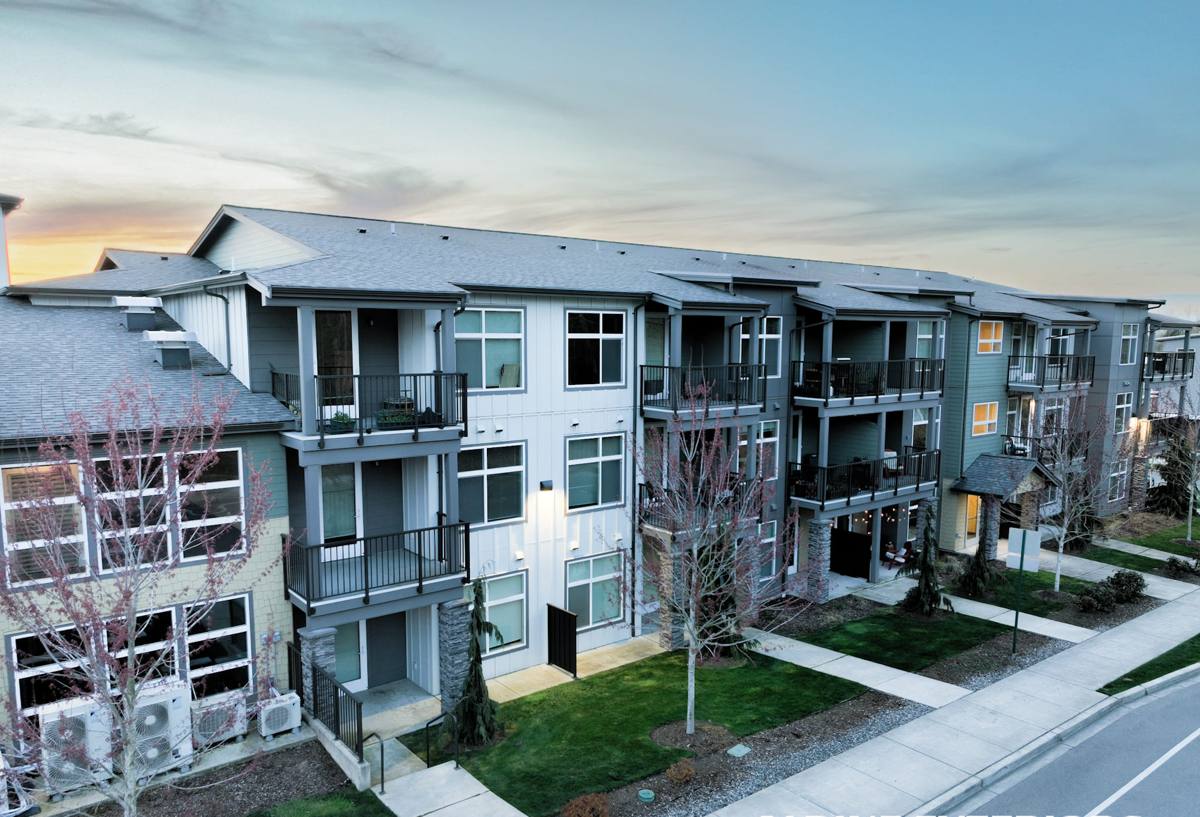
What Salt Air, Rain, and Moss Actually Do to Siding
Salt air
Airborne salt is corrosive to fasteners and hard on paint film. Over years, it accelerates the breakdown of cheaper coatings and can pit or rust exposed metal trim and nails if the wrong hardware is used. It also tends to leave a film on surfaces that holds moisture longer than it would inland.
Driving rain
Wind-driven rain off the water doesn't just fall straight down — it gets pushed sideways into seams, laps, and trim joints. Siding systems that rely on caulk alone to keep water out, rather than proper flashing and drainage behind the cladding, tend to fail here faster than in calmer inland climates.
Moss and algae
Shaded walls, gutters that overflow onto siding, and long damp stretches with little direct sun create ideal conditions for moss, mildew, and algae growth. Porous or wood-based siding materials absorb that moisture and organic growth into the surface itself, which is why staining and softening show up first on those materials in this part of the county.
Why We Only Install James Hardie Fiber Cement Here
We don't install vinyl, LP SmartSide, primed wood, cedar, or other fiber cement brands. That's a standing decision, not a sales pitch, and it matters more in a climate like Ferndale's than it would somewhere dry and mild.
- Fiber cement doesn't feed moss and mold the way wood-based products can — it's not an organic material, so there's nothing for organic growth to root into.
- It doesn't expand and contract with moisture the way engineered wood siding can, which matters when you're getting soaked one week and dried out the next.
- ColorPlus factory finish is baked on and warranted, so you're not relying on field-applied paint to hold up against salt air and UV — a common weak point for lower-cost siding in coastal conditions.
- It's non-combustible, which is simply a better long-term standard regardless of climate.
- James Hardie's HZ product lines are engineered for specific climate zones, including wetter regions like ours, rather than being a one-size-fits-all product.
Vinyl is inexpensive and low-maintenance in mild climates, but it can become brittle and crack in temperature swings, and its seams and trim details are less forgiving of wind-driven rain over time. LP SmartSide and other engineered wood products perform well when installation and maintenance are exactly right, but they're wood-based, meaning moisture management has to be nearly perfect, every year, for the life of the siding. We'd rather not sell a product that only works if nothing ever goes wrong with caulking or gutters. Cedar is genuinely beautiful, but it demands ongoing sealing and refinishing that most homeowners underestimate before they've lived with it through a few wet Whatcom County winters.
What Correct Siding Installation Involves in This Climate
The siding material is only half the equation. A huge percentage of siding failures we see on older Ferndale homes trace back to installation shortcuts, not the product itself. Here's what has to happen underneath the finished wall:
- Full inspection and repair of the sheathing — any rot, soft spots, or existing moisture damage gets addressed before new siding goes up, not covered over.
- A continuous weather-resistant barrier installed correctly, lapped shingle-style so water sheds outward and down, never inward.
- Proper flashing at every penetration — windows, doors, hose bibs, light fixtures, and vents are the places driving rain finds its way in first.
- Correct fastener spacing and type, matched to Hardie's installation specifications, using fasteners rated for coastal exposure.
- Adequate clearance at grade and at horizontal surfaces like decks and roof lines, so siding isn't sitting in standing moisture.
- Properly caulked and painted cut edges at every field cut, since an unsealed cut edge is the fastest way for a fiber cement board to take on water.
Skip any one of these steps and even the best siding material on the market will underperform. This is where hiring based on lowest bid tends to backfire — the shortcuts aren't visible on day one, they show up in year three or four.
Our Process for a Ferndale Siding Job
We approach every Ferndale installation the same methodical way:
- On-site assessment: we walk the exterior, check for existing moisture damage, note problem areas like shaded walls or poor drainage, and measure for material.
- Detailed proposal: a written scope covering product line, color, trim details, and what happens with any sheathing repair, so there are no surprises mid-job.
- Tear-off and inspection: old siding comes off and we inspect the wall assembly before anything new goes on.
- Barrier and flashing installation: the unglamorous work that determines whether the siding lasts 10 years or 40.
- Hardie installation to manufacturer spec: correct fastening, spacing, and sealed cut edges throughout.
- Final walkthrough: we go over the finished job with you before we consider it done.
Because we work Whatcom County regularly, we're not learning the local conditions on your house. We already know which details matter more here — flashing at horizontal trim, drainage at grade, fastener choice — because we've addressed them on other homes facing the same wind and rain patterns.
Comparing Siding Options for Ferndale's Climate
| Factor | James Hardie Fiber Cement | Vinyl | Engineered Wood (e.g. LP SmartSide) | Cedar |
|---|---|---|---|---|
| Moisture resistance | Excellent, non-organic material | Good, but seams/trim vulnerable to wind-driven rain | Fair, moisture-sensitive if maintenance lapses | Poor without regular sealing |
| Resists moss/algae growth | Strong — nothing organic to feed on | Moderate | Weaker — wood-based surface | Weak — natural wood surface |
| Finish durability in salt air | Factory ColorPlus finish, warranted | Can fade/chalk over time | Field-applied paint wears faster | Requires ongoing refinishing |
| Combustibility | Non-combustible | Combustible | Combustible | Combustible |
| Typical maintenance | Low | Low | Moderate to high | High |
Cost Factors for a Ferndale Siding Project
Every home is different, but the main variables that move the price of a siding installation here are:
- Square footage and the complexity of the roofline and wall angles
- Condition of the existing sheathing — hidden moisture damage adds repair time
- Number of windows, doors, and other penetrations requiring flashing
- Product line and profile chosen (lap siding, shingle-style panels, trim details)
- Accessibility of the site, including multi-story sections and tight lot lines
We'll give you specific numbers after seeing the house — broad national averages don't mean much once you factor in the extra flashing and moisture-management work that a coastal Whatcom County home actually needs.
Signs Your Ferndale Home Needs New Siding Sooner Rather Than Later
- Soft or spongy spots when you press on the siding, especially near the bottom courses
- Persistent moss or dark streaking that returns soon after cleaning
- Paint that's peeling or bubbling rather than just fading
- Visible gaps, warping, or buckling boards, particularly around windows and corners
- A musty smell or interior wall staining that could point to moisture getting behind the siding
If you're seeing any of these, it's worth having someone look at the wall assembly itself, not just the surface — by the time siding looks bad, moisture has often been working on the sheathing underneath for a while.
If your Ferndale home is due for new siding, we're happy to come take a look and walk you through what we'd recommend, with no pressure and no obligation. The estimate is free — fill out the form below and we'll get in touch.