 Lynden Siding
 Why Ferndale Roofs Take a Different Kind of Beating
Ferndale sits close enough to the water and open farmland that its roofs deal with a combination of stresses most inland homes never see. Salt-laden air moves in off the coast and settles on metal flashing, fasteners, and vent caps. Wind builds up speed across the flat lowlands north of Bellingham with nothing to slow it down before it hits a roofline. And the region's wet season doesn't just mean rain — it means weeks at a stretch of low sun angle and standing moisture that gives moss and algae exactly the conditions they need to take hold. None of this is dramatic on its own, but stacked together over a Whatcom County winter, it adds up to real wear that a generic roof inspection checklist from a national franchise often misses.
Salt Air and Metal Fatigue
Salt air corrodes exposed fasteners, drip edge, and flashing faster than dry inland air does. On a roof that's already taken wind or impact damage, corroded metal around the damaged area fails sooner than the surrounding roof, which is why a proper storm repair always includes a look at the metal, not just the shingles.
Driving Rain and Wind-Driven Water
Storms that come through this part of Washington often bring rain sideways, not straight down. Wind-driven rain finds its way under lifted shingle tabs, around poorly sealed flashing, and into nail holes that a calm-weather rain would never reach. This is the main reason a storm can cause damage that isn't visible from the ground and doesn't show up as a leak until weeks later.
A Long Moss Season
Whatcom County's moss season runs long — often eight months or more of conditions damp enough to keep moss actively growing. Moss holds moisture against the roof surface, lifts shingle edges as it grows, and, when storm winds tear sections of it loose, can pull granules and even shingle fragments with it. A storm repair on a mossy roof isn't complete until the moss itself is addressed, or the same damage shows up again next season.
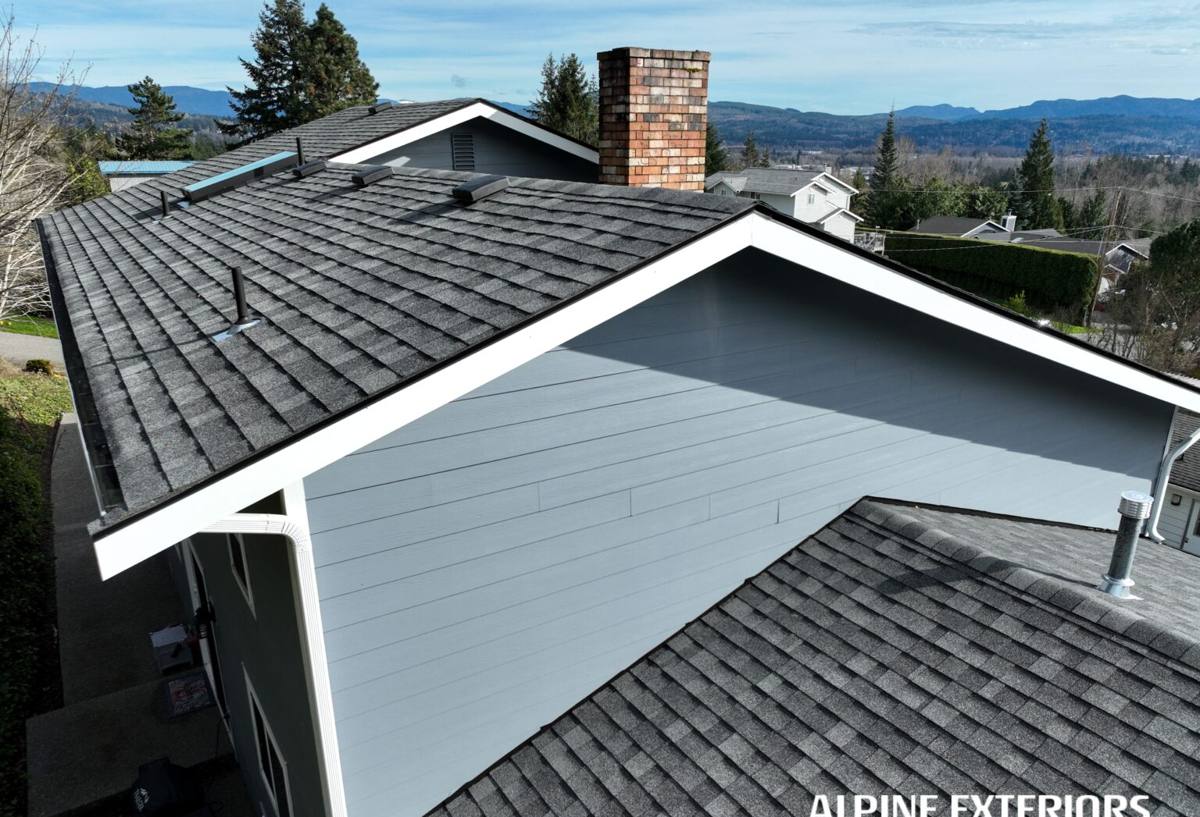
What Actually Counts as Storm Damage (vs. Normal Wear)
Homeowners often assume storm damage means a hole in the roof or a tree branch through the decking. Most of what we're called out for after a Whatcom County windstorm is less obvious than that. Knowing the difference matters because it affects both how urgently a repair is needed and how it should be handled with insurance.
- Wind-lifted or creased shingles — tabs that have been bent back and forth by wind lose their seal and won't reseal on their own, even if they look intact.
- Granule loss in patches — heavy wind-driven rain and hail-sized debris strip granules unevenly, leaving bare spots that age faster than the rest of the roof.
- Flashing separation — around chimneys, vents, and roof-to-wall transitions, flashing can pull loose from wind uplift without any shingles being visibly damaged.
- Fastener back-out — repeated wind flex works nails and screws upward over time, which shows up as small raised bumps under the shingle line.
- Debris impact — branches, gutter debris, or wind-blown material can bruise or puncture shingles without leaving an obvious hole.
- Moss-accelerated lifting — storm winds catching the edge of a moss mat can tear up healthy shingle material along with the moss itself.
What a Correct Storm Damage Repair Involves
A Real Inspection, Not a Drive-By
A storm damage inspection worth paying for means someone on the roof, not someone looking up from the driveway with binoculars. That includes checking the decking underneath damaged shingles for soft spots, confirming whether the underlayment is still intact, and inspecting flashing and vent boots that are easy to skip if you're only looking for missing shingles. We document what we find with photos before any repair work starts, both for our own records and so you have something concrete if you're filing an insurance claim.
Repair vs. Replace: How We Decide
Not every storm-damaged roof needs a full replacement, and we don't sell one when a targeted repair will hold up. The decision comes down to a few honest questions: How much of the roof is affected, and is it isolated or spread across multiple slopes? Is the decking sound underneath, or has water already caused rot? How old is the existing roof, and is it close enough to the end of its service life that a repair is a short-term fix rather than a real solution? We'll walk you through our reasoning on each of these rather than just handing you a number.
Matching Materials the Right Way
Shingle color and profile change from batch to batch and discontinue over time, so matching a repair patch to an existing roof isn't always exact. We source the closest match available and are upfront when an exact match isn't realistic, rather than letting a customer discover a visible seam after the work is done. In cases where a close match isn't possible, we'll talk through options — including whether a full slope replacement makes more visual and financial sense than a patch that will stand out.
Our Process From First Call to Final Walkthrough
1. Assessment and Documentation
We start with a roof-level inspection and photograph everything relevant, both the damage and the surrounding areas that could be affected next if left alone.
2. A Clear Scope and Straight Answers on Cost
You get a written scope of what needs to happen and why, broken down so you can see what's driven by storm damage specifically versus pre-existing wear we noticed along the way. We'd rather tell you about a separate issue than quietly work around it.
3. The Repair Itself
Work is done to match the pitch, materials, and fastening pattern of the original roof — not just tacked over the top of the damaged section. Flashing and underlayment that were compromised get replaced, not just the visible shingles.
4. Cleanup and Follow-Up Check
We clear debris and old material from the property, including a magnetic sweep for stray fasteners in the yard and driveway. On request, we'll do a follow-up check after the next significant rain to confirm the repair is holding.
Comparing Your Repair Options
There's usually more than one way to handle storm damage, and the right call depends on the roof's age and how widespread the damage is. Here's how the common paths compare.
| Approach | What It Addresses | Typical Lifespan Added | Best For |
|---|---|---|---|
| Spot patch (shingles only) | Isolated, cosmetic-level damage with sound decking underneath | A few years, tied to the age of the surrounding roof | Roofs under 10 years old with limited, localized damage |
| Section repair (shingles, underlayment, flashing) | Damage that's compromised the water barrier, not just the surface | Matches remaining roof life | Mid-life roofs with damage concentrated on one slope or area |
| Full slope or full roof replacement | Widespread damage, aging materials, or repeated storm hits on the same roof | A full new service life | Roofs already near the end of their expected lifespan |
Storm Damage and Insurance: What to Know
Most homeowner policies cover sudden storm damage — wind, hail, and impact from debris — but they don't cover damage that's really long-term neglect, like a roof that failed because moss and moisture were left unaddressed for years. Insurance adjusters look for a clear, documented cause and timeline, which is exactly what our inspection photos and written scope are meant to support. We're happy to provide documentation for a claim, walk an adjuster through what we found, and give an honest opinion — but we don't inflate a scope of work to try to maximize a claim payout, and we won't tell you something is storm-related when it's really just an aging roof catching up with itself.
Preventing the Next Round of Damage
A storm repair is a good moment to deal with the conditions that made the damage worse than it needed to be. A few maintenance habits go a long way in a climate like this one.
- Clear moss buildup before it has a chance to lift shingle edges — earlier in the season is easier and cheaper than after it's established.
- Keep gutters and downspouts clear so wind-driven rain has somewhere to go instead of backing up under the roof edge.
- Check attic ventilation — poor airflow traps moisture that speeds up decking rot from the inside, independent of what's happening on the surface.
- Have flashing around chimneys and vents checked yearly, since these are the first points to fail in sustained coastal wind.
- Trim back branches that overhang the roofline before storm season, reducing the odds of impact damage during the next windstorm.
Why a Crew That Already Works Ferndale Matters
We're based just up the road in Lynden, and Ferndale is regular territory for us, not an occasional service call. That matters for a few practical reasons. We already know how moss behaves on roofs exposed to this area's specific mix of shade, moisture, and wind, so we're not guessing at causes. We're familiar with the roofing profiles and ages common in Ferndale's older and newer neighborhoods alike, which speeds up material matching. And because we're local, we can typically get someone out faster after a storm than a crew dispatched from farther away — which matters when wind-driven rain is actively getting into a compromised roof and every day of delay means more water reaching the decking.
If you've had storm damage or just want a second opinion on wear you've noticed, we're glad to take a look. Fill out the form below for a free, no-pressure estimate — we'll tell you plainly what we find, what it will take to fix it right, and what can reasonably wait.