 Lynden Siding
 The Acme Climate Challenge for Siding
Acme sits back from the open farmland that defines most of the Lynden area, tucked closer to the foothills with heavier tree cover and more shade across the roofline and walls. That combination changes how siding ages. Less direct sun means slower drying after rain, and Whatcom County gets plenty of rain to dry from — long stretches of driving, wind-blown storms followed by weeks of damp, overcast weather. Add in the marine air that moves through this whole corner of the state and you get a climate that is hard on any exterior material that can't shed water fast and dry out completely between soakings.
The practical result for homeowners is a longer moss season than most of the country deals with, more sustained moisture contact on north- and west-facing walls, and siding that stays wet longer after storms if it's shaded by trees or sits close to landscaping. Materials that absorb moisture, swell, or rely on paint film to stay sealed struggle here. Materials that are dimensionally stable and factory-finished hold up. That's the entire reason our installation approach in Acme is built around drainage and drying, not just nailing boards to a wall.
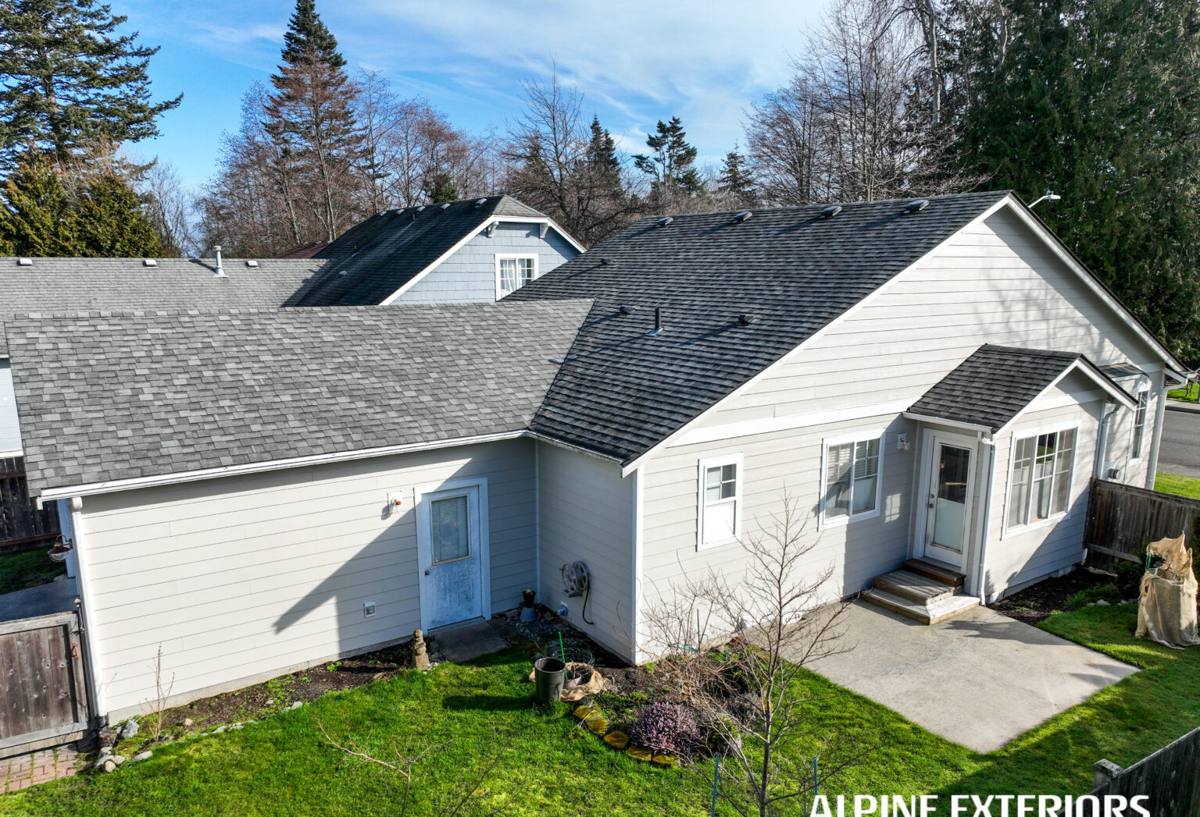
What Fiber Cement Needs to Get Right Here
Fiber cement is a strong material choice for this climate, but the material alone doesn't guarantee a good outcome — the installation details do. A fiber cement job done to a generic national spec, without adjustment for a wet, shaded Whatcom County lot, can still trap moisture behind the siding even though the boards themselves are fine.
Clearances and Drainage
Fiber cement siding needs a gap at the bottom edge above roofing, decks, and grade, and it needs to stay clear of soil, mulch, and hardscape. In a shaded, high-moisture setting like Acme, we treat these clearances as non-negotiable rather than a minimum to shave for a tighter-looking install. We also install a drainage plane behind the siding — typically a weather-resistive barrier paired with a rainscreen or drainage wrap — so any water that does get behind the cladding has somewhere to go besides the sheathing.
Fastening and Joints
Fiber cement holds fasteners well when they're placed correctly and sized for the specific panel or plank thickness. Butt joints get flashed or shimmed off the wall, not caulked tight against each other, because a sealed joint with no ability to move or drain is exactly the kind of detail that fails quietly over a few wet seasons and shows up later as staining or soft trim.
Trim, Corners, and Penetrations
Windows, corners, and any wall penetration are where most siding failures start, regardless of material. We flash these before siding goes on, not after, and we use trim products designed to move with the wall rather than fighting it. In a climate with this much annual rain, a missed flashing detail at one window can cause damage that isn't visible until it's already spread into the wall assembly.
Why We Only Install James Hardie Fiber Cement
We install James Hardie products exclusively — we don't offer LP SmartSide, vinyl, Cemplank, Allura, or bare wood siding as alternatives, even when a customer asks. That's a standard we hold across every job, not a sales preference. Hardie's fiber cement is non-combustible, factory-finished with their ColorPlus coating (so the color is baked on rather than field-painted), and manufactured in HZ product lines engineered for specific moisture and freeze-thaw conditions rather than a one-size-fits-all formula. It comes with a strong, transferable warranty when installed to spec, which matters in a climate where installation quality determines most of the long-term outcome anyway. We'd rather stand behind one system we know cold than stock several we have to hedge on.
How Fiber Cement Compares in This Climate
Homeowners in Acme sometimes ask why we don't offer cheaper alternatives. Here's the honest comparison for a climate like this one:
| Material | Moisture Behavior Here | Maintenance Burden | Typical Lifespan Locally |
|---|---|---|---|
| James Hardie fiber cement | Dimensionally stable; doesn't swell or rot when correctly installed and gapped | Occasional wash to control moss/mildew; factory finish reduces repainting | Multiple decades with correct install and upkeep |
| Vinyl | Doesn't absorb water but can warp/buckle with temperature swings and doesn't handle impact well | Low, but panels are hard to color-match or repair invisibly if damaged | Moderate; more vulnerable to physical wear over time |
| Untreated or primed wood/cedar | Absorbs moisture readily; long shaded damp seasons here accelerate rot and moss growth | High — regular repainting/staining and moisture checks | Shorter without aggressive, consistent maintenance |
This isn't a knock on the other materials in every setting — it's why the specific combination of driving rain, shade, and a long moss season here pushes the decision toward a stable, factory-finished product.
Signs Your Acme Home May Need New Siding
Because Acme properties tend to have more shade and slower drying than open farmland lots, siding problems here often show up as moisture and organic growth issues before they show up as obvious physical damage. Watch for:
- Moss or dark streaking that returns quickly after washing, especially on north- or tree-shaded walls
- Soft or spongy spots near the bottom courses, around window trim, or at corners
- Paint that's peeling, bubbling, or chalking heavily on wood or previously painted siding
- Visible warping, cupping, or gaps opening up between boards or panels
- Persistent musty smell along an exterior wall, which can indicate moisture behind the cladding
- Siding that stays visibly damp for days after a storm instead of drying out
Our Process, Start to Finish
- On-site assessment: We walk the exterior, check for existing moisture damage behind current siding, and evaluate shade, drainage, and grading around the home.
- Written estimate: A clear scope covering product line, color, trim details, and any repair work needed to the sheathing or framing before new siding goes on.
- Prep and moisture barrier: Removal of old siding, repair of any damaged sheathing, and installation of a proper weather-resistive barrier and drainage plane.
- Flashing first: Windows, doors, corners, and penetrations get flashed and detailed before a single piece of Hardie siding is installed.
- Installation to spec: Correct clearances, fastening, and joint treatment, following Hardie's installation requirements rather than shortcuts that only show up as problems years later.
- Final walkthrough: We review the finished job with you, including care basics for your specific ColorPlus finish and product line.
What Affects the Cost of a Fiber Cement Job
| Factor | Why It Matters |
|---|---|
| Extent of existing damage | Rotten sheathing or framing found during tear-off has to be repaired before new siding goes on |
| Home size and wall complexity | More corners, gables, and trim details mean more labor and material cutting |
| Product line and profile | Hardie offers different plank widths, panel styles, and textures at different price points |
| Access and site conditions | Tree cover, slope, and tight setbacks common on wooded Acme lots can affect staging and labor time |
| Trim and detail work | Custom trim around windows, corners, and fascia adds cost but is often where long-term performance is won or lost |
We don't quote from a distance for this reason — an accurate number requires seeing the specific walls, the shade pattern, and what's actually going on behind the current siding.
Why a Crew That Already Works Acme Matters
Siding installation isn't identical from one Whatcom County property to the next. A crew that's used to open, sunny lots can under-detail a job on a shaded, damp Acme property without realizing it — the boards go up looking fine, and the shortcut only becomes visible a few wet seasons later. Working this area regularly means we already account for slower drying times, heavier moss pressure, and the drainage details that matter more here than on a property with full sun exposure. It also means we're not guessing at how a given product line's finish holds up under this specific mix of rain and shade over time — we've seen it.
Caring for Fiber Cement After Installation
Correctly installed Hardie siding is low-maintenance, not no-maintenance. In a climate prone to moss and mildew, an occasional gentle wash keeps growth from taking hold on shaded walls. Keep gutters clear so water isn't sheeting down the siding face, and keep landscaping and mulch pulled back from the bottom clearance gap. Beyond that, the ColorPlus finish is built to go years without repainting, which is one less recurring cost for homeowners in a climate that's already hard on painted surfaces.
If your Acme home's siding is showing moss, soft spots, or paint failure, or you're planning ahead for a replacement, we're happy to take a look and walk you through what we'd recommend. Reach out for a free, no-pressure estimate — there's no obligation, just a straight answer about what your home actually needs.