 Lynden Siding
 Why Blaine's Coastal Climate Is Hard on Siding
Blaine sits about as close to Puget Sound's marine weather as a Whatcom County home can get. That proximity to the water is part of what makes the area beautiful, and it's also exactly what wears out the wrong siding faster than homeowners expect. Salt-laden air corrodes fasteners and finishes that aren't built for it. Wind-driven rain off the Strait doesn't just fall straight down — it gets pushed sideways into seams, laps, and trim joints that a calmer climate would never test. And the long, damp shoulder seasons here give moss and algae months at a time to take hold on anything that stays wet.
None of this is unusual for the area — it's just the reality of building near the water in Whatcom County. The question isn't whether a home's exterior will be tested by salt, rain, and moss. It's whether the siding and the installation were chosen with that testing in mind.
What Correct Fiber Cement Siding Requires in Blaine
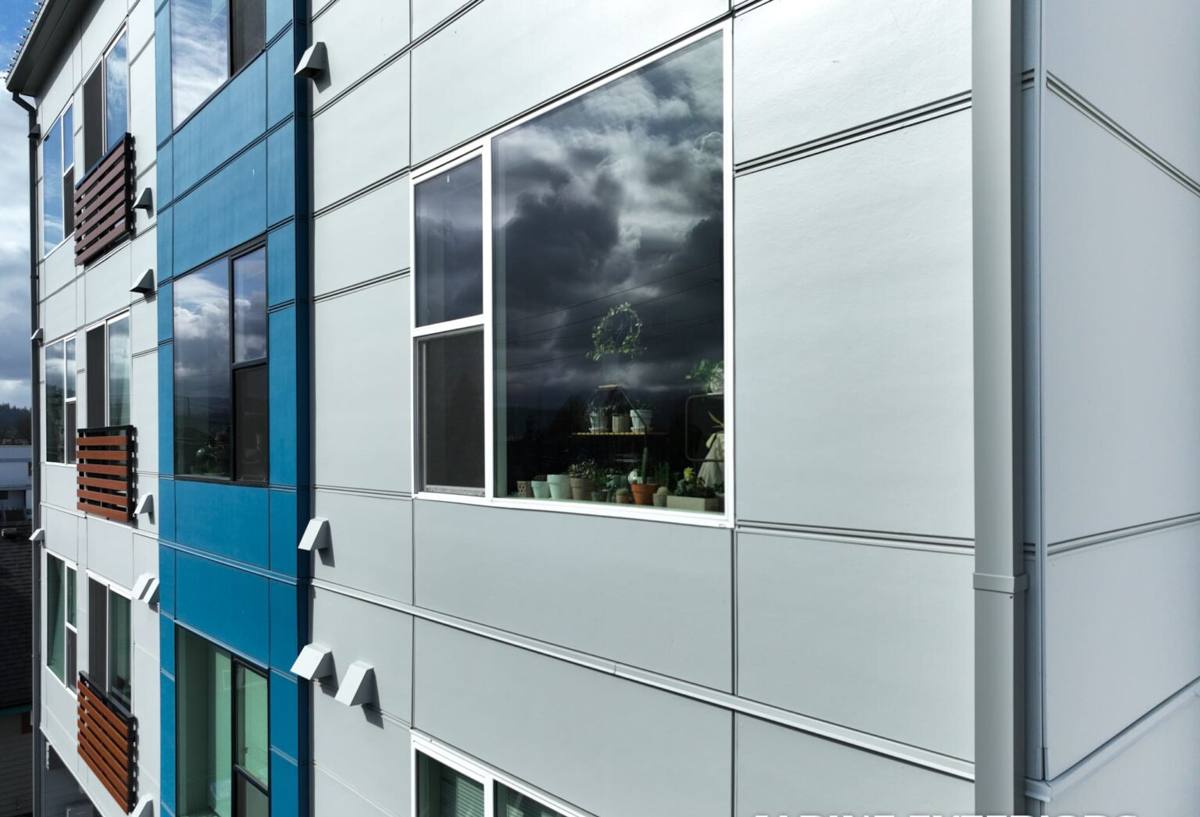
Fiber cement is a strong starting point for this climate because it's dimensionally stable, doesn't rot, and won't feed moss the way untreated wood fiber products can. But the product alone doesn't guarantee a good outcome. What actually determines whether a Blaine home's siding holds up is the detailing underneath and around it:
- A drainable water-resistive barrier and correctly lapped flashing at every window, door, and penetration — so wind-driven rain has somewhere to go besides the sheathing
- Rainscreen or proper furring where conditions call for it, giving the assembly a way to dry between storms instead of staying damp for weeks
- Fasteners and trim hardware rated for coastal exposure, not standard interior-grade hardware that corrodes and stains the face of the siding
- Caulking and sealant only where the manufacturer specifies it — over-caulking traps moisture instead of shedding it
- Factory-finished panels with a real coating system, so the color and moisture protection don't depend on a field-applied paint job holding up in salt air
Skip any one of these and the siding itself can be excellent and the wall assembly will still fail early — usually with moisture damage hidden behind the boards long before it shows on the surface.
Why This Matters More on North- and West-Facing Walls
On most Blaine properties, the elevations facing the water or open exposure take the brunt of driving rain and salt spray, while a shaded north wall holds moisture and grows moss the longest. A siding job that treats every wall the same way — same flashing detail, same fastener spacing, same finish — is missing an easy opportunity to put extra attention where the house actually needs it.
Why We Only Install James Hardie
We don't install LP SmartSide, vinyl, Cemplank, Allura, or bare cedar or spruce siding, and in a marine environment like Blaine that's not a marketing position — it's a practical one. Engineered wood products depend on an intact factory coating to keep moisture out of a wood-fiber core; in a climate with this much sustained dampness and salt exposure, any breach in that coating becomes a much bigger problem than it would inland. Vinyl can warp and fade under UV and temperature swings and offers little in the way of impact or fire resistance. Raw wood siding needs an ongoing maintenance commitment — sealing, staining, moss treatment — that most homeowners underestimate until they're a few years in.
James Hardie fiber cement is cement, sand, and cellulose fiber. It doesn't rot, it doesn't feed moss the way wood-based products can, and it's non-combustible. The ColorPlus factory finish is baked on and warrantied against fading and peeling, which matters a lot in a spot where sun, salt, and rain all take turns working on a painted surface. That's the whole reason we standardized on one manufacturer instead of offering several — we'd rather install one product well than install several products with different failure modes.
The Right HardieZone Product Line for This Area
Hardie engineers its siding by climate zone, and Whatcom County — including Blaine — falls into the HZ5 zone, built for regions with damp, moderate conditions and freeze-thaw cycles. HZ5 formulations are engineered to resist moisture absorption and cracking under those conditions, which is the right baseline for a coastal-influenced climate before any brand or style decision even comes into play.
From there, most Blaine homeowners choose between:
- HardiePlank lap siding — the standard for traditional and craftsman-style homes, available in several exposure widths and textures
- HardieShingle — for a shingled or Cape Cod look, common on homes wanting a coastal aesthetic without an actual wood shingle's maintenance burden
- HardiePanel — vertical panel siding, often paired with board-and-batten trim on modern or farmhouse-style exteriors
Color is worth thinking through specifically for this location: darker ColorPlus tones show less streaking from moss and mineral deposits between cleanings, while lighter tones can show water and organic staining sooner in a wet climate. Neither is wrong, but it's a real trade-off worth discussing before you pick a swatch.
Our Installation Process
Every job follows the same sequence, whether it's a full re-side or a section replacement:
- On-site assessment. We check the existing wall assembly, sheathing condition, and current moisture damage before quoting anything. On older homes near the water, this step often turns up rot or failed flashing that needs to be addressed before new siding goes up — not after.
- Weather barrier and drainage plan. We install or verify a code-compliant water-resistive barrier and, where the wall assembly calls for it, a rainscreen gap so the siding can dry properly between rain events.
- Flashing and trim detailing. Every window, door, and penetration gets flashed to shed water outward, not into the wall. This is the step that separates siding that lasts decades from siding that fails in five years.
- Hardie installation to manufacturer spec. Fastener type, spacing, and clearance all follow James Hardie's published installation guide — the guide the warranty is actually tied to.
- Final inspection and cleanup. We walk the exterior with you before we consider the job finished.
Cost Factors for a Blaine Project
Every home is different, but these are the variables that most often move the price on a fiber cement siding project in this area:
| Factor | Why It Matters in Blaine |
|---|---|
| Extent of existing moisture damage | Homes with long-term exposure to driving rain sometimes need sheathing or framing repair before new siding can go on |
| Rainscreen vs. direct-applied assembly | Adding a drainage gap costs more upfront but pays off in a climate this damp |
| Siding profile and exposure width | Shingle-style and narrow-exposure lap siding take more labor per square foot than standard wide-lap |
| Trim and corner detail complexity | Homes with a lot of windows, dormers, or architectural detail need more flashing and cut work |
| Access and site conditions | Waterfront or bluff-adjacent lots can add scaffolding or staging requirements |
Maintaining Fiber Cement Siding Near the Water
Hardie siding needs far less upkeep than wood or vinyl, but "low maintenance" isn't "no maintenance," especially with a moss season as long as this one. A simple annual routine keeps it looking right and keeps small issues from becoming expensive ones:
- Rinse the exterior once or twice a year to remove salt residue and organic buildup, especially on shaded and north-facing walls
- Keep gutters clear so overflow doesn't run down the face of the siding and feed moss growth
- Trim back landscaping and tree cover that keeps a wall shaded and damp longer than the rest of the house
- Re-caulk at manufacturer-specified joints if you notice cracking or gaps — don't add extra sealant beyond the spec
- Have flashing and trim checked periodically, particularly after a hard winter storm season
Why a Crew That Already Works in Blaine Matters
A siding crew that mostly works drier, inland jobs can install Hardie siding competently and still get the wall assembly wrong for a location like this — because the failure points here (driving rain intrusion, salt-accelerated fastener corrosion, extended moss season) simply don't show up as often somewhere less exposed. Working in Whatcom County's coastal-influenced towns regularly means those details — rainscreen decisions, flashing sequencing, hardware selection — are standard practice, not an afterthought added because something went wrong on a previous job.
If your Blaine home needs new siding, or you're seeing early signs of moisture or moss problems on what you have now, we're glad to take a look and give you a straightforward, no-pressure estimate — no invented urgency, just an honest read on what your home needs.