 Lynden Siding
 Why Deming Homes Wear Out Siding Faster Than You'd Expect
Deming sits in one of the wetter pockets of Whatcom County, tucked against the foothills with the Nooksack River corridor running through it. That geography means more rain days than the coast gets credit for, heavier morning dew that lingers in shaded yards, and a moss season that can run from October clear through April. Add in the salt-laden air that moves inland off the Sound on a west wind, and you've got a climate that's genuinely tough on exterior building materials — tougher than most manufacturers' marketing copy admits.
None of this is exotic. It's the same basic weather pattern across most of Lynden, Everson, and the unincorporated county in between. But it matters a lot when you're deciding what to put on the outside of your house, because the products that hold up fine in a dry climate can fail in specific, predictable ways here — and the installation details that don't matter much in Arizona matter enormously in Deming.
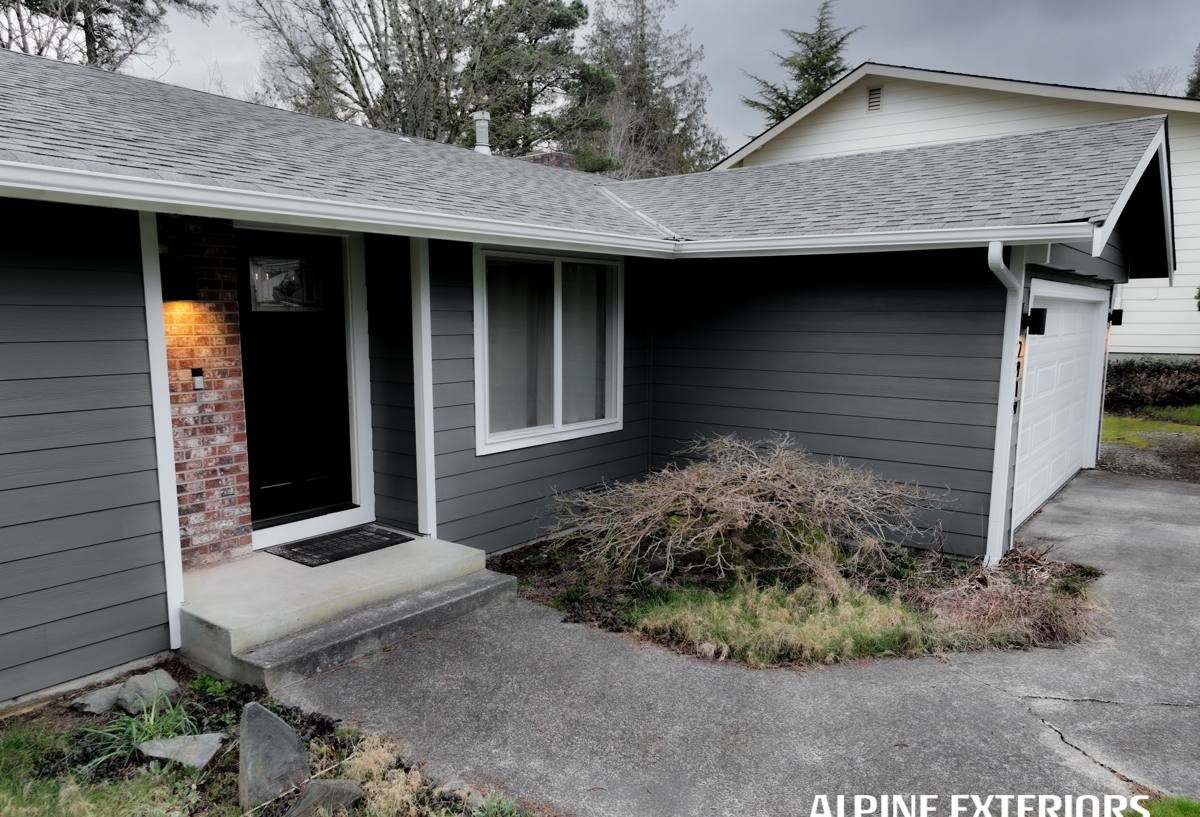
What This Climate Actually Does to Siding
Moisture That Doesn't Fully Dry Between Storms
In a lot of the country, siding gets wet, then gets a stretch of dry, sunny days to shed that moisture completely before the next rain. Whatcom County doesn't reliably offer that. During the wet months, siding can stay damp for days at a stretch — especially on north-facing walls, under eaves with poor overhang, or behind landscaping that blocks airflow. Materials that absorb water and swell, or that trap moisture behind their surface, are working against the clock here in a way they aren't in drier regions.
Moss, Algae, and Constant Shade
The tree cover and cloud cover that make this area beautiful also keep a lot of exterior walls shaded and damp for long stretches. That's exactly the environment moss and algae need to establish. On porous or textured surfaces, spores get a foothold and are hard to fully remove without damaging the material underneath. On a dense, factory-sealed surface, they sit on top and rinse off far more easily.
Salt Air and Corrosion
Deming isn't right on the water, but the marine air off the Sound reaches well inland on prevailing winds, and it doesn't take direct ocean spray to accelerate corrosion on fasteners, flashing, and trim. Over a couple of decades, that steady low-grade salt exposure adds up — it's one more reason the fastener and flashing choices on a siding job matter as much as the siding material itself.
Why We Only Install James Hardie Fiber Cement
We made a deliberate call as a company: we install James Hardie fiber cement siding, and nothing else. Not vinyl, not LP SmartSide, not Cemplank or Allura, not primed spruce or cedar. That's not a marketing angle — it's a standard we set after weighing how each category of product actually performs against weather like Deming's over the long run.
- It's non-combustible. Fiber cement doesn't feed a fire the way wood-based products can, which matters more each year as regional wildfire smoke and dry-season risk increase even here on the wet side of the Cascades.
- It doesn't swell, rot, or delaminate from moisture the way engineered wood products can when they take on water at cut edges or through cracked caulk joints.
- The ColorPlus factory finish is baked on under controlled conditions, not brushed on a jobsite in variable weather — which means better adhesion and a more consistent look over time, plus far less repainting.
- James Hardie engineers regional product lines (HZ5, HZ10) for climate zones like ours, rather than selling one generic board everywhere.
- The warranty is long, transferable, and backed by a company that isn't going anywhere — which matters if you sell the house before the siding's service life is up.
We're not going to tell you vinyl or engineered wood siding is garbage — plenty of it is installed correctly and performs adequately in the right climate. Our position is narrower: for the specific combination of rain, shade, moss pressure, and salt air that Deming and the rest of Whatcom County deal with, fiber cement is the material we're willing to put our name behind and warranty our labor on.
What a Correct Fiber Cement Job Involves in This Area
Fiber cement siding is only as good as its installation. A rushed or generic install erases most of the advantages of the material. In a climate like Deming's, a few details matter more than they would somewhere drier:
Water Management Behind the Siding
Correct installation starts with a drainage plane — house wrap or building paper, properly lapped, with a rainscreen gap where conditions call for it — so any moisture that does get behind the siding has somewhere to go instead of sitting against the wall sheathing. This is arguably more important than the siding material itself.
Flashing at Every Penetration
Windows, doors, hose bibs, light fixtures, deck ledgers — every place something interrupts the wall plane is a place water wants to get in. Proper head flashing, kick-out flashing at roof-to-wall intersections, and correctly lapped weather barrier at every penetration are non-negotiable in a climate that gets this much sustained rain.
Fastening and Clearances to Hardie Spec
James Hardie publishes specific fastener types, spacing, and minimum clearances from grade, roofing, and decking. Cutting corners on clearance from grade or from a roof line is one of the most common ways an otherwise good siding job fails early — it invites splash-back moisture and gives moss a permanent foothold right where you can't easily inspect it.
Caulking and Joint Treatment
Butt joints, corners, and trim transitions need the right sealant, applied correctly, or they become the entry point for the moisture the rest of the install was designed to keep out.
Our Process for a Deming Project
- On-site assessment — we look at your home's specific exposure: which walls take the most weather, where moss has already established, where old flashing or trim is failing.
- Tear-off and sheathing inspection — we don't side over rot or hidden water damage; if we find it during tear-off, we address it before anything new goes up.
- Weather barrier and rainscreen installation — sized and detailed for your home's actual exposure, not a one-size-fits-all wrap job.
- Flashing at every penetration — windows, doors, and roof intersections get individual attention, not just a bead of caulk after the fact.
- Hardie panel or lap installation to manufacturer spec — correct fasteners, correct spacing, correct clearances from grade and roofline.
- Final detailing — trim, caulking, and touch-up to a factory-finish standard.
Cost Factors for a Deming Fiber Cement Project
| Factor | Why It Affects Price |
|---|---|
| Home size and wall complexity | More corners, dormers, and gables mean more cutting, flashing, and labor time |
| Tear-off and disposal | Removing old siding (especially if it's damaged or has hidden rot) adds labor and dump costs |
| Sheathing or framing repair | Moisture-related damage found during tear-off needs to be fixed before new siding goes on |
| Hardie product line and profile | Lap, panel, and shingle-style products differ in material and labor cost |
| Trim and accessory scope | Corner boards, window trim, and fascia work add to the total but tie the whole exterior together |
| Site access | Steep lots, limited driveway access, or heavy landscaping can slow staging and installation |
Why It Matters That We Already Work in This Area
A crew that's done siding work throughout Lynden and the surrounding Whatcom County communities already knows what Deming's weather does to a wall over ten or twenty years — not in theory, but from tear-offs where we've seen exactly where moisture got in and why. That local pattern recognition shows up in small decisions on your job: where we add extra flashing attention even though it's not the most obvious trouble spot, how much rainscreen gap we build in on a north-facing wall, which trim details are worth the extra time given what this climate does to a house.
It also means we're not guessing at code requirements or permitting expectations for the county — we've been through that process before and know what inspectors here are looking for.
A Quick Checklist Before You Hire Anyone
- Ask what weather barrier and rainscreen approach they use, and why.
- Ask them to walk you through their flashing detail at windows, doors, and roof intersections — a vague answer here is a red flag.
- Confirm they're installing fastener types and spacing to the manufacturer's published spec, not "what we always do."
- Ask how they handle sheathing repair if rot turns up during tear-off, and get that answer in writing before work starts.
- Get clarity on what's covered by the material warranty versus the labor/workmanship warranty, and for how long.
- Ask for a written scope that names the specific Hardie product line and profile, not just "fiber cement siding."
If your Deming home's siding is showing moss, chalking paint, soft spots, or you're just planning ahead for a replacement, we're happy to take a look and give you a straightforward, no-pressure estimate — fill out the form below and we'll get in touch.