 Lynden Siding
 James Hardie Siding Built for Kendall's Climate
Kendall homes sit in a part of Whatcom County that puts real, sustained weather pressure on an exterior wall system. Salt-tinged marine air works on fasteners and trim year after year. Rain rarely falls straight down here — wind pushes it sideways into laps, joints, and any gap in the water management hiding behind the siding. And a long moss season settles into shaded, north-facing walls and stays there for months at a stretch. None of that is dramatic on its own, but together it's a longer, tougher-running test on a siding system than most product literature is written to handle.
We install James Hardie fiber cement siding exclusively — no vinyl, no LP SmartSide, no cedar or primed spruce. This page covers what that means specifically for a Kendall home: what the local climate demands of a wall system, what a correct James Hardie installation actually involves, how our process runs from first look to final walkthrough, and why it matters to hire a crew that already works in this area instead of one bidding the job from somewhere else.
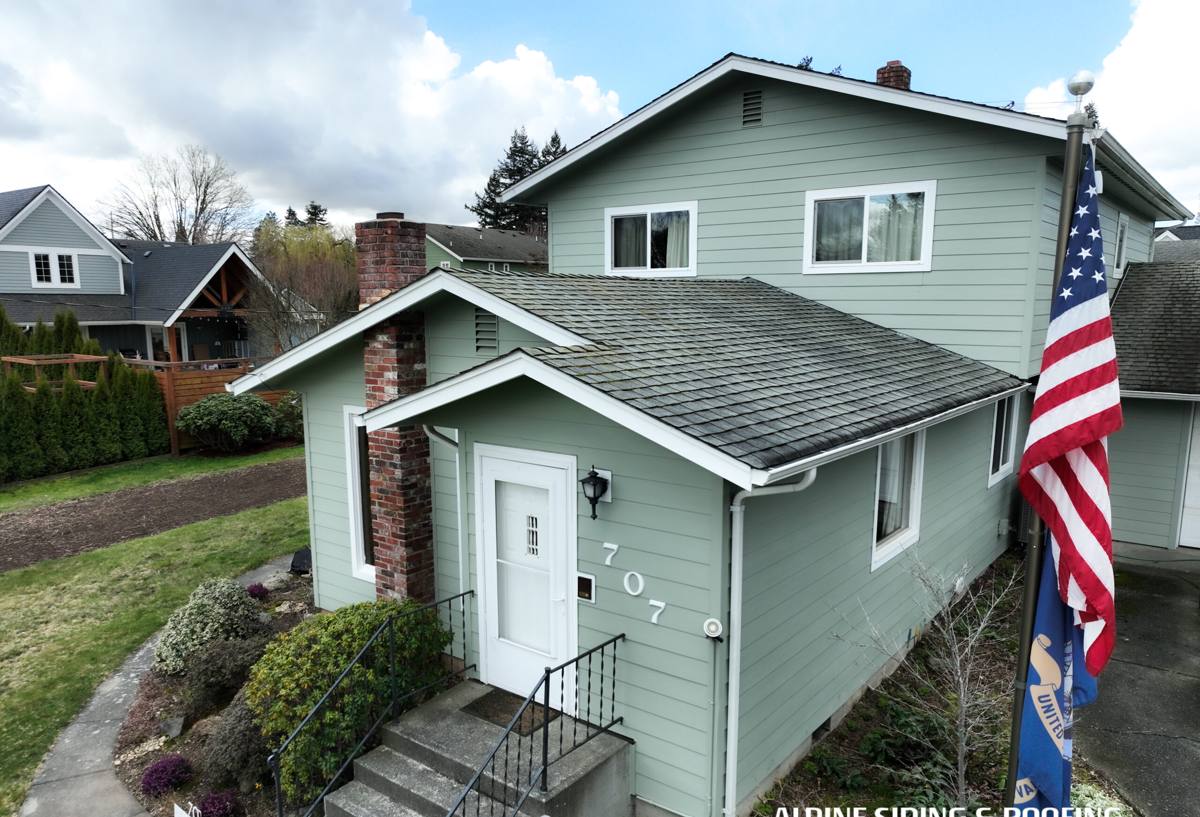
What Kendall's Climate Puts a Siding System Through
Kendall doesn't sit directly on the water, and it's easy to assume that means less exposure. In practice, marine air moves across this whole stretch of Whatcom County regardless of exact distance from the shoreline, and the combination of moisture, wind, and shade does most of the damage over time — not any single dramatic weather event.
Salt Air
Salt-laden air accelerates corrosion on fasteners, flashing, and lower-grade trim hardware, and it breaks down weaker factory finishes faster than a drier inland climate would. That degradation is slow and easy to miss year to year, which is exactly why it needs to be accounted for at the material and hardware level up front, not discovered later.
Driving Rain
Fall and winter rain in this region is rarely a straight-down event. Wind pushes it sideways into lap joints, under trim, and into any seam where the water-resistive barrier or flashing detail isn't right. That sideways load is a harder test on caulked joints and painted surfaces than a simple annual rainfall total would suggest, and it's where a lot of long-term siding problems actually start.
A Long Moss Season
Mild temperatures and steady moisture add up to active moss and mildew growth for most of the year on shaded, tree-lined lots — a description that fits a lot of properties around Kendall. Organic growth on a siding surface holds moisture against the wall behind it, and that trapped moisture is where paint failure, rot, and pest issues tend to originate on organic siding materials.
Why James Hardie Fiber Cement Is the Right Match Here
James Hardie siding is fiber cement: a blend of Portland cement, sand, and cellulose fiber cured into rigid boards and panels. It's an inorganic material, which means it doesn't have a wood-based or petroleum-based core that can absorb water, swell, rot, or feed insects the way organic siding materials can. It's also non-combustible, which is a genuine advantage even in a wet coastal county, and it holds a factory finish differently than wood or vinyl because it doesn't expand and contract with temperature and humidity the way those materials do.
The HZ5 Product Line
James Hardie engineers its siding by climate zone, and the HZ5 line is built for regions with freeze-thaw cycles and sustained moisture exposure — a closer match to Whatcom County's winters than a product engineered mainly for hot, dry markets. That climate-specific engineering is a concrete reason to standardize on this manufacturer rather than treat fiber cement as an interchangeable category.
ColorPlus Factory Finish
Instead of a field-applied paint job, Hardie's ColorPlus finish is baked on in multiple coats in a controlled factory environment before the boards ever reach a Kendall job site. That finish carries its own warranty, separate from the substrate warranty, and it's formulated specifically to resist fading and hold color consistency better than a site-painted finish exposed to salt air and constant UV cycling.
Choosing the Right Hardie Product Line for a Kendall Home
"James Hardie siding" isn't one product — it's a family of profiles, and the right one depends on the home's style, exposure, and how much detail work the elevation calls for. Matching the profile to the house matters as much as the material choice itself.
| Hardie Product | Best Fit For | Notes for Kendall Homes |
|---|---|---|
| HardiePlank lap siding | Traditional and farmhouse-style homes, the majority of the local housing stock | Available in multiple exposures and textures; the most common choice on replacement jobs in this area |
| HardieShingle | Craftsman-style accents, gable ends, dormers | Gives a cedar-shake look without the maintenance burden of real shakes in a damp climate |
| HardiePanel with board-and-batten trim | Modern farmhouse and contemporary styles | Clean vertical lines; needs correct batten spacing and fastening to shed water properly |
| HardieTrim | Fascia, corner boards, window and door trim | Pairs with any of the above; keeps trim material consistent with the field siding's moisture performance |
Color selection matters here too. ColorPlus comes in a standard palette engineered for UV and fade resistance, and darker colors absorb more heat and can show fading differences faster over time than lighter tones — worth weighing against the shaded, tree-covered lots common around Kendall.
What Correct Installation Actually Involves
Fiber cement's reputation depends heavily on installation quality, and that's worth being upfront about rather than pretending the material does all the work by itself. A rushed or out-of-spec install can undercut even the best siding product, and it can also void the parts of the warranty that depend on correct installation.
| Installation Detail | Why It Matters in This Climate |
|---|---|
| Manufacturer clearances from grade, roofline, and decks | Keeps splash-back and standing moisture off the board edge during a wet, high-rainfall season |
| Correct fastener type, spacing, and depth | Prevents cracking and keeps the water-resistive barrier behind the siding intact |
| Flashing at windows, doors, and roof-to-wall transitions | Stops wind-driven rain from tracking behind the siding at the points it most reliably enters |
| Cut-edge sealing on ColorPlus material | Protects the one place on a factory-finished board where the finish isn't already sealed |
| Rain screen or drainage plane behind the siding | Lets incidental moisture drain and dry instead of sitting against the sheathing |
Every one of these details is written into James Hardie's published installation instructions. None of them is optional if you want the product warranty to mean anything if a claim ever comes up.
Cost Factors in a Kendall Siding Replacement
Two bids on the same house can differ by thousands of dollars, and the gap is almost always real scope, not one contractor padding a number. The factors that move a Kendall siding estimate the most:
- Tear-off and sheathing condition: A home with hidden moisture damage behind the old siding needs sheathing repair before new siding goes on — work that only shows up once the old material is off the wall.
- Siding profile and trim complexity: A simple lap-siding box is a faster, cheaper install than a home with multiple gables, dormers, and board-and-batten accents.
- Number of stories and access: Multi-story elevations and tight lot lines add scaffolding, staging, and labor time.
- Window and door count: Every penetration needs correct flashing integration, which adds real labor whether or not it shows up as its own line item.
- Color and finish choice: Standard ColorPlus colors are typically less expensive than custom or premium finish options.
A written estimate should break these out clearly enough that you can see what you're actually paying for, not just a single lump-sum number.
Our Process, Start to Finish
- Site visit and assessment: We look at the existing siding, trim, and any visible moisture or rot signs, and talk through what's realistic once tear-off exposes the sheathing.
- Written estimate: Scope, product line, color, trim details, and warranty terms spelled out in writing before anything is signed.
- Tear-off and sheathing check: Old siding comes off, sheathing gets inspected, and any repair needed is addressed before new material goes on.
- Weather barrier and flashing installation: The moisture management layer goes in first, and we photograph it before it's covered by siding so there's a record of what's behind the wall.
- James Hardie installation to manufacturer spec: Clearances, fastening, and cut-edge sealing all follow published Hardie instructions, not a shortcut version of them.
- Final walkthrough: We review the completed job with you and confirm the site is cleaned up before calling it done.
Why Hiring a Crew That Already Works in Kendall Matters
A crew that regularly works in and around Kendall has already seen how salt air corrodes underspecified fasteners, how wind-driven rain finds its way through a poorly lapped weather barrier, and which elevations and lot conditions hold moss longest through the wet season. That's practical knowledge that shows up in small decisions throughout a job — decisions a crew unfamiliar with this specific climate might not think to make at all.
It also matters after the job is finished. A workmanship warranty is only as good as the company standing behind it, and a contractor with an ongoing, established presence in the area is the one you can actually reach two or three years later if a question comes up.
A Practical Checklist Before You Choose a Siding Contractor
- Does the estimate name the specific Hardie product line and profile, not just "fiber cement siding"?
- Is flashing work at windows, doors, and roof-to-wall transitions explicitly included in the bid?
- Do they carry current WA contractor licensing, liability insurance, and workers' compensation?
- Can they point to recent, real work in or near Kendall and Whatcom County?
- Does the bid separate the manufacturer's product warranty from their own workmanship warranty?
- Will they photograph the weather barrier and flashing before it's covered by siding?
Signs Your Kendall Home's Siding May Already Need Attention
Siding problems in this climate usually build slowly rather than announcing themselves. Worth checking for:
- Soft or spongy spots when you press on the siding, especially near the bottom courses or below windows
- Persistent moss or dark streaking that keeps returning after cleaning
- Visible gaps, warping, or separation at butt joints and corner boards
- Paint that's peeling or bubbling rather than just fading evenly
- Water stains on interior walls near exterior corners, which often trace back to siding or flashing failure well before the damage is visible outside
Any of these is worth a real look before it becomes a sheathing problem instead of a siding problem.
If you're weighing a siding replacement for a Kendall home, or you want an honest read on siding that's already on the house, the estimate is free and there's no pressure attached to it. Use the form below and we'll set up a time to take a look.