 Lynden Siding
 Composite Decking for Kendall's Damp, Tree-Shaded Lots
Kendall sits back from the open water, but that doesn't mean the deck on your house has it easy. Most lots out this way carry heavier tree cover than in-town Lynden, which means more shade, slower drying times, and a longer stretch every year where a deck surface simply doesn't get direct sun. Add in the rain that Whatcom County sees for months at a stretch, and you have exactly the conditions that turn a wood deck green with moss and turn cheap composite boards chalky and faded within a few seasons.
We install composite decking across the whole Lynden service area, and Kendall projects come with their own pattern: lower, shadier framing, damp crawl spaces under the deck, and homeowners who are done replacing pressure-treated boards every few years. A composite deck done right out here isn't just about picking a good board — it's about building the structure underneath so the board can actually perform the way it's supposed to.
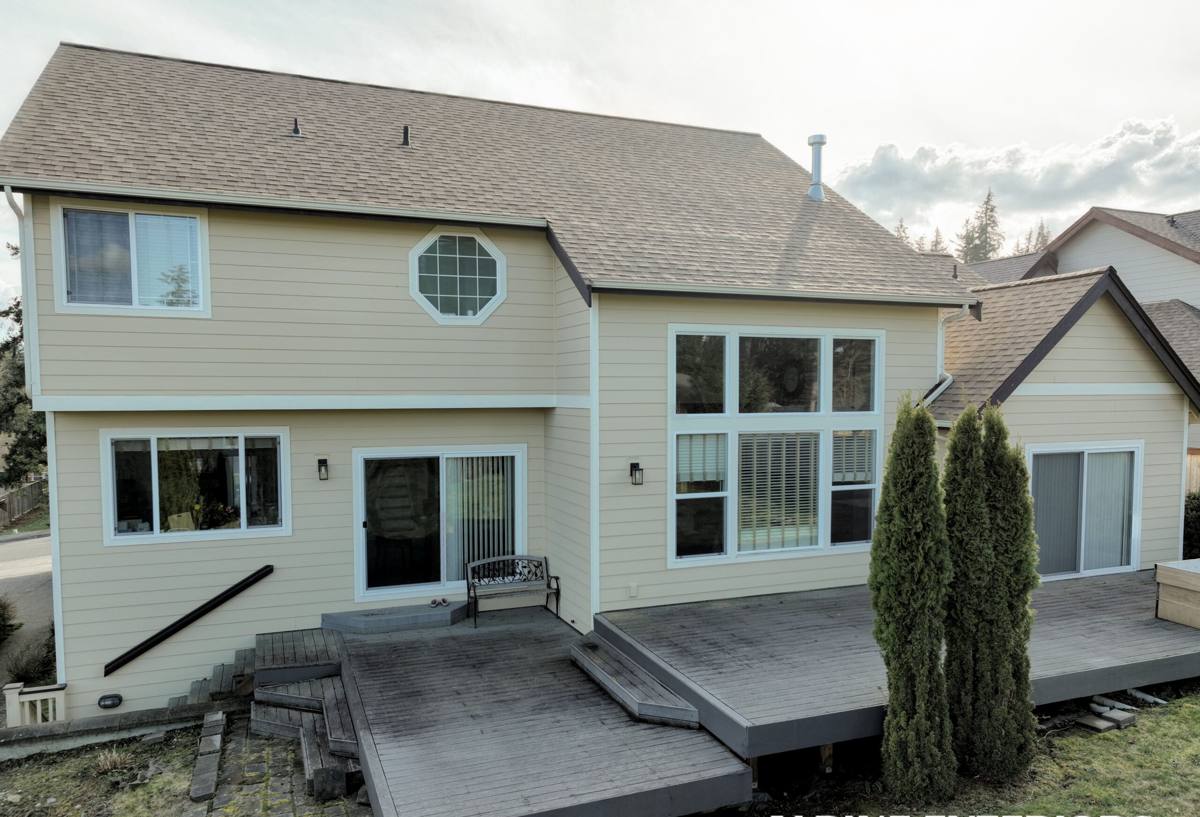
What Whatcom County Weather Actually Does to a Deck
It helps to be specific about what's working against a deck in this part of the county, because it changes how we build.
Driving Rain and Standing Moisture
Rain here doesn't just fall straight down — wind-driven rain gets up under rail caps, into fastener holes, and along ledger boards. Over time, water that can't drain or dry out is the single biggest cause of deck failure, whether the surface material is wood or composite. The composite boards themselves resist rot, but the framing, fasteners, and flashing underneath still need to shed water correctly.
The Long Moss Season
Whatcom County effectively has a moss season that runs from fall through spring, and shaded Kendall lots often extend it further. Moss and algae need moisture and low light to establish, and a deck tucked under trees or on the north side of a house gives them both. Once moss gets a foothold in board grooves or between boards, it holds moisture against the surface and becomes a slip hazard.
Salt Air and Corrosion, Even Inland
Areas closer to the water deal with salt air accelerating corrosion on fasteners, brackets, and railing hardware. Even on the more inland, wooded lots around Kendall, the same damp marine air moves through the county and slowly works on unprotected metal. It's one more reason we don't cut corners on hardware just because a house isn't on the water.
What a Correct Composite Deck Installation Actually Involves
The composite board is the part homeowners see and shop for, but it's maybe a third of what determines whether the deck lasts. Here's what we hold ourselves to on every job:
- Ledger flashing done properly — the ledger board attachment to the house is the single most common source of hidden rot on any deck. Correct flashing keeps water from tracking behind the siding and into the rim joist.
- Joist spacing matched to the board — composite boards have manufacturer-specified maximum joist spacing, and it's often tighter than what you'd use for wood. Running joists too far apart leads to bounce and, eventually, board sag.
- Joist tape or joist protection — a protective tape over the top of each joist keeps rainwater from sitting in the wood fibers where deck screws penetrate, which matters even more under shaded, slow-drying trees.
- Stainless or coated fasteners — hardware that's rated for the moisture and, where relevant, the salt-tinged air this region carries, not generic exterior screws.
- Proper board gapping — composite expands and contracts with temperature more than people expect. Gapping it correctly at installation prevents buckling later and keeps drainage gaps open instead of closing them off.
- Ventilation underneath — low decks built close to grade need enough airflow underneath to let moisture escape instead of collecting in a damp, shaded pocket.
Skip any one of these and the board itself — even a good one — won't perform the way its warranty assumes it will.
Composite vs. Wood vs. PVC: An Honest Comparison
We install more than one type of decking, and each has real trade-offs. Here's how they stack up for a Kendall-style lot with shade and consistent moisture:
| Material | Moisture Behavior | Maintenance | Moss/Algae Resistance | Typical Lifespan |
|---|---|---|---|---|
| Pressure-treated wood | Absorbs water, prone to swelling/checking | Annual staining or sealing recommended | Low — porous surface holds moisture | 10–15 years before major repair |
| Capped composite | Shell resists moisture absorption | Periodic washing only | Moderate to good, depends on surface texture | 25–30+ years |
| Uncapped composite | Some moisture uptake at cut edges/surface | More frequent cleaning; more prone to staining | Lower than capped versions | 15–20 years |
| PVC/cellular decking | Essentially non-absorbent | Low | Good | 25–30+ years |
For most Kendall homes we recommend capped composite as the sweet spot: it holds up to constant dampness and shade far better than wood without the higher cost of full PVC systems, and it doesn't demand the yearly upkeep that keeps a lot of homeowners from ever getting ahead on deck maintenance.
Cost Factors on a Composite Deck Project
We don't quote firm numbers without seeing the site, but these are the variables that actually move the price on a Kendall job:
| Factor | Why It Matters |
|---|---|
| Deck height and grade slope | Elevated decks and sloped lots need more substructure and sometimes engineered footings |
| Existing framing condition | Reusing sound joists costs less than a full tear-out and rebuild |
| Board tier (capped vs. uncapped, PVC) | Material cost per square foot varies significantly by product line |
| Railing system | Composite or metal rail systems cost more than basic wood rail but need less upkeep |
| Access for equipment and material delivery | Tighter, wooded, or sloped lots common around Kendall can add labor time |
| Permit and inspection requirements | Height, size, and attachment to the house can all trigger permit review |
How Our Process Works
- On-site assessment. We look at existing framing, grade, drainage, and sun/shade exposure specific to your lot.
- Material selection. We walk through board tiers and color options with the moisture and shade profile of your yard in mind, not just what looks good in a showroom.
- Permit handling. Where required, we manage the permit application and inspection scheduling with Whatcom County or the applicable jurisdiction.
- Demolition and framing. Old decking is removed, framing is inspected and repaired or rebuilt as needed, and ledger flashing is corrected if it isn't already right.
- Installation. Joist protection, correct fastener selection, proper board spacing, and manufacturer-specified installation methods for the product chosen.
- Final walkthrough. We go over care basics with you before we consider the job done — not just handing over an invoice.
Keeping a Composite Deck Clear of Moss and Algae
Composite doesn't rot, but it isn't maintenance-free, especially under Kendall's tree cover. A simple seasonal routine keeps it looking right and keeps the surface safe underfoot:
- Sweep leaves and debris off regularly — trapped organic matter is what feeds moss and algae growth in the first place
- Wash the deck surface once or twice a year with a soft-bristle brush and a cleaner made for composite (avoid pressure washers on close settings, which can damage the cap layer)
- Clear debris out of the gaps between boards so water keeps draining the way it's designed to
- Trim back overhanging branches where possible to let more light and airflow reach the deck surface
- Check railing hardware and fasteners periodically for corrosion, especially on decks closer to open water
Permits and Practical Considerations for Kendall Properties
Many Kendall properties sit on larger, more rural lots than in-town Lynden, which sometimes means septic systems, wells, or setback rules factor into where a deck can go and how footings are placed. We check these details during the site assessment rather than assuming a standard suburban lot layout, and we handle the permit process so you're not the one tracking down paperwork.
Why Hire a Crew That Already Works in Kendall
A contractor who mostly works drier, more open sites in town can still build a technically fine deck — but they may not think to ask about shade patterns, tree drip lines, or how a particular lot drains after a wet week. We work throughout the Lynden area, including the Kendall foothill lots, and we build with the assumption that a deck out here will spend more of the year damp than dry. That changes small decisions — joist tape, fastener grade, board gapping, ventilation clearance underneath — that don't show up on a spec sheet but show up in how the deck looks and performs five and ten years out.
If you're planning a new composite deck or replacing a tired wood one at your Kendall property, we're happy to walk the site with you and give you a straight, no-pressure estimate. There's a form below to get that scheduled.