 Lynden Siding
 Kendall's Climate Puts Real Demands on Siding
Kendall sits along the route that carries Whatcom County traffic up toward the Mount Baker foothills, which means more tree cover, more shaded lots, and more acreage than you'll typically find on an in-town Lynden street. That changes how a house dries out after weather moves through. Marine-influenced moisture off the Pacific pushes inland through the county all winter, driving rain comes in sideways during a frontal system, and on a shaded, tree-lined lot the sun often doesn't hit the walls long enough to fully dry them between storms. That combination — moisture, wind-driven rain, and slow drying — is exactly the environment that exposes cheap siding or a sloppy installation.
Moss and algae are the most visible symptom. On a shaded wall in Kendall, growth collects in butt joints, along the bottom edge of each course, and anywhere a bead of caulk has failed and let water sit instead of shed. It's not only a cosmetic problem. Moisture that stays against a wall long enough eventually finds a way behind the cladding, and that's where the real damage starts — trapped water rotting sheathing and framing behind siding that still looks fine from the driveway. The siding you choose, and how it's installed, determines whether that moisture sheds or sits.
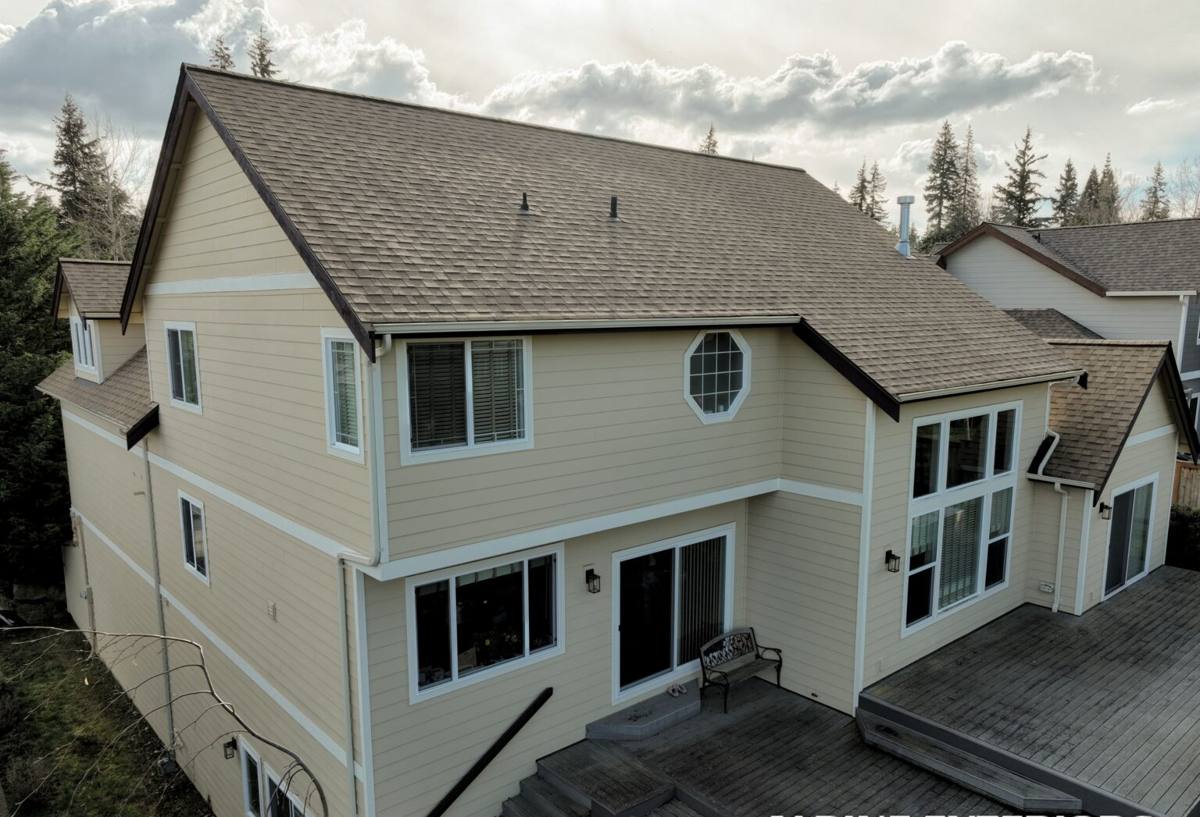
Why Fiber Cement Is the Right Call for Kendall Properties
Wooded Lots and Wildfire-Adjacent Exposure
Many Kendall properties sit on larger, tree-covered lots closer to the forested foothills than a typical in-town lot. That's more than a shade and moss issue — it also means embers and radiant heat from a nearby wildland fire are a real, if infrequent, possibility. Fiber cement siding is non-combustible. That's a meaningful difference from vinyl, wood, or engineered wood products when a home backs up to timber. We're not promising fire insurance discounts or making claims about what will or won't burn in a given fire — we're saying that when you're cladding a property near forested land, non-combustibility is one more honest, practical reason fiber cement earns its keep.
Low Maintenance for Larger, More Rural Properties
On a bigger lot with more wall area and less foot traffic past the house, siding maintenance tends to fall down the priority list — which is exactly when a maintenance-heavy material becomes a liability. Wood needs recoating on a schedule whether or not anyone's watching. Fiber cement with a factory-applied finish doesn't. That matters more on a rural Kendall property than it does on a small in-town lot where the siding is easy to keep an eye on.
What a Correct Fiber Cement Installation Actually Involves
Drainage Plane and Rainscreen Gap
Fiber cement is a rain-screen material, not a waterproof membrane — it's designed to shed the bulk of the water while a water-resistive barrier behind it manages what gets past. On a shaded, slow-drying wall like the ones common around Kendall, that gap and drainage plane matter even more than usual, because whatever moisture does get behind the siding needs a clear path to drain and dry rather than sitting against damp sheathing under tree cover.
Fastening and Flashing
Every penetration — windows, doors, hose bibs, light fixtures — needs proper flashing and integration with the water-resistive barrier, not just a bead of caulk over the gap. Fastener placement and spacing follow the manufacturer's installation instructions exactly, because over- or under-driven fasteners are one of the more common causes of early failure, cracking, and voided warranties on fiber cement jobs.
Factory Finish, Not Field Paint
James Hardie's ColorPlus finish is baked on in a factory-controlled process, which gives it better adhesion and UV resistance than a coat of paint applied on site after installation. We install pre-finished ColorPlus product wherever the color selection allows it, rather than painting in the field, because factory finish is simply a more durable, more consistent result — particularly on a shaded wall where the finish has less sun exposure to help it cure evenly.
Fiber Cement vs. the Alternatives in Kendall's Conditions
| Factor | Fiber Cement (James Hardie) | Vinyl | Wood / Cedar |
|---|---|---|---|
| Behavior in sustained damp, shaded conditions | Engineered to resist moisture damage; won't rot | Won't rot, but can warp or bow with temperature swings | Absorbs moisture; rot and moss growth over time |
| Combustibility | Non-combustible | Melts/deforms under heat | Combustible |
| Maintenance on a shaded lot | Occasional wash; factory finish holds up | Low, but color fades and can chalk | Regular recoating/staining required |
| Typical lifespan when correctly installed | Decades, with a strong transferable warranty | Decades, but brittle with age | Shorter without diligent upkeep |
| Appearance options | Wide range of factory colors and profiles | Limited texture, can look plastic up close | Natural look, but fades and grays without maintenance |
The James Hardie System We Install
We install James Hardie fiber cement exclusively — no LP SmartSide, no vinyl, no Cemplank or Allura, no primed spruce or cedar. That's a deliberate standard, not a limitation on options. Hardie's HZ product lines are engineered for specific climate zones, and the products specified for the Pacific Northwest are built for exactly the moisture exposure Whatcom County sees. For a Kendall home, that typically means HardiePlank lap siding for the field of the house, HardiePanel where a vertical or board-and-batten look is wanted, and Hardie trim boards around openings and corners — all finished in ColorPlus factory color, backed by Hardie's transferable limited warranty when installed to their specifications.
We stand behind one manufacturer's system because mixing brands or improvising with off-spec trim and flashing details is how warranties get voided and how small installation mistakes turn into moisture problems years later. One system, installed correctly, is a more honest promise than a lower bid built on a cheaper substitute.
Our Process, From Estimate to Finished Job
- On-site assessment. We look at your existing siding, sheathing condition where accessible, moisture patterns specific to your lot (shade, drainage, tree cover), and any rot or damage that needs to be addressed before new siding goes on.
- Written estimate. A clear scope covering product line, trim details, color, and what's included — tear-off, disposal, house wrap, flashing, and installation.
- Prep and tear-off. Removal of existing siding, repair of any damaged sheathing or framing found underneath, and correction of the water-resistive barrier and flashing before a single piece of new siding is hung.
- Installation to Hardie spec. Proper fastener pattern, rainscreen gap, and flashing at every penetration, following the manufacturer's instructions rather than shortcuts.
- Final walkthrough. We go over the finished work with you, caulk lines, trim, and touch-ups included, before calling the job complete.
What Fiber Cement Siding Costs in Kendall — and What Moves the Number
| Cost Factor | Why It Matters on a Kendall Property |
|---|---|
| Lot access and acreage | Longer driveways and larger rural lots can add setup and material staging time compared to a compact in-town lot |
| Existing siding removal | Tear-off and disposal of old wood, vinyl, or aluminum siding adds labor before new material goes up |
| Sheathing or framing repair | Shaded, damp walls are more likely to have hidden moisture damage that needs fixing before re-siding |
| Trim and architectural detail | Corner boards, window trim, and any board-and-batten accents add labor beyond a plain lap-siding wall |
| Product line and profile | HardiePlank, HardiePanel, and specialty profiles carry different material costs |
| Color | Standard ColorPlus colors versus custom or premium selections affect price |
We give a written, itemized estimate before any work starts — no ballpark guesses that change once the crew shows up.
Keeping Fiber Cement Siding Looking Right in a Shaded, Wet Climate
- Rinse siding with a garden hose and soft brush once or twice a year, more often on heavily shaded walls where moss tends to collect
- Keep gutters clear so overflow doesn't run down the wall behind the siding
- Trim back branches and vegetation that keep a wall shaded and damp longer than it needs to be
- Check caulk joints around windows, doors, and trim annually and have any cracked or failed sections redone
- Look at the bottom courses near grade for splash-back staining or standing water, and correct drainage or grading issues early
- Avoid pressure washing directly into joints and edges, which can force water behind the siding instead of just cleaning the surface
Why Hiring a Crew That Already Works in Kendall Matters
A siding job in Kendall isn't quite the same job as one two miles away on an open, sunny lot in town. A crew that already works this part of Whatcom County knows to plan around shaded, slower-drying walls, understands the access challenges of larger rural properties, and has already dealt with the moss and moisture patterns specific to tree-covered lots near the foothills. That local familiarity shows up in small decisions — how the rainscreen gap is detailed, where extra flashing attention goes, how the schedule accounts for weather — that a crew unfamiliar with the area might miss.
It also means we're around after the job is done. We install James Hardie fiber cement because it's the product we're willing to stand behind for the long haul, and standing behind it means being a local business you can actually reach if a question comes up five or ten years down the road.
If you're weighing a siding replacement on a Kendall property, we're happy to come take a look and give you a straightforward, no-pressure estimate — no obligation, just an honest read on what your home needs.