 Lynden Siding
 Kendall's Climate Puts Real Demands on Siding
Kendall sits in the rural stretch of Whatcom County northeast of Lynden, tucked against the foothills where the tree cover is heavier and the air stays damp longer into the day than it does out on the open flats. That matters more than most homeowners realize when it comes to exterior siding. Whatcom County as a whole deals with a long, low-intensity rain season, moisture-laden air moving in off the Salish Sea, and stretches of overcast weather that can keep siding surfaces wet for days at a time. Around Kendall specifically, the tree canopy and lower afternoon sun exposure on many lots extend that dampness window even further.
The practical result is a longer moss and algae season than you'd see in a drier inland climate, more cycles of a material getting wet and drying out, and more opportunity for water to find its way behind siding that wasn't installed with tight flashing and drainage in mind. None of this means siding fails fast here — it means the margin for installation error is smaller. A product or a install method that would coast along fine in a dry climate gets tested every single wet season in Kendall.
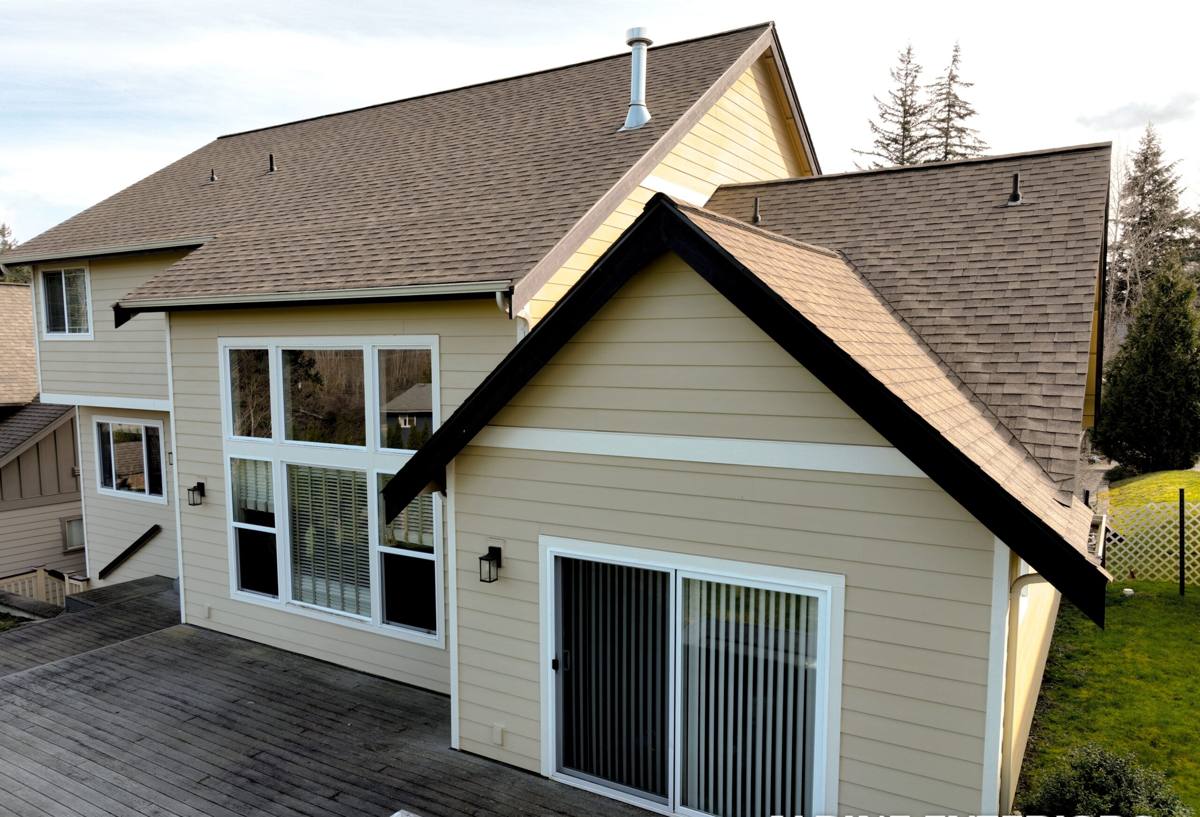
Why This Is a Local Job, Not a Generic One
A siding installation on a shaded, tree-lined Kendall property is a different job than the same product going up on an open, sun-exposed lot closer to town. Shaded homes hold moisture longer on the north and west-facing walls, moss establishes faster on horizontal trim and lower courses, and gutters and downspouts have to work harder because there's more standing tree debris to manage. We adjust installation details for that: closer attention to ground clearance, drip-edge placement, and how siding terminates at grade so splash-back and standing moisture don't sit against the bottom courses year-round.
We also see a lot of older Kendall homes with siding that was correct for its era but was never designed for the moisture load it's carried for 20 to 40 years. Old cedar, old hardboard, and aging vinyl show their age here faster than in drier parts of the state. Replacing that siding is an opportunity to fix the underlying moisture management, not just swap the surface material.
What a Correct Siding Installation Actually Involves
Siding installation is often talked about like it's just fastening boards to a wall. It isn't. A correct installation is a system, and every layer matters as much as the visible siding itself.
Tear-Off and Wall Inspection
We remove the old siding down to the sheathing and actually look at what's underneath — soft spots, past water staining, rot around window and door openings, and any sheathing that's already compromised. In a climate like Kendall's, hidden moisture damage behind old siding is common enough that we treat this step as mandatory, not optional. Anything soft or damaged gets repaired or replaced before a single new panel goes up.
Weather-Resistive Barrier
A properly lapped, correctly fastened weather barrier goes over the sheathing before siding starts. This is the layer that actually keeps bulk water out of the wall assembly if anything gets past the siding itself — and in a high-rainfall area it's not a place to cut corners or reuse a barrier that's already been sitting exposed and degrading.
Flashing at Every Penetration
Windows, doors, hose bibs, vents, light fixtures — every penetration through the wall is a potential entry point for water. Correct flashing, integrated with the weather barrier in the right shingle-lap order, is what actually stops leaks. This is also the step most commonly rushed or skipped by crews that don't specialize in this climate.
Fastening and Clearances
Fiber cement siding has manufacturer-specified fastener patterns, penetration depth, and minimum clearances from grade, roofing, and decks. Getting these wrong doesn't usually cause an immediate problem — it causes a problem in year six or year ten, which is exactly the kind of failure that's hardest to trace back to the install.
Caulking and Finish Details
Joints, trim intersections, and butt seams get sealed with the right sealant, applied correctly — not just run down every visible seam. Over-caulking can trap moisture as often as under-caulking lets it in.
Why We Install Only James Hardie Fiber Cement
We standardized on James Hardie siding for every job we do, including here in Kendall, and we don't install vinyl, LP SmartSide, cedar, primed spruce, Cemplank, or Allura. That's a deliberate call, not a brand preference.
Fiber cement from James Hardie is non-combustible, doesn't swell or rot the way wood-based products can when they take on repeated moisture, and holds its shape and paint line better through the kind of wet-dry cycling Whatcom County sees all year. Hardie's HZ5 product line is engineered specifically for climates with heavy moisture exposure — which describes Kendall well. The factory-applied ColorPlus finish is baked on under controlled conditions, so it resists the fading and peeling that field-applied paint struggles with in a climate that doesn't give paint many fast-drying days. Hardie also backs the product with a strong, transferable warranty, which matters on a material that's meant to be a 30-to-50-year exterior, not a 10-to-15-year one.
We're not going to tell you every other siding product is unusable — plenty of homes around the country wear vinyl or engineered wood siding without incident. But for the specific combination of rain volume, shade, and moss pressure that Kendall properties deal with, we decided fiber cement done correctly is what we're willing to put our name behind. If a homeowner wants a different product, that's a conversation for a different contractor.
How Our Process Works
| Step | What Happens | Why It Matters in Kendall |
|---|---|---|
| On-site assessment | Walk the property, check current siding condition, moisture history, shade patterns, and grading | Identifies moisture-prone walls before tear-off starts |
| Written estimate | Scope, materials, and price broken out clearly | No surprise change orders mid-job |
| Tear-off and sheathing check | Old siding removed, sheathing inspected and repaired as needed | Catches hidden rot common on older, shaded homes |
| Weather barrier and flashing | New barrier installed, all penetrations flashed and integrated | The actual line of defense against Whatcom County's rain volume |
| Hardie installation | Panels or lap siding installed to manufacturer spec, correct fasteners and clearances | Ensures the warranty stays valid and the wall performs long-term |
| Trim, caulk, and final finish | Trim installed, joints sealed, site cleaned up | Clean lines and sealed details that hold up through repeated wet seasons |
| Final walkthrough | Owner walkthrough before we consider the job done | Nothing gets called finished until it's actually right |
What Siding Installation Costs Depend On
We're not going to quote a number here because every house is different, but these are the real factors that move the price on a Kendall siding job:
| Factor | Why It Affects Cost |
|---|---|
| Home size and wall complexity | More square footage and more corners, gables, and dormers mean more labor and material cuts |
| Current siding condition | Hidden rot or sheathing damage found at tear-off adds repair time |
| Siding profile chosen | Lap siding, board-and-batten, and shingle-style Hardie products carry different material and labor costs |
| Trim and detail work | Window and door trim, corner boards, and fascia detailing add time |
| Site access | Steep or wooded Kendall lots can slow staging and material handling |
| Existing moisture damage | Rot repair, re-flashing, or sheathing replacement is priced separately from the siding itself |
Signs a Kendall Home Needs New Siding
- Persistent moss or algae growth that comes right back after cleaning, especially on shaded walls
- Soft spots or visible give when you press on the siding near the bottom courses or under windows
- Paint that's peeling, bubbling, or chalking faster than it should between repaints
- Visible gaps, warping, or cupping in lap siding boards
- Staining or discoloration that tracks with window and door trim, suggesting a flashing failure
- Rising heating bills with no other explanation, which can point to a wall assembly that's no longer sealing properly
- Siding that's original to a home built more than 25-30 years ago and has never been replaced
Why a Crew Already Working Kendall Matters
A contractor who works Kendall regularly already knows which walls on a typical lot here take the worst of the shade and moisture, how far back most homes sit from the road, and what the seasonal rain pattern does to a job schedule. That's not marketing — it changes real decisions on site, like where extra flashing attention goes, how tear-off is sequenced around weather windows, and what to flag during the initial walk that a crew unfamiliar with the area might miss. It also means a straight answer when you call back two years later with a question, instead of chasing down a company that did one job in the area and moved on.
We also stand behind installation as much as the material. James Hardie's product warranty covers the siding itself, but a warranty doesn't fix water damage caused by a flashing detail that was done wrong. Correct installation is what keeps both the product warranty and the wall assembly behind it doing their job for decades, not just years.
Caring for New Siding Through Whatcom County's Wet Seasons
Once new Hardie siding is up, it doesn't need much — that's part of the point. A yearly rinse-down to knock off accumulated moss spores and debris, keeping gutters clear so water isn't sheeting down the wall face, and trimming back vegetation that's crowding the siding are the main maintenance items. Because the ColorPlus finish is factory-applied, you're not on a repainting schedule the way you would be with field-painted wood siding — that alone removes one of the biggest recurring costs of owning a home in a climate this wet.
If you're planning a siding replacement in Kendall or anywhere else around Lynden, we're happy to walk the property, look at what's actually going on with your current siding, and give you a straight, no-pressure estimate — fill out the form below to get started.