 Lynden Siding
 Kendall's Weather Is Harder on Siding Than It Looks
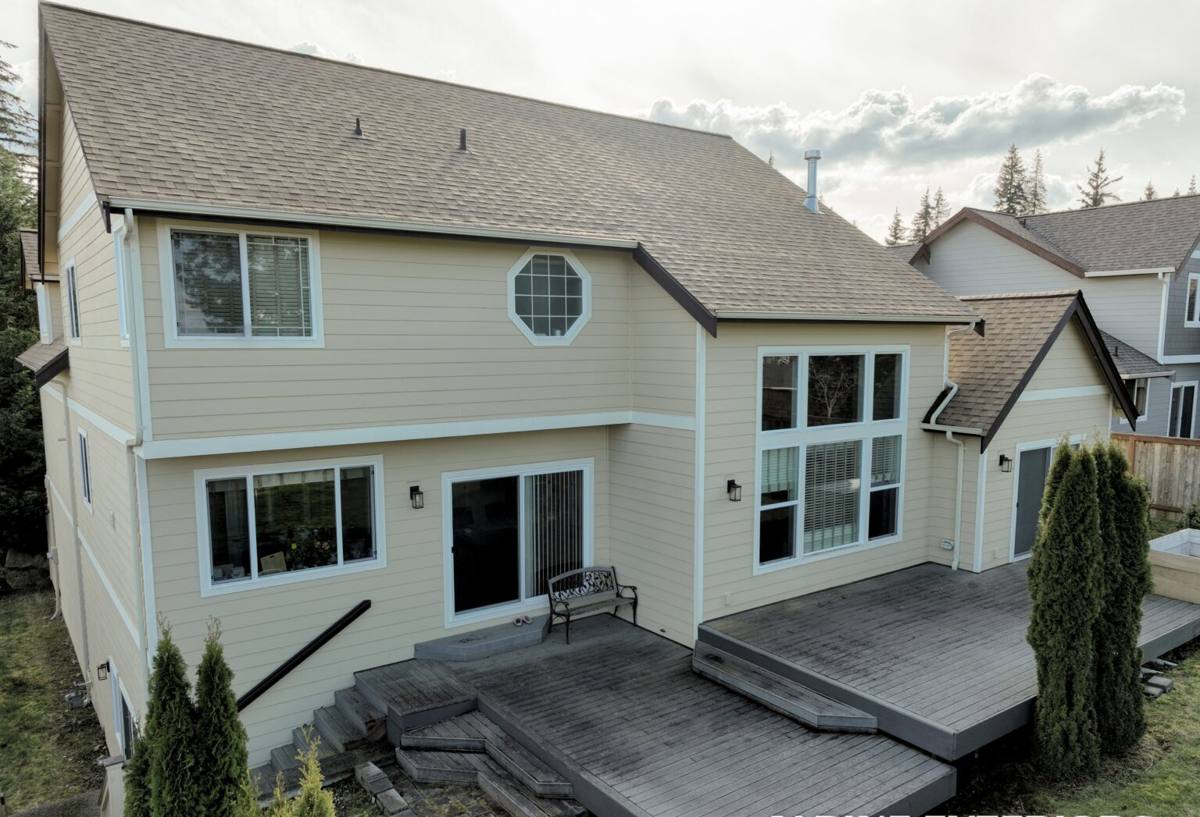
Kendall sits in one of the wetter, greener pockets of Whatcom County, and that's exactly why siding here ages differently than siding in drier parts of the state. Homes out this way deal with a long stretch of the year under cloud cover, regular driving rain that hits walls at an angle instead of straight down, salt-tinged marine air moving inland off the Sound, and a moss season that can run for months at a time. None of that is dramatic on its own. It's the accumulation — season after season — that eventually shows up as soft trim, bubbling paint, or siding that's quietly failing behind a finish that still looks okay from the driveway.
That's the difference between a siding repair call in Kendall and one somewhere drier: by the time damage is visible here, there's usually a history of moisture behind it. A repair that only addresses what's visible on the surface tends to come back. A repair that accounts for how this climate actually behaves tends to last.
What Salt Air, Driving Rain, and Moss Season Actually Do to a Wall
Moss and Organic Growth
Moss doesn't just sit on top of siding and look bad — it holds moisture against the surface long after a storm has passed. On wood-based products, that constant damp contact softens fibers over time. On any siding, moss and algae buildup in laps, seams, and corners traps water exactly where it shouldn't be, which is often the first place a small problem turns into rot.
Driving Rain and Wind-Driven Moisture
Rain that comes in at an angle finds its way past gaps that vertical rain never would. Caulked joints, exposed nail heads, poorly lapped seams, and butt joints without proper flashing are all places driving rain can work its way behind the siding. Once water gets behind the cladding, it needs somewhere to go — and if the drainage plane or house wrap underneath has failed or was never installed correctly, that water just sits there.
Salt-Laden Marine Air
Whatcom County's proximity to the Sound and the Strait means the air carries more salt and moisture than you'd get further inland. Over years, that accelerates corrosion on fasteners, trim, and any metal flashing components, and it speeds up the breakdown of paint and caulk. It's a slow effect, but it's a real one, and it's part of why generic, one-size-fits-all repair work underperforms out here.
Signs a Kendall Home Needs Siding Repair — Not Just Paint
Most homeowners call us because something looks off, not because they've diagnosed the cause. Here's what we tell people to actually check for before assuming a fresh coat of paint will solve it:
- Soft or spongy spots when you press on the siding, especially near the bottom courses or below windows
- Paint that's bubbling, peeling, or cracking in the same spots repeatedly, even after repainting
- Visible gaps at seams, corners, or trim joints where caulking has shrunk or pulled away
- Moss or dark staining concentrated in one area rather than spread evenly across the wall
- Warping, bowing, or siding that no longer sits flat against the wall
- A musty smell or visible staining on interior walls that share an exterior wall with damaged siding
- Fastener heads that are rusting, popping, or streaking rust down the face of the siding
Any one of these can be minor. Several together, especially in one concentrated area, usually mean there's moisture doing damage you can't see yet from the outside.
Repair or Replace? How We Make the Call
Not every damaged section needs a full re-side, and we're not going to tell a Kendall homeowner they need a whole new exterior when a targeted repair will hold up. But there's a point where patching stops making sense. Here's how we generally think about it:
| Factor | Repair usually makes sense | Replacement usually makes sense |
|---|---|---|
| Extent of damage | Isolated to one wall, corner, or a handful of boards | Spread across multiple walls or found in several unrelated areas |
| Underlying moisture barrier | Intact and functioning behind the damaged section | Compromised, missing, or unknown due to age/original install quality |
| Age of existing siding | Well within its expected service life | Nearing or past the end of its practical lifespan |
| Material match | Product is still available or a close match exists | Product is discontinued or visibly mismatched once patched |
| Pattern of failure | One-time event (impact damage, a single failed seam) | Recurring failure in the same areas year after year |
We'll walk the whole exterior, not just the area you called about, because a repair that ignores a failing moisture barrier a few feet away is a repair that's going to need a follow-up visit sooner than it should.
What a Correct Siding Repair Actually Involves
A repair that's done right is not just pulling off a bad board and nailing up a new one. On a Kendall home, given the moisture load this area sees, a proper repair typically includes:
- Removing enough surrounding material to see the full extent of the damage, not just the visible spot
- Checking the house wrap or building paper underneath for tears, gaps, or improper lapping
- Confirming flashing at windows, doors, and butt joints is directing water outward, not trapping it
- Replacing any damaged sheathing or framing found underneath, not just covering it back up
- Re-installing with correct fastener spacing, penetration depth, and clearance from the ground and hard surfaces
- Matching or replacing trim and caulking at a standard that will actually hold up to driving rain
Skipping any of these steps is how you end up with a repair that looks fine for a season or two and then fails again in the exact same spot. We'd rather tell a homeowner the truth about what a section needs than do a quick patch that doesn't address what caused the damage in the first place.
Why We Repair and Rebuild With James Hardie Fiber Cement Only
When a repair calls for new siding material — whether it's a few boards or a full wall — we use James Hardie fiber cement, and we don't stock or install alternatives like vinyl, LP SmartSide, Cemplank, Allura, or primed wood siding. That's a deliberate standard, not a lack of options.
Fiber cement doesn't feed the moss and rot cycle the way wood-based products can, because it's not an organic material for moisture to break down. It's non-combustible, which matters as a long-term durability factor independent of climate. And Hardie's ColorPlus factory finish is baked on under controlled conditions rather than field-applied, which gives it a more consistent, longer-lasting bond than site-painted trim — something that matters a lot in a climate that's hard on exterior paint to begin with. Hardie also engineers regional product lines (HZ5 for areas like ours) specifically for wetter climates, which is a level of climate-specific engineering the alternatives we don't install simply don't offer.
That's also why we're cautious about "just patch it with whatever's already up there." If a home currently has vinyl, LP, or another product we don't install, we'll say so plainly and explain the honest trade-offs — we're not going to pretend those products are unusable, but we're not going to install more of them either. In many repair situations, that means either a like-for-like patch done by someone who works in that material, or transitioning the repaired section (or the whole elevation) to Hardie so it's not fighting the same moisture and maintenance issues again in a few years.
Our Process for Kendall Homeowners
- Walk-through and assessment. We look at the reported problem area and the rest of the exterior, since siding damage in this climate is rarely isolated to just one spot.
- Diagnose the cause, not just the symptom. We check what's happening behind the siding — moisture barrier, flashing, drainage — before deciding on a repair scope.
- Honest recommendation. We tell you plainly whether it's a targeted repair, a larger section replacement, or something that's better addressed as a full re-side, and why.
- Written scope and estimate. No surprise add-ons mid-project; if we find something once we open the wall, we show you before proceeding.
- Repair executed to spec. Correct fastener technique, proper flashing and moisture barrier work, and material matched as closely as possible.
- Final walk-through. We confirm the repair with you before we consider the job done.
Why a Crew That Already Works This Area Matters
Siding repair is one of those trades where local familiarity actually changes the outcome. A crew that regularly works Kendall and the surrounding Lynden area already knows how this microclimate treats different products and installation details — where moss tends to build up fastest, which orientations take the worst of the driving rain, and what a five-year-old repair versus a fifteen-year-old original install typically looks like out here. That's not something you get from a crew that mostly works drier inland areas or does a handful of repairs a year as a side service.
It also means practical things for you as a homeowner: someone who can look at a damaged section and give you a straight answer about whether it's isolated or a sign of something bigger, someone who shows up when they say they will, and someone who's still around if the repair needs a follow-up look. For a job that's fundamentally about stopping moisture before it becomes a bigger problem, that local track record is worth as much as the materials.
Cost Factors to Understand Before You Call
Every repair is different, and we're not going to throw out a number without seeing the damage. But these are the main factors that drive cost on a typical siding repair job in this area:
| Factor | How it affects cost |
|---|---|
| Size of the affected area | A single board versus a full wall changes both material and labor scope |
| Condition behind the siding | Sheathing or framing repair adds cost beyond the siding itself |
| Material match | Matching existing color/profile can be straightforward or require custom work |
| Access | Second-story or hard-to-reach sections require more setup time |
| Root cause fixes | Flashing, house wrap, or drainage corrections add to the base repair cost but prevent repeat failures |
If you're seeing signs of siding trouble on your Kendall home, we're glad to take a look and give you a straight, no-pressure assessment of what's actually going on and what it would take to fix it right. Reach out for a free estimate using the form below.