 Lynden Siding
 Building a Deck That Holds Up in Laurel
Laurel sits in that in-between stretch of Whatcom County — close enough to Lynden to share its town services and school district, but rural enough that most lots are bigger, tree lines run right up to the yard, and a fair number of homes still sit on well and septic. That mix of open pasture and mature timber creates a very specific set of conditions for anything built outdoors, and a deck is one of the harder structures to get right here. It's horizontal, it's exposed to sitting water and falling debris, and it's fastened directly to the house — which means any mistake in how it's built shows up first as a maintenance headache and eventually as rot you can't see until it's expensive.
Whatcom County's climate is defined by long stretches of driving rain from fall through spring, damp air off the Georgia Strait that keeps humidity high even on dry days, and short summers that don't give lumber much time to fully dry out between storms. Add tree cover — common on Laurel's larger, more wooded lots — and you get shade, leaf litter, and slower evaporation, which is exactly the recipe moss and algae need. A deck built the way it might be in a drier climate simply won't age the same way out here.
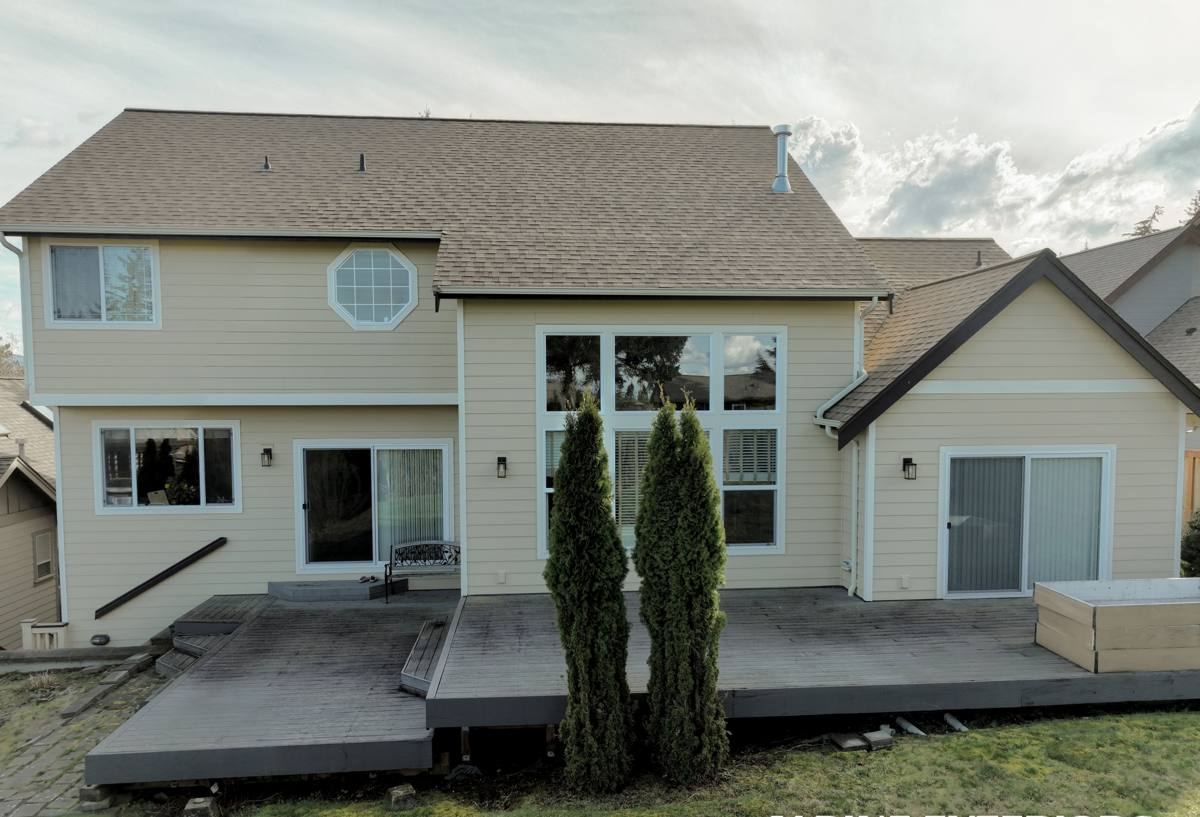
What Laurel Homes Actually Need From a Deck
Most of the deck problems we get called out to fix in this area trace back to a handful of recurring issues, not exotic ones:
- Ledger boards attached to the house without proper flashing, letting water track behind the siding and into the rim joist
- Decking installed tight against the house or without enough slope, so water pools instead of running off
- Fasteners and hardware that aren't rated for continuous wet exposure, leading to rust streaks and weakened connections
- Post bases sitting in soil or standing water instead of on proper footings, which accelerates rot at the base
- No airflow underneath low decks, trapping moisture against joists year-round
None of these are complicated to avoid. They just require building for the climate that's actually here, not a generic set of blueprints.
The Details That Matter Most: Ledger, Flashing, and Framing
The Ledger Connection
The ledger board — where the deck attaches to the house — is the single most important detail on the whole structure. It's also the spot most prone to hidden rot, because a leak there is hidden behind decking and siding until the damage is already done. A correct installation uses proper flashing that directs water up and over the ledger, not just caulk or a construction adhesive standing in for flashing. Given how much rain Whatcom County sees over a wet season, this isn't an area to cut corners on.
Framing and Fasteners
We frame with lumber and hardware rated for continuous outdoor exposure — stainless or heavy hot-dip galvanized fasteners and connectors, not standard coated screws that will streak and weaken over a few wet seasons. Joist tape or a comparable barrier over the top of joists keeps standing water from soaking directly into end grain, which is where rot typically starts.
Slope and Spacing
Decking should be laid with a slight slope away from the house and consistent gapping between boards so water sheds instead of collecting. Too tight, and boards trap moisture and debris; too loose, and the deck feels unfinished and collects grime in the gaps.
Footings and Drainage on Laurel's Larger Lots
Because a lot of Laurel properties have more land and less grading than a typical in-town lot, drainage around the deck's footings deserves real attention. Post footings need to be set below frost depth and clear of any low spot where water naturally collects after a storm — something worth checking across a full rainy season, not just on a dry day during the estimate. On lower decks close to grade, we make sure there's enough clearance and cross-ventilation underneath so the framing can actually dry out between rain events instead of staying damp for months at a stretch.
Choosing Decking Material for This Climate
There's no universally "right" decking material — it comes down to how much upkeep you want to take on versus what you're willing to pay upfront. Here's how the common options actually compare once you factor in Whatcom County's rain and moss exposure:
| Material | Upfront Cost | Maintenance | Moisture Behavior |
|---|---|---|---|
| Pressure-treated wood | Lowest | Annual cleaning, periodic staining/sealing | Can absorb moisture; needs sealing to resist rot and moss |
| Cedar | Mid | Regular sealing to keep color and resist graying | Naturally rot-resistant but still needs upkeep in constant damp |
| Capped composite | Higher | Occasional washing, no staining/sealing | Sheds water well; resists moss better than bare wood |
| PVC decking | Highest | Lowest — mostly just washing | Doesn't absorb moisture at all; most moss/algae resistant |
We're honest with customers about the trade-offs rather than pushing whatever's easiest to install. Wood costs less up front but asks for yearly attention if you want it to actually last in this climate. Composite and PVC cost more initially but hold up with far less maintenance against the moss and constant damp that Laurel's tree cover and rainfall create — and product warranties on capped composite and PVC tend to be longer specifically because the material isn't relying on a sealant to keep moisture out.
Moss, Algae, and Long-Term Deck Care
Even a well-built deck will get some moss and algae growth in this part of Washington — it's a function of shade, humidity, and a long wet season, not a sign something was done wrong. What matters is that the deck is built so growth stays on the surface, where it can be washed off, instead of taking hold in trapped moisture underneath. A yearly cleaning — a stiff brush and appropriate deck cleaner, or a gentle pressure wash — keeps surface growth from turning into a slip hazard and keeps wood decking from holding moisture against the grain. Composite and PVC decks need less attention here, but even they benefit from an annual rinse in a yard with heavy tree cover.
Our Process for a Laurel Deck Project
- On-site walkthrough — we look at the house's siding and framing where the ledger will attach, the grade and drainage around the footprint, and sun/shade exposure from nearby trees.
- Material and layout discussion — we go over decking and railing options against your budget and how much maintenance you actually want to take on.
- Permitting — most decks above a certain height or attached to the house require a permit through Whatcom County; we handle that paperwork as part of the job.
- Build — proper ledger flashing, corrosion-resistant hardware, correctly spaced footings, and decking installed with the right slope and gapping for this climate.
- Final walkthrough — we go over basic care so the deck looks and performs the way it's supposed to for years, not just for the first season.
Why a Crew That Already Works Laurel Matters
A deck built to a generic spec sheet can look identical to a correctly built one on the day it's finished — the difference only shows up two or three wet seasons later, when the ledger flashing either did its job or didn't. Working regularly in Laurel and around Lynden means we already know which details actually matter for this specific stretch of Whatcom County: how much shade a typical tree-lined lot gets, how long moss season really runs, and what fastener and footing choices hold up against the rain patterns here rather than a textbook average. That's not a marketing point — it's the difference between a deck that needs re-sealing and board replacement in five years and one that's still solid in fifteen.
Quick Checklist Before You Hire Anyone
- Ask specifically how the ledger board will be flashed — not just "sealed" — at the house connection
- Confirm fasteners and structural hardware are rated for continuous outdoor/wet exposure
- Ask about footing depth and drainage planning for your specific lot, especially if it's low or tree-covered
- Get a straight answer on maintenance expectations for whatever decking material you choose
- Confirm who's pulling the permit and handling inspections
If you're planning a new deck or need to figure out why an existing one isn't aging well, we're happy to take a look and walk the property with you. A free, no-pressure estimate is the easiest way to find out what your project actually needs — just fill out the form below.