 Lynden Siding
 Why Laurel Homes Need Siding That's Built for This Specific Climate
Laurel sits in one of the wetter, greener corners of Whatcom County, and that's exactly the problem for a house's exterior. The same conditions that keep the lawns thick and the trees tall — long stretches of drizzle, moisture-laden air moving in off the Salish Sea, and short winter days that never quite dry the north side of a house — are hard on siding. Add driving rain that comes in sideways during a fall or winter blow, and a moss season that can run from October through April, and you've got a climate that finds every weak point in an exterior wall system within a few years, not a few decades.
Most siding materials aren't engineered with this specific combination in mind. They're built to a national average — a climate that doesn't sit in fog half the year or get salt-laden wind rolling in from the water. Fiber cement, and specifically the HZ5 product line we install, is formulated and tested for exactly this kind of exposure. That distinction matters more in Laurel than it does in a lot of places, because the margin for error here is thinner.
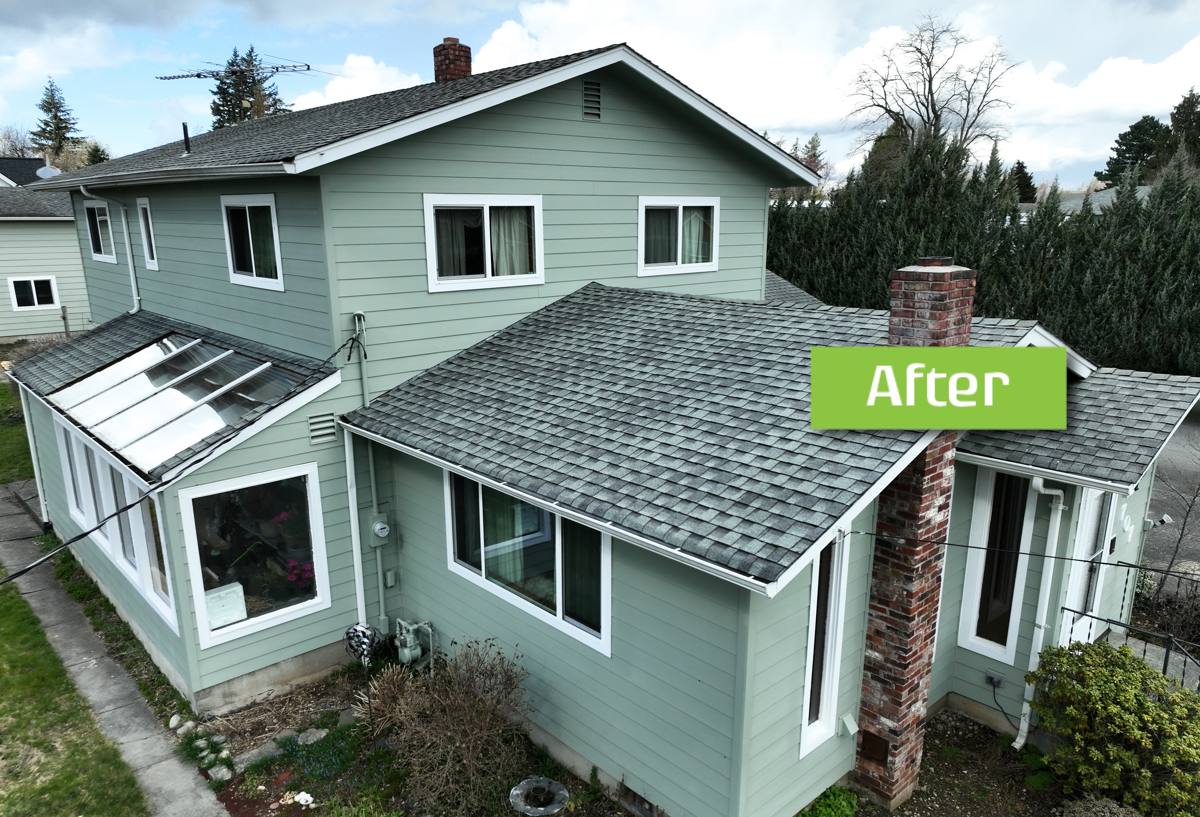
What Fiber Cement Actually Does Differently Here
Fiber cement is a mix of Portland cement, sand, and cellulose fiber, pressed and cured into a dense, dimensionally stable board. Unlike wood-based products, it doesn't swell and contract with every wet-dry cycle, which means the paint or factory finish stays bonded instead of cracking at the seams. Unlike vinyl, it doesn't soften, warp, or go brittle with temperature swings, and it carries a Class A non-combustible fire rating.
Moss and Mildew: The Real Enemy in Whatcom County
Moss doesn't just grow on roofs. Given shade, moisture, and an organic surface to grip, it colonizes siding too — especially on north- and west-facing walls that stay damp longest. Wood-based siding products give moss and mildew something to feed on and root into over time. Fiber cement has no organic food source in the substrate itself, so growth stays a surface issue that washes off rather than one that eats into the material.
Salt Air and Coastal Drift
Whatcom County isn't right on the open ocean, but salt-laden air moves inland with weather systems off the Sound, and it accelerates corrosion on fasteners, staples, and any exposed metal trim. It also tends to hold moisture against a wall surface longer than dry inland air does. Fiber cement's density and factory-applied finish resist that kind of slow chemical attack far better than raw wood or unprotected substrates.
What a Correct Fiber Cement Installation Actually Involves
The material only performs as well as the install. Fiber cement is unforgiving of shortcuts in a wet climate — a poorly flashed window or a missed rain screen gap doesn't show up as a problem in month one. It shows up as trapped moisture, staining, or rot in the sheathing behind the siding two or three years later, by which point it's an expensive fix instead of a five-minute detail.
- Proper clearance from grade, decks, and roof lines so the bottom edge of the siding never sits in standing water or snow pack
- A drainage plane or rain screen gap behind the panels so any moisture that does get past the cladding has somewhere to go
- Correctly lapped and sealed flashing at every window, door, and penetration — the single most common source of hidden leaks
- Stainless or hot-dipped galvanized fasteners driven to the manufacturer's specified depth, not overdriven or underdriven
- Factory-primed or ColorPlus-finished cut edges sealed in the field, since a raw cut edge is the fastest way for water to wick into the board
- Correct joint spacing and caulking with a product rated for the finish, not a generic all-purpose sealant
Common Installation Mistakes That Cause Early Failure
The failures we get called to fix on other contractors' work are rarely about the siding material itself — they're almost always installation details. Panels nailed too tight against each other with no expansion gap. House wrap installed backward or taped incorrectly at seams. Trim boards butted directly against roofing without kick-out flashing, sending roof runoff straight behind the wall. In a dry climate those mistakes might take a decade to surface. In Laurel's climate, they surface fast.
Our Process for a Laurel Project
We run the same disciplined process on every job, adjusted for the specific exposure of each home.
- On-site assessment. We look at existing siding, sheathing condition, moisture readings where accessible, roofline drainage, and which elevations take the worst weather.
- Tear-off and substrate check. Old siding comes off and we inspect sheathing for hidden rot or moisture damage before anything new goes up — this is the point where problems from the old system get caught and fixed, not covered over.
- Weather barrier and drainage plane. A properly lapped house wrap and rain screen system goes on first, since this is the layer doing the real work if anything gets past the cladding.
- Flashing at every opening. Windows, doors, and penetrations get flashed before siding starts, not patched around it afterward.
- Fiber cement installation. Panels, fasteners, and joint treatment installed to James Hardie's published specifications for our climate zone.
- Final inspection and cleanup. We walk the job with the homeowner before calling it done.
Comparing Siding Options for a Laurel Exposure
Homeowners in Laurel often ask how fiber cement stacks up against other common products once you factor in the moss, moisture, and salt exposure specific to this area.
| Material | Moisture/Moss Resistance | Salt Air Durability | Maintenance |
|---|---|---|---|
| James Hardie Fiber Cement | High — non-organic substrate, engineered rain screen compatibility | High — factory finish resists corrosion and fading | Occasional wash-down |
| Vinyl | Moderate — sheds water but seams and J-channels can trap moisture | Moderate — can chalk and become brittle over time | Low, but limited repair options if damaged |
| Primed Wood/Spruce or Cedar | Low to moderate — organic material, needs consistent repainting/sealing | Low — more vulnerable to corrosion at fasteners and edge decay | High — regular repainting and inspection |
| LP SmartSide/Engineered Wood | Moderate — engineered but still wood-based, sensitive to edge exposure | Moderate | Moderate — edge sealing and paint maintenance |
This is why we standardized on James Hardie fiber cement rather than offering multiple product lines. In a climate like Whatcom County's, the material differences aren't cosmetic — they show up in how the wall performs ten and twenty years out.
Cost Factors on a Laurel Siding Project
Every home is different, so we don't quote broad numbers without seeing the job, but the same handful of factors drive cost on most Laurel projects:
| Factor | Why It Matters |
|---|---|
| Existing substrate condition | Hidden moisture damage found during tear-off adds repair scope before new siding can go on |
| Home size and wall complexity | More corners, gables, and trim detail mean more labor and material cuts |
| Product line and finish | Plank profile, panel size, and ColorPlus color selection affect material pricing |
| Access and site conditions | Tree cover, slope, and setback distances affect staging and labor time |
| Trim and accessory work | Fascia, soffit, and window trim replacement often gets bundled into a full re-side |
Why Hiring a Crew That Already Works Laurel Matters
A siding crew that works this specific area regularly knows which elevations on a typical Laurel lot take the worst weather, how long moss actually takes to establish on a shaded wall here, and what kind of moisture load the sheathing behind older siding is usually carrying by the time a homeowner calls. That's not something you get from a general contractor who does a handful of Whatcom County jobs a year alongside work all over the region. It shows up in small decisions — where to add extra flashing, which walls need a wider rain screen gap, how tight to run the punch list before calling a job finished — that a less familiar crew might not think to make.
It also matters for scheduling and weather windows. Fiber cement installation has to happen in reasonably dry conditions, and a crew that works this area consistently plans around Whatcom County's wet season rather than getting caught mid-install by it.
Maintenance Checklist for Laurel's Climate
A correctly installed fiber cement system is low-maintenance, not zero-maintenance. A little seasonal attention keeps it performing for decades.
- Rinse siding annually, focusing on shaded north and west walls where moss and mildew take hold first
- Keep gutters clear so overflow doesn't run down the wall face during heavy rain
- Trim back vegetation and tree branches that keep a wall surface shaded and damp
- Inspect caulking at trim joints and penetrations every year or two, and re-caulk if it's cracked or pulling away
- Watch for any staining or discoloration near ground level, which can signal a drainage or grading issue rather than a siding problem
- Touch up any chips or scratches promptly so the substrate underneath stays protected
If you're weighing a siding replacement on a Laurel property, we're happy to take a look and walk you through what your home specifically needs. Reach out for a free, no-pressure estimate — there's a form right below to get started.