 Lynden Siding
 Roof Repair Built for Laurel's Marine Climate
Laurel sits in that stretch of Whatcom County where marine air off the Salish Sea meets the open farmland and low hills around Lynden. That mix matters more to a roof than most homeowners realize. Salt-laden air moving inland accelerates corrosion on exposed metal, driving rain gets pushed sideways under wind loads that a purely inland roof rarely sees, and the long, damp shoulder seasons here give moss and moisture months to work into a roof system rather than days. A roof repair in this neighborhood has to account for all three, not just patch whatever is leaking today.
We work on roofs in and around Laurel regularly, which means we're not guessing at how a given roof style handles this climate — we've already seen how the local weather ages asphalt shingle, metal, and composite roofing over years, not just in a single storm.
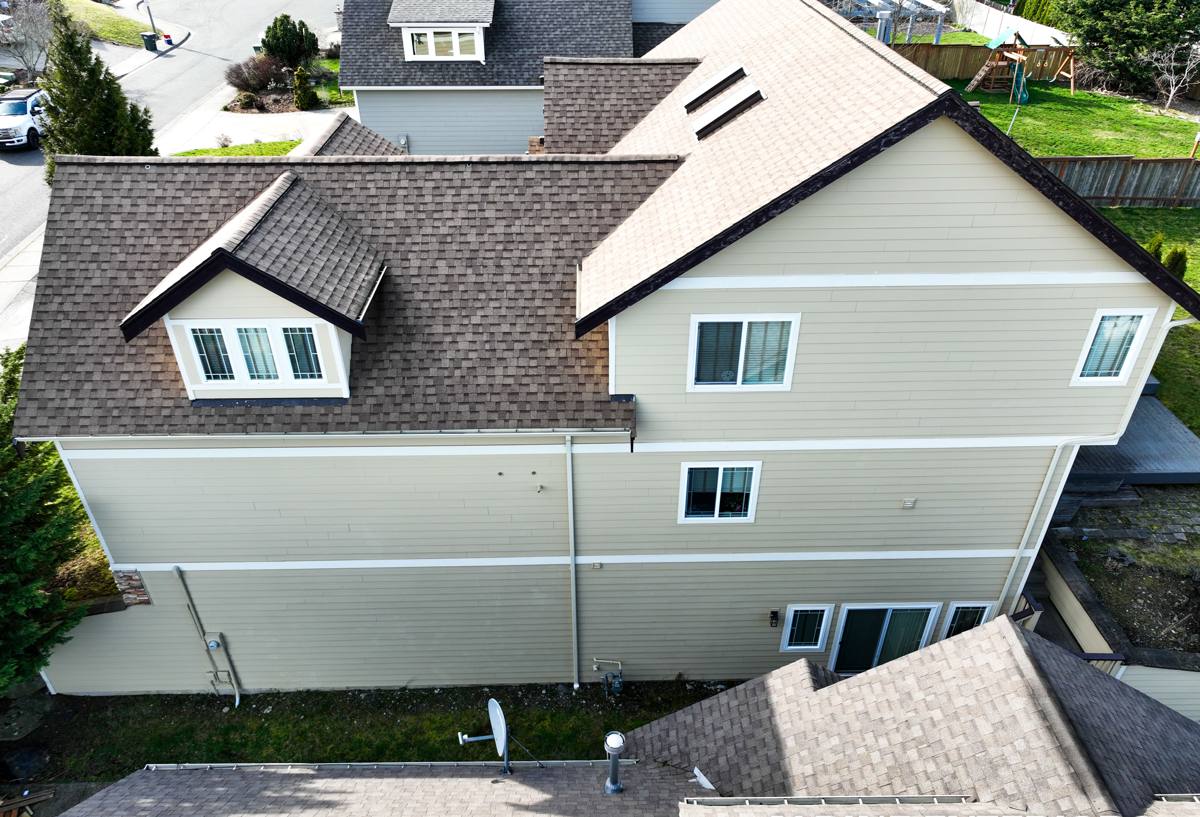
The Roof Problems We See Most on Laurel Homes
Moss and Organic Growth
Whatcom County's moss season runs long — shaded roof planes, north-facing slopes, and anything under overhanging trees can stay damp for weeks at a stretch. Moss itself doesn't just sit on top of shingles; its root structure lifts shingle edges and holds water against the roofing mat, which is where granule loss and early shingle failure start. By the time moss is visible from the ground, it's usually already doing damage underneath.
Flashing and Valley Leaks
Most of the leaks we're called out for in this area aren't failed shingles — they're failed flashing. Step flashing at wall intersections, valley metal, and pipe boot seals all take more abuse here because they're the parts of a roof most exposed to wind-driven rain and repeated wet-dry cycling. Flashing is also the piece of a roof most likely to have been installed wrong the first time, since it takes more skill and patience than laying field shingles.
Wind-Driven Rain Intrusion
Rain that falls straight down is easy for a roof to shed. Rain that's being pushed sideways by wind finds every gap — under shingle tabs, around fasteners, at ridge caps — and that's a regular occurrence with the weather systems that move through this part of Washington. A repair that only addresses the spot where water is showing up inside the house, without checking upslope for where it actually got in, tends to fail again in the next storm.
Gutter and Edge Deterioration
Drip edge, fascia, and the first course of shingles along the eaves take constant water exposure. Combined with moss debris that can dam up gutters, this is a common spot for slow rot that homeowners don't notice until there's staining on a soffit or fascia board.
What a Correct Roof Repair Actually Involves
Diagnosing the Real Cause, Not Just the Symptom
A water stain on a ceiling can have an entry point ten feet upslope from where it shows up indoors. Correct diagnosis means getting on the roof, checking the attic side where accessible, and tracing the path water actually takes — not just caulking the nearest visible gap and calling it done.
Matching Materials the Right Way
Shingle color and profile change between manufacturing runs, so a patch using the wrong batch or an off-brand substitute stands out and can create a slightly different weathering pattern over time. We pull spare shingles from a less visible slope when possible, or match as closely as the existing product line allows, rather than using whatever's easiest to source.
Flashing Detail Work
Any repair that touches a valley, wall intersection, or penetration gets flashing replaced or corrected, not just re-sealed with caulk. Caulk is a short-term fix; properly lapped and fastened flashing is what actually sheds water long-term, and it's the difference between a repair that lasts and one you'll be calling about again next winter.
Checking Ventilation While We're Up There
A roof that's trapping moisture from underneath — through poor attic ventilation — will keep showing moss, sheathing rot, or shingle curling no matter how many surface repairs you do. Since we're already on the roof, we check soffit and ridge venting as part of the job, and we'll tell you honestly if that's contributing to the problem rather than just re-treating the same symptom every year or two.
Our Roof Repair Process
- Inspection and diagnosis. We assess the roof from the surface and, where accessible, the attic side, to find the actual source of the problem — not just the visible symptom.
- Written scope and estimate. You get a clear explanation of what's being repaired, what materials will be used, and why — before any work starts.
- Repair work. This typically means removing and replacing damaged shingles or roofing material, correcting or replacing flashing, and addressing the underlying cause (moisture, ventilation, or physical damage).
- Cleanup and moss treatment where needed. Debris is cleared, gutters checked, and moss addressed at the source rather than just brushed off the surface.
- Final walkthrough. We show you what was done and what to watch for going forward, including realistic guidance on remaining roof life if that's relevant.
Repair or Replace? How We Help You Decide
Not every roof issue needs a full replacement, and not every "leak" is fixable with a patch. Here's the general pattern we look at when advising Laurel homeowners:
| Sign | Usually Points to Repair | Usually Points to Replacement |
|---|---|---|
| Leak location | Isolated to one flashing point, valley, or penetration | Multiple, unrelated leak points across the roof |
| Shingle condition | Localized wear, storm damage to a section | Widespread granule loss, curling, or brittleness roof-wide |
| Age relative to material life | Well within expected service life for the material | At or past the typical service life for that roofing type |
| Decking condition | Solid, no soft spots found during inspection | Soft, spongy, or visibly rotted sheathing in multiple areas |
| Moss/moisture history | First occurrence, addressed early | Chronic, recurring moisture damage over multiple seasons |
We'll tell you plainly which category your roof falls into. If a repair is the honest answer, that's what we'll recommend — a roof doesn't need to be replaced just because it has a problem.
What Roof Repair Costs in Laurel — and Why
Roof repair pricing varies a lot depending on scope, access, and what's actually found once we're up there. Rather than quote a flat number that won't apply to your situation, here's what actually drives cost:
| Cost Factor | Why It Matters |
|---|---|
| Scope of damage | A single flashing repair costs far less than replacing a section of decking and shingles |
| Roof pitch and access | Steep or high roofs take longer and require more safety setup, which affects labor time |
| Hidden damage | Rot found under shingles once they're pulled back can expand the scope beyond the original estimate |
| Material match | Matching an existing roof, especially an older or discontinued shingle line, can take more sourcing time |
| Moss/organic buildup | Heavy moss often means more cleanup and treatment work alongside the physical repair |
As a rough sense of scale, a straightforward flashing or small shingle-section repair is typically a few hundred dollars, while a repair involving deck replacement or multiple problem areas can run into the low thousands. We won't know which range applies to your roof until we've actually looked at it, which is why we start with an inspection, not a guess over the phone.
Materials We Use for Repairs, and Why
For most Laurel-area homes we're repairing asphalt shingle roofs, since that's the dominant roofing type in this part of Whatcom County. Our standard is to match existing shingle profile and weight as closely as the product line allows, and to use metal flashing — not just sealant — at every valley, wall, and penetration point we touch.
We're selective about sealants and adhesives too. Cheaper caulks break down faster under UV and the wet-dry cycling common here, which means a repair that looks fine at handoff can start failing again within a season or two. We'd rather use products with a track record in this climate and stand behind the work, even if that costs a little more up front than the fastest, cheapest patch available.
A Homeowner's Seasonal Roof Checklist for Laurel
- Look for moss or dark streaking on north-facing or shaded roof slopes at least twice a year
- Check gutters for debris buildup, especially after fall leaf drop and before winter rains pick up
- Watch for ceiling stains or musty attic smells after major wind-and-rain events
- Have flashing around chimneys, skylights, and wall intersections inspected every few years, not just when a leak appears
- Trim back tree limbs that keep roof sections shaded and damp longer than the rest of the roof
- Don't ignore a small, isolated leak — it's far cheaper to repair early than after it reaches decking or framing
Why Hiring a Crew That Already Works Laurel Matters
A roofer who mainly works drier inland climates can misjudge what's actually needed here — under-flashing a valley that needs extra protection, or treating moss as a cosmetic issue instead of a moisture problem. We work on roofs throughout Lynden and the surrounding Whatcom County communities regularly enough to know which failure patterns show up on which roof styles and orientations in this specific climate, and we price and schedule around the reality of the local weather rather than working off a generic checklist.
That local pattern recognition is often what separates a repair that lasts from one that reopens the same leak eighteen months later.
If you've got a roof issue in the Laurel area — a leak, storm damage, moss buildup, or just something that doesn't look right — we're happy to take a look and give you a straight answer. Use the form below to request a free, no-pressure estimate.