 Lynden Siding
 Roofing in Laurel: Built for What Whatcom County Actually Throws at a Roof
Laurel sits in that stretch of Whatcom County where marine air off the Salish Sea, steady winter rain, and heavy shade from mature conifers all combine to work a roof harder than most homeowners realize. It's not one dramatic storm that wears a roof out here — it's the accumulation. Months of driving rain that finds every weak seam. Salt-laden wind off the water that speeds up corrosion on fasteners and flashing. Long stretches of low sun angle and standing shade that keep roof surfaces damp for days at a time, which is exactly what moss and algae need to take hold.
A roof replacement in Laurel isn't just "put new shingles on top of old ones and move on." It's a chance to correct whatever let the old roof fail early — usually ventilation, flashing, or underlayment that wasn't matched to this climate — and build something that's actually going to hold up through another 20-30 years of Whatcom County winters.
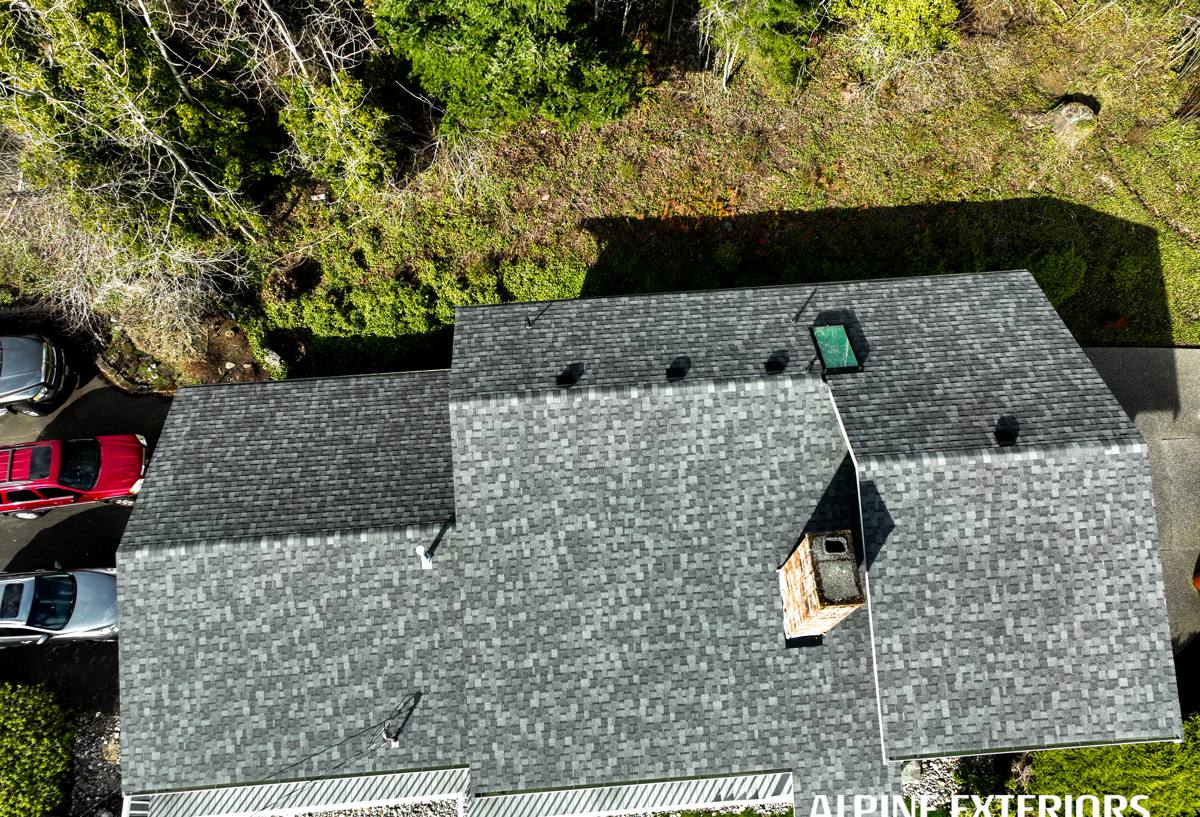
Signs a Laurel Home Is Due for a Roof Replacement
Most roofs don't fail all at once. They give warning signs for a season or two before something actually leaks. Homeowners in Laurel and the surrounding Lynden area should watch for:
- Granule loss showing up in gutters or at downspout outlets, especially after a windy rain
- Shingles that are cupping, curling at the edges, or visibly bald in patches
- Dark streaking or thick moss growth concentrated on the shaded, north-facing slopes
- Soft spots or sagging when walked on, which usually means the decking underneath has taken on moisture
- Daylight visible through the attic roof boards, or damp insulation after a heavy rain
- Flashing around chimneys, skylights, and roof-to-wall transitions that's rusted, lifted, or caulked-over as a patch fix
- A roof that's simply reaching the end of its rated lifespan, even if it looks okay from the ground
Any one of these on its own might just need a repair. Several at once, or a roof past 20-25 years old, usually means replacement is the more honest recommendation — patching an aging roof in this climate tends to buy a year or two at best.
What a Correct Roof Replacement Actually Involves
Full Tear-Off, Not a Cover-Over
We remove the existing roofing down to the deck on every replacement. Roofing over old shingles hides the condition of the decking, traps moisture between layers, and voids most manufacturer warranties. A full tear-off also lets us actually inspect for the rot and soft spots that a Whatcom County roof accumulates over time.
Deck Inspection and Repair
Once the old roofing is off, we check every section of decking for water damage, delamination, or soft wood — particularly around valleys, chimneys, and any spot where a past leak was patched rather than fixed. Damaged sections get replaced before anything new goes down. Skipping this step is the single most common shortcut that leads to an early repeat roof.
Underlayment and Ice-and-Water Protection
Given how much driving rain and wind-blown moisture Laurel sees, we treat underlayment as a real second line of defense, not a formality. That means synthetic underlayment across the field of the roof and self-adhered ice-and-water shield at eaves, valleys, and any roof penetration — the spots where wind-driven rain is most likely to work its way underneath the shingles.
Flashing Done Right
Flashing failures cause more leaks than worn-out shingles do. New step flashing, counter-flashing, and valley flashing get installed as part of every replacement — not caulked over the old flashing, which is a short-term patch that fails within a few years in this climate.
Ventilation That Matches the Home
A roof system needs balanced intake and exhaust ventilation to keep the attic dry and the shingles at a stable temperature. Poor ventilation is one of the biggest reasons roofs in shaded, moisture-heavy areas like Laurel develop moss and rot faster than they should. We evaluate the existing ventilation on every job and correct it where it's undersized or unbalanced.
Material Options and What They Cost to Own
There's no single "best" roofing material — the right choice depends on the home's roof pitch, how much shade it sits under, and what the homeowner wants to spend upfront versus over time. Here's how the common options compare for a Laurel property:
| Material | Typical Lifespan | Moss/Moisture Resistance | Rough Installed Cost Range* |
|---|---|---|---|
| 3-tab asphalt shingle | 15-20 years | Fair — needs regular moss treatment | Lowest of the common options |
| Architectural (laminate) asphalt shingle | 25-30 years | Good — thicker profile sheds water better | Moderate |
| Standing seam metal | 40-50+ years | Excellent — smooth surface discourages moss | Highest upfront, lowest lifetime cost |
| Cedar shake | 20-30 years with upkeep | Requires the most maintenance in wet shade | High, plus ongoing treatment |
*Actual pricing depends on roof size, pitch, number of layers being removed, and access — this table is meant to help compare trade-offs, not to serve as a quote. We'll give you real numbers after walking the roof.
For most Laurel homes with shaded, moderate-pitch roofs, a quality architectural asphalt shingle is the practical middle ground — it holds up well against driving rain, resists moss better than a basic 3-tab, and doesn't carry the upfront cost jump of metal. Homes with heavy year-round shade or a history of aggressive moss growth are often better served by metal, even at the higher upfront cost, simply because there's less surface texture for spores to take hold on.
Our Roof Replacement Process, Step by Step
1. On-Site Assessment
We walk the roof (or inspect from a ladder and attic if conditions call for it), check the decking condition where visible, look at existing ventilation, and note anything unusual about the roof's exposure — heavy shade, valleys prone to debris buildup, that kind of thing.
2. Written Scope and Estimate
You get a written scope that spells out the material, underlayment, flashing plan, and any decking repair allowance — not a vague one-line quote. No pressure to sign on the spot.
3. Scheduling Around the Weather
Roofing works best in a dry window. In Whatcom County that usually means we're watching the forecast closely and scheduling tear-off days when we can get the deck covered and dried in before rain moves back through.
4. Tear-Off, Repair, and Install
Old roofing comes off, decking gets inspected and repaired as needed, then underlayment, flashing, ventilation, and the new roofing go on in that order — each step needs to be right before the next one covers it up.
5. Cleanup and Walkthrough
Site cleanup including a magnetic sweep for stray nails, then a walkthrough so you can see the finished work and ask questions before we consider the job done.
Moss, Algae, and Keeping a New Roof Looking Right
Even a correctly installed roof will see some moss pressure in a place like Laurel, where shade and moisture linger for much of the year. The goal of a good installation isn't to make a roof moss-proof — nothing fully is — it's to reduce how fast moss establishes and make it easy to manage. That means proper ventilation, keeping gutters and valleys clear of needle and leaf debris, and choosing a shingle profile that sheds water quickly instead of holding it against the surface. Zinc or copper strips near the ridge can help slow regrowth on shaded slopes, and we're happy to talk through that option during your estimate if moss has been a recurring issue on your current roof.
Why a Crew That Already Works Laurel Makes a Difference
Roofing crews that work Whatcom County regularly already know which details actually matter here — how much ice-and-water coverage a shaded valley needs, which flashing details fail first in driving rain, how to schedule around this region's weather windows instead of guessing. That local pattern recognition is the difference between a roof that's technically installed to code and one that's actually built for Laurel's specific mix of rain, wind, and shade.
Before You Hire: A Practical Checklist
- Ask to see current Washington contractor license, bonding, and liability insurance — verify it, don't just take their word
- Get the scope of work in writing, including tear-off, decking repair allowance, underlayment type, and flashing details
- Ask specifically how much ice-and-water shield is planned for valleys and eaves, given how wet this area gets
- Confirm who pulls the permit and handles inspection
- Ask about the manufacturer's warranty terms versus the contractor's workmanship warranty — they're not the same thing
- Get a clear answer on cleanup, including a magnetic nail sweep of the yard and driveway
- Be cautious of any bid significantly lower than the others — it usually means a shortcut somewhere in decking, underlayment, or flashing
Ready to Talk About Your Roof?
If your Laurel-area roof is showing its age, moss is getting ahead of you, or you just want an honest read on how much life is left in it, we're glad to take a look. The estimate is free, there's no pressure to commit on the spot, and you'll walk away with a clear, written scope of what the job actually involves. Fill out the form below to get started.