 Lynden Siding
 Siding in Laurel: A Climate That Doesn't Forgive Shortcuts
Laurel sits in the rural stretch northeast of Lynden, where farmland, pasture, and tree-lined properties give way to the kind of weather Whatcom County is known for. Even well inland from Bellingham Bay, this part of the county sits under the same marine air mass that pushes in salt-tinged moisture off the Salish Sea for much of the year. Add driving rain that comes in sideways during winter storms, shaded lots ringed by conifers, and a moss season that can stretch from October through May, and you have a climate that finds every weak point in a home's exterior.
Siding here isn't just cosmetic. It's the primary barrier between that weather and the framing, sheathing, and insulation behind it. When siding fails in a climate like this, it usually fails quietly — moisture gets behind the cladding long before anyone notices a problem on the surface. By the time paint is peeling or boards are visibly warped, there's a good chance the damage already goes deeper than the siding itself.
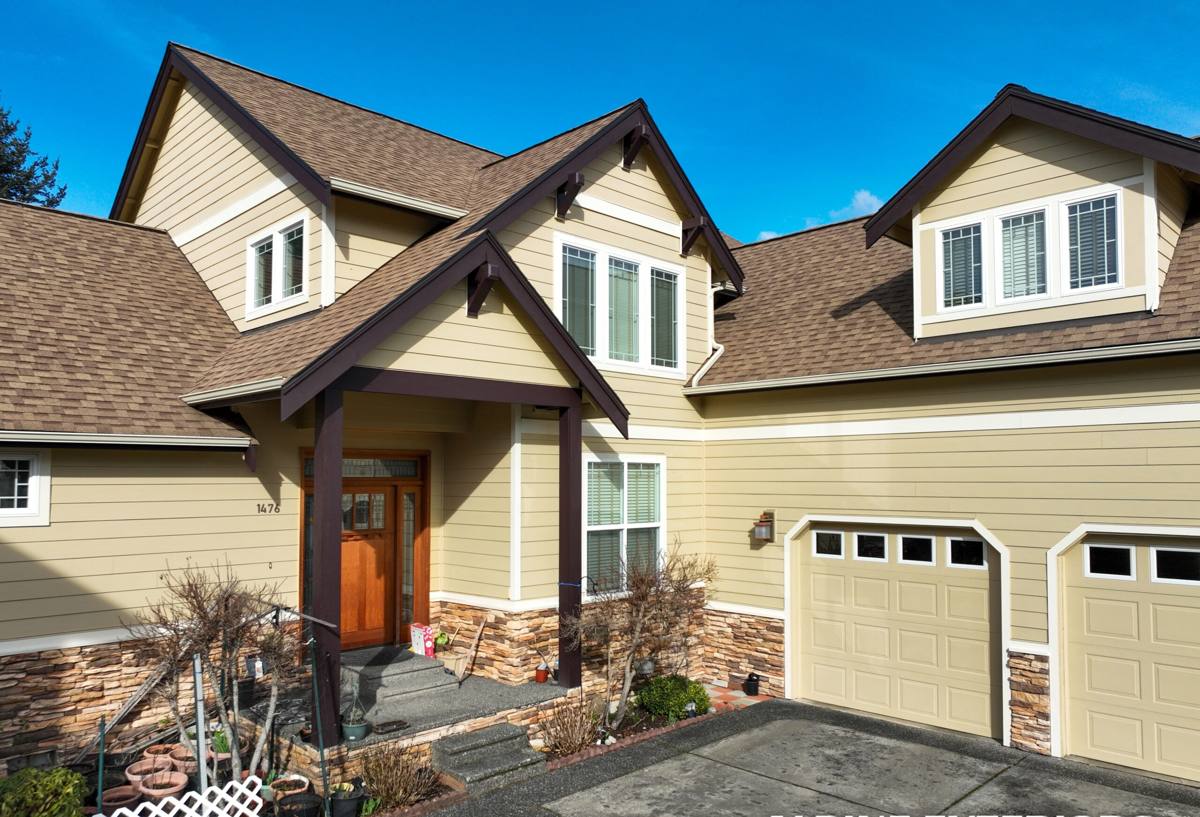
What Correct Siding Installation Actually Requires Here
A siding job that holds up in Laurel's conditions is built in layers, not just nailed to the wall. Skipping any one of these layers is how houses in this climate end up with rot, mold, or premature siding failure inside five to ten years instead of lasting decades.
Moisture Management Comes First
Before a single piece of siding goes up, the wall needs a properly lapped weather-resistant barrier (house wrap or building paper) installed shingle-style so water sheds downward and out, never in. Every window, door, and penetration needs correctly sequenced flashing — installed in the right order relative to the wrap — so water that does get behind the cladding has a way out instead of a place to pool.
An Air Gap Behind the Siding
In a climate with this much sustained moisture, a rain screen gap or furring strip system between the wall and the siding gives water and humid air a path to drain and dry out instead of sitting against the sheathing. This detail matters more in Whatcom County than it does in drier parts of the state, and it's one of the first things we check when we're asked to look at a previous installation that's failing.
Fastening and Clearances
Fiber cement siding has specific nailing patterns, fastener depth requirements, and minimum clearances from grade, roofing, and decks that manufacturers publish for a reason — get them wrong and you create entry points for water or stress cracks that show up years later. Ground clearance matters especially on rural Laurel lots where landscaping, mulch beds, or splashback from unpaved driveways can hold moisture against the bottom courses.
Why We Install James Hardie Fiber Cement — and Nothing Else
We made a decision to install one siding system: James Hardie fiber cement. Not vinyl, not LP SmartSide or other engineered wood products, not Cemplank or Allura, not primed spruce or cedar. That's a narrower lineup than most contractors offer, and it's intentional.
Fiber cement is non-combustible, dimensionally stable, and doesn't absorb and swell with moisture the way wood-based products can. Hardie's ColorPlus factory-applied finish is baked on under controlled conditions rather than field-painted, which matters in a climate where wet weather limits the days paint can properly cure on a jobsite. Hardie also engineers specific product lines (their HZ5 designation, for example) for regions with more moisture exposure, which lines up with what Whatcom County homes actually deal with. The warranty is transferable and backed by a manufacturer with decades of track record, not a promise we're making on our own.
None of this means other products are junk — vinyl is inexpensive and low-maintenance in mild climates, engineered wood siding has real design flexibility, and cedar has a look some homeowners love. We simply won't install products where the maintenance burden, moisture sensitivity, or installation tolerances don't hold up to what we see happen to siding in this specific climate. Standardizing on one system also means our crews install it constantly — there's no learning curve, no guessing on details, and no mixed experience level from job to job.
How Siding Materials Compare in This Climate
| Material | Moisture Behavior | Moss/Algae Resistance | Typical Maintenance |
|---|---|---|---|
| James Hardie fiber cement | Doesn't swell, warp, or rot from moisture exposure | Factory finish resists staining better than raw wood substrates | Occasional wash; repaint not needed for the life of ColorPlus finish |
| Vinyl | Doesn't rot, but can warp or crack in temperature swings and impacts | Prone to green/black staining in shaded, damp areas | Regular washing; brittle panels are hard to color-match if replaced |
| Engineered wood (e.g. LP SmartSide) | Wood-based core is more moisture-sensitive at cut edges and seams | Can host moss/algae if finish wears or edges aren't sealed | Edge sealing and finish upkeep needed to prevent swelling |
| Cedar / primed spruce | Natural wood absorbs moisture; needs consistent sealing to resist it | Most susceptible to moss and mildew without regular treatment | Periodic staining/painting and moisture inspection required |
What Our Siding Installation Process Looks Like
- On-site evaluation: We walk the property, check the existing siding and sheathing for hidden moisture damage, and identify problem areas — shaded walls, poor drainage, missing flashing — before we quote anything.
- Tear-off and sheathing check: Old siding comes off and the sheathing underneath gets inspected. Any soft, rotted, or delaminated sheathing gets repaired or replaced before new siding goes on — covering up a compromised wall never ends well in this climate.
- Weather barrier and flashing: A new weather-resistant barrier is installed correctly lapped, with flashing at every window, door, and penetration sequenced to shed water outward.
- Rain screen installation: Furring strips or a rain screen system go up to create drainage space behind the siding.
- Hardie installation to spec: Panels, lap siding, or trim go up following manufacturer-specified fastening patterns, joint treatment, and clearances.
- Final detailing and cleanup: Caulking, touch-up, and a walkthrough so you know exactly what was done and why.
Signs a Laurel Home Needs Siding Attention
- Soft or spongy spots when you press on siding boards, especially near the bottom courses or under windows
- Persistent moss or dark staining that comes back within weeks of cleaning
- Paint that's peeling, bubbling, or failing faster than it should
- Visible gaps, warping, or cupping in individual boards or panels
- Rising heating costs or drafty rooms that suggest the wall assembly isn't sealed the way it should be
- Siding that's original to a home built more than 20-25 years ago, especially wood-based products nearing the end of their service life
Why It Matters That We Already Work in Laurel and Around Lynden
A crew that regularly works rural Whatcom County properties knows what to expect before they show up — long driveways, mixed sun and heavy shade from tree lines, older farmhouses with additions built at different times, and the drainage quirks that come with unincorporated land versus a platted subdivision. That familiarity shows up in the estimate, not just the installation: we're not guessing at what a Laurel property needs, we've seen the same conditions on the last job down the road.
It also means we're not disappearing after the install. If a warranty question comes up or you want a wall checked after a hard winter, we're a local call, not a call center.
What Affects the Cost of a Siding Installation
| Factor | Why It Matters |
|---|---|
| Square footage and home shape | More corners, dormers, and wall breaks mean more cutting, trim, and labor time |
| Condition of existing sheathing | Rot or moisture damage found during tear-off requires repair before new siding goes on |
| Number of stories and accessibility | Taller walls and difficult access (slopes, limited driveway space) affect scaffolding and labor |
| Siding profile chosen | Lap siding, panel systems, and trim/accent details vary in material and labor cost |
| Tear-off vs. new construction | Removing and disposing of old siding adds labor and disposal costs compared to new builds |
We give a specific number after seeing the property — broad estimates without a walkthrough tend to be wrong in one direction or the other.
Living With Hardie Siding After It's Installed
One advantage of a factory-finished fiber cement system is how little upkeep it asks for. You won't be repainting on a schedule the way you would with wood siding. What Laurel homeowners should still keep up with: an occasional gentle wash to keep moss and organic buildup from taking hold in shaded areas, keeping gutters clear so water isn't sheeting down the wall, and keeping vegetation trimmed back a few inches from the siding so airflow and drying aren't blocked. None of this is intensive — it's the difference between siding that looks new at year fifteen and siding that's fighting a losing battle against moss and moisture the whole time.
If you're dealing with aging or failing siding on a Laurel property, or you're planning ahead of a repaint or repair that isn't worth doing twice, we're happy to take a look and give you a straightforward, no-pressure estimate — just fill out the form below.