 Lynden Siding
 Why Siding in Laurel Wears Differently Than It Looks
Laurel sits close enough to Bellingham Bay and the Puget Sound lowlands that homes here deal with a steady mix of salt-tinged air, wind-driven rain, and long stretches of gray, wet weather that can run from October well into April. None of that is dramatic on its own, but siding doesn't fail dramatically either — it fails a little at a time, in places you can't see from the driveway. A house in Laurel can look fine from the road and still be holding moisture behind the siding at a window sill, a butt joint, or a spot where two trades never quite coordinated their flashing.
The combination that does the most damage here is repetition: rain that comes sideways off the wind, followed by damp air that never fully dries the wall assembly, followed by more rain. Add in the shade from mature trees common on older Laurel lots, and you get long moss and algae seasons that keep siding surfaces wet even between storms. Siding repair in this area isn't just about fixing what's broken — it's about understanding why that particular spot broke first.
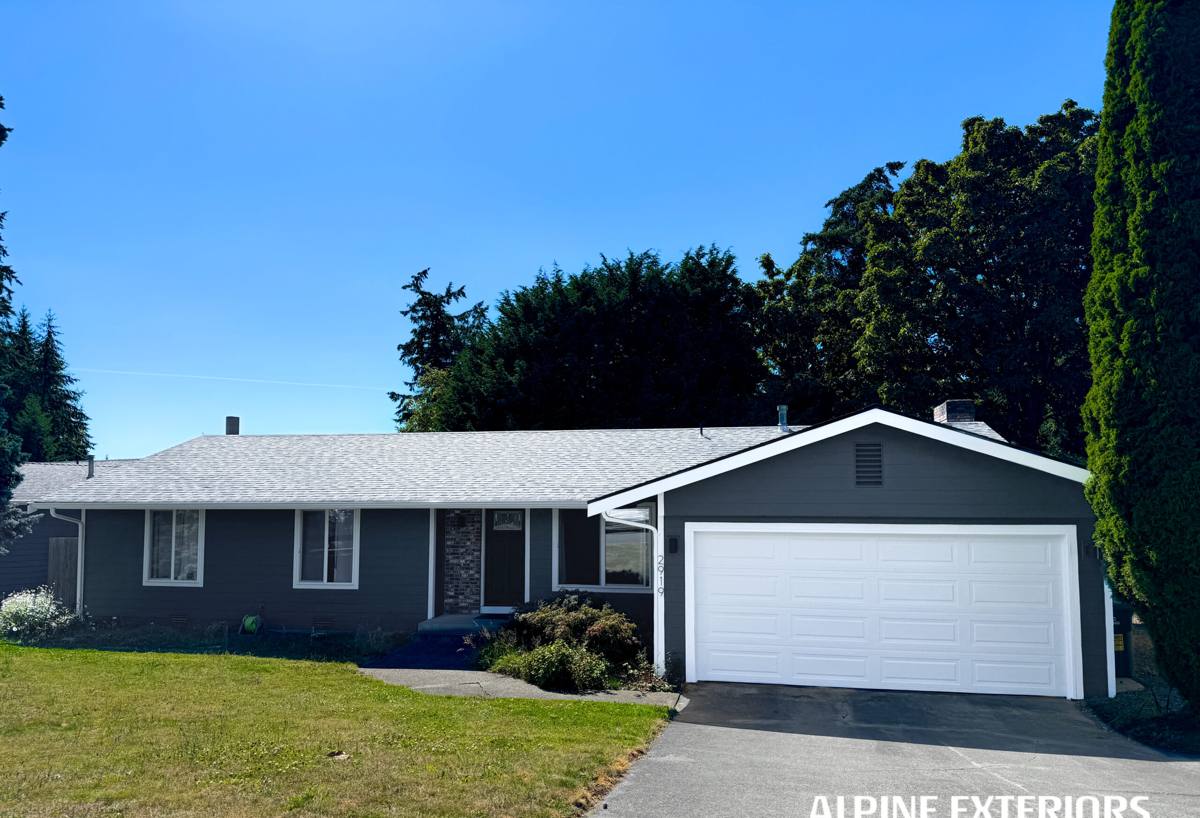
Signs a Laurel Home Needs Siding Repair, Not Just a Wash
What homeowners usually notice first
- Dark streaking or green-black staining that comes back within weeks of cleaning
- Soft or spongy spots when you press on the siding near the ground or under windows
- Visible gaps, cracks, or separated seams at butt joints and corners
- Paint that's bubbling, peeling, or chalking in patches rather than evenly
- Nail heads popping through the surface or slight waviness along a wall plane
What it usually means underneath
Surface staining is often just biology — moss and algae finding a damp surface to live on. But soft spots, persistent staining in one exact location, and bubbling paint are usually a sign that water is getting behind the siding and not drying out. In wood-based and engineered wood siding, that moisture leads to swelling, delamination, and eventually rot. In fiber cement, the material itself resists that kind of failure, but the caulking, flashing, and trim details around it still need attention — those are almost always where a repair actually starts.
What a Correct Siding Repair Involves
Diagnosing the cause before touching the wall
The first mistake in siding repair is treating the visible damage as the whole problem. A cracked board or a soft patch is a symptom. Before any siding comes off, a correct repair starts with figuring out where water is actually entering — a gapped J-channel, a missing kick-out flashing above a lower roofline, caulk that's shrunk and pulled away from a window frame, or siding that was installed too close to grade or a deck surface. If that entry point isn't found and corrected, the same failure shows up again in a year or two, just slightly bigger.
Matching materials the right way
On homes already sided in James Hardie fiber cement, repairs go smoothly because Hardie's factory-applied ColorPlus finish is manufactured to a consistent formulation, which makes color-matching a patch section far more reliable than trying to match a field-painted product that's weathered unevenly. On homes with other siding types, repair often means confronting the limits of the original material — patching around damage in a way that will visibly age differently than the surrounding panels almost immediately.
Getting the water management details right
Any competent repair re-establishes proper lapping, correct fastener placement, and functioning flashing and drainage paths before the new or repaired siding goes back on. In a climate that sees as much driving rain as this area does, house wrap and flashing details matter as much as the siding material itself — a beautiful patch over bad flashing is a repair that's designed to fail again.
Repair or Replace? How to Think About It Honestly
| Factor | Leans toward repair | Leans toward replacement |
|---|---|---|
| Extent of damage | Isolated to one or two wall sections | Recurring in multiple areas or elevations |
| Underlying siding material | Fiber cement in otherwise good condition | Wood, LP, or vinyl showing widespread wear or delamination |
| Age of original installation | Under 10-12 years, installed correctly | Original installation is decades old or was done to a lower standard |
| Moisture findings | Water source identified and easily corrected | Evidence of long-term moisture intrusion behind multiple sections |
| Cost over time | Repair cost is a small fraction of full replacement | Repeated repairs are starting to add up close to replacement cost |
There's no universal answer here — a well-built Hardie installation with one damaged section is almost always worth repairing rather than replacing. An aging, moisture-compromised wall covered in a product that doesn't hold up well in this climate is often a case where repair money is better put toward doing it right once.
Why We Only Repair and Install James Hardie Fiber Cement
We made a deliberate decision as a company to work exclusively in James Hardie fiber cement, and it shows up in how we handle repair calls too. Fiber cement doesn't absorb water the way wood-based products do, it doesn't delaminate in layers, and it's non-combustible — none of which are marketing points to us, they're the reasons repair work on Hardie siding tends to stay contained to the actual problem area instead of spreading. We're not going to pretend every product on the market is equally suited to Whatcom County's wet-season stretch; some materials simply need more maintenance and more forgiveness from the weather than this area consistently gives. That's the honest reason we standardized on one product line rather than offering several.
What that means for a repair visit
If your home already has Hardie siding, our repairs are straightforward — we're working within a system we install every week, with color-matched ColorPlus panels and trim available. If your home has a different siding product, we'll still repair it honestly and correctly, but we'll also tell you plainly if what we're seeing suggests the material itself, not the workmanship, is the long-term issue.
How Our Siding Repair Process Works
- Inspection: We walk the exterior, check suspect areas by hand, and look at flashing, caulk lines, and grade clearance — not just the damaged spot itself.
- Moisture check: Where there's any doubt about hidden water intrusion, we check behind and around the damaged section before quoting a fix.
- Written plan: You get a clear explanation of what caused the damage, what the repair involves, and what it costs — before any work starts.
- Repair: We remove only what needs to come off, correct the underlying water management issue, and install matched materials to the original lines.
- Cleanup and check-in: We clean the work area and walk the repair with you so you know exactly what was done and why.
Moss, Algae, and Salt Air: Managing the In-Between Time
Even correctly installed siding benefits from some attention between repairs, especially on shaded lots or walls that face prevailing weather. A little routine care goes a long way toward keeping small issues small.
- Rinse siding gently once or twice a year to keep moss and algae from establishing — avoid high-pressure washing, which can force water behind panels and damage caulk lines
- Trim back branches and shrubs that keep a wall shaded and damp longer than the rest of the house
- Check and refresh exterior caulking at trim, windows, and butt joints every few years, since caulk fails well before siding does
- Keep gutters clear so overflow isn't running down or pooling against the wall
- Watch for siding installed close to soil, mulch beds, or deck surfaces, and keep vegetation and grade pulled back where possible
Why It Matters to Hire a Crew That Already Works in Laurel
Siding repair done by a crew unfamiliar with this specific stretch of Whatcom County often misses the local pattern — which walls take the worst wind-driven rain, how fast moss returns on shaded north- and west-facing sections, and how local permitting and inspection expectations run in Lynden. A crew that's already doing this work in Laurel and the surrounding area isn't guessing at how the climate behaves here; they've already seen how James Hardie siding performs against it, and how other products tend to hold up by comparison. That local pattern recognition is often the difference between a repair that solves the problem and one that just covers it up for a season.
If you're seeing staining that won't clean off, a soft spot near a window or downspout, or siding that's starting to look tired after a wet winter, we're happy to take a look. Reach out for a free, no-pressure estimate — we'll tell you honestly what we find and what it would take to fix it right.