 Lynden Siding
 Building a Deck for Maple Falls' Real Weather, Not Just the Brochure Weather
Every deck looks good on the day it's finished. The question that matters is what it looks like in year five, after five wet winters, five moss seasons, and however many freeze-thaw cycles the foothills throw at it. Maple Falls sits in a part of Whatcom County where tree cover runs heavy, sun exposure is uneven from one side of a house to the other, and rain doesn't just fall — it sits. That combination is hard on decks that were built to a generic spec instead of a local one.
We're a Lynden-based crew, and we've built and repaired decks across Whatcom County long enough to know that "deck building" isn't one job. A deck on an open, sun-baked lot in the lowlands ages differently than one tucked under fir and cedar canopy near Maple Falls. This page is about the second kind: what these homes actually need, what a correctly built deck involves here, and why local experience changes the outcome.
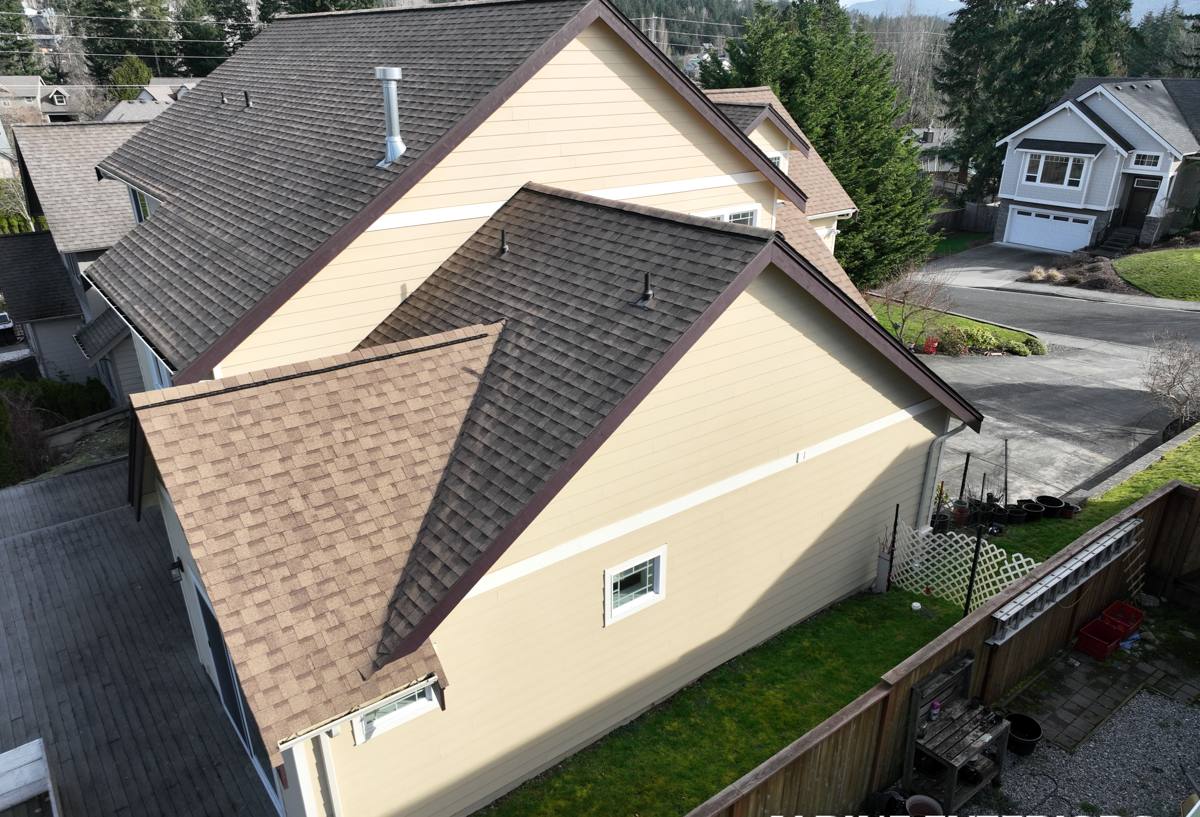
What Maple Falls Properties Actually Ask of a Deck
Whatcom County as a whole deals with a marine-influenced climate — driving rain, long stretches of overcast humidity, and in the county's western and coastal-facing communities, salt-laden air that accelerates corrosion on hardware and finishes. Maple Falls, sitting further inland and at higher elevation toward the Mount Baker corridor, gets a different version of the same problem: less direct salt exposure, but more shade, more standing moisture under tree canopy, and a longer moss season because the sun never fully dries the wood between rain events.
Moisture and Moss Management
A deck built under heavy tree cover doesn't dry the way a deck in an open yard does. Moss and algae take hold fastest in the spots that stay damp the longest — under railings, between deck boards laid too tight, and anywhere debris collects instead of shedding. Left alone, that moisture holds against the wood or composite surface and works into fastener holes, joints, and end grain.
Sun Exposure and Material Movement
Even shaded lots get dappled sun through the day, and that uneven heating and cooling causes materials to expand and contract at different rates across the same deck. Boards that aren't spaced or fastened with that movement in mind cup, crown, or work their fasteners loose over a few seasons — a slower failure than moss, but just as common in homes we've serviced in this part of the county.
Decking Material Options and How They Hold Up Locally
There's no single "right" material for every deck — it depends on budget, how much shade the site gets, and how much maintenance you're willing to do. Here's how the common options compare for a shaded, wet-climate site like Maple Falls:
| Material | Moisture/moss behavior | Maintenance | Relative cost | Typical lifespan |
|---|---|---|---|---|
| Pressure-treated wood | Absorbs moisture readily; needs gaps and airflow to avoid trapping it | Annual cleaning, periodic sealing/staining | Lowest | 10-15 years before major repair |
| Cedar | Naturally rot-resistant but still absorbs moisture in constant shade | Regular cleaning and refinishing to hold color and resist moss | Mid | 15-20 years with upkeep |
| Composite decking | Doesn't absorb water into the board itself, but surface film can still grow moss if not cleaned | Occasional washing, no sealing/staining | Mid-to-high | 25+ years |
| PVC/capped polymer | Fully sealed surface, most resistant to moisture and moss buildup | Lowest — washing only | Highest | 25-30+ years |
In heavy-shade lots like a lot of the Maple Falls properties we've worked on, we lean toward recommending composite or capped polymer for the walking surface, because the maintenance burden of keeping wood clean and sealed in low-sun conditions is real and ongoing. That said, plenty of homeowners want the look and feel of real wood and are willing to do the upkeep — that's a legitimate choice too, as long as it's made with eyes open about the maintenance schedule it requires.
What a Correctly Built Deck Actually Involves
The parts of a deck that fail first are almost never the decking boards themselves — they're the structure and connections underneath. A deck can look finished and still be built wrong in ways that don't show up for a few years.
Footings and Framing
Footings need to be sized and set to the depth required for this region's frost and soil conditions, not guessed at. On sloped or uneven foothill lots, which are common around Maple Falls, footing placement also has to account for drainage — a footing set where water pools will move over time no matter how well it was poured.
Ledger Attachment and Flashing
Where a deck attaches to the house is the single most common point of failure we see on deck repair calls in this region. If the ledger board isn't properly flashed to shed water away from the house's siding and framing, water gets behind it and rots both the ledger and the wall structure behind it — often silently, for years, before it shows on the surface. This is not a place to cut corners, and it's the detail we spend the most time getting right on every deck we build.
Fasteners and Hardware
In a climate with this much moisture, and depending on proximity to marine air, standard fasteners corrode faster than most homeowners expect. Structural connections — joist hangers, ledger bolts, post bases — need corrosion-resistant hardware rated for exterior, wet-climate use. A deck is only as strong as the hardware holding its frame together, and that hardware is invisible once the decking is installed.
Our Process, From Estimate to Finished Deck
We keep the process straightforward because a deck is a big investment and homeowners deserve to know what's happening at each stage:
- Site visit and assessment — we look at sun exposure, tree cover, slope, drainage, and how the deck will attach to the house.
- Design and material discussion — sizing, layout, railing style, and an honest conversation about which decking material fits your budget and your site's shade and moisture conditions.
- Permitting — decks generally require a building permit through Whatcom County, and we handle that process rather than leaving it on the homeowner.
- Framing and structural work — footings, posts, ledger flashing, and joist framing, built to code and to the standards this climate actually requires.
- Decking, railing, and finish work — installed with the board spacing and fastening approach appropriate to the material and site conditions.
- Final walkthrough — we go over the finished deck with you, including what maintenance it will need and roughly how often.
Permits and Code Basics for Whatcom County Decks
Most new decks and many significant deck rebuilds require a permit from Whatcom County, particularly once a deck is attached to the house or built above a certain height. Guardrail height, baluster spacing, and stair requirements are all governed by code, and footing depth requirements exist specifically because of how this region's soil and frost conditions behave. We don't treat permitting as optional paperwork — it protects the homeowner as much as it protects us, because an unpermitted deck can become a real problem at resale or insurance time. If you're unsure whether your project needs a permit, that's a fair question to ask us directly rather than guess.
Maintenance That Actually Matters in This Climate
A well-built deck still needs seasonal attention, especially on shaded Maple Falls lots where moss and moisture linger longer than they would on an open, sunny site. A short checklist covers most of it:
- Sweep debris (needles, leaves, seed pods) off the deck regularly — trapped organic material is what feeds moss growth
- Wash the surface at least once or twice a year to remove algae and moss film before it gets a foothold
- Check that gaps between boards are clear so water can drain through instead of pooling on top
- Inspect railing posts and stair connections annually for looseness, which often signals a fastener starting to corrode or loosen
- Look at the ledger-to-house connection periodically for any staining, gaps, or soft wood — early signs of a flashing problem
- Re-seal or re-stain wood decking on the schedule the product calls for, not just when it visibly needs it
Why It Matters That We Already Work in Maple Falls
A crew that mostly builds decks on open, sunny lots elsewhere in the county will size up a shaded Maple Falls site differently than a crew that's done it before. Knowing which corners of a shaded lot hold moisture the longest, how much airflow a given tree canopy actually allows, and which fastener and flashing details hold up under this specific combination of rain and shade — that's the difference between a deck that needs attention in year three and one that's still solid at year fifteen.
As a Lynden-based crew, we're not driving in from out of the area to give you a one-time bid and disappear. We're close enough to Maple Falls to know the terrain and the weather it deals with, and close enough to come back for a warranty check or a maintenance question without it being a special trip.
If you're planning a new deck or need an honest look at one that's showing its age, we're glad to come out, walk the site, and give you a straightforward, no-pressure estimate. Use the form below to get started.