 Lynden Siding
 New-Construction Windows Are a Different Job Than Replacement Windows
People often assume "window installation" is one job. On a new build it isn't the same task as swapping an old window in an existing wall, and the difference matters more than most homeowners realize until something leaks. New-construction windows have a nailing fin around the perimeter of the frame that gets integrated directly into the wall's weather-resistive barrier (WRB) and flashing system before the siding ever goes on. There's no old frame to work around, no trim to disturb, and no guessing about what's hidden in the wall — but there's also no room for a shortcut, because whatever gets built into that opening now is what the house lives with for the next several decades.
On a new build near Abbotsford, BC, we're usually one trade in a sequence — framer, WRB installer, window crew, siding crew — and the window install has to land at exactly the right point in that order. Go too early and the WRB isn't ready to lap over the fin correctly. Go too late and you're fighting a schedule that's already moved on to siding. Getting that sequencing right is as much a part of "installing windows" as the physical fastening.
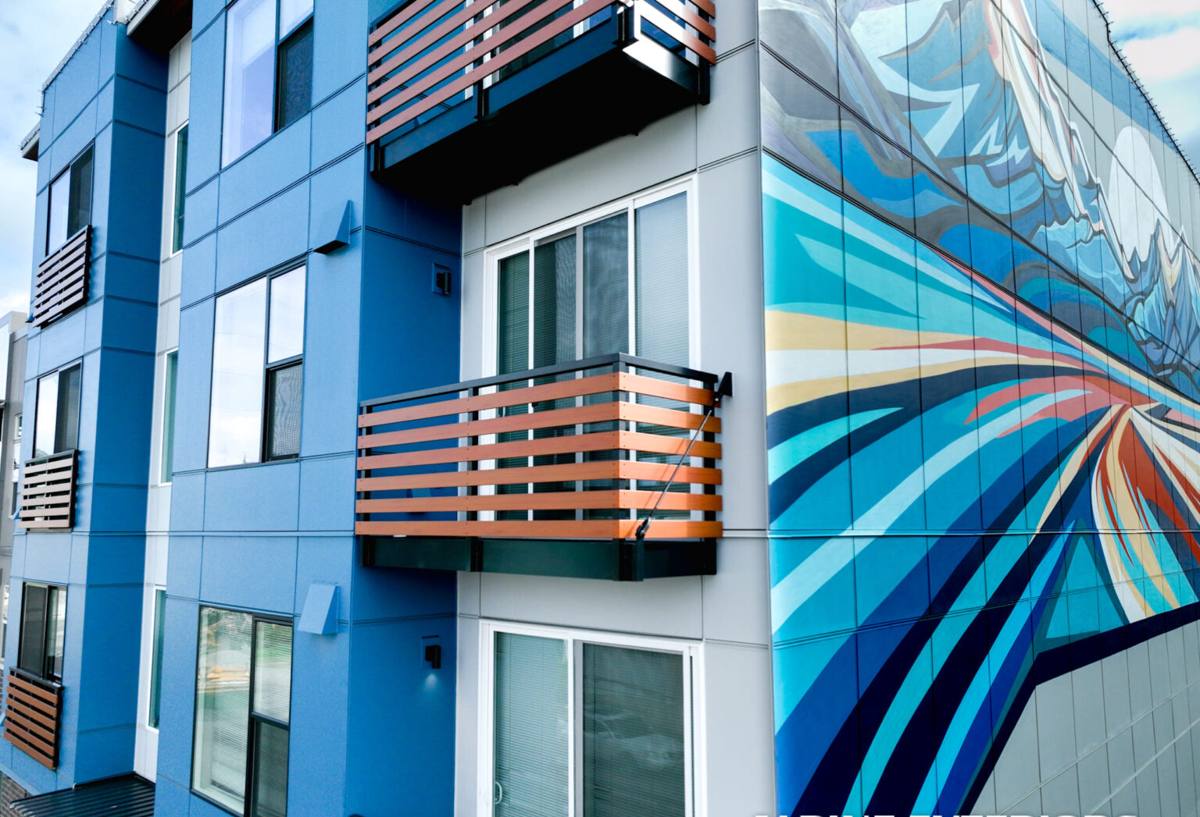
What This Climate Does to a Window Opening Over Time
This part of the Pacific Northwest — Whatcom County on the US side, straight up into the Fraser Valley on the Canadian side — deals with the same weather pattern regardless of which side of the border a house sits on: long stretches of driving, wind-pushed rain, marine air moving in off the water, and a moss and algae season that runs most of the year on anything shaded or north-facing. None of that is dramatic on any single day. The problem is duration. A window opening that's 98% sealed will hold up fine through one storm. It's the cumulative exposure — months of damp air, repeated wetting and drying, freeze-thaw cycles in winter — that finds the 2% that wasn't detailed correctly.
New construction gives us the advantage of building the opening right the first time, before there's any siding, insulation, or drywall to work around. That's the whole argument for doing it carefully now rather than treating it as a step to get through quickly on the way to the next trade.
The Installation Details That Actually Keep Water Out
Rough Opening Prep and the Sill Pan
Every opening gets checked for square and level before a window goes anywhere near it — a frame installed slightly racked will bind, won't seal evenly, and can crack glazing seals early. At the sill, we install a sloped or pan-style flashing so that any water that does get past the window has somewhere to go besides straight down into the framing. This is the single most common corner cut on lower-quality installs, because it doesn't show once trim and siding go on, and it's the detail most likely to cause a slow, hidden leak years later.
Flashing Sequence and House Wrap Integration
Flashing tape and the house wrap have to be layered in the correct order — sill first, then the window's nailing fin, then jamb flashing, then head flashing last, each piece lapping over the one below it like shingles. Reverse that order anywhere and you've built a spot where water runs behind the barrier instead of over it. We tie every window into the WRB before the siding crew shows up, so there's no ambiguity about whose job that overlap was.
Fastening and Air-Sealing
Windows get fastened per the manufacturer's schedule — skipping fastener points to save time is a warranty issue as well as a performance one. On the interior side, the gap between the frame and rough opening gets air-sealed with a compatible low-expansion product, not packed with whatever's on the truck; the wrong foam can bow a vinyl frame enough to affect how the sash operates.
Working New-Construction Jobs in the Abbotsford, BC Corridor
Lynden sits close enough to the border that we regularly work builds on both sides of it, and the climate argument for careful window installation doesn't change when you cross the line — the rain doesn't stop at the border and neither does the moss. What does change is the regulatory picture: a build in Abbotsford falls under the BC Building Code, not Washington's, and permits, inspections, and code sign-off are the general contractor's responsibility, not ours. Our role on a Canadian build is the same physical scope — installing and flashing the windows correctly — working inside the schedule and requirements the builder has already set up. If you're building in Abbotsford and want us on the crew, the earliest useful conversation is with your builder, so window ordering, our availability, and any cross-border delivery logistics line up before framing is done.
Choosing a Window Line for New Construction
On new construction, the window itself gets picked earlier in the process than on a replacement job — often by the builder, sometimes by the homeowner working with the builder's plans. The three material categories cover almost everything we install:
| Material | Upfront Cost | How It Handles This Climate | Best Fit |
|---|---|---|---|
| Vinyl | Lowest | Good moisture resistance; frame can expand/contract more with temperature swings | Budget-driven builds, standard sizes |
| Fiberglass | Mid-to-higher | Very stable dimensionally in wet, freeze-thaw conditions; takes paint if a custom exterior color is wanted later | Larger openings, long-term owners |
| Wood interior / aluminum- or fiberglass-clad exterior | Highest | Excellent weather performance on the exterior face; interior wood look for those who want it | Higher-end builds prioritizing appearance |
We don't push one line over another — we install to the product the builder or homeowner has selected, and we'll flag it ahead of time if a particular unit's flange or frame design doesn't match well with our standard flashing sequence, so it's addressed before the order is placed rather than on install day.
Our Process, Start to Finish
- Initial conversation with you or your builder about scope, window count, and target install date
- Confirm window specs, sizes, and rough opening dimensions against the plans
- Schedule the install to land after WRB is up and before siding starts
- Install sill flashing, set and fasten each window, complete flashing tape sequence
- Air-seal interior gaps and do a final check on operation (sash movement, locks, screens)
- Walk the job with the builder or homeowner before siding crew moves in behind us
What Drives the Cost of a New-Construction Window Package
Every new-construction quote is specific to the plans, but the same handful of factors move the number up or down on nearly every job:
| Factor | Why It Matters |
|---|---|
| Number and size of openings | More and larger windows mean more material and labor hours |
| Window material and glazing package | Vinyl vs. fiberglass vs. clad-wood, plus double vs. triple glazing |
| Wall height and access | Second-story and stairwell windows take longer and often need lift equipment |
| Special shapes or oversized units | Custom flashing details and sometimes crane or extra-crew placement |
| Site and schedule | Cross-border delivery timing, tight build schedules, or weather delays |
We're glad to give a straightforward estimate once we have a set of plans or a window schedule — broad ballpark numbers without seeing the actual opening sizes and quantities aren't useful to either of us.
Checklist: What to Have Ready Before Your Windows Go In
- Final window schedule (sizes, quantities, swing/slide direction) confirmed against the plans
- Windows ordered with enough lead time — new-construction units are often built to order, not stocked
- WRB installed and inspected before we're scheduled on site
- Rough openings framed square and to the correct dimensions
- Clear communication with the siding crew on who follows whom, and when
- For Abbotsford builds: confirmed with your builder that any cross-border material delivery is accounted for in the timeline
Why a Crew That Already Works This Corridor Matters
New-construction window installation isn't complicated in theory — flash it in the right order, fasten it correctly, seal it, move on. What's harder to get from a crew that doesn't work this area regularly is judgment about how much margin to build in for the actual weather here, not textbook weather. A crew that's used to a drier climate can underestimate how much wind-driven rain a wall assembly in this corridor needs to shed, or treat moss and algae growth as a cosmetic problem instead of a sign that a surface stays wet longer than it should. Working consistently across Whatcom County and into the Fraser Valley means we're building to the same standard on both sides of the line, because the weather doesn't know where the border is.
If you're building in Abbotsford, BC and want a straightforward look at what a correct new-construction window install involves for your project, reach out for a free, no-pressure estimate — the form below gets you a real answer, not a sales pitch.