 Lynden Siding
 Why Maple Falls Roofs Wear Out Faster Than the Brochure Says
Maple Falls sits in a part of Whatcom County where the roof over your head is doing more work than most homeowners realize. The air moving through this corner of Washington carries a steady mix of moisture off the Sound and the Strait, and that moisture doesn't just fall as rain — it lingers. Combine that with long stretches of driving, wind-pushed rain in the fall and winter, and shaded tree cover on a lot of Maple Falls properties, and you get a roof environment that's tough on materials that weren't built or installed with this climate in mind.
The two biggest local stressors are moisture intrusion and moss. Salt-tinged, damp air accelerates the breakdown of cheap or aging shingle mat, corrodes exposed fasteners and flashing over time, and keeps roof surfaces wet longer after every storm than they would be in a drier climate. Add shade from evergreens, which is common on wooded and semi-rural Maple Falls lots, and you get roof sections that almost never fully dry out — which is exactly what moss needs to take hold.
None of this means a roof in Maple Falls is doomed. It means the installation has to account for these conditions from the start, not patch around them later. That's the difference between a roof that looks fine for five years and one that actually performs for its full rated life.
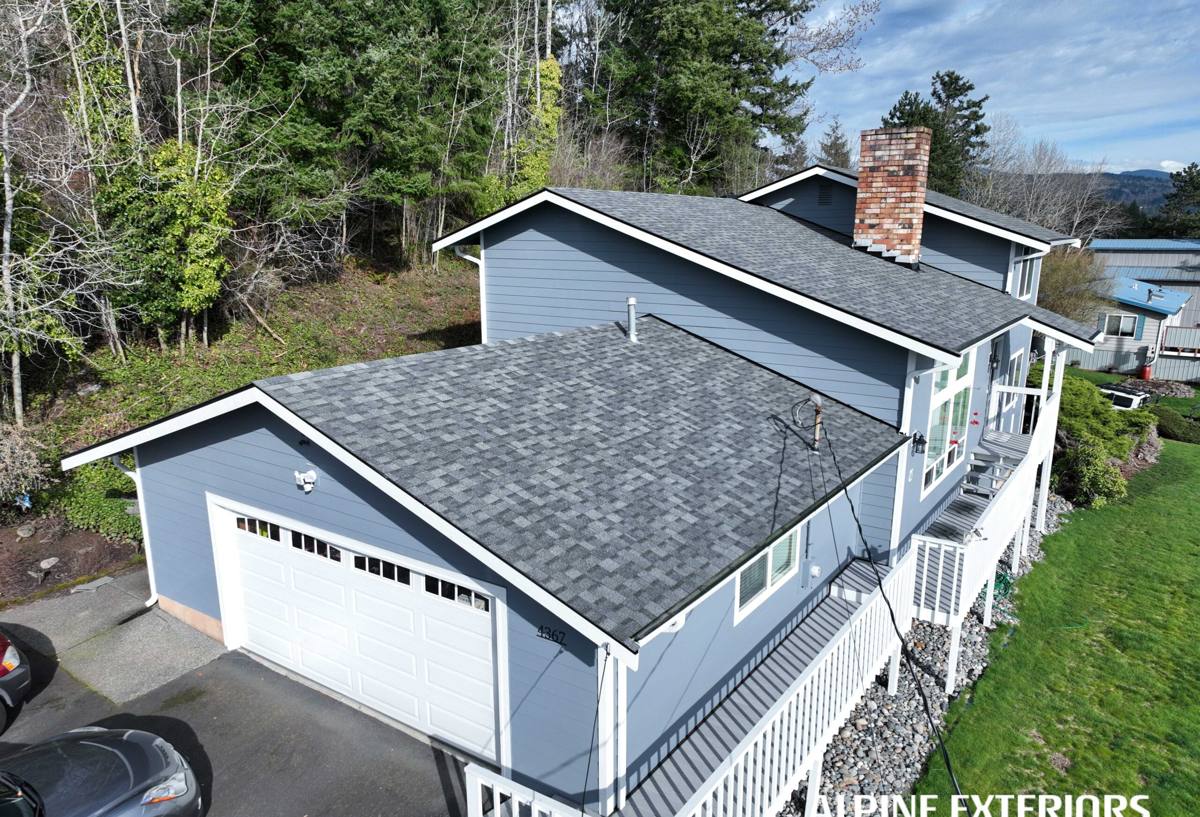
What Moss and Moisture Actually Do to a Roof
Moss doesn't just look bad — it holds water directly against the roofing surface, which is the opposite of what a roof is supposed to do. Under a mat of moss, shingles stay damp for days after a storm instead of hours. Over years, that trapped moisture works granules loose, softens the shingle mat, and can lift edges enough for wind-driven rain to get underneath. On older or lower-grade roofs, moss growth is often the first visible sign that the roof is holding moisture it shouldn't be.
Driving rain adds a second problem: wind-pushed water doesn't fall straight down, it gets pushed sideways and upward under laps, around penetrations, and along edges. A roof that's only detailed for vertical rainfall — thin underlayment, minimal flashing, standard nailing — will eventually leak in exactly those spots during a hard Whatcom County storm, even if the shingles themselves are in decent shape.
What a Correct New Roof Install Actually Involves
A new roof is more than shingles nailed to plywood. For a Maple Falls home, we treat the installation as a full moisture-management system, not just a surface layer:
- Full tear-off, not an overlay. Roofing over old material traps moisture, hides deck damage, and voids most manufacturer warranties. We remove down to the deck on every install.
- Deck inspection and repair. Any soft, delaminated, or water-stained sheathing gets replaced before anything new goes down — covering rotten decking with new shingles just delays a bigger repair.
- Ice-and-water barrier at vulnerable points. Eaves, valleys, and roof-to-wall transitions get a self-adhering membrane underneath the field underlayment, since those are the areas most prone to wind-driven rain and ice damming.
- Synthetic underlayment across the field. A durable, water-resistant underlayment gives the roof a second line of defense if wind ever drives water past the shingles themselves.
- New flashing, not reused flashing. Step flashing, valley metal, and counterflashing around chimneys and walls are replaced, not bent back into place. Reused flashing is one of the most common causes of "mystery leaks" on otherwise good roofs.
- Balanced attic ventilation. Intake at the eaves and exhaust at the ridge, sized to the attic volume, so moist air actually moves out instead of condensing on the underside of the deck.
Choosing a Roofing Material for This Climate
There's no single "best" roofing material for every Maple Falls home — it depends on the roof pitch, the budget, and how much long-term maintenance the owner wants to take on. Here's how the common options actually compare in this climate:
| Material | Moss/moisture resistance | Typical lifespan here | Maintenance |
|---|---|---|---|
| Standard 3-tab asphalt | Fair — needs regular moss treatment | 15–20 years | Moderate to high |
| Architectural (laminate) asphalt | Good, especially with algae-resistant granules | 25–30 years | Low to moderate |
| Metal (standing seam or panel) | Excellent — sheds moisture, resists moss | 40–50+ years | Low |
| Cedar shake | Poor in shaded, damp lots without diligent upkeep | 20–30 years with maintenance | High |
For most Maple Falls homes we recommend an architectural asphalt shingle with algae-resistant (AR) granules as the baseline choice — it holds up well against the local moisture load at a reasonable cost. Metal roofing is worth serious consideration on heavily shaded lots or steep pitches where moss has been a repeat problem, since it gives water almost nothing to cling to. Cedar shake can look great, but on a damp, tree-covered lot it demands a level of upkeep most homeowners don't want to sign up for — that's a maintenance-burden call for the homeowner to make with full information, not a knock on the material itself.
A Note on Algae-Resistant Shingles
Standard asphalt shingles are prone to dark streaking from algae growth in consistently damp climates. AR shingles have copper-containing granules mixed in specifically to resist that. It's a small upgrade in material cost that pays off visibly within a few years on a shaded roof.
Our Installation Process
- On-site assessment. We look at the existing roof, attic ventilation, deck condition, and how the property is shaded and exposed to prevailing weather.
- Written scope and material selection. You get a clear breakdown of what's being torn off, what's being replaced, and which materials fit your roof and budget — no vague allowances.
- Full tear-off and deck inspection. Old roofing comes off completely, and we flag any deck repairs before covering anything.
- Underlayment, ice-and-water barrier, and flashing installation. This is the layer that actually determines whether the roof stays dry — we don't rush it.
- Roofing material installation to manufacturer spec. Correct nailing pattern, exposure, and fastener count matter more for wind and rain performance than most homeowners are told.
- Ventilation check and correction. We confirm intake and exhaust are balanced before calling the job done.
- Final walkthrough and cleanup. Magnetic sweep for stray fasteners, full site cleanup, and a walk-through so you know what was done and why.
What Drives the Cost of a New Roof
Every roof is different, but the same handful of factors move the price up or down on most Maple Falls jobs:
| Factor | Why it matters |
|---|---|
| Roof size and number of planes | More square footage and more cuts mean more material and labor |
| Pitch and access | Steep or hard-to-access roofs take longer and require more safety setup |
| Deck condition | Rotten or delaminated sheathing found during tear-off adds repair cost |
| Material choice | Standard asphalt, AR asphalt, and metal carry different material costs |
| Ventilation upgrades | Adding proper intake/exhaust vents where none exist is extra work, but prevents future moisture damage |
| Number of penetrations | Chimneys, skylights, and vent stacks each need dedicated flashing detail |
We give you the real number after seeing the roof, not a phone estimate that changes once we're up there. If deck repair is needed, we show you the damage before we cover it.
Checklist: What to Ask Before You Hire Anyone for a Roof
- Is the quote for a full tear-off, or is this an overlay over existing roofing?
- Does the estimate include ice-and-water barrier at eaves and valleys, or only the shingles themselves?
- Will flashing be replaced or reused?
- Is attic ventilation being evaluated and balanced as part of the job?
- What's the manufacturer's warranty, and is the installer certified to offer an enhanced warranty on it?
- Are they licensed and insured to work in Washington, and can they show proof?
- Do they have recent work you can drive by in Whatcom County?
Why It Matters That We Already Work Maple Falls
A roofing crew that's worked this specific area knows which details get skipped by installers who are used to drier climates or lower-maintenance jobs elsewhere. We know that a roof in Maple Falls needs more attention paid to shaded, slow-drying sections, that flashing details matter more here than in a dry inland climate, and that ventilation gets overlooked on a lot of older homes in this area — which quietly shortens roof life from the inside out. That's local knowledge you can't get from a national franchise crew rotating through on a one-off job.
It also means we're not disappearing after the invoice clears. If a warranty issue or a question comes up two years down the road, we're still working in Lynden and the surrounding communities, not three counties away.
Warranty and Long-Term Care
Manufacturer warranties on shingles typically range from 25 years to lifetime coverage on higher-tier products, but those warranties are conditional on correct installation — which is another reason installation quality matters as much as material choice. We back our workmanship separately from the manufacturer's material warranty, and we'll walk you through exactly what's covered by whom before the job starts.
After installation, the best thing a homeowner can do is keep an eye on moss regrowth, especially on shaded slopes, and keep gutters clear so water isn't backing up under the eaves. A five-minute look from the ground once or twice a year catches most problems early, long before they become a leak.
If you're planning a new roof for a home in Maple Falls, we're glad to come take a look and give you a straight, no-pressure estimate — no obligation, just an honest read on what your roof actually needs. Use the form below to get started.