 Lynden Siding
 Asphalt Shingle Roofing for Nooksack Homes
Nooksack sits in a corner of Whatcom County where the weather doesn't do anything in half measures. Winters bring long stretches of driving rain off the Pacific, humid air moves in off the Nooksack River valley and nearby Sound, and shade from mature trees keeps roof surfaces damp for days after a storm passes. Asphalt shingle roofs here don't fail because the product is bad. They fail because they were installed, flashed, or ventilated without accounting for what this specific climate does to a roof, year after year.
This page covers what asphalt shingle roofing means specifically for a home in and around Nooksack — what the climate demands, what a correctly done job actually involves, and how we approach the work when we're on your roof.
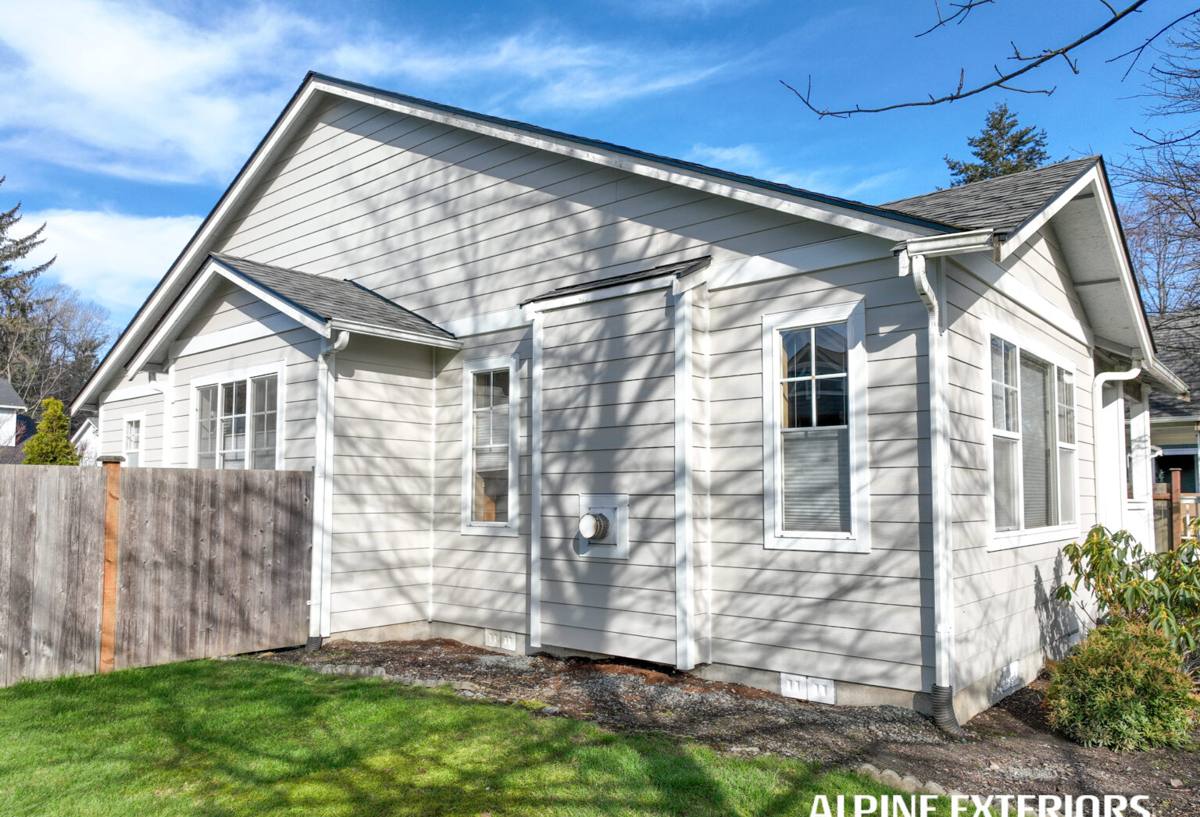
What Salt Air, Rain, and Moss Actually Do to a Shingle Roof
Three things wear down shingle roofs faster in this part of Whatcom County than they would in a drier inland climate, and they compound each other.
Salt Air
Even well inland from the coast, moisture-laden air carries fine salt content that settles on exposed metal and granule surfaces. Over years, it accelerates corrosion on flashing, nail heads, and vent stacks faster than plain rainwater would on its own. A roof detailed with the wrong fasteners or exposed metal shows rust streaks and pinhole leaks well before the shingles themselves are worn out.
Driving Rain
Rain here rarely falls straight down. Wind-driven rain off passing fronts pushes water sideways and up under shingle tabs, valleys, and flashing edges — areas that a roof in a calmer climate can get away with detailing more loosely. Underlayment coverage, valley treatment, and starter course overlap all matter more when wind is pushing water uphill instead of just letting it run off.
Long Moss Season
Shaded, north-facing slopes and roofs under tree cover stay damp for most of the fall through spring stretch. That's exactly what moss needs. Moss doesn't just look bad — its root structure lifts shingle tabs, holds water against the granule surface, and breaks the seal strips that keep shingles locked down against wind. A roof with a heavy moss season and no maintenance plan ages years faster than the same roof kept clean.
Signs a Nooksack Roof Needs Attention
Most shingle roof failures in this area give warning signs well before there's an active leak. Worth checking for, especially after the wet months:
- Granules collecting in gutters or at downspout outlets — a sign shingles are wearing thin
- Dark streaking or green-black patches, especially on shaded or north-facing slopes
- Curling, cupping, or lifted shingle edges, particularly along the roof's south and west exposures
- Moss growth thick enough to see from the ground, or moss bridging between shingle courses
- Rust staining around vent stacks, chimney flashing, or exposed nail heads
- Soft or spongy spots when walked, or sagging along the ridge or eave line
- Daylight visible through the roof deck from inside the attic
- Water stains on interior ceilings, especially near valleys, chimneys, or skylights
What a Correct Asphalt Shingle Installation Involves
Asphalt shingle roofing looks simple from the ground, but the parts you can't see are what determine whether it holds up through a Whatcom County winter. A correct job includes:
Deck Inspection and Repair
Every tear-off starts with checking the sheathing underneath. Soft, delaminated, or water-damaged plywood gets replaced before anything new goes down — shingles are only as good as the surface they're fastened to.
Underlayment
Given how much wind-driven rain this area sees, we don't treat underlayment as an afterthought. Full synthetic underlayment coverage, with self-adhered ice-and-water membrane at eaves, valleys, and any roof-to-wall transitions, gives a second line of defense if wind pushes water past the shingle surface.
Flashing
Valleys, chimneys, skylights, and any wall-to-roof intersection are where the overwhelming majority of leaks start — not in the open field of shingles. Flashing needs to be corrosion-resistant metal, properly lapped with the underlayment and shingle courses, and sealed with materials rated for constant moisture exposure, not just fresh-install appearance.
Ventilation
A roof that traps warm, humid attic air underneath it will sweat from the inside, which rots decking and shortens shingle life regardless of how good the shingles are. Balanced intake at the eaves and exhaust at the ridge keeps air moving and keeps moisture from condensing where you can't see it.
Fastening and Nail Pattern
Every shingle manufacturer specifies a nailing pattern and nail count for warranty coverage, and wind exposure in this area is a real factor, not a formality. Under-nailed shingles are one of the most common causes of wind-lift failures we see on older roofs in the region.
Choosing a Shingle Type for This Climate
Not every asphalt shingle product handles moss, moisture, and wind the same way. Here's how the common options compare for a Nooksack home:
| Shingle Type | Moss/Algae Resistance | Wind Rating | Typical Lifespan Here |
|---|---|---|---|
| Standard 3-tab | None built in | Lower | 15–20 years, less with heavy shade |
| Architectural/laminate | Better mass, sheds moss growth more slowly | Higher | 25–30 years with proper install |
| Algae-resistant (AR) shingles | Copper/ceramic granules resist moss and algae staining | Same as base product line | Similar to architectural, with cleaner long-term appearance |
| Impact-rated (Class 4) | Varies by product | Higher, denser mat | Comparable to architectural, added durability against debris |
For most shaded or tree-covered lots around Nooksack, we lean toward architectural shingles with algae-resistant granules. The added cost over standard 3-tab is modest, and given how long moss season runs here, it's usually worth it over the life of the roof.
How We Approach a Nooksack Roofing Job
- On-site assessment. We walk the roof (or inspect closely if pitch or condition makes that unsafe) and check the attic from inside, not just the shingle surface. Ventilation, deck condition, and existing moisture damage all get evaluated before we talk about shingles.
- Honest repair-vs-replace conversation. If a roof has isolated damage and sound decking elsewhere, we'll say so. Full replacement isn't always the right answer.
- Tear-off, not overlay. We remove existing shingles down to the deck rather than layering new shingles over old. Overlays trap moisture, hide deck problems, and void most manufacturer warranties.
- Deck repair as needed. Any soft or damaged sheathing is replaced before underlayment goes down.
- Underlayment, flashing, and ventilation installed to spec — not just to code minimums, but to what actually holds up against wind-driven rain and a long wet season.
- Shingle installation with manufacturer-specified nailing patterns and full warranty documentation.
- Site cleanup including magnetic sweep for stray nails and haul-away of old material.
What Affects Cost on a Shingle Roofing Job
Every roof is different, but these are the factors that move the price up or down on a typical Nooksack-area shingle project:
| Factor | Why It Matters |
|---|---|
| Roof pitch and access | Steeper roofs and limited access take longer and require more safety setup |
| Deck condition | Rotted or delaminated sheathing found during tear-off adds material and labor |
| Number of layers to remove | Roofs with a prior overlay take longer to strip to bare deck |
| Shingle grade selected | Standard 3-tab vs. architectural vs. impact-rated changes material cost per square |
| Valleys, chimneys, skylights | More flashing detail work means more labor time |
| Ventilation upgrades | Adding ridge or intake venting where none exists is additional scope |
We don't quote a job over the phone from a square-footage guess. A firm number comes after we've actually seen the roof.
Maintenance That Extends Roof Life Here
Given how long the moss season runs in this part of Whatcom County, a shingle roof lasts noticeably longer with a small amount of upkeep:
- Keep gutters clear so water isn't backing up under the eave line during heavy rain
- Have moss removed by soft-washing or manual removal — never pressure-washed, which strips granules
- Trim back overhanging branches to cut down on shade and debris buildup
- Have flashing and sealant points checked every few years, especially around chimneys and skylights
- Address small leaks or lifted shingles quickly — a $200 repair now is a lot cheaper than a $2,000 deck repair later
Why Hire a Crew That Already Works This Area
Roofing crews that mostly work drier inland climates or dense urban roofs don't always adjust their detailing for what Whatcom County actually throws at a roof. A crew that's already worked on homes around Nooksack knows which slopes hold moss longest, how much underlayment coverage the driving rain actually demands, and which flashing details tend to fail first in this environment. That's not a marketing point — it shows up in how few callbacks a properly detailed roof needs five and ten years down the line.
We're not asking you to take our word for the climate concerns above. We're happy to walk your roof, point out what we see, and explain exactly why we'd approach it a certain way — no pressure, no upsell script. If you'd like a straightforward look at your roof's condition and an honest estimate, the form below gets you on our schedule for a free assessment.