 Lynden Siding
 Why Nooksack-Area Homes Need Siding Built for This Climate
The stretch of Whatcom County around Nooksack and Lynden sits close enough to the Salish Sea and the Nooksack River bottomlands that homes here deal with a specific combination of punishment most siding was never designed for: salt-laden air moving in off the water, long stretches of driving rain pushed sideways by wind, and a moss season that can run eight months or more in shaded, north-facing spots. Add in the freeze-thaw swings we get most winters and you have a climate that finds every weak point in a siding system — every seam, every fastener, every spot where paint film is thin.
This isn't a page about siding in general. It's about what fiber cement siding specifically needs to do on a Nooksack-area home, what a correct installation looks like out here, and why the crew you hire matters as much as the product you choose.
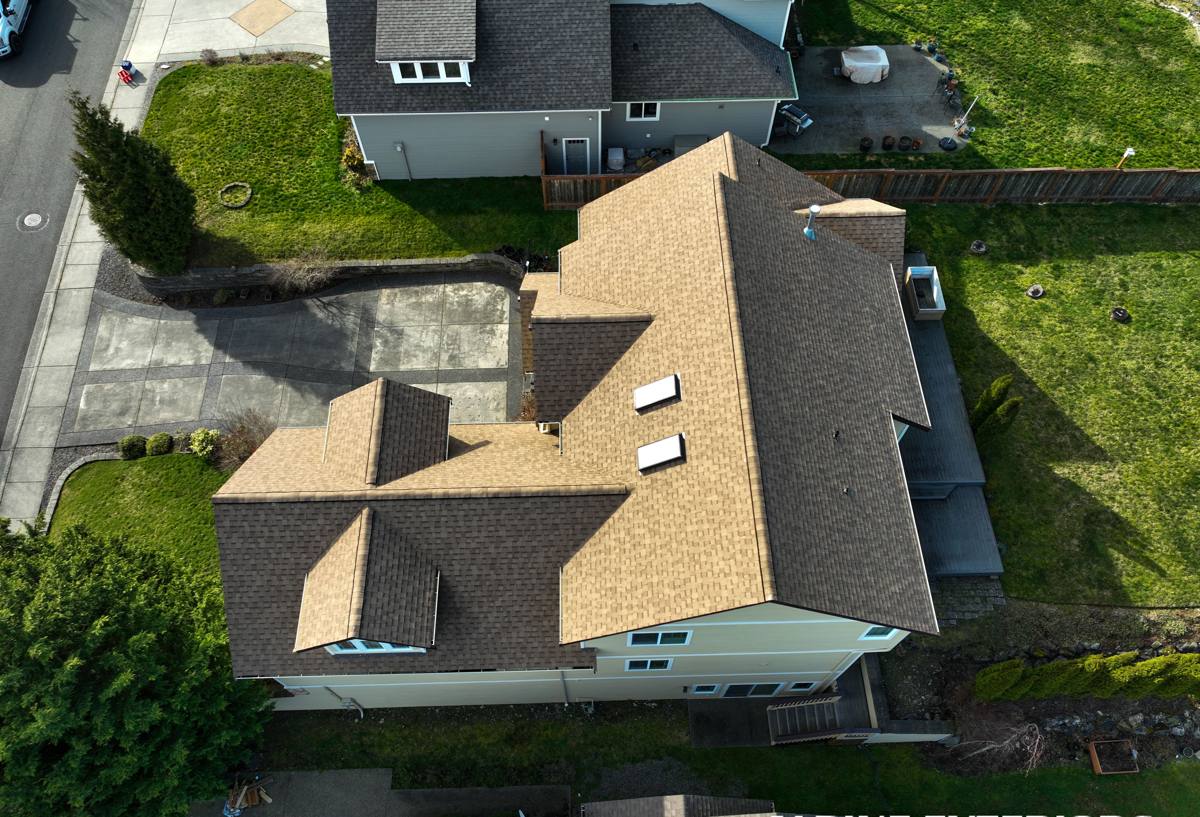
What Salt Air, Rain, and Moss Actually Do to Siding
Salt Air
Coastal-influenced air carries fine salt particles that settle on exterior surfaces and accelerate corrosion of anything metal — nail heads, flashing, trim fasteners. On wood-based or wood-composite sidings, that salt also draws moisture into the material through hygroscopic action, keeping the surface damp longer after a storm passes. Over years, that repeated wetting is what breaks down paint adhesion and lets water find its way behind the cladding.
Driving Rain
Lynden and Nooksack don't get hurricane-force wind, but we do get sustained windward rain events where water isn't just falling — it's being driven horizontally into wall assemblies. That matters because most siding failures aren't caused by rain hitting a flat wall; they're caused by rain finding a horizontal lap, a butt joint, or a fastener hole and working its way in sideways or upward. A siding system's water-shedding detail — not just the material itself — is what determines whether a home stays dry.
Moss and Sustained Dampness
North- and west-facing walls, especially under eaves or near mature trees, stay shaded and damp for long stretches of the year here. That's exactly the environment moss and mildew need. On porous or organic siding materials, moss growth isn't just cosmetic — its root structure holds moisture against the surface, which speeds up rot in wood-based products and paint failure on almost everything else.
Why Fiber Cement Is the Right Material for This Environment
Fiber cement is a composite of Portland cement, sand, and cellulose fiber, cured into a dense, dimensionally stable board. It doesn't absorb water the way wood or wood-composite products do, it doesn't swell and shrink significantly with humidity changes, and it's non-combustible. Those three properties line up directly with the three problems above: it resists the moisture salt air encourages, it holds its shape and seams tighter against driving rain, and its surface doesn't feed moss and mildew the way organic materials do.
We install James Hardie fiber cement exclusively — not as a brand preference, but because Hardie is the manufacturer that engineers its products by climate zone, backs them with a real factory finish system, and has the installation infrastructure (training, specs, local supply) that lets us install to spec every time. We don't install LP SmartSide, vinyl, Cemplank, Allura, or primed wood siding, and we're upfront about why: those products each carry trade-offs — in moisture behavior, maintenance burden, or long-term appearance — that we're not willing to put our name behind. Hardie's HZ5 product line is specifically engineered for the freeze-thaw, moisture-heavy climate zones the Pacific Northwest falls into.
ColorPlus Factory Finish
One detail that matters more here than in drier climates: Hardie's ColorPlus finish is baked on at the factory in a controlled environment, not brushed or sprayed on site. That matters because field-applied paint on any siding — fiber cement or otherwise — is only as good as the weather conditions on install day and the prep work underneath it. A factory finish gives you consistent film thickness and adhesion before the board ever gets exposed to Whatcom County weather, and it comes with its own finish warranty separate from the substrate warranty.
What a Correct Fiber Cement Installation Involves
Fiber cement is only as good as the installation behind it. The material resists moisture well, but every gap, exposed cut edge, or missed flashing detail is a spot where water can still get behind the cladding and cause problems in the sheathing or framing that no amount of good siding material will fix. On a Nooksack-area home, we pay particular attention to:
- Weather-resistive barrier and drainage plane — a correctly lapped and taped water/weather barrier behind the siding, so incidental moisture that gets past the cladding has somewhere to drain instead of sitting against the sheathing.
- Rainscreen or proper furring where called for — a small air gap behind the siding lets it dry out after wind-driven rain events instead of staying damp against the wall assembly.
- Flashing at every horizontal transition — window and door heads, roof-to-wall intersections, and deck ledgers are where driving rain finds its way in; each needs correct flashing, not just caulk.
- Cut-edge sealing — factory edges of Hardie board are treated at the plant, but every field cut exposes raw material that has to be primed and sealed before installation, per manufacturer spec.
- Correct fastener pattern and clearance — proper nailing schedule, and a minimum clearance between the bottom of the siding and grade, decks, or roof lines so splashback and standing moisture don't sit against the board.
- Caulking joints appropriately — not every seam should be caulked solid; Hardie's specs call for certain joints to be left to shed water naturally rather than sealed, which is a detail installers unfamiliar with the product commonly get wrong.
How Our Process Works on a Nooksack-Area Home
1. Walkthrough and Assessment
We look at the existing siding, the condition of the sheathing where it's exposed, moss and staining patterns (which tell us where moisture has been sitting), and the wall orientations most exposed to prevailing wind and rain. This is also when we flag anything that needs to be addressed before new siding goes on — soft sheathing, missing flashing, inadequate clearances.
2. Scope and Product Selection
We walk through Hardie's plank, panel, and shingle-style options and colors, and talk through which profile fits the home. We give a written estimate with a clear scope — what's being removed, what's being repaired, what's being installed, and what the warranty covers.
3. Tear-Off and Substrate Repair
Old siding comes off, and we address anything the walkthrough or the tear-off itself reveals — rotted sheathing, missing barrier, undersized flashing. This is the stage where problems that have been hidden for years get fixed, not covered over.
4. Weather Barrier and Flashing
New weather-resistive barrier goes on correctly lapped, taped, and flashed at every penetration and transition before a single piece of siding is hung.
5. Installation to Manufacturer Spec
Hardie board goes up following the manufacturer's fastening, clearance, and joint-treatment specifications — not shortcuts that speed up the job but compromise performance ten years down the line.
6. Final Walkthrough
We walk the finished job with you, check caulking lines, trim details, and touch-up needs, and go over the warranty paperwork.
Why Hiring a Crew That Already Works Nooksack Matters
Fiber cement installation quality varies enormously by crew, and the details that matter most — rainscreen gaps, flashing sequencing, cut-edge sealing, fastener spacing — are exactly the details that don't show up in a driveway estimate or a quick look at finished siding. They show up five or ten years later, when a crew that cut corners has moved on and you're the one dealing with water damage behind the wall.
A contractor who already works this specific stretch of Whatcom County knows which wall orientations on a typical Nooksack lot take the worst of the wind-driven rain, has already seen what moss buildup looks like on north-facing walls after a few damp winters, and has relationships with local suppliers that mean the right Hardie profile and color are available without weeks of delay. That local pattern-recognition is worth more than a lower bid from a crew that installs one Hardie job a year between other siding types.
Fiber Cement vs. Other Siding Materials in This Climate
| Material | Moisture Behavior | Moss/Mildew Resistance | Maintenance | Fire Rating |
|---|---|---|---|---|
| James Hardie Fiber Cement | Dimensionally stable, doesn't absorb and swell | Dense, non-organic surface resists growth better than wood-based products | Low — factory finish, periodic wash | Non-combustible |
| Wood-Composite (e.g. LP SmartSide) | Wood-based core, more sensitive to sustained moisture exposure | Organic material can support growth if finish is compromised | Moderate — finish and seams need monitoring | Combustible, engineered wood |
| Vinyl | Doesn't absorb water but can warp/distort with heat and doesn't stop moisture behind it | Smooth surface resists growth but seams and laps can trap debris | Low, but limited repair options if damaged | Combustible, can melt/deform |
| Primed Cedar/Spruce | Natural wood, absorbs moisture, needs consistent sealing | Most susceptible without diligent upkeep | High — regular refinishing needed | Combustible |
This table reflects general material characteristics, not a claim that every product in a category performs identically — installation quality and local exposure always matter. It's simply why, for the climate around Lynden and Nooksack, we standardized on one system rather than offering several.
Cost Factors for a Nooksack-Area Fiber Cement Project
Every home is different, but the main variables that move a fiber cement project's cost are consistent:
| Factor | Why It Matters |
|---|---|
| Home size and wall complexity | More corners, dormers, and trim details mean more cutting, flashing, and labor time |
| Condition of existing sheathing | Hidden rot found during tear-off adds repair scope — this is common on older homes with a history of moisture intrusion |
| Siding profile chosen | Lap, panel, and shingle-style Hardie products differ in material and labor cost |
| Trim and accessory scope | Fascia, soffit, and trim work bundled into the project affects total cost |
| Access and site conditions | Multi-story walls, tight lot lines, or landscaping can affect scaffolding and staging time |
Signs Your Current Siding May Already Be Failing
- Persistent moss or dark streaking on north- or west-facing walls that returns shortly after cleaning
- Soft or spongy spots when you press on the siding, especially near the bottom courses
- Paint that's peeling, bubbling, or chalking heavily rather than fading evenly
- Visible gaps opening at butt joints or corner boards
- Interior signs — musty smell, staining, or soft drywall near exterior walls, especially after a heavy rain stretch
- Warping, cupping, or separation at seams on wood or composite siding
If you're seeing more than one of these, it's worth having the wall assembly looked at, not just the surface — by the time siding shows visible damage, moisture has often been working on what's behind it for a while.
Get a Straightforward Look at Your Home
If you're in Nooksack, Lynden, or the surrounding area and dealing with aging siding, moss you can't stay ahead of, or you're just planning ahead for a replacement, we're glad to come take a look. We'll give you a straight assessment of what we see, walk you through the Hardie options that fit your home, and put together a clear, no-pressure estimate — use the form below to get started.