 Lynden Siding
 Why Nooksack Roofs Take a Different Kind of Beating
Nooksack sits in the Nooksack River valley, close enough to Puget Sound and the Georgia Strait that marine air pushes inland through Whatcom County on a regular basis. That air carries moisture, and combined with our long, gray stretch of fall and winter rain, it creates conditions that older or poorly-installed roofing simply wasn't built to handle. Add in the tree cover and shaded lots common on Nooksack properties, and you get a fourth factor: moss and organic growth that doesn't quit for months at a time.
Asphalt shingle roofs in this area tend to show their age fast — granule loss from driving rain, moss lifting shingle edges, and slow saturation of the decking underneath. Metal roofing, installed correctly for this specific climate, sheds water faster, resists moss far better than shingles, and holds up to the salt-tinged air without the maintenance headaches. But "installed correctly for this climate" is doing a lot of work in that sentence — a metal roof installed the way it might be in a dry inland climate won't perform the same way here.
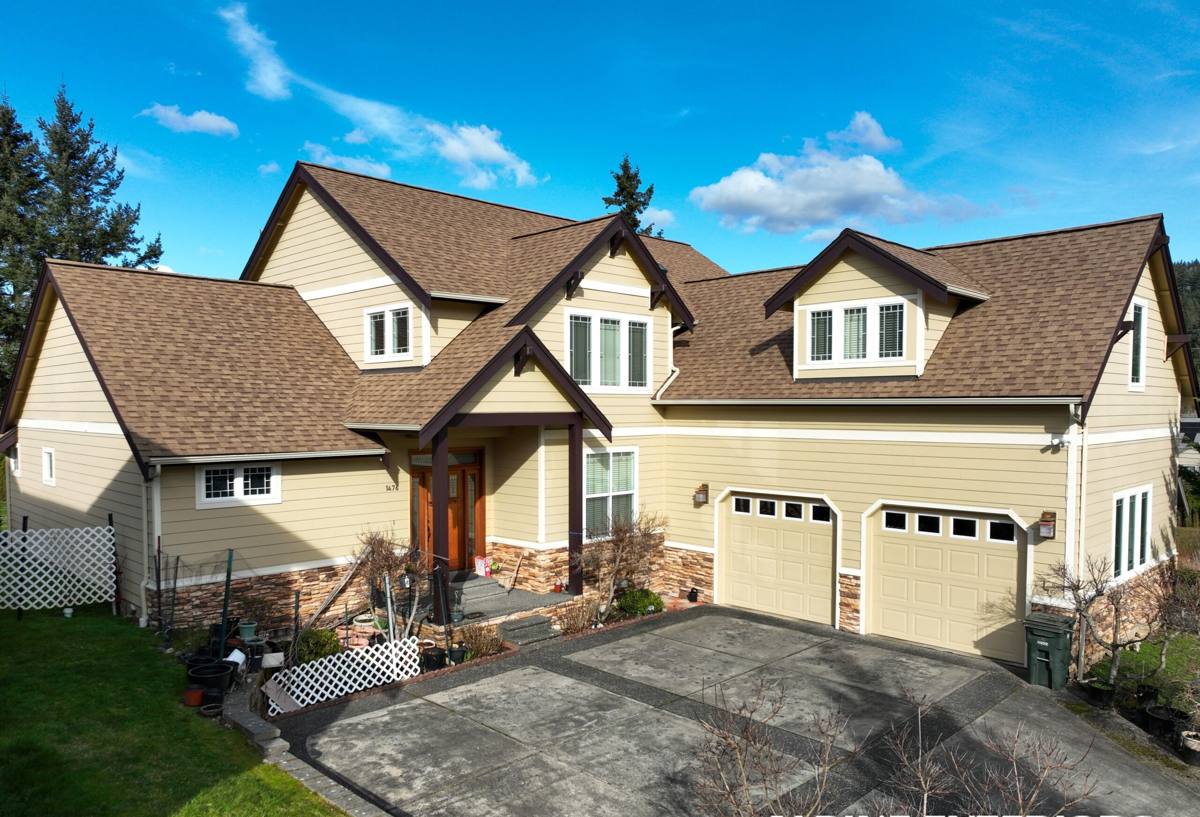
What a Metal Roof Actually Has to Survive Here
Moss and Organic Growth
Moss doesn't just sit on a roof surface — it holds moisture against whatever it's growing on and, on shingles, works its way under tabs over a few seasons. Metal panels give moss spores far less to grab onto, especially on steeper pitches and smooth panel profiles. Metal roofing doesn't eliminate moss risk near heavy tree cover, but it removes most of the mechanical damage moss causes to organic roofing materials.
Driving Rain and Wind-Driven Water
Whatcom County storms often come with sideways rain, not just straight-down rain. That matters at every seam, valley, and penetration on a roof. A metal roofing system is only as water-tight as its seams and flashing details — the panel material itself is rarely the weak point.
Salt-Influenced Air and Corrosion
Nooksack isn't beachfront, but the regional air carries enough marine influence over time to matter for bare or poorly coated metal, exposed fasteners, and mismatched metals in contact with each other. Coating quality and fastener selection matter more here than they would fifty miles inland.
Picking the Right Metal Panel System for This Area
Not all metal roofing is built the same way, and the right choice depends on the home, the roof pitch, and the budget. Here's how the common options compare for a climate like ours:
| System | Moss & Moisture Performance | Corrosion Resistance | Where It Fits Best |
|---|---|---|---|
| Standing seam (concealed fastener) | Excellent — no exposed fastener heads to fail or leak over time | Very good with quality coatings | Most Nooksack-area homes, especially steeper or more exposed roofs |
| Exposed-fastener ribbed/corrugated panel | Good, but fastener gaskets wear and need eventual attention | Fair to good — depends on fastener quality and coating | Outbuildings, shops, budget-conscious projects |
| Stone-coated steel shingle/shake panels | Good — sheds moss better than asphalt, textured surface holds a bit more debris than smooth standing seam | Good with factory coatings | Homeowners wanting a traditional shingle or shake look with metal durability underneath |
For most Nooksack homes we recommend standing seam because the concealed fastener system removes the single most common long-term failure point on a metal roof — fastener gaskets that dry out, shrink, or back out over fifteen to twenty years of freeze-thaw and wind exposure. Exposed-fastener panels aren't a bad product, but they carry a maintenance obligation that homeowners need to plan for, not a defect that shows up right away.
What a Correct Installation Actually Involves
Deck Inspection and Prep
Before any panel goes down, the roof deck gets inspected for soft spots, rot, or moisture damage — common on older Whatcom County homes where a previous roof trapped moisture against the sheathing for years without anyone noticing. Metal roofing installed over a compromised deck will fail regardless of how good the panels are.
Underlayment
A synthetic, high-temperature-rated underlayment goes down as the roof's real waterproofing layer — the metal panels are the weather shield, but the underlayment is the backup if wind-driven rain ever gets past a seam. In valleys and eave areas prone to ice or standing water, a self-adhering membrane adds a second layer of protection.
Fastening and Panel Attachment
Panel clips and fasteners need to be rated for the specific panel gauge and profile, and matched metallurgically to avoid galvanic corrosion between dissimilar metals — a detail that matters more in marine-influenced air than it does in a dry climate. Panel layout also needs to account for thermal expansion; metal roofing moves with temperature swings, and a rigid installation that doesn't allow for that movement will eventually buckle or pull loose.
Flashing, Valleys, and Penetrations
This is where most roof leaks actually originate, metal or otherwise. Chimneys, vent stacks, skylights, and valley intersections all need custom-formed flashing, not generic trim pieces stretched to fit. Given how much driving rain this area sees, flashing detail work is not a place to cut corners.
Ventilation
A metal roof over a poorly ventilated attic traps moisture underneath, which defeats the whole purpose of switching to a moisture-resistant roofing material. Ridge and soffit ventilation should be checked and corrected as part of the project, not treated as a separate issue.
How We Approach a Nooksack Metal Roofing Project
- On-site inspection. We look at the existing roof, the deck condition where visible, attic ventilation, and how the home is exposed to wind and tree cover.
- Tear-off vs. overlay decision. Some roofs can accept a metal system over existing shingles if the deck and code allow it; most of the time on older homes here, a full tear-off is the honest recommendation once the deck is exposed.
- Material and profile selection. We walk through panel type, gauge, and finish options against the home's roof pitch, style, and budget.
- Installation. Deck prep, underlayment, panel installation, and all flashing and penetration detailing, done in the sequence that keeps the roof watertight at every stage — not just at the end.
- Final walkthrough and cleanup. Job-site debris, old material, and stray fasteners get cleared before we call the job done.
Keeping a Metal Roof Moss-Free and Long-Lived Here
Metal roofing needs far less upkeep than shingles, but "far less" isn't "none" — especially with the moss pressure common around Nooksack and the surrounding valley.
- Clear overhanging branches back from the roofline to reduce shade and debris buildup.
- Rinse off accumulated needles, leaves, and debris from valleys and low-slope sections once or twice a year.
- Keep gutters clear so water isn't backing up against eave flashing during heavy rain.
- Watch for any minor scuffs to the finish near foot traffic areas (satellite dish work, chimney service) and have them touched up before bare metal is exposed.
- Have fastener heads and sealant points on exposed-fastener systems checked every few years if that's the panel type installed.
- After any major windstorm, a quick visual check of ridge caps and flashing is worth five minutes.
What Nooksack Metal Roofing Projects Typically Cost
Metal roofing costs more upfront than asphalt shingles, and the final number depends heavily on panel type, roof complexity, and current material pricing — so treat the table below as a guide for comparing options, not a quote.
| Cost Factor | Impact on Price | Notes |
|---|---|---|
| Panel system (standing seam vs. exposed fastener) | High | Standing seam runs higher due to labor and concealed fastener hardware |
| Roof complexity (valleys, dormers, penetrations) | Medium-High | More cuts and flashing details mean more labor time |
| Tear-off vs. overlay | Medium | Tear-off adds disposal and deck-repair cost but is usually the right call on older roofs |
| Coating/finish grade | Medium | Higher-grade finishes cost more but hold color and resist corrosion longer in our climate |
| Roof pitch and access | Low-Medium | Steeper or harder-to-access roofs add labor time and safety equipment needs |
Homeowners often recover part of the price difference over time through lower maintenance costs and a much longer service life than asphalt shingles offer in a wet, moss-prone climate — but the honest answer on cost only comes from a specific roof measurement and material selection, not a general estimate.
Why a Crew That Already Works Nooksack Matters
A roofing crew that works this specific area regularly knows how local wind patterns hit different lot orientations, which older Nooksack and Lynden-area home styles tend to have deck or ventilation issues hiding under the surface, and how to sequence a job around our wetter months so a roof isn't left partially open during a storm system. That's not something a crew coming in from outside the area picks up on the first job — it's built from doing the work here repeatedly, on homes with the same climate exposure as yours.
It also matters for follow-up. A local crew is easy to reach if a question comes up two years after installation, and stands behind workmanship on a roof they can actually drive to.
If you're weighing metal roofing for a Nooksack-area home, we're happy to take a look and walk you through what your specific roof needs — no pressure, no obligation. Reach out through the form below for a free estimate.