 Lynden Siding
 Storm Damage Looks Different on a Nooksack Roof
Nooksack sits along the river flats east of Lynden, close enough to the foothills that weather moving in off the Salish Sea has already picked up speed and moisture by the time it reaches you. That combination — wind funneling through the valley, long stretches of driving rain, and shade from mature conifers that keeps roofs damp for days after a storm passes — creates a specific pattern of roof damage that's easy to miss from the ground. A roof here rarely fails all at once. It fails at the edges: a lifted shingle tab here, a bent flashing corner there, a patch of moss holding water against the deck in a spot that never quite dries out.
We work roofs in Nooksack and the rest of Whatcom County through every storm season, and most of the calls we get after a bad windstorm or an atmospheric river event aren't for roofs that are obviously wrecked. They're for roofs that look fine from the driveway but have a handful of real problems that will turn into a leak, or a much bigger repair, if they sit through another wet season untouched.
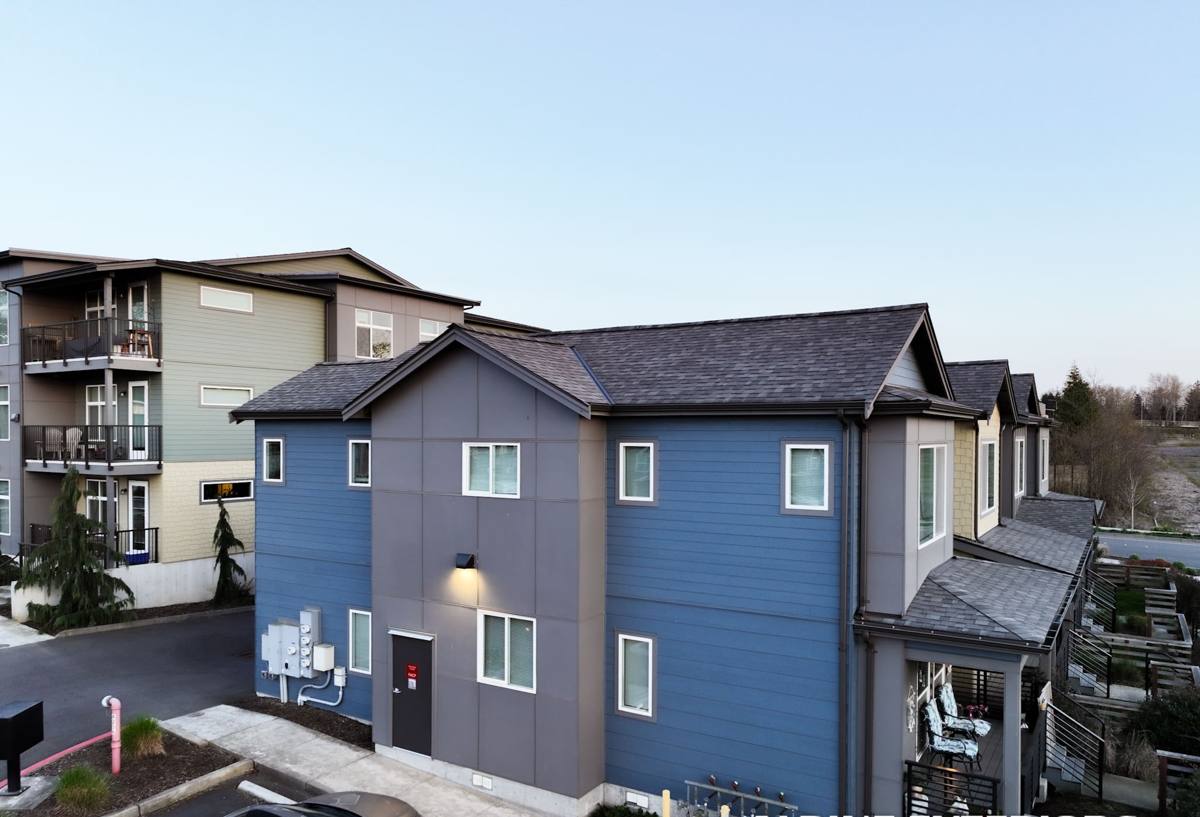
What Local Storms Actually Do to a Roof
Wind-Driven Rain and Wind Uplift
Whatcom County storms rarely bring the straight-line gusts you'd see in a plains hailstorm. Instead, wind here tends to come in sustained, shifting bursts that get under shingle tabs and flashing edges rather than tearing off whole sections. The result is subtle: a shingle that's lifted but not gone, a ridge cap that's cracked but still in place, a step flashing edge that's peeled back just enough to let wind-driven rain track sideways under the roofing instead of running off it. None of that looks dramatic. All of it lets water in.
Moss, Debris, and Trapped Moisture
Nooksack's tree cover and the region's long wet season mean moss isn't a cosmetic issue — it's a moisture-management problem. Moss holds water against the roofing material well after a storm has cleared, softening shingle mat, working into nail penetrations, and lifting edges just enough for wind and rain to finish the job. Storm damage and moss damage often show up in the exact same spots because a moss-softened shingle is far more likely to tear or lift in wind than a healthy one.
Coastal Moisture and Metal Fatigue
The same weather systems that carry salt-tinged marine air across Whatcom County reach inland into the Nooksack valley too, just in a milder form. Over years, that moisture-laden air accelerates corrosion on exposed fasteners, flashing, and any older metal roofing components — especially where a storm has already scratched or bent the protective coating. It's a slow process, but it's part of why a roof here ages differently than the same roof would in a dry inland climate.
Signs You Have Storm Damage, Not Just Wear
Some of these are visible from the ground with binoculars; others you'll only catch from an attic or a close-up inspection. Either way, this is the list we actually check against after a storm:
- Shingle tabs that are curled up, cracked, or missing entirely, especially near ridges and roof edges where wind pressure is highest
- Granules collecting in gutters or at downspout outlets — a sign shingles have been abraded by wind-blown debris or hail
- Flashing around chimneys, skylights, and roof-to-wall junctions that looks bent, lifted, or separated from the surface it's sealing
- New or worsening moss growth concentrated in one area, which often marks a spot where water is sitting longer than it should
- Water stains, sagging, or discoloration on interior ceilings or in the attic, particularly after a storm with sustained wind and rain
- Debris — branches, needles, cones — packed into valleys or against a chimney base where it can dam water during heavy rain
- Gutters pulling away from the fascia or showing new dents, which usually means something heavier than rain hit the roofline
What a Correct Storm Repair Actually Involves
A storm repair that's done right isn't just "replace what's obviously broken." It's a sequence, and skipping steps is how the same damage reappears after the next storm.
1. Full-Roof Inspection, Not Spot-Checking
Storm damage is rarely confined to one visible spot. We check the whole roof — all slopes, all flashing points, the attic underside where accessible — because wind that damaged one section usually stressed the fasteners and seals nearby too, even if they haven't failed yet.
2. Deck Condition Before Anything Goes Back On
If water has been getting under the roofing for any length of time, the decking underneath needs to be checked for soft spots, delamination, or rot before new shingles or flashing go down. Covering a compromised deck with new material just hides the problem and shortens the life of the repair.
3. Matching Materials and Fastening Correctly
Repairs should use materials that match the existing roof's exposure and weight class where possible, and every shingle and flashing piece needs to be fastened and sealed to current manufacturer specs — not just nailed back into the old pattern. This matters most at transitions: valleys, chimney flashing, and wall step-flashing, which is where the majority of storm-related leaks in this area actually originate.
4. Moss and Debris Removal as Part of the Repair, Not an Afterthought
If moss contributed to the damage, treating and removing it is part of the fix, not a separate upsell. Leaving moss in place around a fresh repair just sets up the same failure again next season.
Repair or Replace? What Actually Drives That Decision
Not every storm-damaged roof needs a full replacement, and not every roof that "just needs a patch" is a good candidate for one. Here's how we weigh it:
| Factor | Favors Repair | Favors Replacement |
|---|---|---|
| Roof age relative to material lifespan | Roof is well within its expected service life | Roof is already near or past the end of its expected lifespan |
| Extent of damage | Damage is isolated to one or two areas | Damage is scattered across multiple slopes or recurring in the same spots |
| Deck condition | Decking is sound underneath the damaged area | Decking shows rot or soft spots in multiple locations |
| Moss and moisture history | Moss is manageable with cleaning and treatment | Moss and moisture damage are widespread and long-standing |
| Material availability | Matching shingles or metal are still available | Original material is discontinued or badly mismatched when patched |
Cost ranges for storm repairs vary widely depending on how much of the roof is affected, whether decking needs to be replaced, and roof pitch and access. We'll give you an honest number after we've actually looked at the roof — not a phone quote based on guesswork.
How We Handle a Storm Damage Call in Nooksack
Step 1: Fast Assessment, Emergency Protection If Needed
If a storm has left an active leak or exposed decking, our first priority is stopping water intrusion — tarping or temporary sealing — before we scope the full repair. That protects the interior and the decking while we plan the permanent fix.
Step 2: Documented Inspection
We photograph and document the damage clearly enough to support an insurance claim if you're filing one, including close-ups of flashing, shingle condition, and any interior water intrusion.
Step 3: Written Scope and Straight Answer on Repair vs. Replacement
You get a clear, itemized explanation of what's damaged, what caused it, and what fixing it correctly requires — including whether a repair is genuinely sufficient or whether we think you're better off putting that money toward a longer-term fix.
Step 4: The Repair Itself
We complete the work to match the existing roof as closely as possible, seal every affected transition point, and clear the moss or debris that contributed to the failure.
Step 5: Follow-Up
Storm repairs get checked again after the next significant weather event to confirm the fix held, especially for roofs with a moss or drainage history.
A Note on Insurance Claims
Many storm-related roof repairs are covered under homeowner's insurance, but coverage depends on your policy's specific storm damage provisions and how the damage is documented. We're not your insurance adjuster and we won't promise a claim outcome, but we can give you a clear, dated, photographed record of the damage and its likely cause — wind, impact, or ongoing moisture — which is exactly what most adjusters ask for. If you're not sure whether damage is worth filing a claim over, get it inspected before you decide; a small, well-documented repair now is usually cheaper than an unaddressed leak that shows up as interior damage later.
Why It Matters That We Already Work in Nooksack
A roof that's been through a dozen Whatcom County storm seasons behaves differently than a brand-new roof, and knowing that comes from doing the work here repeatedly — not from a general repair checklist. We know which roof details in this area tend to fail first under wind and moisture, which moss patterns signal a real drainage problem versus a cosmetic one, and how local roofing materials hold up against this specific climate over time. That local pattern recognition is what keeps a storm repair from becoming a repeat visit next season.
If your roof took a hit in a recent storm, or you're just not sure whether what you're seeing is storm damage or normal wear, we'll come take a look. The estimate is free, there's no pressure to sign anything on the spot, and you'll walk away with a straight answer about what your roof actually needs.