 Lynden Siding
 Why Ferndale Roofs Wear Differently Than Roofs Inland
Ferndale sits close enough to the water that salt-laden air is a real factor in how roofing materials age, not just a talking point. Combine that with Whatcom County's driving, wind-pushed rain and a moss season that can run most of the year in shaded, north-facing areas, and you get a roofing environment that punishes shortcuts. A repair that would hold up fine in a dry inland climate can fail here in a season or two if it wasn't done with this specific combination of exposures in mind.
Most of the repair calls we run in Ferndale trace back to the same handful of causes: fasteners and flashing that corroded faster than expected, moss that held moisture against the roof deck longer than the material could tolerate, or wind-driven rain that found its way in through a joint that would never have leaked in calmer weather. None of these are exotic problems. They're predictable, and a roof repaired correctly the first time accounts for all three.
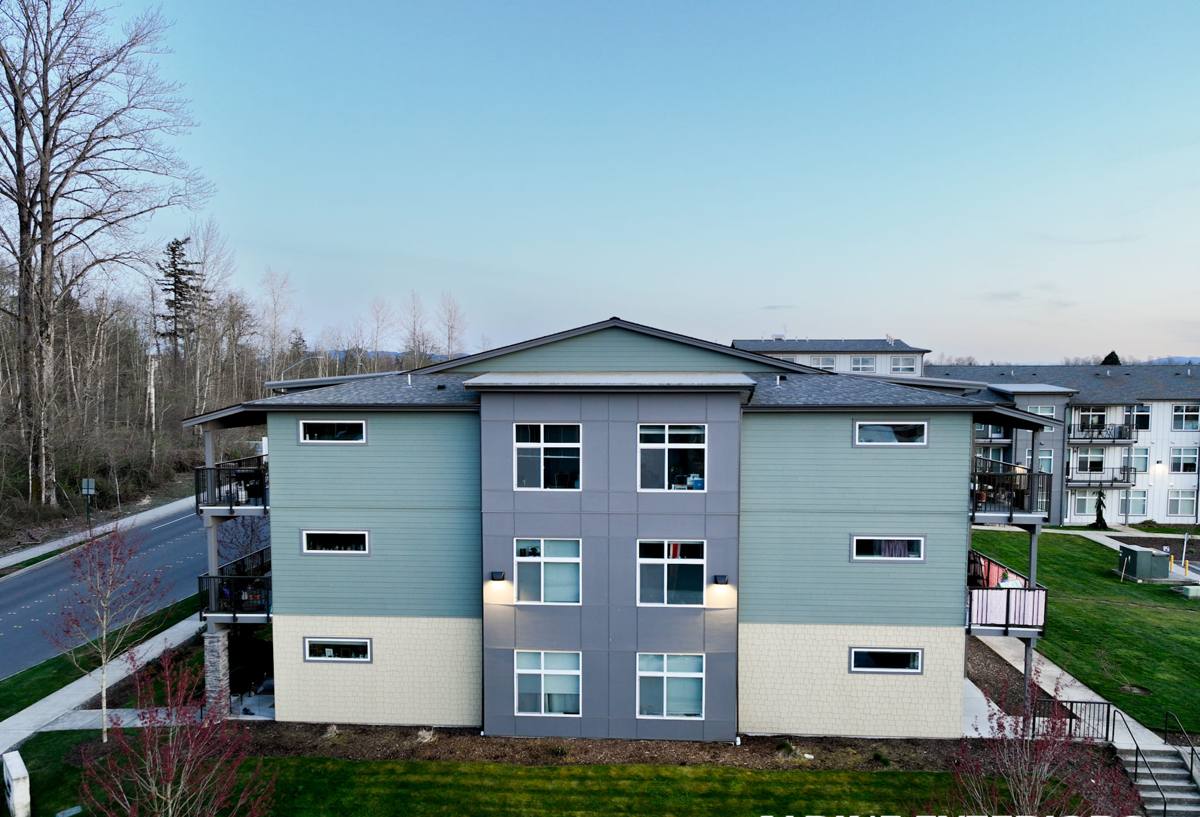
What Salt Air, Rain, and Moss Actually Do to a Roof
Salt Air and Metal Components
It's not the roofing field itself that usually fails first — it's the metal. Nail heads, flashing, gutter fasteners, and vent boots with metal collars all corrode faster in a marine-influenced air than they would twenty or thirty miles inland. Once a fastener starts to go, the seal around it goes with it, and that's where small leaks begin. Choosing corrosion-resistant fasteners and flashing metals isn't an upsell here — it's the difference between a repair that lasts and one you're calling us back for in two winters.
Driving Rain and Wind-Pushed Water
Standard rain falls and drains. Driving rain gets pushed sideways and upward under laps, around ridge caps, and into any gap that a straight-down rain would never reach. Roofs and repairs designed for calmer weather often rely on gravity alone to keep water out. In Ferndale, gravity isn't enough — laps, underlayment, and flashing all need enough overlap and mechanical seal to resist wind pressure, not just water weight.
Moss and Prolonged Moisture Contact
Moss doesn't just look bad. It holds water against the roofing surface long after the rain has stopped, which accelerates granule loss on asphalt shingles, promotes rot on wood-based roofing, and keeps the roof deck underneath damp for days at a time. Shaded roof planes, north-facing slopes, and areas under overhanging trees are the usual trouble spots we see across Whatcom County, and Ferndale's tree cover and cloud cover give moss plenty of opportunity.
Common Repair Issues We See on Ferndale Homes
- Flashing failure around chimneys, skylights, and roof-to-wall joints — usually corrosion or a seal that dried out and cracked
- Moss-related granule loss and soft spots on asphalt shingle roofs, especially on shaded north- and east-facing slopes
- Wind-lifted or missing shingles/shakes after a storm, often at ridges, hips, and roof edges where wind uplift is strongest
- Clogged or sagging gutters that back water up under the roof edge instead of carrying it away
- Nail pops and fastener corrosion that let water track down through the roof deck before it ever shows up as an interior stain
- Attic and roof deck moisture from inadequate ventilation, which shows up as premature wear from the underside rather than the top
What a Correct Roof Repair Actually Involves
A roof repair that holds up in this climate isn't just "find the leak, patch the leak." It starts with figuring out where the water is actually entering, because in a wind-driven rain environment the entry point is often several feet from where the stain shows up inside. We trace the path, not just the symptom.
Diagnosis Before Repair
We inspect the full roof plane, not just the spot you called about — flashing, fasteners, underlayment where visible, ventilation, and the condition of the surrounding roofing material. A leak at a chimney flashing, for example, is sometimes a symptom of a deck problem underneath that a surface patch won't fix.
Matching Materials and Method
Repairs need to match the existing roofing system in material, profile, and fastening method, and use corrosion-resistant flashing and fasteners appropriate for a marine-influenced climate. A patch that doesn't match the surrounding material's expansion, weight, or water-shedding pattern becomes its own future leak point.
Sealing for Wind-Driven Rain, Not Just Gravity
Every lap, flashing edge, and penetration gets sealed with wind-driven rain in mind — proper overlap, mechanical fastening in addition to sealant, and underlayment that extends far enough to handle water pushed upslope by wind rather than just water running straight down.
Addressing the Cause, Not Just the Symptom
If moss caused the damage, we address the moss and the conditions that let it take hold — not just the resulting soft spot or granule loss. If poor ventilation contributed, that gets flagged too. A repair that ignores the underlying cause is a repair you'll be paying for again.
Our Process for Ferndale Repair Calls
- Inspection and diagnosis — we look at the whole roof, not just the reported leak, and identify the actual entry point and contributing factors
- Written estimate — a clear explanation of what's wrong, what the repair involves, and what it costs before any work starts
- Repair — matched materials, corrosion-resistant fasteners and flashing, and sealing methods built for wind-driven rain
- Cleanup and debris removal — old material, moss debris, and fasteners removed from gutters and the ground
- Follow-up — if the repair uncovered a larger issue (deck rot, ventilation problems, a roof nearing the end of its service life), we tell you plainly rather than patch around it
Repair vs. Replace: How We Help You Decide
Not every damaged roof needs to be replaced, and not every leak can be permanently solved with a patch. The honest answer usually comes down to how much of the roof is affected, how old the existing roofing is, and whether the damage is isolated or spread across multiple planes.
| Factor | Favors Repair | Favors Replacement |
|---|---|---|
| Extent of damage | Isolated to one area (flashing, one slope, one penetration) | Widespread across multiple roof planes |
| Age of roofing material | Well within expected service life | Near or past typical lifespan for the material |
| Underlying deck condition | Solid, no rot or soft spots | Soft decking or repeated moisture intrusion at the deck level |
| Moss/algae history | Recently cleaned, isolated staining | Long-term moss damage with granule loss across large areas |
| Repeat leak history | First occurrence, clear single cause | Recurring leaks in different spots each season |
Typical Repair Scope and Cost Factors
Costs vary based on roofing material, roof pitch, height, and how much of the structure (deck, flashing, ventilation) is involved beyond the surface material. The ranges below are meant to give a sense of scope, not a quote — every roof gets its own written estimate after inspection.
| Repair Type | What's Typically Involved | Broad Cost Range |
|---|---|---|
| Flashing repair/replacement | Chimney, skylight, or wall flashing resealed or replaced with corrosion-resistant metal | $300 – $900 |
| Localized shingle/shake repair | Replacing wind-damaged or moss-damaged sections on one roof plane | $400 – $1,200 |
| Moss treatment and cleaning | Safe removal, treatment, and debris clearing from gutters and roof surface | $250 – $700 |
| Gutter and roof-edge repair | Resecuring or replacing damaged gutter runs and roof-edge flashing | $300 – $1,000 |
| Deck repair (when uncovered) | Replacing rotted or soft decking found under damaged roofing | Varies — quoted after inspection |
Timing: Why Moss Season Matters for Scheduling
Whatcom County's wet, shaded conditions mean moss growth is active for much of the year, and once it takes hold it keeps working even in cooler months. Late summer and early fall — before the heaviest driving rain sets in — is often the best window for moss treatment and preventive repair, because it gives sealants and repairs time to cure in drier conditions before winter storms test them. That said, active leaks shouldn't wait for ideal weather; a temporary or full repair done correctly can be performed in most conditions, and delaying an active leak usually costs more in deck and interior damage than the repair itself would have.
Why a Crew That Already Works Ferndale Matters
Roofing crews unfamiliar with this specific stretch of Whatcom County sometimes repair to a generic standard — one built for drier or less wind-exposed climates — and those repairs underperform here. A crew that regularly works Ferndale roofs already knows which fastener and flashing materials hold up against the salt air, how much overlap driving rain actually requires, and which roof orientations in this area are most prone to moss buildup. That local pattern recognition shows up in fewer callbacks and repairs that are sized correctly the first time, rather than a series of undersized patches.
Local familiarity also means faster response. Roof leaks don't wait for a convenient time, and being able to get someone out to look at an active leak quickly — rather than scheduling around a long drive — matters when water is actively getting into your home.
Signs You Should Have Your Roof Inspected
- Visible moss or dark streaking on roof slopes, especially shaded or north-facing areas
- Granules collecting in gutters or at downspout outlets
- Water stains on interior ceilings or walls, particularly after a windy rainstorm
- Missing, curling, or lifted shingles or shakes visible from the ground
- Rusted or corroded flashing around chimneys, vents, or skylights
- Sagging gutters or gutters overflowing during heavy rain
- A musty smell or visible moisture in the attic
If any of this sounds like your roof, or you'd just like an honest opinion on what's going on up there, we're happy to take a look. Fill out the form below for a free, no-pressure estimate — we'll tell you plainly what we find, what it would take to fix it, and what it would cost.