 Lynden Siding
 Why Roofs in Nooksack Wear Differently Than Roofs Inland
Nooksack sits low in the Whatcom County lowlands, close enough to the Nooksack River and the marine air pushing in off Bellingham Bay and Puget Sound that roofs here deal with a different set of stresses than a roof forty miles inland or up in the mountains. It's not one dramatic event that wears a roof out — it's the accumulation of small, constant exposure: months of low-intensity drizzle, salt-laden air that speeds up corrosion on metal fasteners and flashing, and a moss season that can run from October clear through April in a shaded, north-facing section of roof.
None of that means a roof here is doomed. It means the maintenance and repair standard has to account for moisture that lingers instead of draining fast, and for organic growth that most drier climates never have to think about. When we look at a repair call in Nooksack, we're checking things a roofer in a dry-summer climate might skip entirely — because here, those are usually where the real damage started.
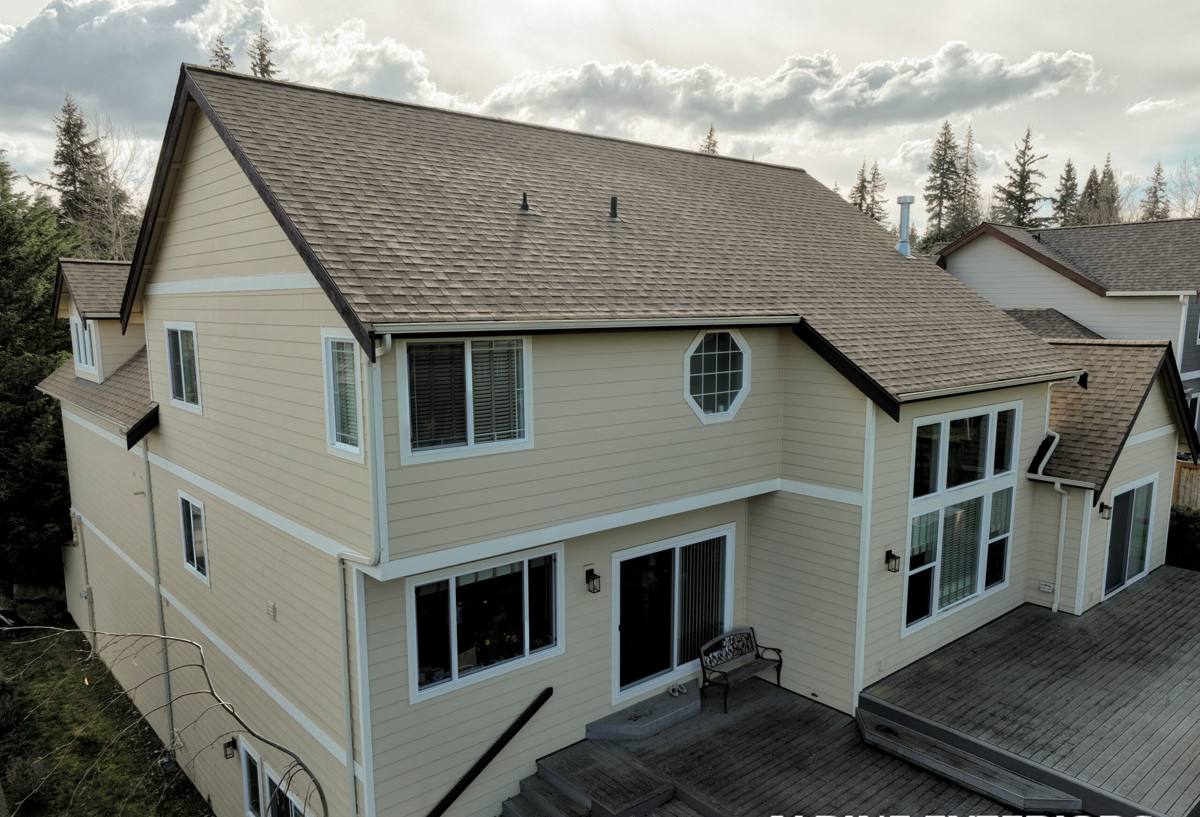
The Repair Calls We See Most Often in This Area
Roof problems in Nooksack tend to fall into a handful of repeatable categories. Recognizing which one you're dealing with helps you understand what the fix actually needs to accomplish, not just patch over.
Moss and Organic Growth
Moss holds moisture against the shingle or shake surface long after the rest of the roof has dried out. Over a season or two, that trapped moisture works granules loose on asphalt shingles and softens wood shakes from underneath. By the time moss is visible from the ground, it's usually already lifted shingle edges in that section, which is exactly where wind-driven rain gets a foothold.
Flashing and Fastener Corrosion
Anywhere metal meets metal — valley flashing, step flashing at chimneys and walls, exposed nail heads — is a spot where salt-influenced air and constant damp cycles accelerate rust. A corroded fastener doesn't just look bad; it loses its grip on the shingle beneath it, and a failed flashing seam is one of the single most common sources of a slow, hard-to-trace interior leak.
Wind and Storm Damage
Whatcom County gets its share of fall and winter windstorms, and Nooksack's more open, low-lying terrain doesn't offer the wind break that a denser tree line provides in some parts of Lynden. Lifted or torn-off shingles, damaged ridge caps, and displaced flashing after a storm are common calls, and they need attention fast — an exposed section left through even one more heavy rain can turn a shingle repair into a decking repair.
Gutter Backup and Edge Rot
When gutters clog with moss debris and needles, water backs up under the first course of shingles at the eave. Over time this rots the fascia board and the roof decking at the edge — a problem that starts as a gutter issue but ends up as a roofing repair if it's ignored long enough.
What a Correct Repair Actually Involves
A roof repair that holds up in this climate is more than swapping out the shingle you can see. Here's what we consider the minimum standard for a repair to actually solve the problem instead of covering it up:
- Inspect beyond the visible damage — check the decking underneath for soft spots or delamination before replacing surface material
- Match or upgrade the underlayment in the repaired section, not just the shingle layer
- Replace corroded fasteners and flashing rather than re-using rusted hardware
- Re-seal and re-lace shingle courses so the repair blends into the surrounding roof's water path, not just the one damaged spot
- Clear and treat moss in the surrounding area so it doesn't immediately re-establish next to the fresh repair
- Check attic ventilation near the repair — poor airflow is often part of why that section failed first
- Document what was found and what was replaced, so you have a record if the same area needs attention again
Skipping any of these steps is how a roof ends up with the same leak reappearing eighteen months later in a slightly different spot.
Repair or Replace: How We Help You Decide
Not every damaged section needs a full roof replacement, and not every roof is a good candidate for another round of patching. The honest answer depends on the roof's age, how widespread the damage is, and what's underneath the surface layer. This is roughly how we walk through that decision with a homeowner:
| Factor | Leans Toward Repair | Leans Toward Replacement |
|---|---|---|
| Roof age | Under 15 years, or well-maintained | Approaching or past manufacturer's expected lifespan |
| Extent of damage | Isolated to one section or slope | Recurring in multiple areas or found on inspection to be widespread |
| Decking condition | Solid, no soft spots found | Soft, delaminated, or water-stained decking discovered |
| Moss/algae history | Recent growth, surface-level staining | Long-term growth that's already lifted multiple courses |
| Ventilation | Adequate, no attic moisture issues | Poor airflow contributing to repeated failure in same spot |
We'll always tell you plainly which side of that table your roof falls on. If a repair is the honest answer, that's what we quote — we don't upsell a replacement a roof doesn't need yet.
How Our Process Works
1. On-Site Inspection
We walk the roof (weather permitting) and check the attic from inside where accessible. We're looking at decking condition, insulation for signs of past moisture, ventilation, and the full extent of damage — not just the spot you called about.
2. Straight Assessment and Written Quote
You get a plain explanation of what we found, what caused it, and what fixing it correctly requires — along with a written price before any work starts. If there's a cheaper, adequate fix and a more thorough one, we'll lay out both honestly.
3. The Repair Itself
We work the damaged section back to sound material, replace what needs replacing, and re-integrate the repair into the surrounding roofline so water sheds the way it's supposed to — not just around the patch.
4. Cleanup and Walkthrough
Debris, old materials, and displaced fasteners get cleared from the yard and gutters before we leave. We'll walk you through what was done and flag anything else worth keeping an eye on.
Moss Season: A Practical Maintenance Checklist
Between repairs, the biggest thing a Nooksack homeowner can do to protect a roof is stay ahead of moss and organic buildup rather than reacting to it once it's established. A simple seasonal routine goes a long way:
- Clear gutters and downspouts at least twice a year — more often near overhanging trees
- Remove moss and debris from the roof surface before it spreads across a full slope, using methods that don't scrape or damage the shingle mat
- Check for and trim back branches that keep a section of roof shaded and slow to dry
- Look at flashing around chimneys, vents, and skylights once a year for rust, gaps, or lifted sealant
- Watch for granule buildup in gutters or at downspout outlets — a sign shingles are wearing faster than they should
- Have a professional inspection after any significant windstorm, even if nothing looks obviously wrong from the ground
Materials: What We Use and Why
For repair work, matching the existing roofing material is almost always the right call — mixing shingle types or brands on the same roof creates visible seams and can create subtle differences in how each section sheds water. Where we have latitude to recommend an upgrade during a repair, we lean toward materials with proven moss resistance (algae-resistant shingle lines, for instance) and corrosion-resistant flashing and fasteners, since those are the two failure points this climate stresses hardest.
We're generally cautious about repairing older wood shake roofs with anything less than a full understanding of what's underneath, since shake systems hide moisture damage differently than asphalt does, and a surface-level patch can leave a much bigger problem undiscovered. If a shake roof's damage points to a systemic moisture issue rather than one bad section, we'll say so rather than doing a repair that won't hold.
Why Hire a Crew That Already Works This Area
A repair contractor who works Whatcom County regularly already knows what a Nooksack roof is up against before they climb the ladder — the moss patterns that show up on north-facing slopes, the way driving rain off a windstorm finds the same vulnerable valleys and flashing points, and how long a section of roof stays wet after a normal week of fall weather. That familiarity means less time spent diagnosing and more time spent fixing the actual problem the first time.
It also means straightforward answers about permitting, disposal of old roofing material, and realistic scheduling around the wetter months when roof work has a narrower weather window. A crew unfamiliar with the area is guessing at all of that; a local crew already knows it.
Getting an Estimate
If you're seeing moss buildup, a stain on a ceiling, missing shingles after a storm, or just want an honest read on where your roof stands, we're glad to come take a look. The estimate is free, there's no pressure to book anything on the spot, and you'll get a plain answer about what — if anything — actually needs to be done. Use the form below to get started.