 Lynden Siding
 Roof Replacement Built for Blaine's Weather, Not Just Any Roof
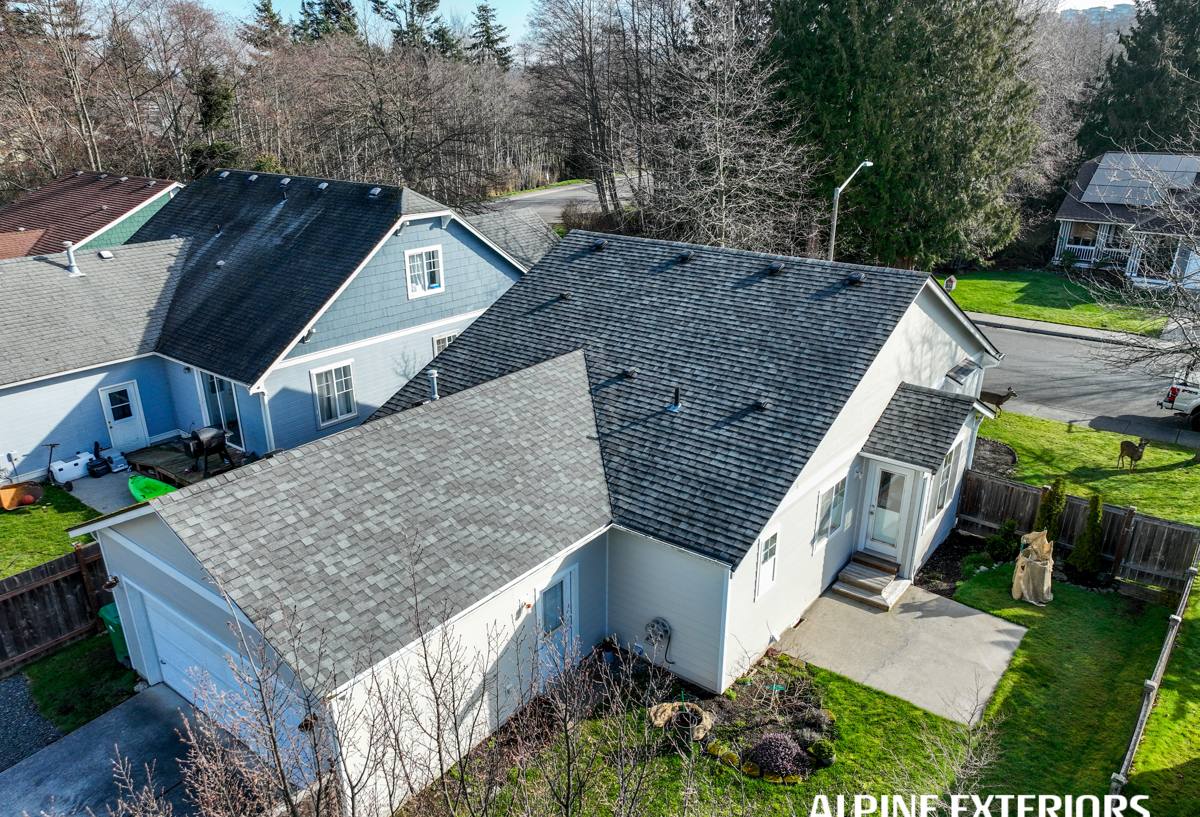
Blaine sits right up against the Salish Sea, and that location shapes what a roof has to survive here. You're dealing with salt-laden air blowing in off Semiahmoo Bay and the Strait of Georgia, long stretches of driving rain through the fall and winter, and a moss season that can run eight months or longer in shaded, north-facing areas. A roof spec that works fine in a drier inland town doesn't hold up the same way two miles from saltwater. When we replace a roof in Blaine, we're building it for this specific combination of exposure, not a generic Whatcom County roof.
This page covers what actually goes into a correct roof replacement for a Blaine home — the material choices that make sense here, the parts of the job that get skipped on a lot of "just re-shingle it" quotes, and what our process looks like from first look to final walkthrough.
Why Blaine's Climate Is Harder on Roofs Than People Expect
Salt air and metal fatigue
Salt in the air accelerates corrosion on any exposed metal — flashing, fasteners, gutter hardware, and vent caps. Roofs that use bare or lightly coated steel components tend to show rust streaks and pitting years before they should. It's rarely the shingles that fail first close to the water; it's the metal detailing around them.
Driving rain and wind-driven water
Rain here doesn't always fall straight down. Storms off the Strait push rain sideways, which means water gets tested against every seam, lap, and penetration on the roof — not just the open field of shingles. A roof that only manages water well when it falls vertically will leak in Blaine even if it would've been fine somewhere more sheltered.
Moss, moisture, and shaded roof planes
Cool, damp air combined with tree cover common around Whatcom County creates ideal moss conditions on north- and east-facing slopes. Moss isn't just cosmetic — it holds moisture against the roofing material, works its way under shingle tabs, and can lift edges enough to let water in underneath. Left unaddressed over several seasons, moss growth shortens the life of an otherwise sound roof.
What a Correct Roof Replacement Actually Involves
A roof replacement is more than swapping old shingles for new ones. Done right, it's a system — deck, underlayment, flashing, ventilation, and the finish material all working together. Here's what we check and address on every tear-off in this area:
- Deck inspection: Once the old roofing is off, we check the sheathing for soft spots, delamination, or water staining and replace any compromised sections before anything new goes down.
- Underlayment upgrade: Given the wind-driven rain here, we use underlayment products suited to higher water exposure, not the minimum-code option.
- Ice-and-water membrane at vulnerable points: Eaves, valleys, and areas around chimneys or skylights get self-adhering membrane as extra protection where water is most likely to back up or pool.
- Flashing replacement: Flashing around chimneys, walls, vents, and valleys gets replaced, not reused — old flashing is one of the most common hidden leak sources on "resurfaced" roofs.
- Ventilation review: Proper intake and exhaust airflow keeps the attic dry and helps prevent moisture buildup that feeds rot and moss growth from the underside.
- Fastener and hardware selection: Near the coast, corrosion-resistant fasteners and hardware matter more than they do inland — we account for that in material choice.
Roofing Material Options for a Blaine Home
There's no single "right" roofing material for every house — it depends on your roof pitch, budget, and how much upkeep you want to take on. Here's how the common options stack up against Blaine's salt air, rain, and moss conditions:
| Material | Salt Air Performance | Moss Resistance | Typical Lifespan | Maintenance |
|---|---|---|---|---|
| Architectural asphalt shingle | Good, with corrosion-resistant flashing/fasteners | Moderate — benefits from zinc/copper strips | 25–30 years | Periodic moss treatment on shaded slopes |
| Standing seam metal | Very good with proper coating/finish | Excellent — sheds moss naturally | 40–50+ years | Low |
| Composite/synthetic shake | Good | Good | 30–50 years | Low to moderate |
| Cedar shake | Fair — needs regular treatment near salt air | Poor without upkeep | 20–30 years with maintenance | High |
We don't push one product on every job. Cedar shake, for example, can still look great in Blaine, but it demands a real maintenance commitment near saltwater — regular treatment and moss removal — that not every homeowner wants to sign up for. We'll tell you that plainly instead of letting you find out the hard way after year three.
Zinc and Copper Strips: A Simple Moss Deterrent
On shingle and shake roofs in shaded areas, we often install zinc or copper strips near the ridge. Rain washes trace metal ions down the roof plane, which discourages moss and algae growth on the slopes below. It's a low-cost addition that meaningfully extends the interval between moss treatments, and it's worth discussing for any north-facing roof plane in Blaine.
Signs Your Blaine Roof Needs Replacing, Not Patching
Not every roof problem means a full replacement — sometimes a repair is the honest answer. But there are signs that point to a roof that's past the point where patching makes financial sense:
- Granule loss heavy enough that shingles look bald or the gutters are full of grit
- Curling, cracking, or cupping shingles across multiple roof planes, not just one isolated spot
- Soft or spongy decking felt underfoot, or visible sagging between rafters
- Recurring leaks in the same area despite prior repairs
- Heavy, persistent moss growth that keeps returning after cleaning
- Rusted, cracked, or missing flashing around chimneys, vents, or valleys
- The roof is at or past its material's expected service life and showing multiple wear signs at once
If your roof only shows one or two of these in a small area, a targeted repair might genuinely be the right call — we'll say so rather than upselling a full tear-off you don't need yet.
Our Roof Replacement Process
1. On-Site Assessment
We walk the roof (or use appropriate access methods for steep or fragile roofs), check the attic for ventilation and moisture signs, and look at flashing, valleys, and penetrations up close. This tells us what's actually going on, not just what's visible from the ground.
2. Straightforward Estimate
You get a written scope covering material choice, tear-off, deck repair allowances, underlayment, flashing, and ventilation work — with the reasoning behind each recommendation, not just a bottom-line number.
3. Scheduling Around Blaine's Weather Windows
We plan roof replacements around realistic dry-weather windows for this part of Whatcom County. Open roof decks and driving rain don't mix, so timing and weather contingency planning are part of the job, not an afterthought.
4. Tear-Off and Deck Repair
Old roofing comes off down to the deck, damaged sheathing gets replaced, and we confirm the deck is sound before anything new goes on.
5. System Installation
Underlayment, ice-and-water membrane at vulnerable points, new flashing, ventilation components, and the finish roofing material go in, in that order, following manufacturer specifications for the product installed.
6. Final Walkthrough and Cleanup
We walk the finished roof with you, cover care and maintenance basics for your specific material, and do a magnetic sweep and full site cleanup before we consider the job done.
Cost Factors for Blaine Roof Replacement
Every roof is different, so we won't quote a number without seeing the job — but these are the main factors that drive cost up or down:
| Factor | How It Affects Cost |
|---|---|
| Roof size and pitch | Steeper roofs take longer and require more safety setup |
| Number of layers to remove | Multiple existing layers add tear-off labor and disposal cost |
| Deck condition | Rot or delamination found underneath adds repair cost |
| Material choice | Metal and composite typically cost more upfront than asphalt, less over time |
| Number of penetrations | Chimneys, skylights, and vents each need individual flashing work |
| Access and staging | Difficult access or tall/steep sections can add equipment costs |
Why It Matters That We Already Work in Blaine
Roofing crews that mostly work inland or further south sometimes spec roofs the same way regardless of location — same underlayment, same fastener grade, same moss plan everywhere. Working Blaine and the surrounding Whatcom County coastline regularly means we've seen firsthand which details actually matter here: where flashing tends to corrode first, which roof orientations grow moss fastest, and which underlayment holds up against sideways rain off the water. That's not something you get from a spec sheet — it's from doing the work in this specific environment repeatedly.
It also means we're not guessing about permitting or typical construction in the area, and we're positioned to stand behind the work locally, not from a service area we visit occasionally.
Roof Replacement Checklist for Blaine Homeowners
- Get an actual attic and deck inspection, not just a roof-surface look
- Ask what underlayment grade is being used and whether it's rated for high wind-driven rain exposure
- Confirm flashing will be replaced, not reused, at chimneys, valleys, and vents
- Ask about ventilation — intake and exhaust balance affects moisture and roof lifespan
- Discuss moss prevention options (zinc/copper strips) if any roof planes are shaded
- Get the material comparison in writing, including realistic maintenance expectations
- Confirm fastener and hardware corrosion resistance given the coastal location
If your roof is showing wear, growing moss it shouldn't, or you're just planning ahead, we're glad to take a look and give you a straight, no-pressure estimate. Use the form below to get started.