 Lynden Siding
 Roofing in Deming Isn't the Same Job as Roofing Downtown
Deming sits back from town, tucked against forested land along the Nooksack River corridor, and that setting changes what a roof has to deal with. Tree cover means more shade, more falling debris, and more moss than a roof out in the open. Add in the marine-influenced weather that moves through Whatcom County — long stretches of driving rain, salt-tinged air pushing inland off the Sound, and short winter days that never quite dry a roof out — and you get a roofing environment that's genuinely tougher on materials than the textbook version.
We're not going to tell you every roof in Deming fails the same way or on the same schedule. Sun exposure, tree canopy, roof pitch, and the age and quality of the original install all matter. But the pattern we see again and again on wooded, rural Whatcom County lots is roofs that look fine from the driveway and are already compromised underneath — moss holding moisture against the shingles, fasteners backing out from decades of freeze-thaw cycling, and flashing that's quietly failed around a chimney or skylight nobody's looked at closely in years.
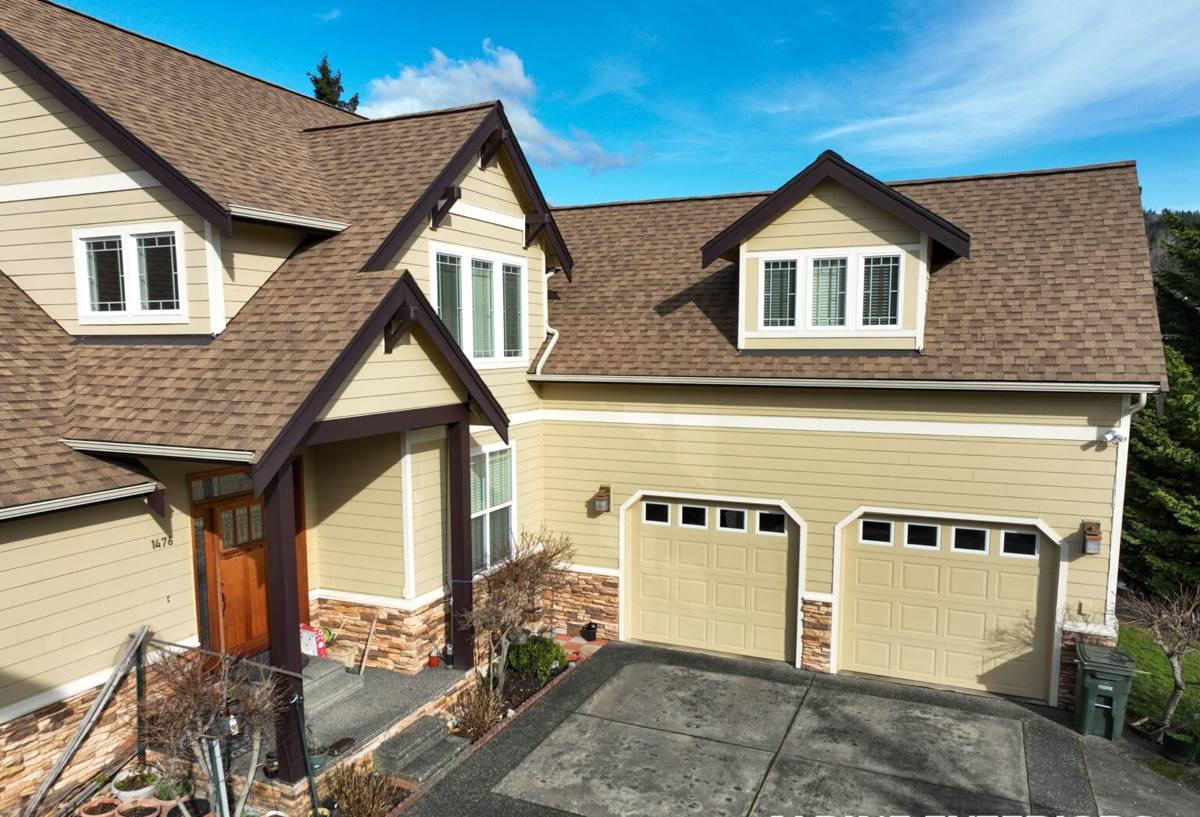
What Deming's Climate Actually Does to a Roof
Moss and Organic Growth
Shade from surrounding trees keeps roof surfaces damp longer after every rain, and that's exactly what moss and algae need to take hold. Once moss establishes on an asphalt shingle roof, it lifts the shingle edges, holds water against the granule surface, and accelerates the wear that would otherwise take decades. A long moss season — which in this part of the county can mean most of the year — isn't cosmetic. It's a moisture-retention problem sitting directly on top of your roof deck.
Driving Rain and Wind-Driven Moisture
Pacific storm systems don't just drop rain straight down here; wind pushes it sideways, under shingle tabs, up against flashing, and into any gap that's even slightly open. A roof that would hold up fine in a calmer climate can leak in Whatcom County if the underlayment, flashing details, and shingle overlap aren't done to a standard that accounts for wind-driven rain specifically.
Salt Air and Metal Fatigue
Even away from the immediate waterfront, marine air carries salt inland across this part of Washington. Over years, that air accelerates corrosion on exposed fasteners, flashing, and any lower-grade metal roofing components. It's one more reason material choice and fastener quality matter more here than they would in a dry inland climate.
Signs a Deming Roof Needs Replacement, Not Another Repair
Not every roof problem calls for a full tear-off. But there's a point where patching stops making financial sense and starts just delaying the inevitable — often at a higher total cost than if you'd replaced the roof outright. Here's what tells us a roof has crossed that line:
- Granule loss heavy enough that you can see bare, shiny patches on multiple slopes
- Shingles that are cupping, curling, or cracking across large sections rather than in one isolated spot
- Moss or algae mats that have been growing for multiple seasons, especially on north-facing or shaded slopes
- Soft or spongy decking underfoot in the attic, or daylight visible through the roof boards
- Repeated leaks in different locations after previous patch repairs
- A roof that's already 20+ years old and has never had a full tear-off, only overlays or spot repairs
- Visible sagging along the ridge or between rafters
If you're only seeing one or two of these, a repair may still be the right call. If you're seeing several at once, it's worth having a straightforward conversation about replacement before a small problem turns into deck damage or interior water intrusion.
What a Correct Roof Replacement Actually Involves
Full Tear-Off and Deck Inspection
We don't install new roofing over old, failing layers. A proper replacement starts with stripping the roof down to the deck so we can actually see what's underneath — rot, soft spots, old water staining, or damaged sheathing that needs to be replaced before anything new goes on. Skipping this step is how a new-looking roof ends up failing early, because the problem was never in the shingles, it was in the deck.
Underlayment and Ice/Water Protection
Given how much rain this area sees, underlayment isn't a formality — it's the roof's real waterproofing layer, with the shingles acting as the wear surface on top. We pay particular attention to valleys, eaves, and any low-slope transitions, where synthetic underlayment or self-adhering ice-and-water membrane belongs regardless of what the minimum code requires.
Ventilation
A roof that can't breathe traps moisture in the attic, which shortens the life of the decking and the roofing material from underneath — often invisibly, until you're dealing with rot. Balanced intake and exhaust ventilation is part of a correct replacement, not an upsell.
Flashing and Penetrations
Chimneys, vents, skylights, and wall-to-roof transitions are where the overwhelming majority of roof leaks actually start. New flashing, properly integrated with the underlayment and shingle courses — not just caulked over the old flashing — is non-negotiable on every replacement we do.
Choosing a Roofing Material for a Deming Property
There's no single "best" roofing material — there's the right material for your roof's pitch, your tree cover, your budget, and how long you want to go before thinking about your roof again. Here's how the common options stack up for this specific climate:
| Material | How It Handles Moss & Moisture | Relative Lifespan | Upfront Cost |
|---|---|---|---|
| Asphalt Composition Shingle | Prone to moss without upkeep; algae-resistant granule options help | 20–30 years | Lower |
| Metal (standing seam or panel) | Sheds moisture fast, resists moss well; needs quality fasteners near salt air | 40–60 years | Higher |
| Cedar Shake | High maintenance burden in shaded, damp settings; needs regular treatment | 20–30 years with upkeep | Higher |
| Synthetic/Composite Shingle | Resists moisture absorption well; consistent performance under tree cover | 40–50 years | Mid to higher |
We'll be honest about trade-offs rather than just selling you the highest-margin product. Cedar shake, for example, can look great, but on a heavily shaded Deming lot it demands more regular cleaning and treatment to keep moss from taking over — that's a maintenance commitment, not a knock on the material itself. Metal costs more upfront but sheds moss and rain fast enough that it can be the lower-hassle option long term. Asphalt remains the most common choice because it balances cost and performance well when it's installed with the right underlayment and ventilation behind it.
What Affects Your Roof Replacement Price
We don't post fake instant quotes because roof pricing genuinely depends on your specific roof. These are the factors that actually move the number:
| Factor | Why It Matters |
|---|---|
| Roof size and number of planes | More square footage and more valleys/hips mean more material and labor |
| Pitch and steepness | Steep roofs require more safety setup and take longer to work |
| Number of existing layers | Tear-off of multiple old layers adds labor and disposal cost |
| Deck condition | Rotted or soft sheathing needs replacement before new roofing goes on |
| Material choice | Asphalt, metal, and synthetic products carry different material costs |
| Access and tree cover | Wooded, rural lots can require extra care and time around landscaping |
Any honest estimate accounts for these before giving you a real number — which is why we walk the roof and the attic before quoting, rather than guessing from the street.
How Our Process Works
- On-site inspection. We get on the roof and into the attic, not just a drive-by look, and check the deck, flashing, ventilation, and current material condition.
- Written estimate. You get a clear breakdown of material, labor, and scope — no vague lump-sum guesswork.
- Material selection. We walk through the options for your roof's pitch, exposure, and budget, and explain the real trade-offs instead of pushing one product.
- Scheduling around the weather. We plan tear-off and install around dry windows where possible, since an open deck is vulnerable to this region's rain.
- Tear-off, deck repair, and install. Full removal of old roofing, deck inspection and repair as needed, new underlayment, flashing, ventilation, and roofing material.
- Cleanup and final walkthrough. Site cleared of debris and nails, and we walk the finished roof with you before calling the job done.
Living With a Deming Roof: Moss and Tree Care After Replacement
A new roof is only the start. On wooded lots, keeping tree limbs trimmed back from the roofline reduces both debris buildup and the shade that feeds moss growth. Keeping gutters clear matters more here than in drier climates, since a clogged gutter backs water up under the eaves during heavy rain. If moss does start to return, gentle removal methods and zinc or copper control strips installed at the ridge can slow regrowth without damaging the shingles — something we're happy to talk through as part of a replacement, since prevention is a lot cheaper than another premature roof job.
Why It Matters That We Already Work in Deming
A roofing crew that regularly works this part of Whatcom County already knows what a wooded, rural lot means for access, staging, and scheduling around weather windows. We're not learning the local permitting process or guessing at how a low-slope valley behaves under sustained rain for the first time on your roof. That familiarity shows up in fewer surprises mid-project and a crew that isn't cutting corners to get out of an unfamiliar area faster.
If your roof is showing its age, or you just want an honest read on whether repair or replacement makes more sense for your home, we're glad to come take a look. The estimate is free, there's no pressure to sign anything on the spot, and you'll get a straight answer about what your roof actually needs.