 Lynden Siding
 Siding Repair Around Wiser Lake: What Makes This Spot Different
Wiser Lake sits in a part of Whatcom County that gets more moisture exposure than a typical in-town lot. Homes here deal with two things at once: the same wind-driven rain and salt-tinged marine air that moves through all of Lynden off the Salish Sea, plus the extra humidity that comes from simply being near open water. Fog sits longer, dew hangs on siding later into the morning, and shaded, tree-lined stretches near the lake stay damp well after the rest of the property has dried out. None of that is a defect in a house — it's just the climate this neighborhood sits in. But it means siding here ages on a different timeline than siding in a drier, more exposed part of the county, and repairs that don't account for it tend to fail again within a season or two.
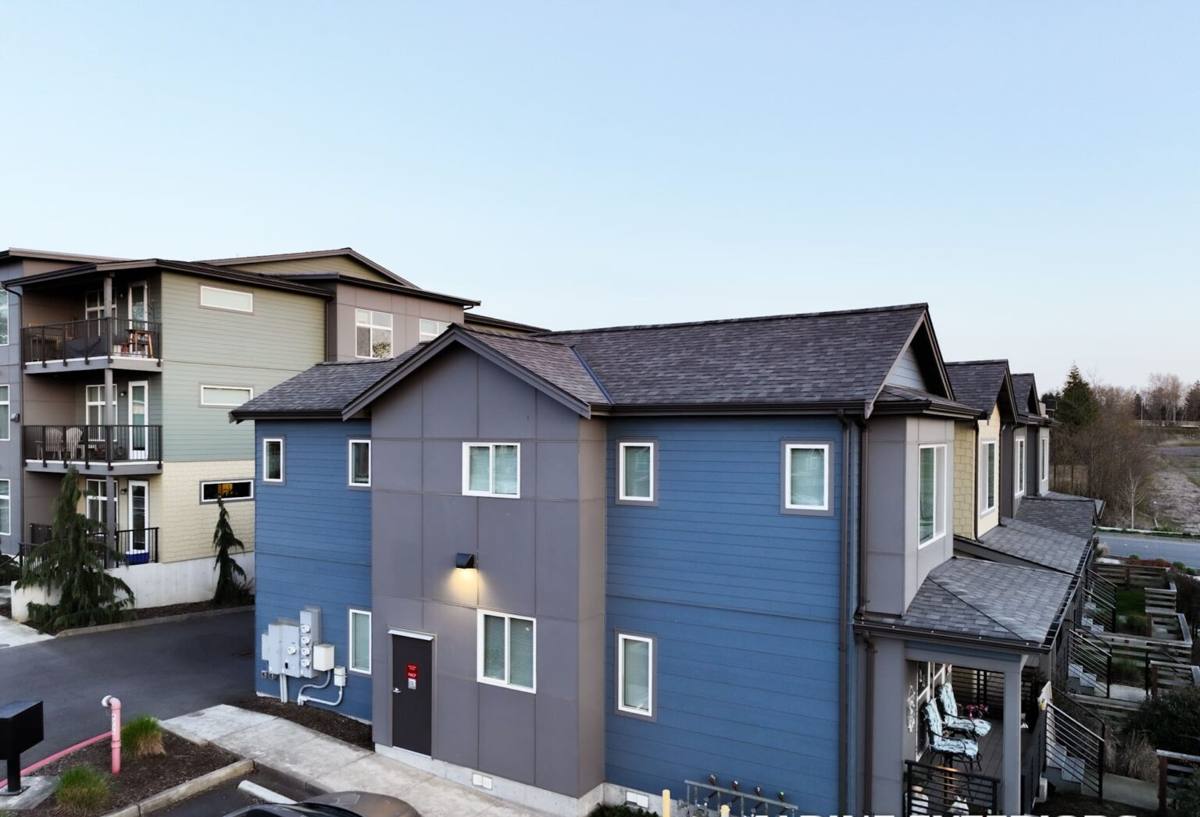
The Climate Factors That Wear Down Siding Here
Driving, Wind-Driven Rain
Rain that falls straight down is easy for siding to shed. Rain that's pushed sideways by wind is a different problem — it works its way up under laps, around trim, and into any gap in the caulk line. Whatcom County gets plenty of both, and homes near Wiser Lake catch it from multiple directions depending on how the lot sits relative to the water and tree line.
An Extended Moss and Algae Season
Moss and algae need shade and moisture to establish, and this area supplies both for a large part of the year. North-facing walls, areas under mature trees, and low spots that don't get direct sun can stay damp for months at a stretch. Left alone, that constant moisture doesn't just discolor the siding — it holds water against the surface long enough to cause real damage underneath.
Humidity Off the Lake Itself
Being close to open water adds a layer most inland Lynden properties don't deal with as much: slower drying times after storms, more morning condensation, and a general dampness in the air that keeps siding and trim wet longer between rain events. Combined with the region's salt-influenced air, it's a faster path to corroded fasteners and stressed finishes than you'd see on a drier lot a few miles away.
Common Siding Repair Issues We See on Wiser Lake Homes
Most repair calls in this area fall into a handful of recognizable patterns. Knowing what's causing the symptom matters more than the symptom itself — two houses can have the same stain and need completely different fixes.
| Symptom | What's Usually Happening | What It Typically Needs |
|---|---|---|
| Soft or spongy panel near the bottom of a wall | Moisture wicking up from grade or splash-back, trapped behind the siding | Localized panel replacement plus a fix for the drainage or grading issue |
| Dark green or black staining on shaded walls | Moss and algae holding moisture against the surface | Cleaning, plus a look at whether the finish or airflow around the wall needs attention |
| Cracked or missing caulk at trim and joints | Repeated wet/dry cycling and UV exposure, worsened by wind-driven rain | Proper re-sealing, sometimes after re-flashing the joint first |
| Peeling or blistering paint on older siding | Moisture trapped behind an aging or incompatible coating | Often a sign the material itself needs replacing, not repainting |
| Rust streaks bleeding through near nail heads | Fastener corrosion accelerated by damp, salt-influenced air | Replace the fasteners, re-seat the panel, spot-prime and repaint |
| Warped, buckled, or delaminating boards | Prolonged water absorption into the material itself | Panel replacement — material choice matters here |
What a Correct Siding Repair Actually Involves
It Starts With Finding Out Why, Not Just Patching
Caulking over a soft spot or painting over a stain hides a problem instead of fixing it. A proper repair starts with figuring out why that section failed — bad flashing, a caulk joint that opened up, a downspout dumping water against the wall, or simple age. Skip that step and the same failure shows up again in a year or two, usually worse.
Matching Materials Without Creating New Problems
Whatever siding is already on the house, a repair needs to tie into it cleanly — same reveal, same fastening pattern, a finish that will hold color and texture consistently with what's around it. Mismatched materials or incompatible coatings can actually trap moisture differently than the original assembly did, which creates a new failure point right next to the old one.
Flashing and Drainage Come First
Behind every piece of siding there should be a working water-management system — housewrap, flashing at penetrations and transitions, and a path for any water that does get behind the cladding to drain back out. If that layer is damaged or was never installed correctly, new siding over it just delays the next repair. We check it before anything goes back on the wall, not after.
Why We Repair — and Replace — With James Hardie Only
This company installs one siding system: James Hardie fiber cement. That matters for repair work as much as it does for a full re-side. When we're called out to a Wiser Lake home with failing vinyl, LP SmartSide, cedar, or primed spruce siding, we're honest about what we find. If the damage is isolated and the surrounding material is sound, a like-kind patch can make sense. But when the failure is tied to the material itself struggling against this area's rain and humidity — soft OSB substrate, delaminating panels, wood that's absorbed water past the point of drying out — patching it with more of the same product just buys a little time.
In those cases, the honest recommendation is replacing the affected section (or the wall) with James Hardie fiber cement. It's non-combustible, engineered in HZ product lines built for wetter climates like ours, and finished at the factory with ColorPlus coating rather than a field-applied paint job — which matters directly for a place with this much rain and moss exposure, since factory-cured finish holds up to UV and moisture cycling better than most on-site paint. It also carries a strong transferable warranty when installed to spec. We don't say this to sell every repair into a full replacement — most repairs stay repairs. But when Hardie is the right long-term answer, we say so plainly instead of patching around the real problem.
Repair or Full Replacement? How We Help You Decide
| Factor | Repair Usually Makes Sense | Replacement Usually Makes Sense |
|---|---|---|
| Extent of damage | Isolated to one wall or a few boards | Spread across multiple elevations |
| Condition of surrounding siding | Still sound, just cosmetically or locally damaged | Showing early signs of the same failure elsewhere |
| Underlying water damage | None found once panels are pulled | Present at the sheathing or framing level |
| Current material | James Hardie fiber cement in good condition | Vinyl, LP SmartSide, cedar, or primed spruce showing moisture-related failure |
| Cost over time | Lower upfront, appropriate for the scope | Repeated patching would cost more than solving it once |
Our Wiser Lake Siding Repair Process
- On-site inspection to identify every affected area, not just the spot that was reported
- Moisture check behind the siding at suspect areas to confirm what's actually happening under the surface
- A written scope that separates what's cosmetic from what's structural, with repair or replacement recommended honestly
- Correction of the underlying water-management issue — flashing, caulk, or drainage — before new material goes on
- Repair or panel replacement using materials and fasteners suited to this climate
- Finish work so the repaired area blends with the rest of the wall
- Site cleanup and a walkthrough so you know exactly what was done and why
Why Hire a Crew That Already Works This Area
A contractor who regularly works around Wiser Lake already knows which walls tend to fail first, how long areas near the water actually take to dry out between jobs, and how the local moss and moisture patterns differ from a job three miles inland. That familiarity shows up in small ways that matter: scheduling around the wetter stretches of the year, knowing not to seal in moisture that hasn't fully dried, and recognizing quickly whether a stain is cosmetic or a sign of something underneath. It also means faster response — a crew that's already working the area doesn't need to build local knowledge on your dime.
Signs It's Time to Call for a Siding Repair Inspection
- Soft spots when you press on siding near the bottom of a wall
- Paint that's bubbling, peeling, or flaking in patches
- Moss or algae that comes back within weeks of being cleaned
- Visible gaps or cracked caulk at trim, corners, or window edges
- Rust streaks running down from nail heads
- A musty smell or damp feeling on an interior wall near the exterior
- Siding that looks wavy, warped, or is pulling away from the wall
If you're seeing any of this on a home near Wiser Lake, it's worth getting a straight answer about what's actually going on before it turns into a bigger repair. We offer free, no-pressure estimates — use the form below to get one scheduled.