 Lynden Siding
 Sumas Roofs Take a Different Kind of Beating
Sumas sits right up against the Canadian border in the Nooksack River valley, and that location shapes what a roof deals with here. When outflow winds funnel down out of the Fraser Valley, they hit this corner of Whatcom County harder and more directly than they hit roofs a few miles south. Add in long stretches of driving rain, a moss season that barely takes a break, and the salt-laden marine air that rides inland off the Strait of Georgia and Bellingham Bay, and you've got a roof that's under more sustained stress than most homeowners realize — until a storm finds the weak point.
Storm damage roof repair isn't the same job as routine maintenance. A storm doesn't just add wear — it creates a specific, often hidden failure: a lifted shingle tab, a cracked flashing seam, a puncture from wind-driven debris. Left alone, that small failure becomes a water intrusion problem, and water intrusion in this climate moves fast because everything around it is already damp. Our job is to find that failure quickly, repair it correctly, and make sure the fix holds up through the next storm rather than becoming next season's callback.
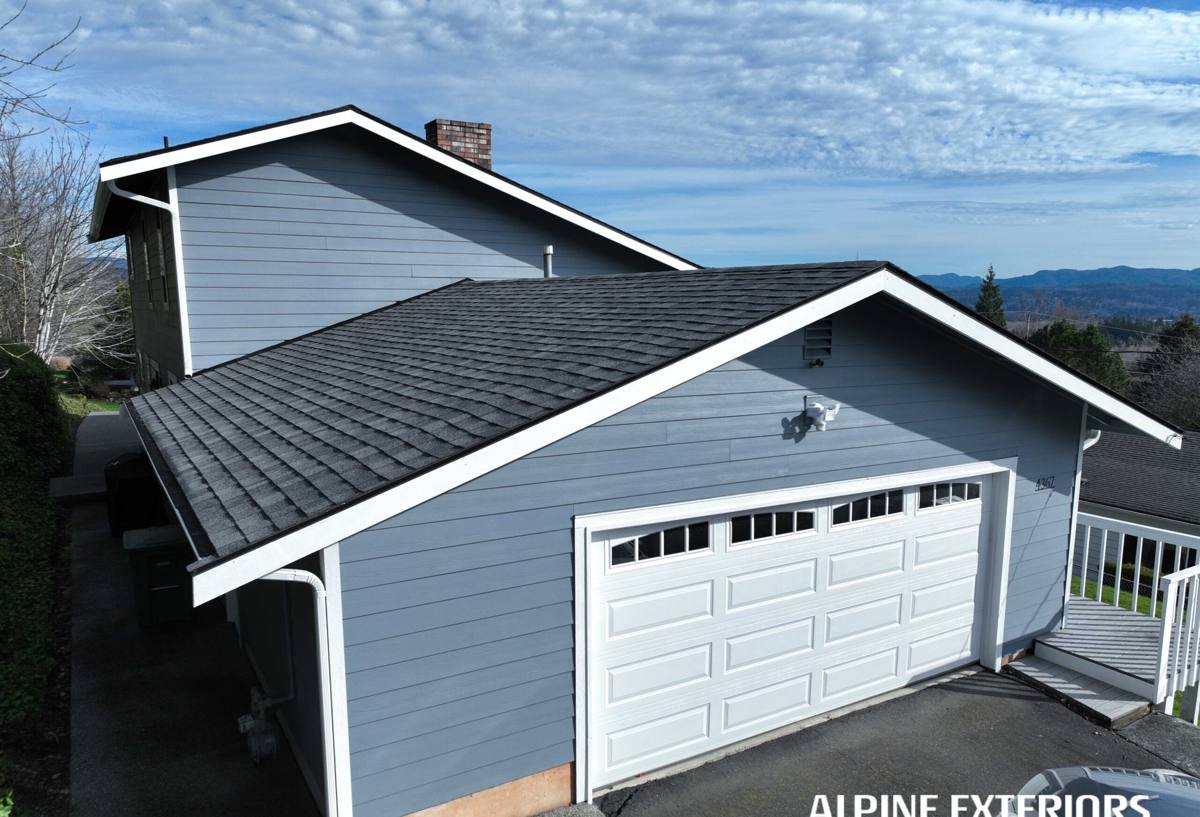
What Whatcom County Weather Actually Does to a Roof
Wind and Driving Rain
Wind alone rarely destroys a roof outright. What it does is work at edges — ridge caps, rake edges, and any spot where a shingle or panel isn't fully sealed down. Once wind gets a corner lifted, driving rain gets pushed sideways under it instead of running off the surface the way the roof was designed to shed it. That's how a storm turns a small install flaw or an aging seal into an active leak overnight.
Moss and Trapped Moisture
Whatcom County's moss season runs long, and moss doesn't just sit on top of shingles looking unsightly — it holds moisture against the roofing material and works its way under tabs and around fasteners. A roof with moss buildup going into a storm is more vulnerable than a clean one, because the moss has already been prying at the seal line before the wind ever shows up.
Salt Air and Metal Fatigue
The marine air that reaches inland toward Sumas carries salt, and salt accelerates corrosion on exposed metal — flashing, fasteners, vent caps, gutter hardware. Corroded metal fails quietly, with no visible drama, until a storm puts load on it and it gives way. This is one of the reasons a storm-damage inspection has to look past the obvious hole and check every metal transition point on the roof.
Signs Your Sumas Roof Took Storm Damage
Not every sign is obvious from the ground, and not every leak shows up right away. Here's what we check for after wind and rain events, and what homeowners should watch for between visits:
- Shingle tabs that look lifted, curled, or missing entirely, especially along ridges and edges
- Granules collecting in gutters or at downspout outlets — a sign of accelerated shingle wear
- Flashing that's visibly bent, pulled away, or separated from a chimney, skylight, or wall intersection
- Water stains on interior ceilings or upper walls that appear after a storm, even faint ones
- Soft or spongy spots when walking the roof, which indicate moisture has already reached the decking
- Debris punctures or dents from wind-carried branches, especially near overhanging trees
- Gutters pulling away from the fascia or sagging under water weight
- Daylight visible through the roof deck from inside an attic space
If you notice any of these after a storm, the smart move is to get it looked at before the next weather system comes through — not after a second or third leak has compounded the damage.
What a Correct Storm Damage Repair Actually Involves
Assessment Before Anything Gets Touched
We start by identifying the actual entry point of water, which is often not where the interior stain shows up. Water travels along rafters and decking before it drips somewhere visible, so a repair based only on where a ceiling stain appears can miss the real damage entirely. We check the full roof plane, not just the area a homeowner points to.
Matching Materials, Not Just Patching
A storm repair should blend into the existing roof system, not sit on top of it as an obvious patch. That means matching shingle type, profile, and as close to the existing color as the manufacturer's current line allows, and tying new flashing into the existing roofing correctly rather than caulking over a gap and calling it done.
Flashing and Wall Transitions
Because we do siding work as well as roofing repair, we pay particular attention to where the roof meets the wall — step flashing, kick-out flashing at roof-to-wall intersections, and the transition behind gutters. This is where a huge share of storm-related leaks actually originate, and it's an area some roof-only crews treat as somebody else's problem. We treat it as part of the same water-management system, because it is one.
Decking and Structural Check
If water has been getting in for a while before the storm made it obvious, the decking underneath may be soft or delaminated. A proper repair replaces compromised decking rather than fastening new shingles over a weak substrate — that shortcut just guarantees a repeat call.
Repair or Replace: What Actually Drives That Decision
Storm damage doesn't always mean a full new roof, and it doesn't always mean a quick patch will hold either. The right call depends on a few honest factors:
| Factor | Favors Repair | Favors Replacement |
|---|---|---|
| Roof age | Under 10-12 years, in otherwise good condition | Near or past expected service life |
| Extent of damage | Isolated to one area or slope | Multiple areas or widespread granule loss |
| Decking condition | Solid, no rot or soft spots found | Soft decking or signs of long-term moisture |
| Material availability | Matching shingles still in production | Discontinued product, poor color/profile match |
| Underlying moss/wear history | Minimal prior moss or wear | Heavy moss history compounding the storm damage |
We'll tell you plainly which category your roof falls into, and if a repair is the honest answer, that's what we'll recommend — we don't upsell a full replacement when a correctly done repair will hold.
Our Process, Start to Finish
- Inspection. We walk the roof and the interior spaces below it to find every point of concern, not just the one that's obvious.
- Written scope. You get a clear explanation of what's damaged, what caused it, and what the repair involves — no vague line items.
- Temporary protection if needed. If there's an active leak, we address that first so the interior of the home isn't taking on more water while a full repair is scheduled.
- The repair itself. Matched materials, correct flashing detail work, and decking replacement where needed.
- Final check. We confirm the repair sheds water correctly and walk you through what was done.
Working With Insurance Claims
Many storm repairs get filed as insurance claims, and we're glad to document damage clearly — photos, cause, and scope — to support that process. What we won't do is inflate a scope of work to match a claim amount, or tell a homeowner what their policy covers, since that's between you and your adjuster. Our job is an honest, accurate assessment of the roof itself; that's the foundation a fair claim is built on.
Why a Crew That Already Works Sumas Matters
Storm damage repair rewards local knowledge in a way a lot of exterior work doesn't. Knowing how outflow wind typically hits roofs in this part of Whatcom County, knowing what a normal moss season looks like here versus a bad one, and knowing which flashing details tend to fail first in this climate all shape how fast we can diagnose a problem correctly the first time. A crew unfamiliar with Sumas conditions is more likely to treat a symptom instead of the actual cause, which means a repair that looks fine for a season and then fails with the next storm.
We also know that storm damage rarely waits for a convenient week. Being local means a faster response when water is actively getting into a home, and it means we're still around months later if a repair needs a follow-up look — not a crew that worked the area for one storm season and moved on.
Get a Straight Answer About Your Roof
If your Sumas home took wind, rain, or debris damage in a recent storm, don't wait for a small leak to become a bigger repair. We offer a free, no-pressure estimate — we'll assess the actual damage, explain what we find in plain terms, and give you an honest recommendation on repair versus replacement. Fill out the form below to get started.