 Lynden Siding
 Windows in Ferndale's Marine Climate
Ferndale sits close enough to the water that homes here take a different kind of weather beating than towns further inland in Whatcom County. Salt-laden air off the bay, long stretches of driving rain through fall and winter, and a moss season that seems to start earlier every year all put steady pressure on a house's windows. None of it is dramatic on its own, but it adds up year after year — and windows are usually one of the first places it shows, in the form of fogged glass, swollen sashes, or drafts you can feel standing near the frame.
We're based just down the road in Lynden, and Ferndale is one of the communities we work in regularly. That matters more for window installation than people expect. How a window gets flashed, sealed, and fitted has to account for the actual weather it will face, not the weather windows face in a manufacturer's brochure.
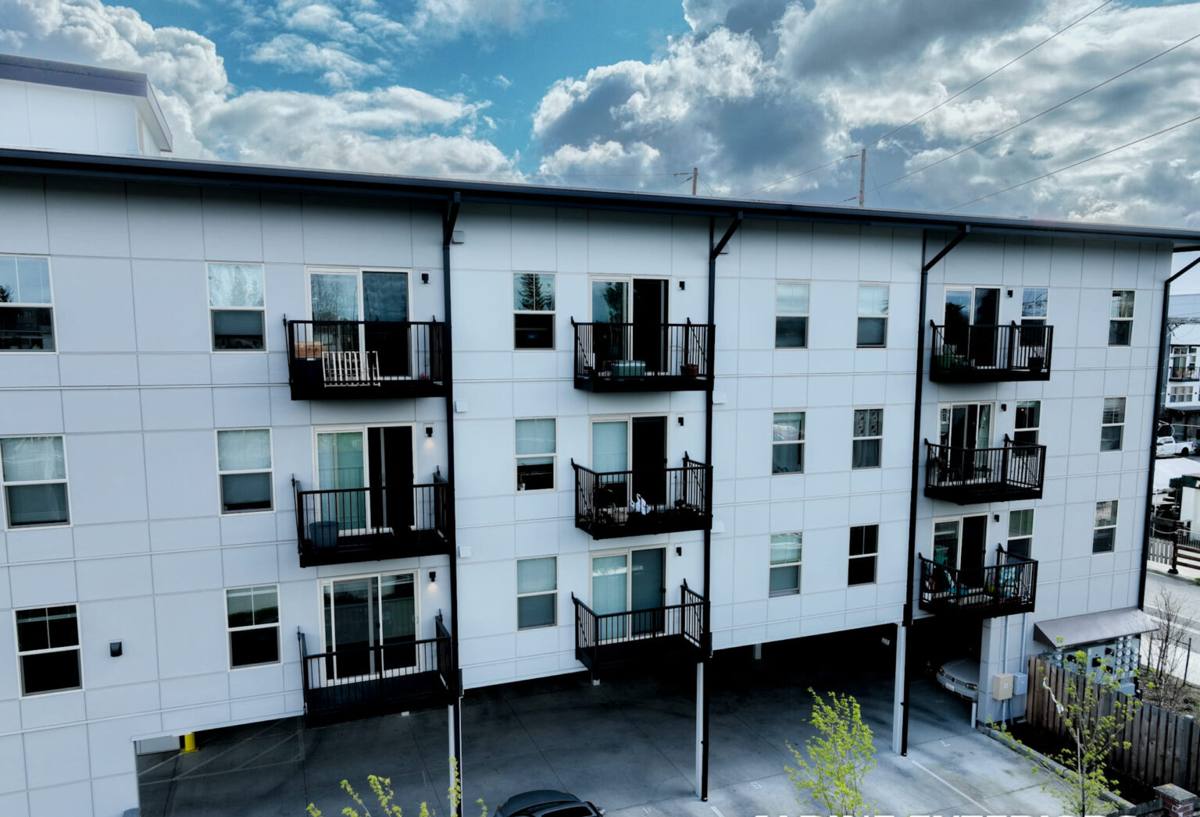
How Salt Air, Rain, and Moss Season Wear Down Windows
Salt air is corrosive to unprotected metal — hardware, hinges, and older aluminum frames take the brunt of it. Over time you'll see pitting on hardware, stiff or sticky locks, and finishes that dull faster than they would a few miles inland. It's a slow process, but Ferndale's exposure means it happens sooner here than in a lot of other Whatcom County neighborhoods.
Driving rain is a different problem. Wind-driven rain doesn't just fall on a window, it pushes against it, testing every seam, weep hole, and flashing detail. A window that's watertight in a light shower can still leak in a sideways November storm if the flashing wasn't lapped correctly or the sill pan was skipped. Most of the water damage we find inside walls didn't come from a dramatic storm — it came from years of small amounts of water finding a path in through an installation shortcut.
Moss and algae don't grow on the glass, but they do grow in the grime that collects in window tracks, on sills, and in corners that don't get sun or airflow. That buildup holds moisture against wood trim and finishes longer than it should, which shortens the life of anything not built or sealed to handle it. It's a maintenance issue as much as an installation issue, but the right installation makes ongoing upkeep a lot easier.
What This Means in Practice
- Hardware and frame materials should be chosen with corrosion resistance in mind, not just looks.
- Flashing and sill pan details matter more here than in a dry climate — they're not optional extras.
- Sills, trim, and tracks need enough slope and airflow to shed water and dry out between storms.
- Finishes exposed to salt air benefit from products rated for coastal or marine exposure.
What a Correct Window Installation Actually Involves
A window installation is more than setting a new unit into an old opening. Done right, it's a small waterproofing project with a window in the middle of it. The steps that actually protect a house are mostly invisible once the trim goes back on, which is exactly why it's worth understanding them before you hire someone.
The Non-Negotiables
- Sill pan flashing — a sloped, sealed pan under the window that directs any water that gets past the glass back outside instead of into the wall.
- Properly lapped flashing tape — installed in the right order (sides before top, top overlapping sides) so water always sheds downward and outward, never backward into the framing.
- Correct shimming and leveling — a window that isn't square or plumb stresses the sash, causes uneven wear on hardware, and can bind or leak within a few years.
- Air sealing with the right materials — low-expansion foam or backer rod and sealant around the frame, not just caulk smeared over a gap.
- Exterior sealant compatible with the siding and trim — the wrong sealant either fails early or traps moisture against materials that need to dry out.
Skipping or rushing any one of these doesn't usually cause a problem the first year. It shows up two, five, or ten years later as rot in the framing, stained drywall, or a window that won't operate smoothly anymore — and by then it's a bigger repair than it needed to be.
Signs Your Ferndale Home Needs New Windows
Not every window that looks tired needs replacing, and not every window that looks fine is actually performing well. Here's what we'd actually check before recommending replacement over repair.
- Fogging or a permanent haze between panes — the seal has failed and the insulating gas is gone.
- Wood frames that feel soft, spongy, or show dark staining, especially at the bottom corners.
- Windows that are difficult to open, close, or lock, or that have started sagging in the frame.
- Noticeable drafts near the frame even when the window is fully closed and locked.
- Condensation forming on the inside of the glass regularly, which can point to poor seals or inadequate insulation.
- Visible gaps, cracked caulk, or daylight visible around the trim from outside.
- Rising heating bills without any other obvious cause, especially in a home with older single-pane or early double-pane windows.
If you're only seeing one or two of these and the frames are otherwise sound, a repair or re-seal might be the more honest answer. We'll tell you that if it's true — replacing a window that doesn't need it isn't a service, it's just an upsell.
Our Window Installation Process
The process is the same whether it's one window or a whole house, just scaled up.
- On-site assessment. We look at the existing openings, check for rot or water damage in the framing, measure accurately, and talk through what you actually need — better insulation, easier operation, less maintenance, or a specific look.
- Product selection. We walk through frame materials, glass packages, and options that make sense for a Ferndale home's exposure, and give you honest trade-offs instead of steering you toward the most expensive option.
- Removal and inspection. Old windows come out carefully, and we inspect the framing underneath. If there's rot or water damage from a past installation, we address it before the new window goes in — putting a new window over a wet frame just hides the problem.
- Installation. Sill pan, flashing, leveling, insulation, and air sealing, done in the order and manner that actually keeps water and air out — not just what's fastest.
- Interior and exterior finish work. Trim, caulk, and paint or stain touch-up so the finished opening looks right from both sides.
- Walkthrough and cleanup. We test operation on every window, clean up the work area, and go over care and warranty information before we leave.
Choosing the Right Window Frame Material
There isn't one "best" frame material for every house — it depends on your budget, your home's style, and how much upkeep you want to do. Here's how the common options compare for a coastal Whatcom County home.
| Material | Upkeep | Coastal/Salt Air Behavior | Typical Cost Position |
|---|---|---|---|
| Vinyl | Low — no painting, occasional cleaning | Good; won't corrode, though color options are more limited over time | Entry to mid-range |
| Fiberglass | Low to moderate | Excellent; very stable in temperature and moisture swings, resists warping | Mid to upper-mid range |
| Aluminum | Moderate | Prone to corrosion and pitting near salt air unless well-coated; conducts cold | Varies widely |
| Wood-clad | Higher — cladding protects exterior, but interior wood and any exposed joints need attention | Fair; performs well if maintained, more vulnerable if seals or caulking are neglected | Upper range |
For most Ferndale homes, vinyl and fiberglass end up being the practical choices because they hold up to salt air and moisture with the least ongoing maintenance. Wood-clad windows can still be the right call for a specific look or a historic home, but they ask more of the homeowner in terms of upkeep near the water.
Glass Packages Matter Too
Frame material gets most of the attention, but the glass package affects comfort and energy use just as much. Double-pane with a low-E coating is the standard baseline for this climate. Triple-pane adds insulation value and sound dampening, which is worth considering on north- or west-facing walls that catch the worst of the wind and rain, but it comes at a higher cost and added weight that not every frame or opening needs.
Cost Factors for Ferndale Window Projects
We don't publish fixed prices because every home and every opening is different, but these are the factors that actually move the number up or down.
| Factor | Why It Matters |
|---|---|
| Number and size of windows | More straightforward math — more openings and larger units mean more material and labor |
| Frame material and glass package | Vinyl to fiberglass to wood-clad spans a wide range, and glass upgrades add cost per unit |
| Condition of existing framing | Rot or water damage found during removal adds repair work before the new window can go in correctly |
| New construction vs. replacement | Replacing into an existing opening is usually less involved than resizing or cutting a new opening |
| Access and site conditions | Second-story windows, tight landscaping, or difficult access can add time |
| Trim and finish work required | Matching existing trim profiles or repainting/staining adds labor beyond the window itself |
The only way to get a real number is to have someone look at the actual openings — we'd rather give you an honest estimate on site than a number over the phone that won't hold up once we see the house.
Why Hire a Crew That Already Works Ferndale
General window installation advice is the same everywhere. What's different is how that advice gets applied to a specific house in a specific place, and that's where local experience actually pays off. Working regularly in Ferndale and around Whatcom County means we've seen how salt air treats different hardware finishes over time, how driving rain finds the weak points in older flashing details, and which parts of a house tend to collect moss and moisture first.
It also means practical things for you as the homeowner: we're a short drive from Lynden, so scheduling, follow-up questions, and warranty visits aren't a hassle. We're familiar with the building codes and permitting expectations that apply in this part of the county, and we're not learning the local climate on your project — we've already learned it on the last one.
What to Look For in Any Contractor You Hire
- Willingness to do an in-person assessment before quoting a price.
- A clear explanation of flashing and sealing methods, not just window brand names.
- Honest talk about repair versus replacement, without pushing replacement by default.
- References or examples of work done in your specific area, not just general claims.
- A written warranty that covers both the product and the installation labor.
If your windows in Ferndale are drafty, foggy, hard to operate, or just overdue, we're happy to take a look and give you a straightforward, no-pressure estimate — no obligation, just an honest read on what your home actually needs. Fill out the form below and we'll get in touch to schedule a time.