 Lynden Siding
 Fiber Cement Siding Built for the Wiser Lake Climate
Wiser Lake sits in a part of Whatcom County that gets more weather exposure than a lot of homeowners expect. Between the marine air that moves through this corner of Washington, driving rain off the foothills, and a moss season that can stretch from October into May, exterior siding here works harder than it does almost anywhere else in the state. We install fiber cement siding specifically for homes in this area, and this page covers what that actually involves — not the generic pitch you'd get for any zip code, but what a correct installation looks like when the product has to survive this particular climate.
Lynden and the surrounding Whatcom County lake communities share a common problem: siding that looks fine for the first few years and then starts failing from the inside out. Moisture gets behind panels, algae and moss take hold in shaded, damp corners, and paint or coatings that were never rated for this much sustained dampness start to peel or chalk early. Fiber cement, installed correctly, solves most of that. Installed poorly, it can develop the same problems as any other siding material — just more slowly.
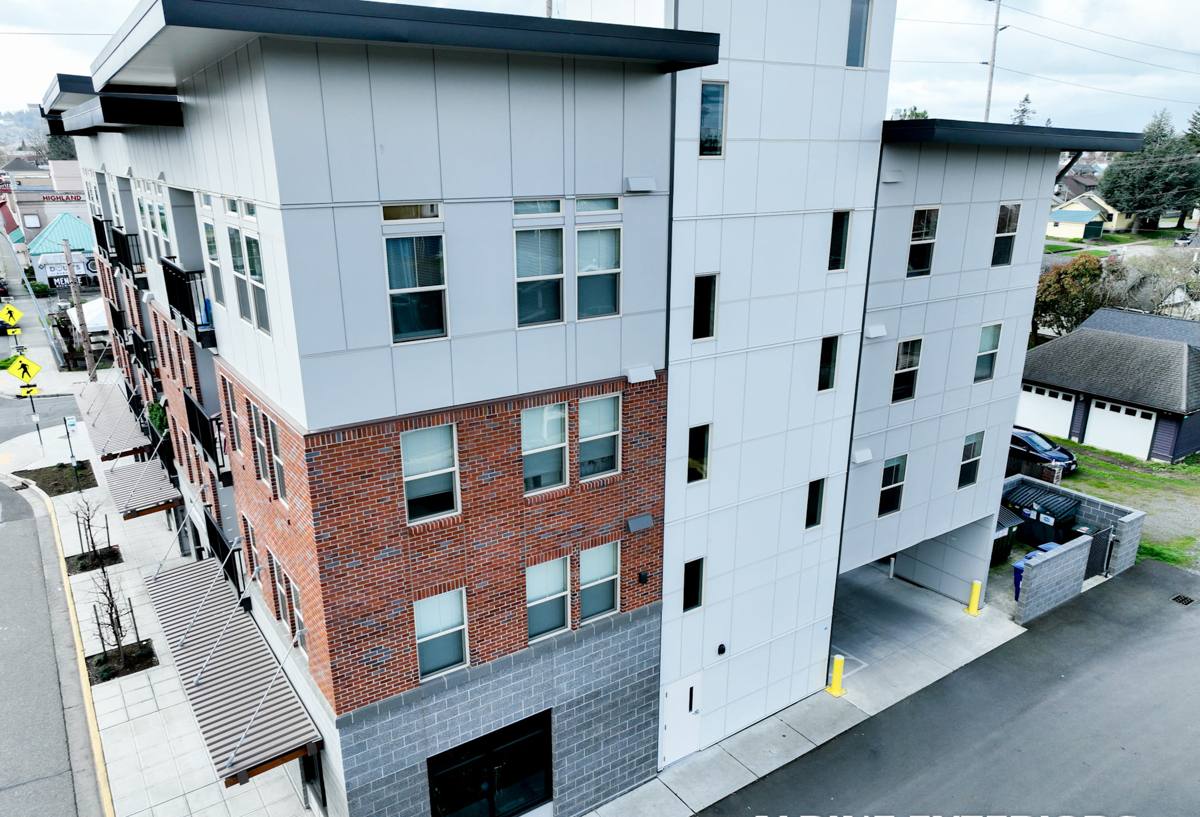
What This Climate Actually Does to Siding
It helps to be specific about the failure modes we see on homes around Wiser Lake, because the "why" drives every decision in the installation process below.
Driving rain and wind-driven moisture
Rain in this part of Washington rarely falls straight down. Wind pushes it sideways into wall assemblies, which means siding isn't just shedding water off its face — it's fighting moisture trying to get behind it at every seam, corner, and penetration. A siding job that isn't detailed for wind-driven rain will eventually let water find its way to the sheathing, even if the panels themselves are rated for the job.
Moss, algae, and prolonged dampness
Shaded north walls, tree-lined lots, and lake-adjacent humidity all add up to long stretches where siding simply doesn't dry out. That's the environment moss and algae need. It's not just cosmetic — trapped moisture and organic growth accelerate rot in trim, fascia, and any wood-based siding underneath.
Salt-influenced marine air
Even away from open water, Whatcom County gets marine air moving through on a regular basis. That air carries more moisture and, over time, is harder on unprotected fasteners, raw wood, and coatings that aren't built for a wet climate than drier inland air would be.
What a Correct Fiber Cement Installation Involves
Fiber cement is only as good as the installation behind it. Most of the problems homeowners eventually call us about — cracking at butt joints, staining below fasteners, swelling at the bottom edge — trace back to shortcuts taken during install, not a defect in the siding itself. For a Wiser Lake home, here's what we consider non-negotiable:
- Weather-resistant barrier, done right: A properly lapped, taped house wrap behind the siding, with all penetrations sealed before the first panel goes up.
- Correct clearances: Siding held off grade, decks, patios, and roof lines at the manufacturer-specified gap so water can drain and wood-framed elements underneath can dry.
- Flashing at every horizontal transition: Windows, doors, and roof-to-wall intersections get flashed as a system, not caulked as an afterthought.
- Fastener pattern and depth to spec: Over- or under-driven nails are one of the most common causes of early siding failure, and it's invisible from the ground.
- Factory-finished panels, field-painted cuts: Any field-cut edge gets sealed and touched up so raw fiber cement never sits exposed to this much rain.
- Joint treatment built for movement: Butt joints and seams detailed so the assembly can expand and contract without opening a path for water.
None of this is exotic. It's the manufacturer's own installation standard, applied without skipping steps to save a day on the schedule.
Why We Only Install James Hardie
We don't install every brand of fiber cement siding, and we're upfront about why. James Hardie is the only fiber cement product we put on homes, including here around Wiser Lake and greater Lynden. A few reasons that matter for this specific climate:
- Climate-engineered product lines. Hardie makes HZ5 and similar formulations specifically for regions with heavier moisture exposure, rather than a single one-size-fits-all board.
- Factory-applied ColorPlus finish. The finish is baked on at the factory under controlled conditions, which holds up better against sustained damp weather and UV than field-applied paint on comparable products.
- Non-combustible material. Fiber cement doesn't burn, which matters everywhere but is an easy, permanent upgrade over wood-based alternatives.
- A warranty structure that's actually transferable if you sell the home, which matters in a market where siding age and condition come up in every inspection.
- A long track record installed to spec in wet Pacific Northwest climates specifically, not just in dry-climate markets where moisture is a smaller factor.
We'd rather install one product exceptionally well, understand every quirk of it, and stand behind it fully than spread our crews thin across several materials with different installation requirements and different failure points.
Our Process for Wiser Lake Projects
- On-site assessment. We look at your current siding, sheathing condition where accessible, moisture-prone areas (north-facing walls, shaded corners, low-clearance sections), and any existing rot or trim damage.
- Scope and product selection. We recommend the Hardie product line and profile suited to your home's exposure — this isn't the same recommendation for every wall of every house.
- Tear-off and substrate check. Old siding comes off and we inspect sheathing before anything new goes up. Hidden rot gets addressed, not covered over.
- Weather barrier and flashing installation. This is the step that determines whether the siding lasts 10 years or 40, and it's the step that's invisible once the job is done.
- Siding installation to manufacturer spec. Correct clearances, fastening, and joint treatment throughout — the details covered above, applied consistently.
- Final detailing and walkthrough. Trim, caulking, touch-up paint on field cuts, and a walkthrough so you know what was done and why.
Fiber Cement Compared to Other Siding Options Here
Homeowners in this area often ask how fiber cement stacks up against the other materials they see advertised. Here's an honest comparison for this specific climate:
| Material | Moisture performance in this climate | Maintenance burden | Longevity when installed correctly |
|---|---|---|---|
| James Hardie fiber cement | Strong — engineered for wet climates, factory finish resists moss and UV wear | Low — periodic washing, no repainting on a fixed cycle | Decades, with a transferable warranty |
| Vinyl siding | Sheds water on the face but can trap moisture behind it; warps under heat/cold cycling | Low upfront, but cracks and fades over time | Moderate, shorter than fiber cement |
| Primed wood (cedar, spruce) | Absorbs moisture readily; needs a sound paint film to hold up in constant damp weather | High — repainting and caulking on a recurring cycle | Shorter without diligent upkeep |
| LP SmartSide / engineered wood | Better than raw wood but still moisture-sensitive at cut edges and seams | Moderate — edge sealing and finish maintenance matter | Good, but installation sensitivity is higher |
We don't install vinyl, LP SmartSide, primed wood, or cedar as our standard product — this table is here so you can weigh the trade-offs yourself, not to talk any of them down. Each has a place; we've simply standardized on the one that holds up best, with the least ongoing maintenance, in this specific climate.
What Drives Cost on a Wiser Lake Siding Project
| Factor | Why it matters here |
|---|---|
| Tear-off and substrate repair | Homes with hidden moisture damage from old siding need sheathing or framing repair before new siding goes on |
| Home size and wall complexity | Dormers, multiple gables, and cut-up wall lines take more labor per square foot than a simple rectangular home |
| Siding profile and trim package | Lap width, shingle-style accents, and trim detailing all affect material and labor cost |
| Flashing and window/door detailing | Homes with more openings need more flashing work, which is time well spent given the rain exposure here |
| Access and site conditions | Lake-adjacent lots, slopes, and mature landscaping can affect scaffolding and staging needs |
We provide a detailed, written estimate after seeing the home in person — we don't quote sight-unseen, because the factors above vary too much house to house to make a ballpark number meaningful.
Living With Hardie Siding in This Climate
Correctly installed fiber cement is low-maintenance, not no-maintenance. Here's what ownership actually looks like around Wiser Lake:
- Rinse siding periodically (a garden hose or soft wash, not a pressure washer aimed directly at seams) to keep moss and algae from establishing, especially on shaded north walls.
- Keep gutters clear so overflow doesn't run down the siding face and hold moisture against it longer than necessary.
- Trim back landscaping that keeps a wall shaded and damp — airflow is one of the simplest defenses against moss.
- Inspect caulking at trim and penetrations every year or two and touch up before it fails, not after.
- Address any impact damage or field-cut exposure promptly rather than letting raw edges sit exposed to the rain.
Why Hiring a Crew That Already Works This Area Matters
A siding crew that primarily works drier climates will make different assumptions than one that works Whatcom County lake communities every season. Clearance heights, flashing details, and even where moss tends to establish first on a given roofline are things you learn by doing the work here repeatedly, not by reading a spec sheet once. We work Lynden and the surrounding Wiser Lake area regularly, which means we're not guessing at how this climate behaves — we're building to what we've already seen it do to houses nearby.
If you're weighing a siding replacement on a Wiser Lake home, we're happy to take a look and walk you through what we'd recommend and why. Reach out for a free, no-pressure estimate using the form below.