 Lynden Siding
 Roofing in Abbotsford's Fraser Valley Climate
Abbotsford sits in the Fraser Valley, close enough to the Salish Sea and Puget Sound air masses that homes here deal with a mix of moisture problems most drier regions never see. Winters bring long stretches of driving rain that comes in sideways off the coastal weather systems, not just straight down, which pushes water into laps and fastener lines that a roof built for calmer climates wouldn't need to worry about. Add in salt-tinged air drifting up from the coast and a moss season that can run eight or nine months out of the year in shaded, north-facing sections, and you've got a roof that's working harder than it looks.
None of this means Abbotsford roofs fail faster than anywhere else. It means the installation details matter more here than in a lot of places. A roof put on with the same shortcuts that would pass fine in a dry climate tends to show moss, granule loss, and soft decking years before it should in this part of Whatcom County and the Fraser Valley.
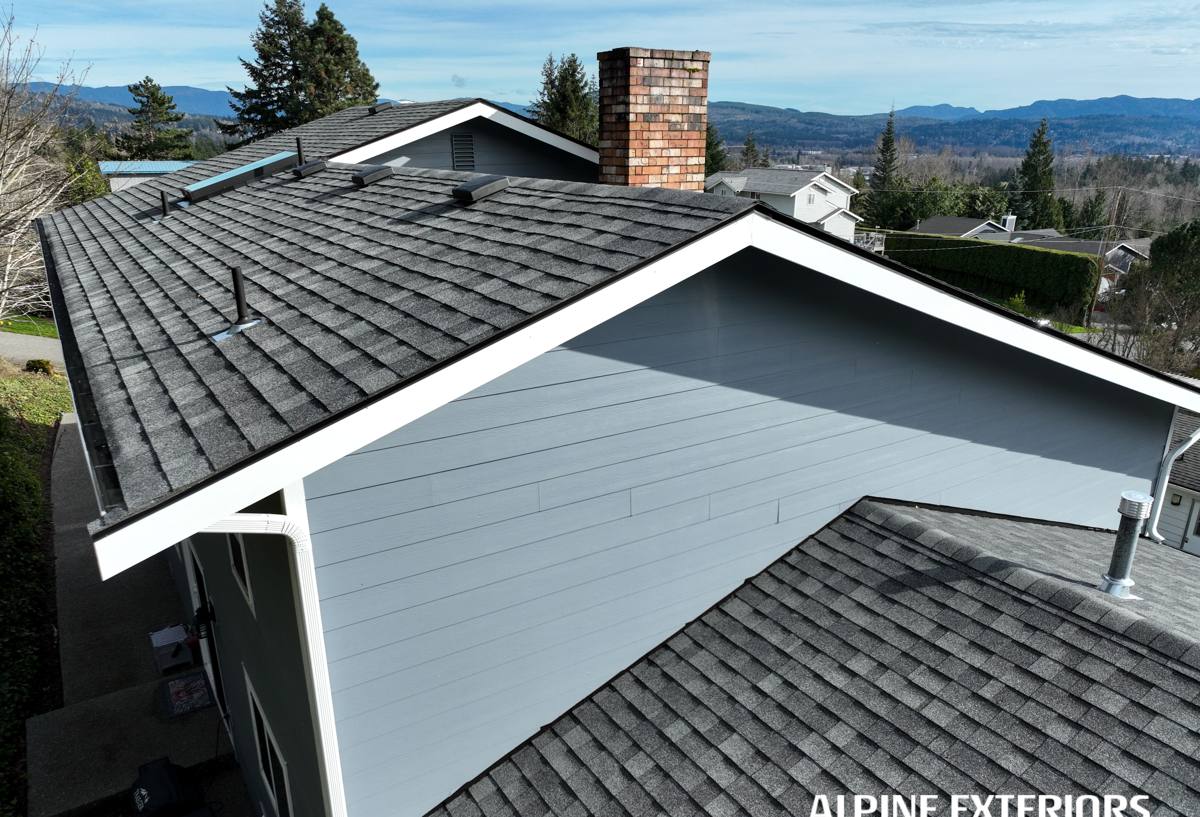
When a New Roof Is the Right Call
Not every roofing problem needs a full replacement, and a straight answer up front saves everyone time. Full replacement usually makes sense when:
- Shingles are cupping, cracking, or losing granules across large sections rather than in one isolated spot
- You've had two or more repair visits in the last few years for different leaks
- There's soft or spongy decking when walked on, or daylight visible through the roof deck from the attic
- Moss has been left to grow thick enough that it's lifting shingle edges rather than just sitting on the surface
- The roof is past its expected service life and insurance or a home sale is forcing the question
If your roof is showing one localized issue — a damaged vent boot, a section of flashing, a handful of wind-lifted shingles — a repair is the honest recommendation, not an upsell to a full tear-off.
What a Correct New Roof Installation Includes
A new roof is more than shingles. The parts most homeowners never see are what determine whether the roof handles Fraser Valley weather for its full expected life or starts failing early.
Tear-off and deck inspection
Old roofing comes off down to the deck so the sheathing can actually be inspected, not just covered over. Any soft, delaminated, or water-stained plywood gets replaced before anything new goes down. Skipping this step is the single most common shortcut that leads to early failure.
Underlayment
Given the amount of wind-driven rain this area sees, underlayment choice matters. Synthetic underlayment with ice-and-water shield at eaves, valleys, and penetrations gives a second line of defense if wind ever drives water up under a shingle course.
Flashing
Step flashing at walls, counterflashing at chimneys, and properly lapped valley flashing are where most leaks actually originate — not the shingle field itself. New flashing, not reused old flashing, should go in with a full replacement.
Ventilation
Balanced intake (soffit) and exhaust (ridge or roof vents) keep the attic temperature and moisture close to outdoor conditions. In a damp climate like this one, poor ventilation traps moisture in the attic and accelerates deck rot and moss growth from underneath.
Roofing Material Options for Abbotsford Homes
Most homes in this area choose between a few proven options. Each has real tradeoffs worth knowing before you decide.
| Material | Typical Lifespan | How It Handles Moss and Moisture | Notes |
|---|---|---|---|
| Architectural asphalt shingles | 25-30 years | Good with proper ventilation and periodic moss treatment | Most common choice; wide range of price and color options |
| Standing seam metal | 40-50+ years | Very good — smooth surface sheds moss and debris well | Higher upfront cost, lower long-term maintenance |
| Composite/synthetic shake | 30-40 years | Good; resists moisture absorption better than wood | Mimics wood shake appearance without the maintenance burden |
| Cedar shake | 20-30 years | Requires the most upkeep in a wet, mossy climate | We install it when requested, but it needs regular treatment and inspection to hold up here |
We don't push cedar shake as a first recommendation for shaded or heavily treed Abbotsford lots — not because it's a bad product, but because its maintenance schedule and moisture sensitivity are a poor match for a climate with this much sustained dampness. Homeowners who want the look and are willing to keep up with treatment and inspection can still have it installed correctly.
Ventilation and Moss: The Two Things Most Re-Roofs Get Wrong
If we had to name the two details that separate a roof that lasts from one that doesn't in this region, it's ventilation and moss management — and they're related.
A roof deck that's too warm relative to the outside air condensates moisture on its underside during cold, damp stretches. That moisture feeds rot from the inside while the moss builds up on the outside, and by the time a homeowner notices either problem, both have usually been developing for a while. Correct intake-to-exhaust venting ratios, sized to the attic's square footage, prevent this from the start rather than treating symptoms later.
Moss itself isn't just cosmetic. Once established, it holds moisture against the shingle surface long after the rest of the roof has dried, which is exactly the kind of prolonged dampness that shortens shingle life. Zinc or copper strips near the ridge, proper tree trim-back where feasible, and periodic gentle cleaning all extend a new roof's life far more than people expect.
Our Installation Process, Step by Step
- On-site assessment — we look at the existing roof, attic ventilation, and any problem areas before quoting anything
- Written estimate — material options, scope, and a clear price, no vague allowances
- Tear-off and deck inspection — old roofing removed, deck checked and repaired as needed
- Underlayment and flashing — ice-and-water shield at vulnerable areas, new flashing throughout
- Ventilation check and correction — intake and exhaust balanced to the attic, not just left as-is
- Material installation — shingles, metal, or composite installed to manufacturer spec, not shortcut spacing
- Site cleanup and magnetic sweep — nails and debris cleared from the property
- Final walkthrough — we go over the finished roof with you before calling the job done
Permits, Codes, and Working Across the Border
Abbotsford falls under British Columbia's building code and the City of Abbotsford's permitting process, which is a different set of requirements than what applies on the Washington side of the line. A crew that only works in Whatcom County and occasionally crosses into BC for a job can miss details in permitting, inspection scheduling, or local code specifics that a crew already familiar with Abbotsford's process handles as a matter of routine.
We don't cut corners on this. Permit requirements, inspection timing, and any homeowner-facing paperwork specific to Abbotsford are handled as part of the job, not treated as an afterthought because the crew is based across the border in Lynden.
Cost Factors to Expect
Exact pricing depends on roof size, pitch, material choice, and how much deck repair is needed once the old roofing comes off — we won't quote a number without seeing the roof. But the factors that move the price are consistent from job to job:
| Factor | Why It Matters |
|---|---|
| Roof size and pitch | Steeper roofs take longer and require more safety setup |
| Number of layers being removed | Tear-off labor scales with how much old material comes off |
| Deck condition | Rotted or soft sheathing found during tear-off adds material and labor |
| Material choice | Metal and composite cost more upfront than asphalt but less over the roof's life |
| Ventilation corrections | Adding intake or exhaust vents where the original design was insufficient |
| Flashing complexity | Roofs with more valleys, chimneys, and wall intersections need more flashing work |
Why a Lynden Crew That Already Works Abbotsford Matters
Lynden sits close enough to the border that serving Abbotsford homes is a natural extension of our regular service area, not a special trip. That matters in a few practical ways: we already know how Fraser Valley moisture and moss behave on roofs in this specific stretch of the Pacific Northwest, we're familiar with Abbotsford's permitting process rather than learning it on your job, and we're close enough to respond quickly if a warranty question or a storm-related issue comes up after installation.
A new roof is a long-term investment in the home. Hiring a crew that treats the underlayment, flashing, and ventilation with the same seriousness as the shingle brand is what actually determines whether that investment holds up through Abbotsford's wet winters and long moss seasons.
After Your New Roof Goes On
A correctly installed roof still benefits from basic upkeep, especially in a climate this damp. A simple maintenance checklist:
- Have gutters cleared at least twice a year so water isn't backing up under the roof edge
- Check for moss buildup each spring and address it early, before it lifts shingle edges
- Trim back overhanging branches that keep sections of the roof shaded and slow to dry
- Walk the attic once a year to confirm ventilation isn't blocked by insulation or storage
- Have flashing around chimneys and vents checked after any major windstorm
If you're weighing a new roof for a home in Abbotsford, we're happy to take a look and give you an honest read on what your roof actually needs — no pressure, no inflated urgency. Use the form below to request a free estimate.