 Lynden Siding
 Why Laurel Homes Need a Different Approach to Windows
Laurel sits close enough to the water and open farmland around Lynden that its homes take a different kind of weather beating than houses further inland in Whatcom County. Salt-tinged air moving in off the Sound, long stretches of driving rain through fall and winter, and a moss season that seems to start earlier every year all put steady pressure on window systems — not just the glass, but the frames, seals, and flashing around them. A window that performs fine in a drier climate can fail quietly here: fogging between panes, soft wood at the sill, or a frame that's gone spongy behind the trim before anyone notices a problem from inside the house.
Energy-efficient windows are marketed everywhere, but "energy-efficient" means something specific in this climate. It's not just a U-factor on a sticker. It's a window and installation system that keeps water out, resists the corrosive effect of salt-laden moisture on hardware and seals, and holds its seal integrity through repeated wet-dry-wet cycles year after year. That's the standard we build to on every Laurel job.
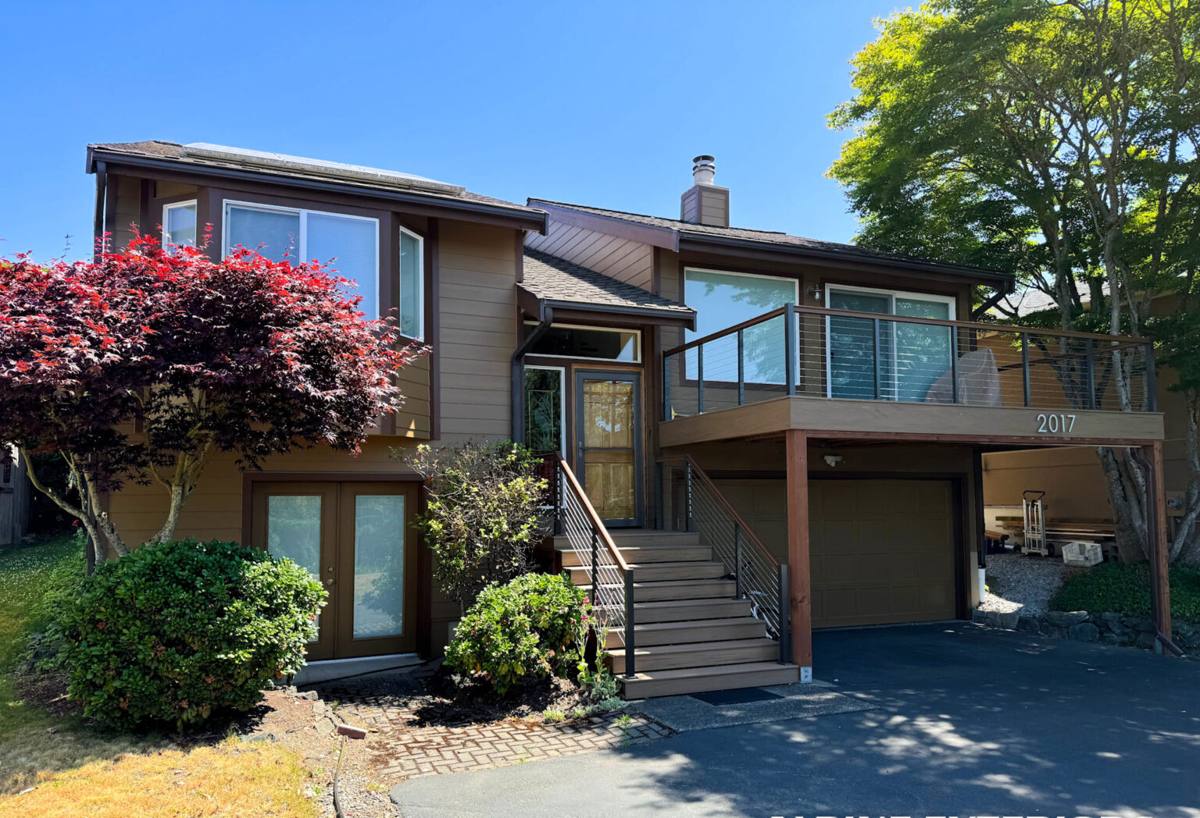
What "Energy-Efficient" Actually Means for This Climate
Homeowners often assume energy efficiency is mostly about winter heat loss. In Whatcom County, it's just as much about controlling moisture and air infiltration during the wet months, which run far longer here than in most of the country. A properly specified window addresses several things at once:
- Low U-factor — how much heat transfers through the window; lower is better for keeping conditioned air inside during our cool, damp winters.
- Low-E glass coatings — microscopically thin coatings that reflect heat while still letting daylight through, which helps in both winter heat retention and summer heat gain control.
- Warm-edge spacer systems — the material separating the panes of glass; in a climate with constant condensation risk, a poor spacer accelerates seal failure and fogging.
- Weep system design — the small drainage paths built into a window frame that let wind-driven rain that gets past the outer seal drain back out instead of pooling in the frame cavity.
- Corrosion-resistant hardware — locks, hinges, and balances that won't seize or pit prematurely from salt-laden moisture in the air.
Any one of these done poorly undermines the rest. A window can carry a great efficiency rating on paper and still perform badly here if the installation doesn't account for how water actually moves around a house near the coast.
The Local Climate Factors We Design Around
Salt Air
Salt in the air accelerates corrosion on exposed metal — window hardware, screen frames, and especially lower-quality fasteners. We favor hardware and frame materials with proven corrosion resistance for homes in this part of the county, and we pay attention to how far a given install site sits from open water, since exposure varies block to block.
Driving Rain
Rain that comes in sideways during a Pacific storm doesn't behave like rain falling straight down. It gets pushed under trim, into gaps around a frame, and behind siding if the flashing isn't detailed correctly. Most window leaks we're called out to inspect in this area trace back to flashing and sealant details, not the window unit itself.
Moss and Prolonged Dampness
A long moss season means extended periods where wood trim, sills, and the siding around a window stay damp far longer than in drier climates. Moss and algae growth on and around window trim holds moisture against the surface, which is exactly the condition that rots wood sills and degrades caulking joints over time. Part of doing this job right is making sure water sheds away from the window opening instead of sitting against it.
Signs a Laurel Home's Windows Are Underperforming
Homeowners usually notice one of these before they call, and any of them is worth a look before it turns into a bigger repair:
- Fogging or a hazy film between panes — the seal has failed and the gas fill or dead-air space is compromised
- Noticeable draft near the frame edge on a windy day
- Soft or discolored wood at the sill or lower frame
- Difficulty opening, closing, or locking a window that used to operate smoothly
- Visible moss or dark staining on exterior trim around the window opening
- A cold wall or window area even when the rest of the room is warm
- Rising heating bills without any other obvious cause
None of these by themselves mean a full replacement is required — sometimes it's a resealing or trim repair issue. That's worth an honest assessment rather than an assumption either way.
What a Correct Installation Involves
The window unit itself is maybe half the equation. The other half is the installation detail work that determines whether the window actually performs the way its rating suggests, especially in a climate that tests flashing and sealant work as hard as this one does.
Removal and Opening Inspection
Before a new window goes in, the old one comes out cleanly and we inspect the rough opening — sill, framing, and sheathing — for any hidden water damage or rot. This is the point where problems from years of prior moisture exposure get caught, and it's much cheaper to address them now than after a new window is sealed in over a hidden issue.
Flashing and Water Management
Correct flashing sequencing (how house wrap, flashing tape, and the window's nailing flange layer over each other) is what actually keeps driving rain out. This is the detail that separates a window that lasts through Whatcom County winters from one that develops a slow leak within a few years.
Air Sealing and Insulation
The gap between the window frame and rough opening gets properly insulated and air-sealed — not stuffed too tight, which can bow a frame, and not left with gaps, which defeats the efficiency rating entirely.
Interior and Exterior Finish
Trim, caulking, and paint or stain get finished to shed water away from every joint, with attention to the same moss-prone areas that cause trouble on the existing windows we replace.
Comparing Window Frame Materials for This Climate
| Material | Moisture & Salt Resistance | Maintenance | Typical Lifespan Considerations |
|---|---|---|---|
| Vinyl | Good — won't rot or corrode; UV exposure over decades can affect color and brittleness | Low — no painting required | Long-lasting if welded joints and reinforcement are quality-made |
| Fiberglass | Very good — dimensionally stable through wet-dry cycling | Low | Strong long-term performer, generally higher upfront cost |
| Aluminum | Fair — durable structurally, but can be prone to condensation and corrosion near salt air without thermal breaks | Low to moderate | Best suited when thermally broken and well-sealed |
| Wood / Wood-clad | Requires diligence — exterior cladding helps, but exposed wood is vulnerable in a long moss season | Higher — regular finish upkeep needed | Can last well with consistent maintenance; higher risk if neglected |
We don't push one material as universally "best." The right choice depends on the specific exposure of a given wall — how much direct weather it takes, how close it sits to salt air influence, and what the homeowner wants for long-term maintenance. We'll walk through these trade-offs honestly rather than steering toward whatever has the highest margin.
How Our Process Works for Laurel Homeowners
- On-site assessment — We look at existing windows, framing condition, and specific exposure factors (sun, wind, proximity to open areas) for the property.
- Product recommendation — Based on that assessment, we recommend window types and frame materials suited to the home's actual conditions, not a one-size-fits-all package.
- Clear, written estimate — Scope, materials, and cost laid out plainly, no surprise add-ons discovered mid-project.
- Careful removal and opening inspection — Catching hidden rot or damage before it's covered by a new install.
- Installation with proper flashing and sealing — The detail work that determines long-term performance in this climate.
- Final finish and walkthrough — Trim, paint/stain, and a walkthrough so the homeowner understands operation, maintenance, and warranty coverage.
Why Local Experience in Lynden and Laurel Matters
A crew that already works this area understands the difference in exposure between a home tucked back from the wind and one that catches driving rain straight off open fields or closer to the water. That local knowledge shapes real decisions — where extra flashing attention matters most, which sides of a house need hardier hardware, and how aggressively to plan for moss and moisture management around trim. It also means faster response if something needs a follow-up look after the first real storm season tests the work.
We're not guessing at Whatcom County weather from a spec sheet. We see how these window systems hold up here, year after year, on homes very much like yours in Laurel and the surrounding Lynden area.
Cost Factors Worth Understanding Upfront
Every home is different, but the main variables that move a window project's cost are consistent:
| Factor | Why It Matters |
|---|---|
| Number and size of windows | Straightforward scope driver |
| Frame material chosen | Vinyl, fiberglass, aluminum, and wood carry different material costs |
| Condition of existing rough openings | Hidden rot or damage found during removal adds repair scope |
| Access and site conditions | Second-story or hard-to-access windows take more labor time |
| Trim and finish work required | Full trim replacement costs more than reusing sound existing trim |
| Glass package (Low-E, gas fill, spacer type) | Higher-performance glass packages add cost but improve efficiency and durability |
We give straightforward, itemized estimates so a homeowner understands exactly what's driving the number rather than a vague lump sum.
Maintaining Your Investment After Installation
Even the best window installation benefits from basic upkeep, especially given Whatcom County's wet season length:
- Rinse salt residue and grime off exterior glass and frames a few times a year, particularly on wind-exposed sides of the house
- Check and clear weep holes at the base of window frames so drainage paths don't clog with debris
- Inspect exterior caulking annually and touch up any cracked or separated joints before wet season
- Keep gutters and nearby vegetation clear so runoff and shade don't hold extra moisture against window trim
- Address any moss growth on adjacent siding or trim promptly rather than letting it spread toward the window opening
None of this is complicated, but skipping it is how a well-installed window ends up with an avoidable problem years down the road.
If you're weighing whether your Laurel home's windows are due for an upgrade, or you just want a straight answer on what shape they're in, we're glad to take a look. Fill out the form below for a free, no-pressure estimate — no obligation, just an honest assessment from a crew that knows this part of Whatcom County.