 Lynden Siding
 Decks in Acme Take a Different Kind of Beating
Acme sits in the South Fork Nooksack valley, tucked under tree cover and closer to the foothills than most of Whatcom County's coastal neighborhoods. That setting changes how a deck ages. Wooded lots mean more shade, less airflow, and slower drying after every rain. Add in the marine air that pushes inland off the Sound and the long stretch of gray, wet months typical for this part of Washington, and you get decks that stay damp longer than they should — which is exactly the condition wood rot, moss, and corroded hardware need to take hold.
We repair decks in Acme regularly, and the failures we see are rarely random. They follow a pattern shaped by this climate: framing that was never properly flashed, fasteners that couldn't handle sustained moisture, and decking that held onto moss and organic debris for months at a time. Understanding that pattern is the difference between a repair that lasts and one that's patched over rot that keeps spreading underneath.
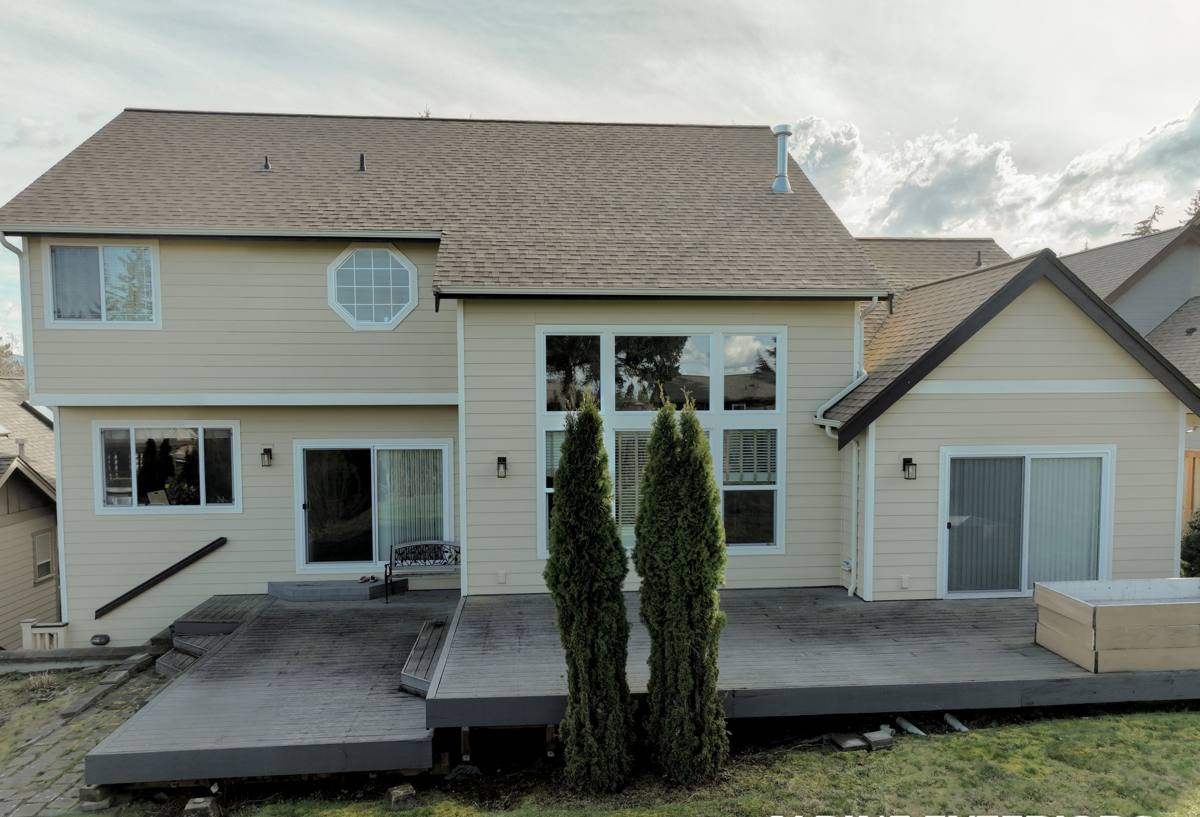
What Actually Fails on a Deck Out Here
Ledger Board and Framing
The ledger board — where the deck bolts to the house — is the single most common failure point we find, and it's also the most serious. If it was installed without proper flashing, water works its way behind it every time it rains and rots both the ledger and the rim joist behind it. This kind of damage is often invisible from the deck surface. You have to look at it from underneath, or in some cases pull decking boards near the house to see it.
Fasteners and Hardware
Older decks, and even some newer ones built with the wrong hardware, use fasteners that aren't rated for prolonged contact with treated lumber or sustained damp conditions. Nail and screw heads corrode, joist hangers rust and lose their holding strength, and bolted connections loosen as wood fibers compress around them. Corroded hardware is one of the more dangerous problems because the deck can look and feel fine right up until it doesn't.
Decking Boards and Moss
Shaded lots and a long moss season mean deck boards here hold onto moisture far longer than they would in full sun. Moss and algae aren't just a slip hazard — they trap water against the wood surface and accelerate rot, especially where boards butt against each other or against framing. Composite decking isn't immune either; moss growing in surface texture or between boards holds moisture against the substructure even if the boards themselves don't rot.
Repair or Replace? How We Make That Call
Not every deck problem means a full rebuild, and not every deck is worth repairing piece by piece. We inspect the structure first — framing, ledger, footings — because that's what determines safety and long-term value. Surface issues on sound framing are usually a straightforward repair. Rot or corrosion at the structural connections usually isn't.
| Factor | Leans Toward Repair | Leans Toward Replacement |
|---|---|---|
| Ledger board condition | Solid, properly flashed | Soft, rotted, or never flashed correctly |
| Framing and joists | Isolated soft spots | Widespread rot or undersized for current code |
| Footings/posts | Stable, no movement | Heaving, rot at grade, or inadequate depth |
| Decking surface | Scattered board damage, moss on otherwise sound wood | Cupping, splitting, or rot across most boards |
| Age of structure | Under 15 years, built to code | Older structure with outdated framing methods |
| Budget goal | Extend usable life a few years | Long-term, lower-maintenance solution |
We'll tell you plainly which category your deck falls into, and if a repair is a reasonable stopgap versus a temporary fix on a structure that's already past the point of being worth it, we'll say so before any work starts.
Signs Your Deck Needs Attention Now
- Soft or spongy spots when you walk across the deck, especially near the house
- Visible gaps or rust streaks where the ledger board meets the siding
- Wobble or movement in the railing when you lean on it
- Persistent moss or dark staining that keeps coming back after cleaning
- Nail heads popping up or screw heads showing rust
- Cracks running along the grain of structural framing members, not just decking
- Standing water that doesn't drain within a few hours after rain
- Gaps opening up between deck boards or around post bases
If you're seeing more than one of these, it's worth having someone look underneath the deck, not just at the surface.
Our Deck Repair Process
- Structural inspection. We check the ledger connection, framing, joist hangers, footings, and post bases before touching anything cosmetic. This is where we find the problems that actually matter.
- Honest scope and estimate. You get a clear breakdown of what's failing, what's still sound, and what it will cost to fix — not a vague number.
- Remove and address the source. Rotted framing gets replaced, not just covered. If moisture intrusion caused the damage, we fix the flashing or drainage issue causing it, not just the symptom.
- Rebuild to current fastening standards. Corroded hardware gets swapped for connectors and fasteners rated for the exposure conditions, not whatever happened to be on hand originally.
- Finish work. Decking, railing, and surface repairs go back in clean, with attention to drainage and airflow so the fix doesn't just repeat the same failure in a few years.
- Walkthrough. We show you what was found, what was replaced, and what to watch going forward.
Materials and Standards We Hold To
Wood and composite decking each have a place, and we're upfront about the trade-offs rather than pushing one over the other.
Pressure-treated framing is standard for structural members, but treated lumber still needs proper flashing and fastener compatibility — treatment chemicals in modern lumber are corrosive to the wrong hardware, which is part of why we don't cut corners on connector selection.
Wood decking is affordable and repairable board by board, but it needs regular cleaning and refinishing to hold up against this area's moss and moisture, and it will show wear faster in shaded yards.
Composite decking resists rot in the boards themselves and doesn't need staining, but it carries a higher upfront cost, and moss and debris still need to be cleared off the surface and out of gaps — otherwise moisture sits against the substructure underneath just the same. Composite also behaves differently than wood during installation and repair; boards expand and contract, and fastening patterns matter more than people expect, which is why we follow manufacturer spacing and fastening specs closely rather than treating it like wood.
For flashing and moisture barriers at the ledger board, we use self-adhering flashing tape rated for exterior use, not just building paper or caulk alone. That single detail prevents the most common and most expensive failure we see.
Why a Crew That Already Works in Acme Matters
A deck repair company that mostly works in dry, sunnier climates will size up moisture problems differently than a crew that works this valley regularly. We know what shaded, tree-covered lots do to a deck's underside, how fast moss returns here compared to open, sunnier yards, and which framing and flashing shortcuts show up again and again in this area. That means we're not guessing at causes — we're checking the specific spots that fail here first.
There's also a practical side: being familiar with Whatcom County permitting and typical inspection expectations for structural deck work means fewer surprises and delays once a repair or rebuild is underway. Depending on the scope of the work, structural repairs can require a permit — we'll tell you if yours does and handle that conversation rather than leaving you to sort it out.
Keeping a Repaired Deck Solid
A good repair buys you years, but a few habits stretch that further in this climate:
- Sweep leaves and debris off the deck regularly, especially in fall — trapped organic matter holds moisture and feeds moss
- Clean moss and algae off the surface at least once a year, before it gets established
- Keep gutters and downspouts clear so runoff isn't dumping extra water onto or near the deck
- Reseal or restain wood decking on the schedule the product calls for, not just when it looks faded
- Check underneath the deck once a year for early signs of moisture at the ledger board or framing
Catching a small problem during a yearly look is a lot cheaper than catching it after it's spread through the framing.
Get an Honest Look at Your Deck
If your deck has soft spots, moss that won't quit, or you're just not sure whether it's a repair or a replacement situation, we're glad to come take a look. The estimate is free, there's no pressure, and you'll get a straight answer about what's actually going on underneath — fill out the form below to get started.