 Lynden Siding
 Why Aldergrove Roofs Wear Faster Than the Warranty Sticker Suggests
Every asphalt shingle comes with a manufacturer's warranty printed in years — 25, 30, sometimes "lifetime." Those numbers are tested under lab conditions, not under an Aldergrove winter. Homes here sit close enough to the water to pick up salt-laden air, far enough inland to catch driving, wind-pushed rain off the Fraser Valley, and shaded enough by mature trees and damp ground that moss has a long season to work on any roof that isn't shedding water and drying out properly. None of that shows up on a warranty card. It shows up ten years later as curled tabs, black streaking, and soft spots around the edges of a roof that "still had time left."
We install and replace asphalt shingle roofs on homes in and around Aldergrove regularly enough to know which parts of a roof fail first here, and why. This page is about that one job — asphalt shingle roofing for Aldergrove homes — not a generic rundown of roofing in general.
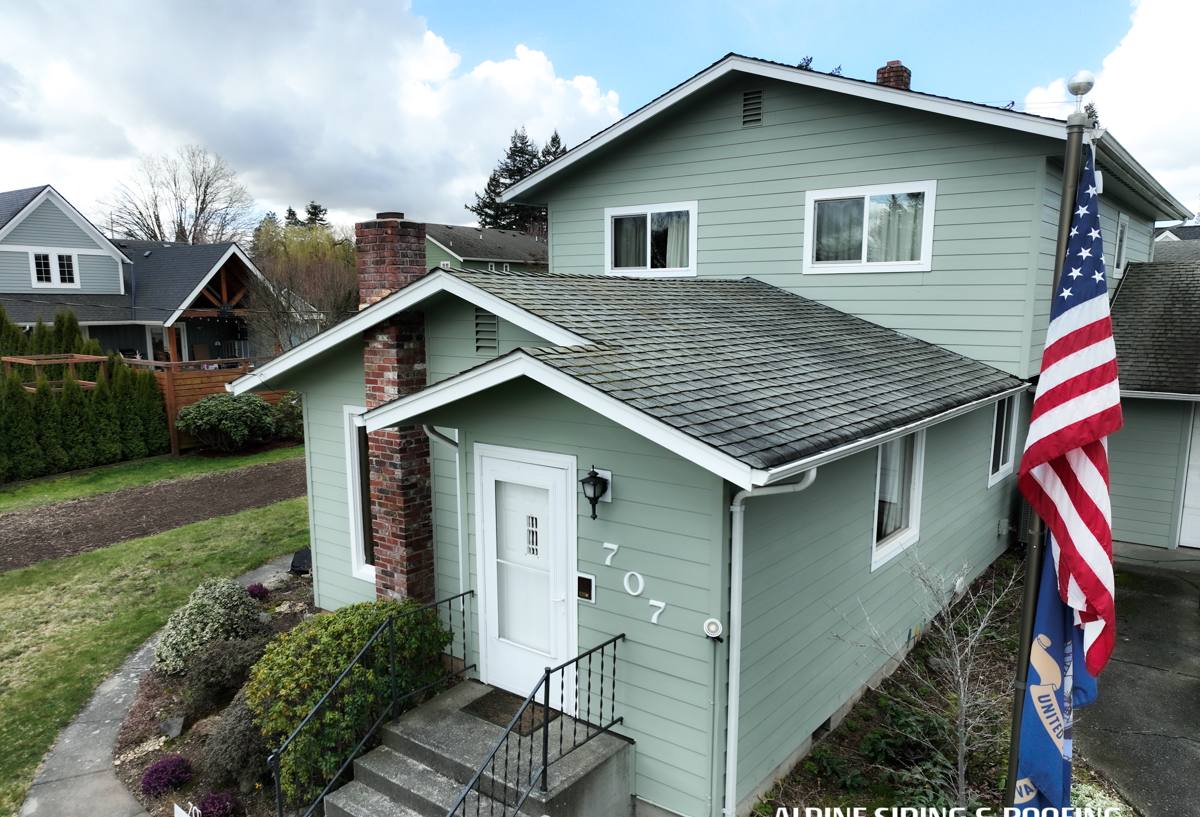
What Salt Air, Driving Rain, and Moss Actually Do to a Shingle Roof
Salt Air and Granule Wear
Asphalt shingles rely on their ceramic-coated granules for two jobs: reflecting UV and shedding water off the asphalt mat underneath. Salt-carrying air accelerates the breakdown of those granules and speeds up oxidation of the asphalt itself. Once granule loss starts, it's not cosmetic — it's the beginning of the shingle losing its ability to protect the mat from sun and water, and it tends to show up first on south- and west-facing slopes.
Driving Rain and Wind-Driven Intrusion
Straight-down rain is easy for any roof to handle. Rain that comes in sideways during a windstorm is a different problem — it tests every lap, every nail line, and every flashing detail on the roof. A roof that's been installed with proper overlap, correct nailing height, and sealed flashing shrugs this off. A roof with shortcuts in any of those areas will show leaks specifically during wind-driven storms, even if it's bone dry the rest of the year.
Moss and Moisture Retention
Whatcom County and the surrounding Fraser Valley climate give moss a long growing window — damp, mild, and shaded conditions for most of the year. Moss doesn't just look bad; it holds moisture directly against the shingle surface long after the rest of the roof has dried, works its way under tab edges as it grows, and can lift shingles enough to let wind and water underneath them. Roofs in tree-shaded yards or on north-facing slopes are the most exposed to this.
What a Correct Asphalt Shingle Installation Involves
A shingle roof is a system, not a single product nailed to plywood. Every layer matters, and skipping or shortcutting any one of them is exactly how a "new roof" ends up leaking in year three instead of year twenty.
Tear-Off and Deck Inspection
We remove the old roofing down to the deck rather than layering over it — layering traps moisture, adds weight, and hides deck problems. Once it's off, we inspect the plywood or board decking for soft spots, rot, or delamination, most commonly found around old leak points, valleys, and roof penetrations, and replace only what's actually compromised.
Underlayment and Ice-and-Water Protection
A synthetic or felt underlayment goes down across the full deck as the roof's backup water barrier. In vulnerable areas — eaves, valleys, and around chimneys or skylights — we add a self-adhering ice-and-water membrane, which is the difference between a roof that sheds a wind-driven storm and one that leaks through the nail holes during it.
Flashing Details
Most shingle roof leaks that show up years later trace back to flashing, not the shingles themselves — valleys, chimneys, skylights, and wall-to-roof transitions. We install new flashing rather than reusing old, bent, or rusted pieces, since flashing is cheap compared to the drywall repair that follows a flashing leak.
Ventilation
Balanced intake and exhaust ventilation keeps the attic close to outdoor temperature, which reduces moisture buildup under the deck and helps the shingles themselves last their full service life instead of baking or trapping condensation from underneath. Poor ventilation is one of the most common reasons a shingle roof fails early, and it's also one of the easiest things to get wrong on a roof that otherwise looks fine from the ground.
Nailing Pattern and Wind Rating
Every shingle has a manufacturer-specified nailing zone and nail count for its wind rating. Nail too high, too few, or with a nail gun set too deep, and the shingle's actual wind resistance drops well below what the packaging claims — which matters directly here, where driving rain usually arrives with real wind behind it.
Choosing the Right Shingle for This Climate
Not every shingle line is built the same way, and for a roof that has to deal with salt air, driving rain, and moss, the differences matter more than the price tag alone suggests.
| Shingle Type | Typical Lifespan | Best For | Trade-Offs |
|---|---|---|---|
| 3-tab (standard) | 15–20 years | Budget-conscious rentals or outbuildings | Lower wind rating, less impact resistance, wears faster under UV and salt exposure |
| Architectural / laminate | 25–30 years | Most Aldergrove homes | Better wind rating and thickness; algae-resistant granule versions worth the small upcharge here |
| Premium / impact-resistant | 30+ years | Homes exposed to wind, tree cover, or hail history | Higher upfront cost; often qualifies for insurance discounts |
For most homes in this area, we recommend an architectural shingle with algae-resistant (copper-infused) granules. The upcharge over a standard shingle is modest, and it directly addresses the moss and staining problem that shows up faster here than in drier inland climates.
Our Process, Start to Finish
- On-site inspection and honest assessment of what the current roof actually needs — repair, partial replacement, or full tear-off
- Written estimate that spells out materials, scope, and timeline before any work begins
- Full tear-off, deck inspection, and repair of any compromised sheathing
- Underlayment, ice-and-water membrane, and new flashing installed to code
- Shingle installation to manufacturer nailing specs, matched to the roof's actual wind exposure
- Ventilation check and correction if intake or exhaust airflow is inadequate
- Full site cleanup, including magnetic nail sweep of the yard and driveway
- Final walkthrough and warranty paperwork
Keeping Moss and Algae From Cutting Your Roof's Life Short
A correctly installed roof still needs some basic upkeep in a climate that grows moss year-round. This isn't about aggressive pressure washing, which can strip granules and shorten a roof's life on its own — it's about a few simple habits that keep water moving off the roof the way it's supposed to.
- Keep gutters clear so water doesn't back up under the shingle edge
- Trim back overhanging branches to cut down on shade and debris buildup
- Have moss brushed off gently (never pressure-washed) rather than left to grow into the tab edges
- Check attic ventilation isn't blocked by insulation stuffed into soffit vents
- Schedule a quick visual inspection after any major windstorm
Signs Your Aldergrove Roof Needs Attention Now
Some warning signs are obvious from the ground; others take a trained eye or a trip into the attic. Either way, catching these early is almost always cheaper than waiting for a leak to show up inside the house.
- Granules collecting in gutters or at the base of downspouts
- Shingle edges curling up or tabs that look cupped rather than flat
- Dark streaking or thick moss growth, especially on north-facing slopes
- Daylight visible through the roof deck from inside the attic
- Soft or spongy spots when walking the roof
- Water stains on ceilings that only appear during wind-driven storms
What Affects the Cost of a Shingle Roof Replacement
| Factor | Why It Matters |
|---|---|
| Roof size and pitch | Larger and steeper roofs take more material, time, and safety setup |
| Deck condition | Rotten or delaminated sheathing found during tear-off adds material and labor |
| Shingle tier chosen | Standard, architectural, and impact-resistant lines carry different material costs |
| Number of penetrations | Chimneys, skylights, and vents each need individual flashing work |
| Layers being removed | Tearing off multiple existing layers takes longer than a single-layer tear-off |
| Access and disposal | Tight lots, long carries to the dumpster, or difficult truck access add time |
We walk every roof and give a specific, written number rather than a rough guess over the phone — the factors above vary enough from house to house that a real estimate has to start with someone actually on the roof.
Why a Crew That Already Works Aldergrove Matters
Aldergrove sits close enough to the border that it gets lumped into general "Lower Mainland" or "Whatcom County" service descriptions, but the roofing needs here are specific — and so are the practical realities of working this area. A crew that already handles jobs on both sides of the line knows the building code differences between Canada and the U.S., knows what permitting looks like locally, and knows which parts of a roof fail first because of this exact combination of salt air, wind-driven rain, and moss — not because of a generic Pacific Northwest checklist. That familiarity shows up in fewer surprises during tear-off, a more accurate estimate up front, and a finished roof built for the conditions it will actually face instead of the conditions a shingle was rated for in a lab.
If your roof is showing any of the wear signs above, or you'd simply like a straight answer on whether repair or replacement makes more sense, we're happy to take a look. There's no cost and no pressure to a walkthrough and written estimate — use the form below to get one scheduled.