 Lynden Siding
 Why Birch Bay's Shoreline Climate Is Rough on Siding
Birch Bay sits right on the water, and that changes what a house needs from its siding compared to homes further inland around Lynden. Wind coming off the Strait of Georgia carries salt spray onto exterior walls, especially on the sides of a house that face open water or take the brunt of storms rolling through. Add in wind-driven rain that gets pushed sideways into siding joints and trim, plus a long stretch of the year — roughly fall through spring — where shaded, damp walls barely dry out between rain events, and you have three separate stresses working on the same wall assembly at the same time.
None of these stresses are dramatic on their own. Salt film doesn't rot a wall overnight, and a little moss on a north-facing corner isn't a structural emergency. The problem is what happens over years: salt residue holding moisture against a surface longer than it otherwise would, paint and caulk breaking down faster under that combination, and moss colonies gradually working into any seam or fastener hole that wasn't sealed correctly the first time. Siding in Birch Bay doesn't fail because of one bad storm. It fails because of small installation shortcuts that compound for a decade in a wetter-than-average, saltier-than-average environment.
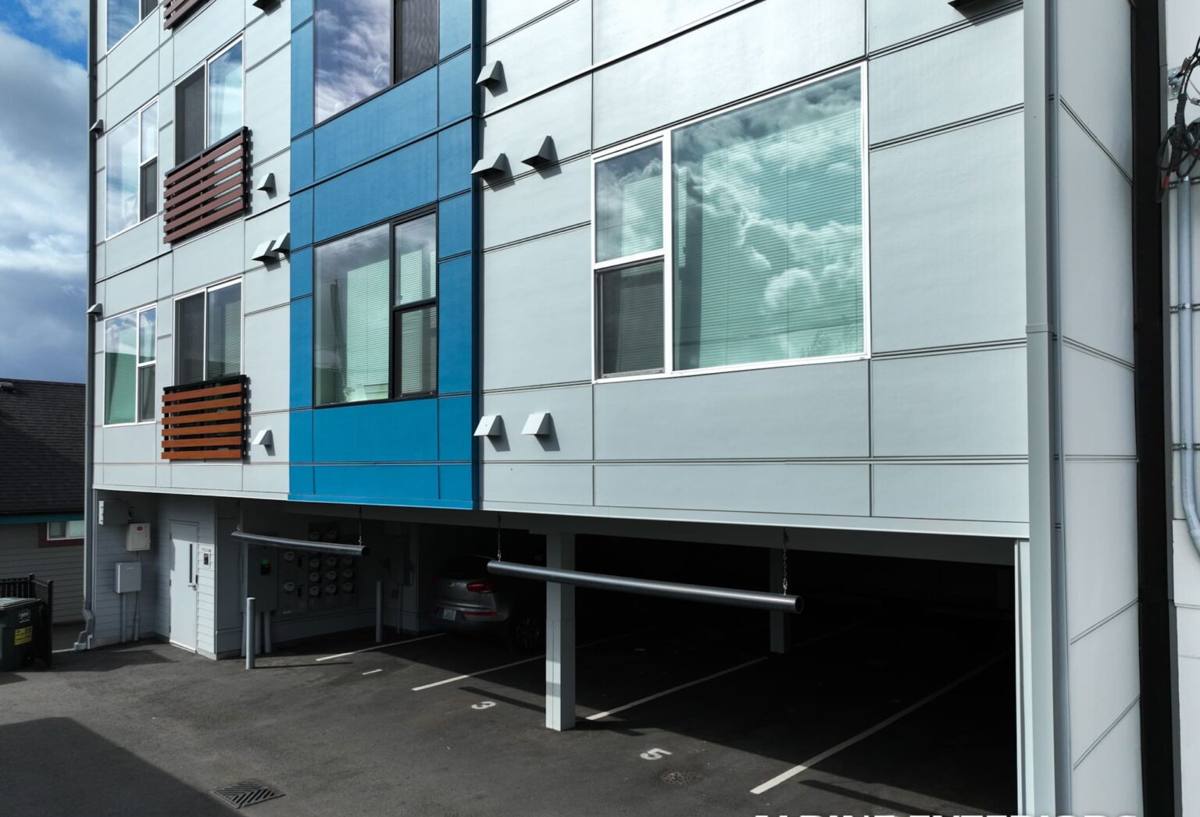
What a Correct Installation Actually Involves This Close to the Water
Fiber cement siding is only as good as the installation underneath it, and that's doubly true a few hundred yards from salt water. The material itself resists rot and won't support combustion, but a poorly detailed installation can still let moisture behind the cladding — and once water gets behind siding on a coastal wall, it has less chance to dry out between rain events than it would on a drier, more inland lot.
The details that matter most in this environment
- Proper clearance between the bottom edge of the siding and grade, decks, and roof lines, so splash-back and pooled water don't sit against the board
- A drainage plane (weather-resistive barrier plus furring or a rainscreen gap) that lets any incidental moisture drain and the wall assembly breathe
- Corrosion-resistant fasteners — this is not the place to save money on plain steel nails, given the salt content in the air
- Factory-cut and field-cut edges sealed per manufacturer spec, since a raw, unsealed cut edge is the fastest path for water into the board
- Minimal reliance on caulk at butt joints — caulk is a maintenance item, not a substitute for correct flashing, and it's one of the first things to fail under UV and salt exposure
- Flashing at every penetration, window, and door head detailed so water sheds outward instead of tracking behind the cladding
Every one of these is standard practice on paper. In the field, they're the details that get rushed on a job priced too low or crewed by installers who don't regularly work this close to the water. A wall that looks identical to a correctly flashed one on installation day can behave very differently five winters later.
Why We Only Install James Hardie in This Area
We install James Hardie fiber cement exclusively — not vinyl, not LP SmartSide, not primed wood, not other fiber cement brands. For a shoreline community like Birch Bay, the reasons matter more than they would somewhere drier. Hardie's HZ5 product line is engineered specifically for the wetter, more moisture-exposed climate zones of the Pacific Northwest, which includes the coastal edge of Whatcom County. It's a formulation and installation spec built around resisting moisture-related damage rather than a generic siding product with a coastal add-on.
ColorPlus factory-applied finish is the other piece of the equation. Field-applied paint on any siding material breaks down faster under salt exposure and UV than a factory-baked finish does, which means more frequent repainting to keep a coastal home looking right. ColorPlus is baked on in a controlled environment with multiple coats and a finish designed to hold color and resist fading, chipping, and salt film buildup significantly longer than typical field paint. It also carries its own finish warranty separate from the substrate warranty, which is a meaningful distinction for a wall that's going to see more weather cycles per year than an inland home.
Fiber cement is also non-combustible, which matters given the wildfire smoke and dry-season fire risk that affects Western Washington in general, even in a wetter pocket like Birch Bay. It's one more reason we standardized on this product rather than treating siding brand as interchangeable.
Panel Choices That Make Sense for a Birch Bay Home
Most homes in this area do well with HardiePlank lap siding as the primary field material — it's the most common profile, holds up well under wind-driven rain when installed with correct lap and fastening, and comes in a range of ColorPlus colors and textures (smooth or cedar-textured). HardiePanel vertical siding works well for accent gables, entry features, or a more modern look, and HardieTrim boards handle corners, window and door trim, and fascia in a material that won't rot the way wood trim does in a damp, shaded spot.
A note on color choice near the water
Darker colors show less obvious salt film between cleanings but can show fading differences over time if a section gets more sun than the rest of the wall. Lighter, more matte finishes tend to hide moss staining on shaded elevations better than glossy or very dark tones. Neither is "correct" — it's a trade-off worth talking through based on which sides of the house are shaded and which face the water.
Fiber Cement vs. Other Siding Materials in This Climate
| Factor | Vinyl | Untreated / Primed Wood | James Hardie Fiber Cement |
|---|---|---|---|
| Salt air exposure | Can become brittle and discolor over time near water | Absorbs moisture, accelerates rot near salt spray | Non-combustible cement composite, engineered for moisture exposure (HZ5) |
| Moss season resilience | Moss grows on the surface film; doesn't damage the panel itself | Moss holds moisture against wood, encourages rot underneath | Surface can host moss like any siding, but the board itself doesn't rot from it |
| Wind-driven rain | Can flex and loosen at fastener points in high wind | Prone to swelling/warping at joints over repeated wet cycles | Rigid, dimensionally stable when installed to spec with correct clearances |
| Finish longevity | Color molded in, but fades and chalks; not repaintable easily | Field paint fails fastest of the three, needs frequent repainting | ColorPlus factory finish holds up longer than field-applied paint |
| Fire resistance | Can melt/deform under heat exposure | Combustible | Non-combustible |
Our Process, Start to Finish
We walk the exterior before we quote anything, looking at what's actually happening on the wall right now — moisture staining, soft spots at the bottom courses, condition of existing flashing and trim, and which elevations are taking the most weather. On a Birch Bay property that usually means paying close attention to whichever side faces the water and any shaded, poorly ventilated walls where moss has had years to establish itself.
- On-site inspection and moisture check of the existing wall assembly, not just a visual estimate
- Honest conversation about what's actually causing damage (often installation or flashing issues, not just "old siding") before we talk about replacement
- Removal of old siding and inspection of the sheathing underneath — this is where hidden rot or trapped moisture usually shows up
- Repair of any damaged sheathing or framing before new siding goes on; new siding over a bad substrate just hides the problem
- Installation of a proper drainage plane, correct flashing at every penetration, and Hardie siding installed to manufacturer spec and clearances
- Final walkthrough and punch list before we consider the job done
Why a Crew That Already Works Birch Bay Matters
Siding installation isn't identical from lot to lot even within the same small area. A crew that regularly works Birch Bay already knows which elevations tend to take the worst of the wind and salt spray, how much more attention shaded, water-facing walls need compared to a similar house a mile inland toward Lynden, and how the permitting and inspection process works through Whatcom County for exterior work. That familiarity shows up in small decisions — fastener choice, flashing details, where to spend extra time sealing — that a crew unfamiliar with this specific stretch of coastline might not think twice about.
It also means we're not learning on your house. We've seen what happens to siding that was installed correctly here and what happens to siding that wasn't, and that experience shapes how we detail every wall we touch in this community.
Living With Fiber Cement Siding in a Moss-Season Climate
Correctly installed Hardie siding is low-maintenance, not no-maintenance. A little seasonal attention goes a long way toward keeping it looking right and performing the way it's designed to.
- Rinse salt film off the exterior periodically, especially on water-facing walls, using a garden hose rather than a high-pressure washer that can force water into joints
- Keep gutters and downspouts clear so water isn't overflowing and running down the siding face
- Trim back vegetation and tree cover near shaded walls to improve airflow and reduce the conditions moss needs to establish
- Inspect caulking at windows, doors, and penetrations annually and touch up as needed — caulk is a maintenance item even on a correctly installed wall
- Watch north-facing and heavily shaded elevations for early moss growth and address it with a gentle wash rather than letting it build up over multiple seasons
- Avoid pressure washing directly at seams, joints, or under lap edges regardless of how the rest of the cleaning is done
What Drives Cost on a Birch Bay Siding Job
| Cost Factor | Why It Matters Here |
|---|---|
| Condition of existing sheathing | Coastal moisture exposure makes hidden rot more likely, which can add repair scope once old siding comes off |
| Home size and wall complexity | More corners, gables, and trim detail mean more cutting, fitting, and flashing work |
| Access and site conditions | Waterfront and hillside lots can affect staging, scaffolding, and material handling |
| Siding profile and color | Lap vs. panel vs. shingle-style profiles and premium ColorPlus color options price differently |
| Trim and accent work | Corner boards, window trim, and accent panels add labor beyond the field siding itself |
We don't quote a job without seeing the wall in person — the factors above shift enough from house to house, especially near the water, that a phone estimate isn't a responsible one.
If you're weighing a siding replacement on a Birch Bay home, we're happy to walk the exterior with you, point out what we actually see, and put together a straightforward, no-pressure estimate — use the form below to get started.