 Lynden Siding
 Decking Built for Blaine's Marine Climate
Blaine sits right on the water, tucked against Semiahmoo Bay and Drayton Harbor near the Canadian border. That location is a big part of why the city is a great place to live, and it's also why decks here take a beating that decks twenty miles inland don't. Salt-laden air moves off the water and onto every exposed surface, driving rain comes in sideways off Georgia Strait weather systems, and the long gray stretch from fall through spring gives moss, algae, and mildew months to get established on anything that stays damp. A deck built without that specific combination in mind will show it within a few seasons — soft spots, rust streaks around fasteners, green film that never fully dries out, and boards that cup or crown.
Composite decking, installed correctly, holds up to that environment far better than untreated or even treated wood. But "composite" isn't one product, and "installed correctly" isn't a given — a lot of what determines whether a Blaine deck lasts fifteen years or needs rework in five happens below the board line, in the framing, fasteners, and drainage details most homeowners never see once the job is done.
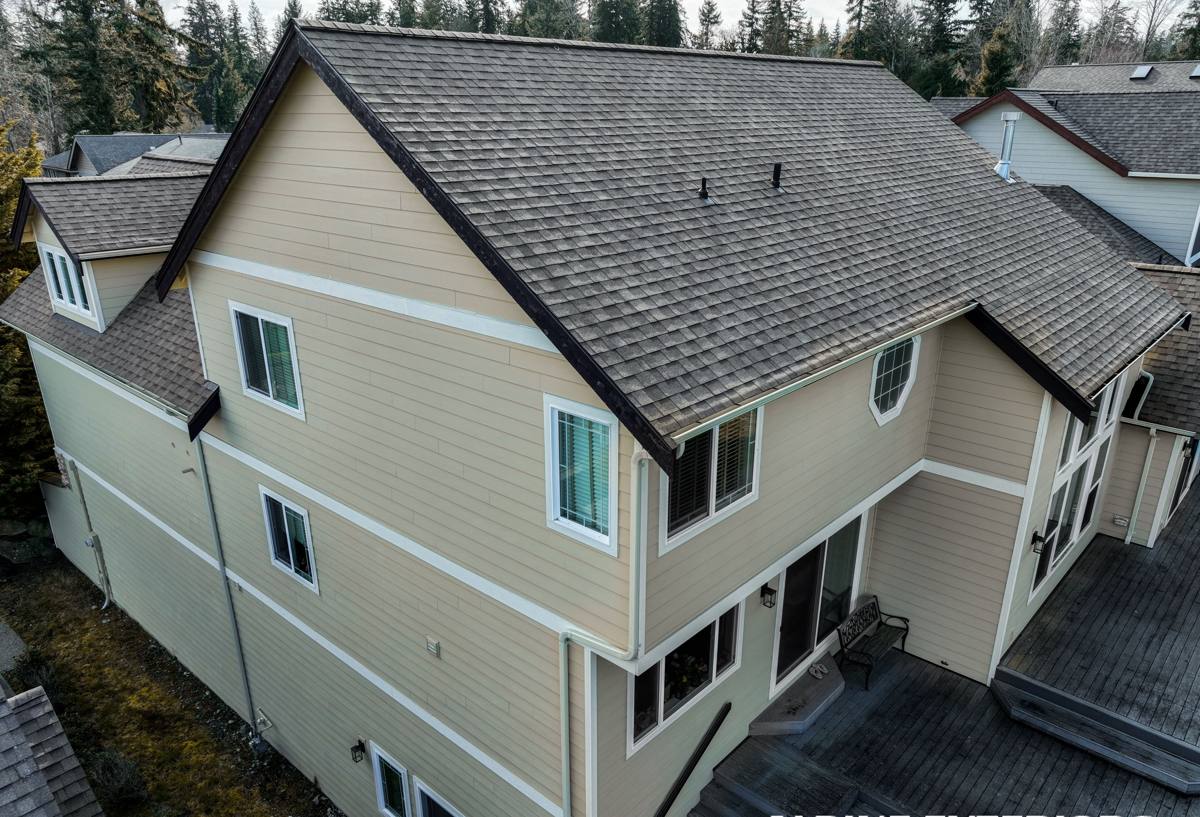
What Salt Air and Driving Rain Actually Do to a Deck
It helps to understand the specific failure modes before talking about the fix.
Salt Air and Metal
Salt in the air accelerates corrosion on anything metal — screw heads, joist hangers, structural brackets, railing hardware. Standard galvanized fasteners that would be fine forty miles from the water can start rusting within a couple of years this close to Semiahmoo Bay. Once a fastener rusts, it weakens, and it can also stain the surrounding decking material, especially lighter-colored composite boards.
Driving Rain
Rain that comes in at an angle, rather than straight down, gets under railings, into end grain, and behind fascia boards that a purely vertical rain would never reach. It also means water doesn't just land on a deck surface — it gets pushed into joints, seams, and any gap in the flashing where the deck meets the house.
The Long Moss Season
Whatcom County's wet season stretches long, and shaded or low-airflow areas of a deck can stay damp for days at a time. Moss and algae need exactly that: moisture, low light, and a surface to grip. On wood, that moisture cycle contributes to rot. On a poorly installed composite deck, it shows up as slick, discolored patches — usually in the same spots each year — corners, under furniture, and anywhere airflow underneath the deck is restricted.
Why We Recommend Composite for Most Blaine Homes
We install wood decking when a homeowner specifically wants that look and understands the upkeep it requires. But for most Blaine properties, especially anything within a mile or two of the water, composite is the more honest long-term recommendation. It's not about wood being a bad product — it's about maintenance burden and moisture behavior in this specific climate.
- Composite doesn't need annual staining or sealing to resist moisture intrusion the way wood does
- It doesn't splinter or develop soft spots from repeated wet-dry cycling
- Modern capped composite boards resist the surface staining that salt residue and organic growth cause on bare wood
- Color and grain are consistent board to board, which matters on a deck that's rarely fully shaded from UV
- Most manufacturers back capped composite with substantially longer warranties than they offer on their own wood alternatives, because the material behaves more predictably in wet climates
The trade-off is worth being upfront about: composite costs more up front than pressure-treated lumber, and it doesn't have the exact look and feel of real wood. Some homeowners weigh that trade-off and still choose wood, and that's a legitimate call — we'll build either one correctly. But when a homeowner asks us directly what we'd choose for a Blaine deck that sees salt spray and months of wet weather, composite is our honest answer.
What a Correct Composite Install Involves Here
The board itself is maybe a third of what determines how a Blaine deck performs. The rest is in details that are easy to skip and expensive to fix later.
Framing and Ledger Attachment
Where the deck attaches to the house, that ledger connection has to be flashed correctly so driving rain can't work its way behind it and into the rim joist or wall sheathing. This is one of the most common failure points we find on older decks in this area — a ledger board that was fastened without proper flashing, sitting against a house wall that's taken years of sideways rain.
Joist Protection
Composite decking outlasts the wood framing underneath it if that framing isn't protected. We tape or wrap joists to keep standing water from sitting on top of the lumber and slowly rotting it from the inside, invisible from above until the deck starts to feel spongy.
Fasteners and Hardware
Given how fast standard galvanized hardware corrodes this close to the water, we use stainless steel or coated fasteners rated for coastal exposure on structural connections, along with hidden composite-specific fastening systems on the board surface. It costs more than off-the-shelf hardware, but it's the difference between hardware that lasts the life of the deck and hardware that's rusting and staining boards within a few years.
Airflow and Drainage Underneath
Moss and algae need standing moisture to take hold. Proper joist spacing, board gapping, and — where the deck is low to the ground or partially enclosed — attention to underneath ventilation all reduce how long any given spot on the deck stays wet after a storm. This is often the single biggest factor in whether a deck develops slick, mossy patches or stays clean through the wet months.
Railings and Stairs
Railing posts and stair stringers see more direct weather exposure than the deck field itself, and they take structural load, so hardware quality and correct blocking matter even more there. We build these to hold up under the same salt-air and moisture conditions as the rest of the deck, not as an afterthought once the decking is down.
How Our Process Works
We keep the process straightforward and make sure every homeowner understands what's being done and why before we start.
- On-site assessment — We look at the site's actual exposure: how close to the water, how much direct weather it gets, existing drainage, and condition of any structure we're replacing.
- Material selection — We walk through board tiers and finishes with the homeowner, matching the choice to budget and how the space will be used, not just upselling the top option.
- Framing and structural work — Ledger flashing, joist protection, and hardware selection are handled to coastal-exposure standards regardless of which composite tier is chosen.
- Installation — Boards, fascia, and railings are installed with manufacturer-specified gapping and fastening for proper drainage and thermal movement.
- Final walkthrough — We go over basic care with the homeowner so the deck stays looking right through its first wet season and beyond.
Comparing Composite Board Tiers for a Coastal Property
| Board Type | Moisture & Salt Resistance | Maintenance | Typical Warranty Range |
|---|---|---|---|
| Uncapped composite | Adequate; more prone to surface staining over time | Occasional cleaning to prevent buildup in shaded areas | Shorter, often prorated |
| Capped composite (cap on show face only) | Good; cap layer resists moisture and staining better than uncapped | Low; periodic washing recommended | Moderate to long |
| Fully capped composite (cap on all sides) | Best; sealed against moisture intrusion on cut ends and undersides | Lowest; best resistance to moss/algae grip | Longest, typically the manufacturer's top tier |
For decks with real salt exposure and heavy shade in spots, we generally steer homeowners toward fully capped boards, particularly on cut ends near stairs and border details where uncapped edges would otherwise sit exposed to standing water.
Maintaining a Composite Deck Through Blaine's Wet Season
Composite cuts down maintenance significantly compared to wood, but "low maintenance" isn't "no maintenance," especially in a climate that stays wet for months at a stretch.
- Sweep debris — leaves, needles, seed pods — off the deck regularly through fall so it doesn't trap moisture against the boards
- Rinse the deck surface periodically during the wet season, especially shaded corners and areas under furniture
- Keep gutters and downspouts near the deck clear so runoff isn't dumping extra water onto or under the deck structure
- Check railing posts and stair connections annually for any looseness, which can be an early sign of hardware corrosion
- Avoid pressure-washing at close range or high pressure, which can damage the cap layer on composite boards — a soft wash is usually enough
- Trim back vegetation that shades the deck and slows drying after rain, if practical
Local Considerations for Blaine Properties
Whatcom County and the City of Blaine have their own permitting requirements for deck construction, particularly for decks above a certain height, decks near property lines, or work close to shoreline setback areas given Blaine's waterfront geography. Requirements vary by specific site and structure, so we handle the permitting conversation as part of planning the job rather than leaving it for the homeowner to sort out separately. If a property is in or near a shoreline jurisdiction area, that's worth flagging early since it can affect what's allowed and what documentation is needed before work starts.
Get a Free, No-Pressure Estimate
If you're weighing a new composite deck or replacing an aging one in Blaine, we're happy to come take a look, talk through what your specific site needs given its sun, shade, and exposure to the water, and put together a straightforward estimate — no pressure, no upsell script. Use the form below to get started.