 Lynden Siding
 Building Decks for Custer Homes Near Lynden
Custer sits close enough to the water and open farmland north of Lynden that its decks take a beating most homeowners don't expect until they're a few years in. Between salt-laden air drifting in off the Strait, driving rain that comes in sideways more often than straight down, and a moss season that can stretch from October through April, an outdoor deck out here is under near-constant environmental pressure. A deck built the way it might be built inland, or in a drier climate, tends to show its age fast in this corner of Whatcom County — cupped boards, soft spots around fasteners, slick green film on shaded stretches, and rust bleeding through composite or wood alike.
We build and replace decks for homeowners throughout the Custer and Lynden area, and the approach we take here is shaped directly by what this climate does to a structure over time, not just what looks good on installation day.
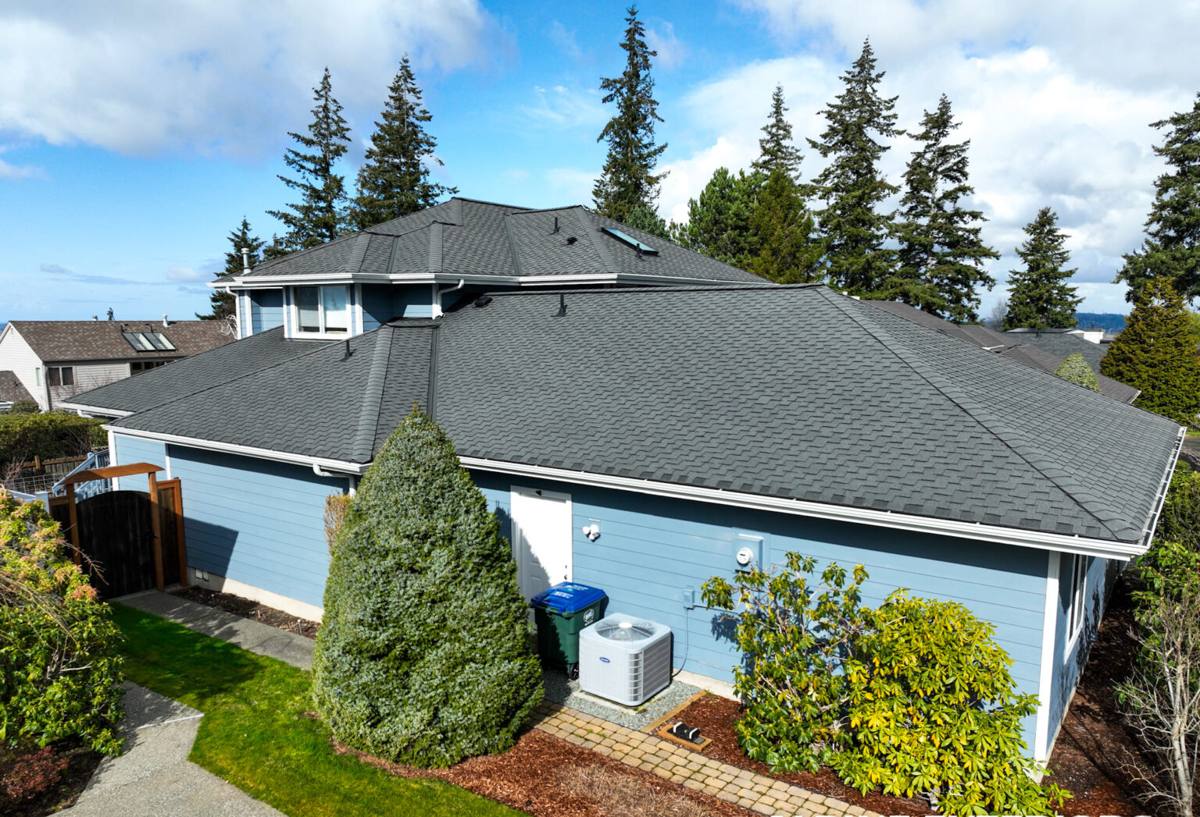
What Custer's Climate Actually Does to a Deck
It helps to be specific about the mechanisms at work, because they drive every material and construction decision that follows.
Salt Air and Metal Fasteners
Proximity to the water means airborne salt finds its way onto every exposed surface, including the fasteners, brackets, and ledger hardware holding a deck together structurally. Standard galvanized hardware corrodes faster under this kind of exposure than it would twenty miles inland. Once a fastener starts to corrode, it loses holding strength long before it looks obviously bad — which is part of why hardware choice matters as much as the decking material itself.
Driving Rain and Water Intrusion
Rain in this part of Whatcom County frequently comes in at an angle, pushed by wind off open fields and the water. That means water gets driven under railings, into end grain, and against ledger boards and house connections in ways that vertical-only rain wouldn't cause. Any gap, unsealed cut end, or poorly flashed ledger becomes an entry point, and once moisture gets behind a board or into a joist, it doesn't dry out quickly in our climate — it just sits there.
The Long Moss Season
Shaded decks, north-facing decks, and decks tucked under trees or eaves in the Custer area can stay damp for months at a stretch. That dampness is exactly what moss and algae need to establish. Beyond the slip hazard, moss holds moisture against the deck surface long after the rest of the yard has dried, which accelerates rot in wood decking and can stain or degrade lower-grade composite products over time.
What a Correctly Built Deck Needs Out Here
None of the climate issues above are solved by a single product or trick — they're addressed by a combination of framing decisions, hardware choices, drainage detailing, and surface material selection working together.
- Stainless steel or coated fasteners rated for coastal/high-corrosion exposure, not standard galvanized hardware
- Proper ledger flashing where the deck attaches to the house, so water is directed away from the wall structure rather than into it
- Joist tape or a comparable moisture barrier on the tops of framing members to keep standing water out of the wood itself
- Deck board gapping sized correctly for the material, so water sheds through rather than pooling on the surface
- Airflow underneath the deck — adequate ground clearance and, where the site allows it, skirting that still permits ventilation
- A surface material matched to how much sun or shade the specific deck actually gets, since a product that performs fine in full sun can struggle in a shaded, moss-prone spot
Decking Material Options for This Climate
There's no single "best" decking material for Custer — the right choice depends on budget, how much sun the deck gets, and how much upkeep the homeowner actually wants to do. We walk through the honest trade-offs rather than pushing one product line.
| Material | How It Handles This Climate | Maintenance | General Cost Position |
|---|---|---|---|
| Pressure-treated wood | Affordable and strong, but end grain and cut edges need sealing, and shaded areas need regular moss/algae treatment | Annual cleaning, periodic staining or sealing | Lowest upfront cost |
| Cedar | Naturally more rot- and insect-resistant than most softwoods, but still needs sealing to handle driving rain and salt air long-term | Regular staining/sealing to maintain appearance and protection | Mid-range |
| Composite decking | Resists rot and doesn't need sealing, but lower-grade composites can still trap moisture and grow algae in shaded, damp spots if not capped/textured well | Periodic washing; minimal sealing | Higher upfront, lower long-term upkeep |
| PVC decking | Fully synthetic, handles moisture and salt exposure very well, doesn't absorb water into the board itself | Occasional washing | Highest upfront cost |
We're upfront that we steer homeowners away from bargain composite products with thin or unfinished caps in shaded, damp locations — not because the category is bad, but because in a Custer-style microclimate, a poorly capped board holds moisture at the surface and shows algae staining within a couple of seasons. That's a maintenance-burden and appearance issue we'd rather flag before installation than after.
Our Deck Building Process
1. On-Site Assessment
We look at sun exposure, drainage patterns on the property, proximity to water or open exposure to prevailing wind, and how the deck will tie into the house. A deck tucked against a tree line needs different detailing than one in full open exposure.
2. Design and Material Selection
We talk through decking material, railing style, and framing layout based on the site conditions we found, not a one-size template. Budget and maintenance appetite both factor in honestly at this stage.
3. Permitting
Most new decks and many replacements in Whatcom County require a building permit, particularly where structural framing, height above grade, or attachment to the house is involved. We handle that process as part of the project so it's done correctly and doesn't create problems at resale.
4. Demolition or Site Prep
For replacement projects, we remove the old structure and inspect what's underneath — ledger connections, post footings, and the house band board are all points where hidden rot or corrosion shows up in this climate, and we address anything compromised before building over it.
5. Framing and Flashing
This is where most of the long-term durability decisions get made: fastener grade, ledger flashing, joist protection, and drainage slope. It's not the most visible part of the job, but it's the part that determines whether the deck is still solid in fifteen years.
6. Decking, Railing, and Finish Work
Surface material goes down with correct spacing and fastening for the product, railings are set to code, and any staining or sealing needed at install is done before we walk off the job.
Deck Repair vs. Replacement
Not every aging deck in the Custer area needs to be torn out. We look at a few honest signals to figure out which direction makes sense:
- Are the framing members (joists, beams, posts) structurally sound, or is there soft, spongy wood at connection points?
- Is the ledger connection to the house solid and properly flashed, or is there evidence of past water intrusion behind it?
- Is the surface damage limited to a few boards, or is it widespread across the whole deck?
- Are the footings adequate and stable, or has the deck settled or shifted?
If the framing and footings are sound, a surface-level replacement of decking and railing can extend a deck's life significantly for less than a full rebuild. If the framing itself is compromised — which we see more often on older, unflashed ledger connections in this climate — replacement is usually the more honest recommendation, since patching structural rot doesn't hold up.
Sizing and Layout Considerations
Beyond materials, the shape and size of a deck affects how well it holds up here. Larger uninterrupted spans of decking in shaded areas collect more standing moisture and moss than a layout broken up with steps, planters, or varied levels that encourage airflow and drainage. Railing style matters too — solid or tightly spaced railing systems can block airflow along the deck edge, which slows drying after Whatcom County's frequent rain events. We factor this into layout conversations rather than treating size and shape as purely a use-of-space decision.
Why Local Experience Matters for This Job
A deck built by a crew unfamiliar with Custer's specific exposure to salt air and driving rain can look fine on day one and still develop problems within a few years — corroding hardware, a ledger that was flashed for a drier climate, or decking that wasn't matched to how much shade the site actually gets. We work in this area regularly, which means the hardware grade, flashing detail, and material recommendations we make aren't generic — they're based on what we've seen actually hold up, and what fails, on decks built under these specific conditions.
If you're planning a new deck or looking at replacing one that's showing its age, we're happy to come take a look and give you a straightforward assessment. There's a form below to request a free, no-pressure estimate.