 Lynden Siding
 Deck Repair Built for Everson's Climate
Everson sits in the part of Whatcom County where the Nooksack River valley funnels moisture off the Cascades and the Salish Sea keeps things damp most of the year. That combination is hard on outdoor structures. A deck here doesn't fail because it was built wrong — it fails because wood, fasteners, and finishes take a beating from months of driving rain, a long moss season, and the salt-tinged air that moves through this part of Western Washington. If you own a deck in Everson, repair isn't a one-time chore. It's an ongoing relationship with a structure that's constantly fighting moisture.
This page is about deck repair specifically — not full replacement, not new builds — for homeowners in and around Everson who have a deck that's still fundamentally sound but showing its age or damage.
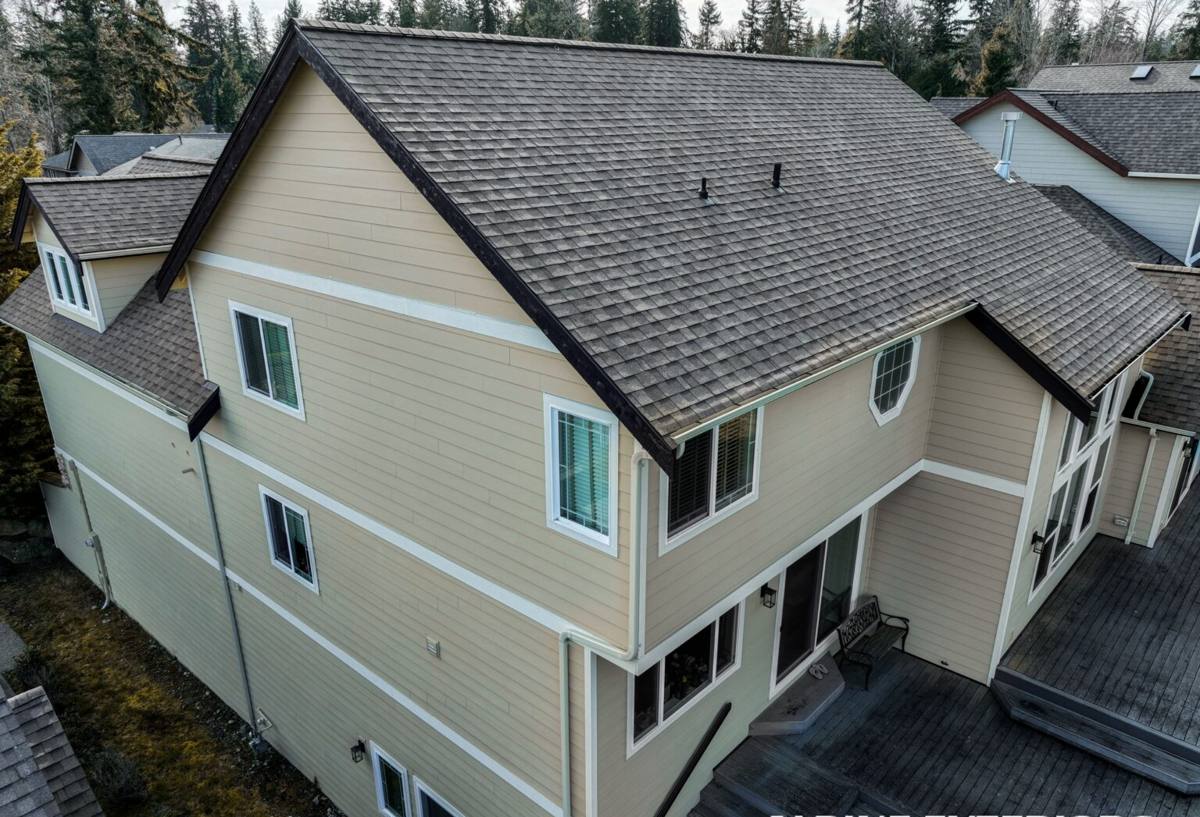
What Everson's Climate Does to a Deck
Driving Rain and Standing Water
Whatcom County gets rain that doesn't just fall straight down — wind off the valley pushes it sideways into ledger boards, under railings, and into any gap where two pieces of wood meet. Water that gets trapped between deck boards or behind flashing doesn't dry quickly in our climate, and that's where rot starts. Most of the structural repairs we see begin at a joint, a fastener hole, or a ledger connection where water had a place to sit for weeks at a time.
Moss and Algae
Whatcom County's moss season runs long — often eight months or more of the year with enough moisture and shade for moss and algae to take hold on horizontal wood surfaces. Moss isn't just cosmetic. It holds moisture against the wood surface, blocks the wood from drying between rain events, and its root structure can work into the wood grain over time. A deck with heavy moss growth is a deck that's staying wet far longer than it should.
Freeze-Thaw and Seasonal Movement
Everson gets enough cold snaps each winter for water trapped in wood fibers or between boards to freeze, expand, and split fibers apart. It's usually not one hard freeze that causes damage — it's the repeated cycle of freezing and thawing over several winters that opens up cracks water can then get into.
Salt Air and Metal Fasteners
Whatcom County's proximity to Puget Sound and the Strait of Georgia means a mild but real salt content in the air, especially closer to the water. Over years, that salt exposure accelerates corrosion in lower-grade fasteners, brackets, and connectors — which is one of the most common hidden causes of deck movement and squeaking that homeowners can't explain by looking at the boards alone.
Signs Your Deck Needs Repair
- Boards that feel spongy, soft, or flex more than they used to when walked on
- Persistent moss or algae staining that comes back within weeks of cleaning
- Railings or posts that wobble, even slightly, when pushed
- Rust streaks running down from screws, bolts, or brackets
- Gaps opening up between deck boards or where the deck meets the house
- Visible daylight or water staining underneath the deck near the ledger board
- Stairs that feel less solid than the deck surface itself
- Peeling, cracking, or graying finish that's been reapplied more than once without lasting
Any one of these on its own might be minor. Several together, especially near the ledger board or support posts, usually means it's time for a proper inspection rather than another round of surface cleaning.
Repair or Replace: How We Decide
Not every deck problem calls for a full rebuild, and not every deck is worth repairing indefinitely. The honest answer depends on where the damage is and how much of the structure it's reached.
| Condition | Usually Repairable | Usually Needs Replacement |
|---|---|---|
| Surface boards | Isolated soft spots, cracking, cupping in a few boards | Widespread rot across most of the deck surface |
| Ledger board | Minor surface staining, caught early | Soft or rotted wood where deck attaches to the house |
| Support posts/footings | Single post showing early rot, footing still solid | Multiple posts compromised or footings shifting |
| Railings | Loose balusters, single damaged section | Structural posts rotted or code-noncompliant throughout |
| Fasteners/hardware | Localized rust, easily swapped | Widespread corrosion suggesting age-related fatigue |
The rule we work by: if the framing and ledger connection are sound, repair makes sense. If rot or corrosion has reached the structural bones of the deck, patching individual boards is just delaying a bigger job — and in some cases creates a safety issue we're not willing to sign off on.
What a Correct Deck Repair Actually Involves
1. Full Structural Inspection First
Before any board gets replaced, we check the framing underneath — joists, the ledger board connection to the house, support posts, and footings. In this climate, the damage that matters most is often invisible from the top of the deck. We probe suspect areas rather than guessing from appearance alone.
2. Isolate and Replace Damaged Material
Rotted or compromised boards, joists, or posts get removed and replaced — not covered over. Patching over rot with new decking on top is one of the most common shortcuts we see from prior work, and it just hides the problem for a year or two before it resurfaces.
3. Address the Water Source, Not Just the Symptom
If a repair is needed because water was getting trapped somewhere — a missing flashing detail, a gap that should have been sealed, poor drainage under the deck — we fix that root cause as part of the repair. Replacing a board without fixing why it rotted just buys you a few more years before the same spot fails again.
4. Upgrade Fasteners and Hardware
Where we're opening up a section of deck, we use corrosion-resistant fasteners and structural connectors rated for exterior, high-moisture use. Given the salt content in the air here, this is not a place to save a few dollars with standard hardware.
5. Match Finish and Appearance
Where boards are being replaced individually, we work to match the existing decking as closely as possible in species, dimension, and finish, so repaired sections don't stand out as obvious patches.
6. Final Check for Code and Safety
Railing height, baluster spacing, and stair guard requirements get checked against current building code during any repair that touches those components — an easy thing to overlook when the goal is just "fix the wobble."
Wood vs. Composite: What We Recommend for Repairs
When a repair involves replacing more than a few boards, homeowners often ask whether to switch materials. Here's how we think about it honestly, without overselling either option.
| Factor | Wood (Cedar/Fir) | Composite |
|---|---|---|
| Upfront repair cost | Lower per board | Higher per board |
| Moss/algae resistance | Requires regular cleaning and finish maintenance | Better resistance, but still needs periodic washing |
| Long-term maintenance | Refinishing every 2-3 years in this climate | Minimal refinishing, occasional cleaning |
| Matching existing deck | Easier to blend with existing wood decking | Difficult to match an existing wood deck exactly |
| Repair-in-place feasibility | Straightforward to replace individual boards | Can be trickier to source matching discontinued colors |
For a partial repair on an otherwise wood deck, we typically recommend staying with wood so the repaired sections blend in and age together. Composite makes more sense when a larger portion of the deck is being redone, or when a homeowner is ready to reduce long-term maintenance and is willing to accept a different look on the older sections.
Our Deck Repair Process
- On-site inspection — we walk the full deck, probe suspect boards and framing, and check the ledger, posts, and footings, not just the surface
- Written scope and estimate — a clear breakdown of what needs replacing versus what's structurally sound and can stay
- Material matching — sourcing decking, railing components, or hardware that matches your existing deck where possible
- Repair work — removal of compromised material, structural correction where needed, replacement decking installed and fastened correctly
- Finish and cleanup — staining or sealing as needed, site cleaned of debris and old material
- Final walkthrough — we point out anything you should keep an eye on going forward and give honest maintenance guidance for this climate
Maintenance That Extends the Life of a Repair
- Sweep leaves and debris off the deck surface before fall rains set in — trapped debris holds moisture against the boards
- Clean moss and algae off horizontal surfaces at least once a year, ideally before it gets thick
- Check the gap between deck boards periodically — debris packed into gaps prevents proper drainage and drying
- Inspect railings and posts for movement each spring after the wet season
- Reapply finish or sealant on schedule rather than waiting until it's visibly failing
- Keep gutters and downspouts near the deck clear so runoff isn't draining directly onto or under it
Why It Matters to Hire a Crew That Already Works in Everson
Deck repair advice that works in a drier climate doesn't always hold up here. A crew that primarily works in less rain-heavy regions may not think twice about a repair detail that turns into a callback in two years once Whatcom County's wet season hits it. Working regularly in and around Everson means we've seen how local moisture patterns, moss growth, and the valley's temperature swings actually play out on real decks over multiple seasons — not just how they're supposed to perform on paper.
It also means fewer surprises on scheduling and site logistics. We're familiar with the kind of lot layouts, drainage patterns, and typical deck ages found in this area, which helps us give a more accurate estimate on the first visit instead of a rough guess that changes once work starts.
Get an Honest Look at Your Deck
If your deck in Everson has soft spots, moss that won't stay gone, loose railings, or you're just not sure whether it needs a few boards replaced or something more involved, we're happy to take a look. We'll tell you plainly what we find — including if a repair genuinely isn't the right call anymore. Reach out for a free, no-pressure estimate using the form below.