 Lynden Siding
 Deck Replacement Built for Nooksack's Weather, Not Against It
Nooksack sits in a part of Whatcom County where the weather doesn't ease up on outdoor structures. Moisture drifts in off the Pacific and settles into the valley, salt-tinged air moves inland from the bay, and the moss season here isn't a few weeks in November — it's realistically fall through spring. A deck built without that in mind will look fine for a year or two and then start failing from the ground up: soft joists, black streaks on the boards, rail posts that wobble because the post base never had a fighting chance against standing water.
A deck replacement isn't just tearing off old boards and nailing down new ones. Done right, it's a chance to fix the drainage, ventilation, and fastening problems that caused the old deck to fail in the first place — so the new one actually lasts through another decade of Lynden winters instead of repeating the same slow decline.
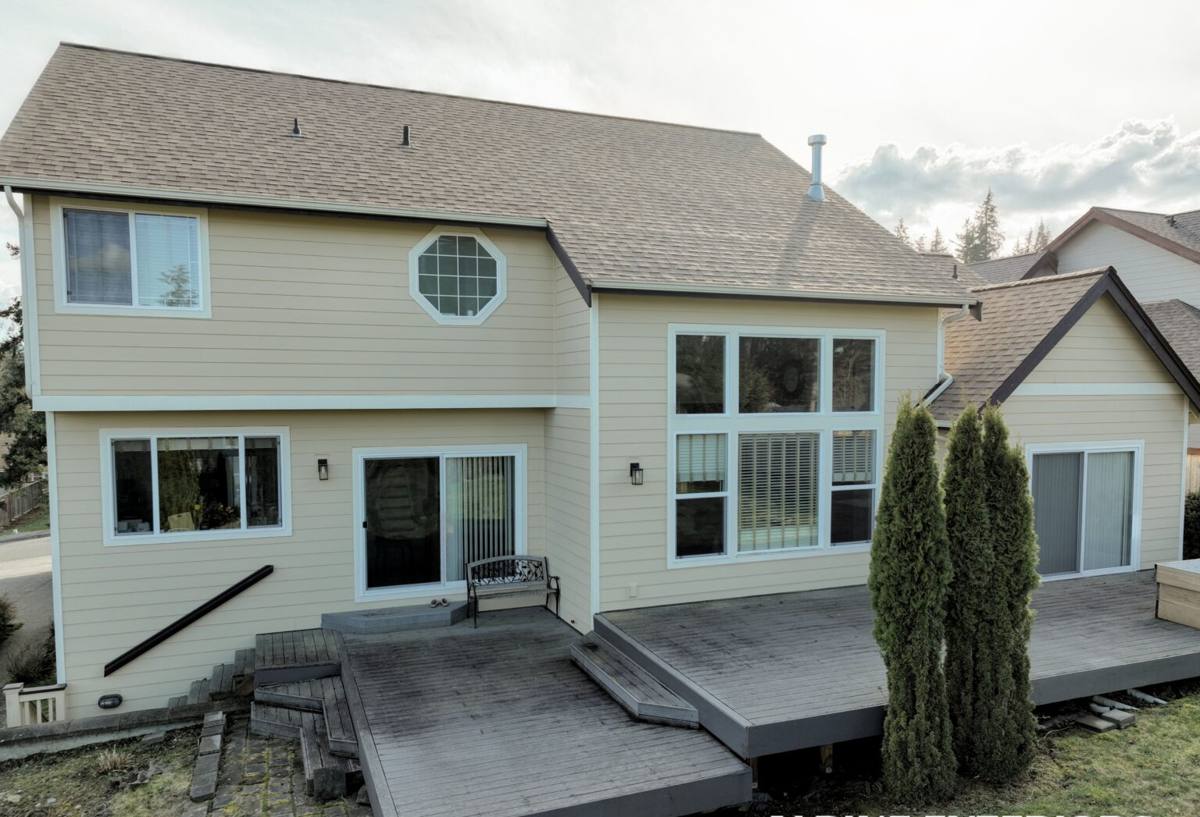
Signs a Nooksack Deck Needs Replacing, Not Just Repair
Homeowners often call us wanting a few boards swapped, and sometimes that's genuinely all that's needed. But there are signs that point to a full replacement being the more honest recommendation:
- Soft or spongy spots anywhere on the deck surface, especially near the house or around post locations
- Ledger board (where the deck attaches to the house) showing rot, rust streaks, or gaps where water has been getting behind it
- Persistent green or black growth that comes back within weeks of cleaning, no matter how you scrub it
- Joists or beams that flex noticeably when walked on, or visible sagging between support posts
- Railing posts that move at the base — often a sign the post anchoring or the framing under it has already rotted
- A deck older than 15-20 years built with untreated fasteners or undersized framing by today's standard
If the framing underneath is compromised, patching the surface boards just hides the problem for another season. That's a real cost consideration we walk through honestly during an estimate — sometimes repair is the right call, and we'll say so.
Why Moisture Damage Shows Up Faster Here
In a drier climate, a deck can go years with minor moisture intrusion before it becomes structural. In Whatcom County, the combination of frequent rain, humidity that doesn't fully clear between storms, and long stretches without direct sun means wood assemblies stay damp longer. That's what accelerates rot at ledger boards, post bases, and anywhere two pieces of wood meet without a gap for airflow or drainage.
What a Correct Deck Replacement Involves
A deck replacement done to a proper standard covers more than the decking surface itself. Here's what we look at on every job:
Framing and Structure
Joists, beams, and posts get sized to current code span tables, not just matched to whatever was there before. If the old deck was undersized or spaced too wide, that gets corrected — it's a lot easier to fix during a full replacement than to retrofit later.
Ledger Attachment and Flashing
This is the single most common failure point on older decks in this region. The ledger needs proper flashing that sheds water away from the house wall, correct lag bolts or through-bolts (not just nails), and — where the deck is freestanding instead of ledger-attached — that's often the more durable choice against a house wall that already deals with enough moisture exposure.
Footings and Post Bases
Footings need to sit below frost depth and posts need to be held above grade on proper post bases, not buried or sitting directly on soil. This is where a lot of the moss and rot problems start on older decks — wood in direct soil contact stays wet nearly year-round here.
Fasteners and Hardware
Everything structural gets hot-dip galvanized or stainless hardware rated for ground contact and treated lumber. Mismatched hardware corrodes faster in humid, salt-tinged air and is one of the most common causes of premature failure we see when we tear off an old deck.
Decking Surface and Drainage Gaps
Board spacing and airflow underneath the deck matter as much as the material choice. Tight, unventilated spacing traps moisture and speeds up moss and mildew growth regardless of what the boards are made of.
Choosing a Decking Material for This Climate
There's no single right answer here — it depends on budget, how much upkeep you want to do, and how long you plan to stay in the home. We walk through the real trade-offs rather than pushing one product line.
| Material | Upfront Cost | Maintenance | How It Handles This Climate |
|---|---|---|---|
| Pressure-treated wood | Lowest | Annual cleaning and re-sealing recommended | Prone to moss and graying without regular upkeep; needs consistent sealing to resist the wet season |
| Cedar | Moderate | Periodic oiling or staining | Naturally rot-resistant but still needs maintenance to fight moss and UV graying long-term |
| Composite decking | Higher | Occasional washing, no sealing | Resists rot and insects well; some early-generation composites can still grow surface mildew if airflow underneath is poor |
| PVC/capped composite | Highest | Lowest — occasional washing | Best moisture resistance of the group; higher upfront cost offset by little to no ongoing sealing or staining |
Whatever surface material you choose, the framing and fastener standards underneath don't change — that structural work is what actually determines how long the deck lasts, regardless of what's on top.
How Our Process Works
We keep this straightforward because homeowners deserve to know what's happening at each stage:
- Free on-site estimate — we inspect the existing deck (or the build site for a new one), check framing condition where visible, and talk through material options and realistic cost ranges.
- Written scope — what's being removed, what's being rebuilt, materials and hardware specified, and a clear timeline.
- Permitting — we handle the permit application and inspection scheduling required for the jurisdiction the property falls under.
- Demolition and disposal — old decking, framing, and debris removed and hauled off.
- Rebuild — footings, framing, ledger flashing, and decking installed to the agreed scope, with structural elements inspected before the surface goes down.
- Final walkthrough — we check the finished deck with you before calling the job done.
Permits and Local Code Considerations
Deck replacements involving structural changes — new footings, a raised deck, or attachment to the house — typically require a permit in Whatcom County, and inspections happen at specific points (footings before backfill, framing before decking goes down). Skipping this isn't a shortcut worth taking: unpermitted structural work can complicate a home sale later and, more importantly, means nobody but the builder ever verified the footings and framing were done correctly. We handle the permit process as part of the job rather than leaving it to the homeowner to sort out.
Caring for a New Deck in a Wet, Mossy Climate
A well-built deck still needs some seasonal attention here. This is the maintenance routine we recommend to keep a new deck performing the way it should:
- Sweep debris and leaves off the surface regularly in fall — trapped organic matter is what feeds moss growth
- Rinse the deck surface a few times a year to clear pollen, algae film, and grime before it sets in
- Check railing posts and stair connections annually for movement or loosening hardware
- Keep gutters and downspouts near the deck clear so runoff isn't dumping extra water onto or under the structure
- For wood or cedar decks, re-seal or re-stain on the schedule the product calls for — don't wait until graying is severe
- Trim back vegetation that's shading the deck and keeping it damp longer than it needs to be
Why a Crew That Already Works in Nooksack Matters
Deck failures in this area follow patterns — ledger rot from inadequate flashing, post bases that were never lifted off wet soil, moss buildup from boards laid too tight. A crew that's worked other decks in and around Lynden and Nooksack has already seen how these failures start and builds to head them off from day one, rather than treating this as a generic build that happens to be in Washington. That local pattern recognition is worth more than it sounds — it's the difference between a deck that needs attention again in five years and one that doesn't.
We're also familiar with the permitting expectations in this part of Whatcom County, which keeps the project moving instead of stalling on paperwork or inspection scheduling.
Get an Honest Look at Your Deck
Whether your current deck is showing soft spots and moss you can't get ahead of, or you're planning a new deck from scratch, we're happy to come take a look and give you a straight answer on what it needs. The estimate is free, there's no pressure, and if repair rather than full replacement makes more sense for your situation, we'll tell you that too. Use the form below to get started.