 Lynden Siding
 Siding That Has to Work in Deming's Climate, Not Just Look Good
Deming sits inland from the salt water but still gets the full package of what Whatcom County throws at a house: long stretches of driving rain off the Pacific, humidity that never fully lets go, and shaded, tree-lined lots where moss and algae get a running start every fall. Add proximity to the Nooksack River corridor and the damp air that settles into these low-lying areas, and you have a set of conditions that punishes the wrong siding choice fast. We install James Hardie fiber cement exclusively, and on Deming homes specifically, that choice comes down to one thing: Hardie's HZ5 product line is engineered for exactly this weather pattern, not a generic climate zone that happens to include the Pacific Northwest.
This page is about one job in one area — James Hardie siding installed correctly on a home in or around Deming. Not a general pitch for fiber cement, not a rundown of every siding material on the market. Just what your house actually needs here, what a correct installation looks like, and why hiring a crew that already works this specific stretch of the county matters more than it might seem.
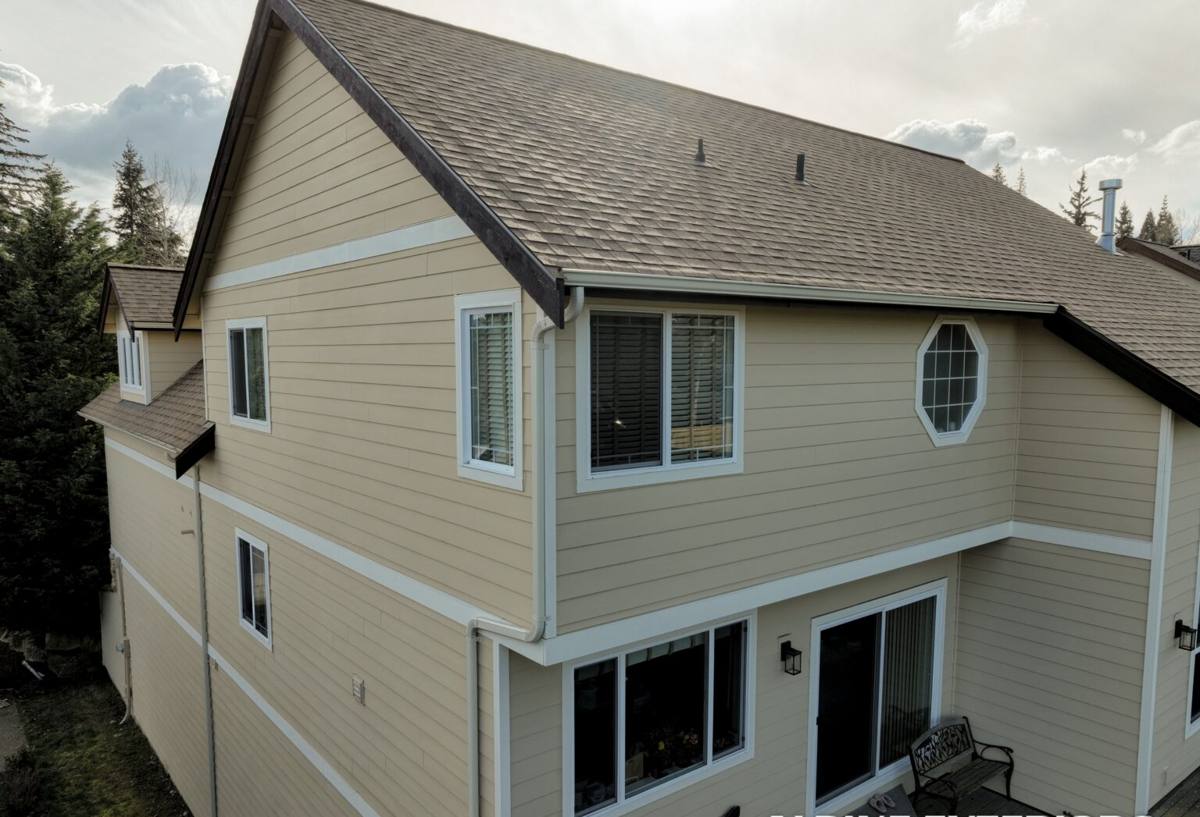
What Deming's Climate Actually Does to Siding
Moisture Load
Whatcom County gets rain most of the year, but the way it arrives matters. Driving rain — wind-blown precipitation that hits siding at an angle instead of falling straight down — forces water into laps, seams, and fastener penetrations that would stay dry in a calmer climate. Deming's more rural, tree-covered lots often sit lower and shadier than open coastal properties, which means siding surfaces stay damp longer after a storm passes. Wood-based products (cedar, primed spruce) absorb that moisture over time. Fiber cement doesn't, but only if the installation details — flashing, gaps, caulking — are handled right. The material is only as good as the install.
Moss and Algae Season
Moss isn't just a roof problem here. On shaded exterior walls, especially north- and east-facing elevations that get less sun exposure, moss and green algae staining build up on siding surfaces over a long, wet season that can run eight months or more. Some siding materials trap that growth in surface texture or seams. Hardie's factory-applied ColorPlus finish is smoother and more resistant to this buildup than field-painted alternatives, and it holds its color instead of chalking or fading under repeated wet-dry cycles — which matters when moss-related staining and cleaning are already a fact of life on a Deming exterior.
Temperature Swings and Wood Movement
Whatcom County isn't extreme in temperature range, but the combination of damp cold in winter and warm, dry stretches in summer causes real wood siding to expand, contract, and eventually cup or crack at the joints. Fiber cement's dimensional stability means it doesn't move the way wood does, which keeps caulked joints and paint lines intact for years longer.
Why We Only Install James Hardie Here
We don't carry vinyl, LP SmartSide, Cemplank, Allura, primed spruce, or cedar. That's not a marketing line — it's a standard we hold because we've seen how each of those products performs, or fails to perform, in exactly this kind of wet, mossy, inland-valley climate. Vinyl can warp and doesn't hold up structurally in wind-driven rain the way fiber cement does. Engineered wood products like LP SmartSide are treated to resist moisture but remain wood at the core, meaning any breach in the coating opens the door to swelling and rot. Competing fiber cement brands like Cemplank and Allura are reasonable products on paper, but James Hardie is the only one that offers a climate-specific engineered line (HZ5) built for the Pacific Northwest's moisture profile, backed by a factory finish warranty and a national installer network with real accountability.
James Hardie doesn't get everything right for every situation — it's heavier than vinyl, it requires proper fastening and blade handling during installation, and it costs more upfront than the cheaper alternatives. We think that trade-off is worth it on a Deming home, because the alternative is redoing siding work in twelve years instead of thirty.
What a Correct Installation Involves
Fiber cement siding is only as good as the crew installing it. Hardie itself will tell you that improper installation is the leading cause of early siding failure — not the material. On a Deming property, here's what we treat as non-negotiable:
- Proper clearances: siding held at least 6 inches above grade, roof lines, and decks to prevent wicking moisture from ground contact or splashback
- Correct fastening: HardieZone-approved nails or screws driven to the manufacturer's spacing and depth spec, not overdriven or underdriven
- Rain screen or drainage plane behind the siding where the wall assembly calls for it, so any moisture that gets past the cladding has somewhere to go
- Sealed and flashed penetrations at every window, door, vent, and light fixture — the majority of real-world moisture intrusion happens here, not through the siding field itself
- Factory-cut edges primed or sealed at every field cut, since raw cut edges are the one place ColorPlus finish doesn't already protect the board
- Proper joint treatment at butt joints and corners, using Hardie-approved caulk rated for this climate's UV and moisture exposure
Skip any one of these and you can end up with a Hardie product that fails early anyway — which is why we don't treat installation as a formality after the material decision is made.
Our Process for a Deming Project
1. On-Site Assessment
We walk the property and look at what's actually driving wear on your current siding — sun exposure, tree cover, drainage patterns, and any signs of moisture intrusion at trim, windows, or the foundation line. This tells us where extra attention is needed during install, not just what color you want.
2. Product and Line Selection
For most Deming homes we're specifying HZ5 boards, engineered for the Pacific Northwest's freeze-thaw and moisture cycles, in either lap siding, panel, or shingle profiles depending on the home's style. We'll walk through ColorPlus color options and explain the difference between factory finish and field-painted Hardie, since that decision affects long-term maintenance.
3. Tear-Off and Wall Prep
Old siding comes off, and we inspect the sheathing and weather barrier underneath before anything new goes up. This is where hidden moisture damage from years of driving rain often shows up, and it needs to be addressed before new siding goes over it — not sealed in behind it.
4. Installation to Spec
Boards go up following Hardie's published installation guide and local code requirements, with the clearances, fastening, and flashing details above followed on every elevation, including the shaded, moss-prone sides that get skipped or rushed by less careful crews.
5. Final Walkthrough
We go around the house with you, check joints, caulk lines, and trim details, and make sure everything matches what was agreed to before the crew leaves.
Cost Factors on a Deming Job
| Factor | Why It Matters Here |
|---|---|
| Home size and number of stories | More wall area and more complex access (steep lots are common inland) affect labor time |
| Tear-off scope | Full removal of old wood or vinyl siding vs. installing over existing sheathing changes both cost and timeline |
| Hidden moisture or rot repair | Common on older homes with wood siding that's been absorbing rain for decades; found during tear-off, priced separately |
| Siding profile | Lap, shingle, and panel styles have different material and labor costs |
| Trim and detail work | Homes with more windows, dormers, or architectural detail need more flashing and cut work |
| Site access | Wooded or sloped Deming lots can require more setup time than an open, flat property |
We don't quote a number without seeing the house — anyone who does is guessing, and on a job where flashing and clearance details determine whether the siding lasts 15 years or 40, guessing isn't good enough.
Why a Crew That Knows Deming Matters
A siding crew that mostly works dry, open suburban lots elsewhere in the county can miss what matters on a shaded, tree-covered Deming property — where moss pressure is higher, where drainage off a sloped lot behaves differently, and where a home might sit further from a hardware supplier if something needs to be re-ordered mid-job. We work this part of Whatcom County regularly enough to know which elevations need extra flashing attention before we even start tear-off, and we're not learning the local rain patterns on your dime.
Local also means accountability. If a caulk line needs attention two winters after installation, we're not driving in from out of the area to make it right — we're already working nearby.
Before You Hire Anyone, Check This
- Are they licensed and insured in Washington State, and will they show you proof without being asked twice
- Do they install Hardie specifically, or are they generalists who'll sell you whatever's in stock
- Will they explain their fastening and flashing approach, or just talk about color options
- Do they inspect and address sheathing/moisture issues during tear-off, or just cover over what's there
- Can they explain the difference between ColorPlus factory finish and field paint, and why it matters in this climate
Ready to Talk About Your Deming Home
If your current siding is showing moss staining that won't wash off, cracked or cupping boards, or you're just planning ahead before winter rains start again, we're happy to take a look. We'll give you a straight assessment of what your home needs and a free, no-pressure estimate — no obligation, just an honest look at what correct Hardie installation would involve on your property.