 Lynden Siding
 New-Construction Windows for Laurel: Built In Right From the Start
New-construction windows are a different job than replacement windows, even though homeowners often use the terms interchangeably. On a new build or a full wall reframe, we're not working around an existing frame — we're installing windows with a nailing fin directly to the sheathing, integrating them into the weather-resistive barrier, and building the flashing and drainage plane from scratch. Done correctly, that gives a home in Laurel decades of trouble-free performance. Done poorly, it's the single most common source of hidden water damage in newer homes, because problems stay invisible behind siding and trim until rot, mold, or a warped sill finally forces the issue.
For homes going up in and around Laurel, near Lynden in Whatcom County, getting this stage right matters more than in a lot of other parts of the country. This is a job that rewards patience and correct sequencing, not speed.
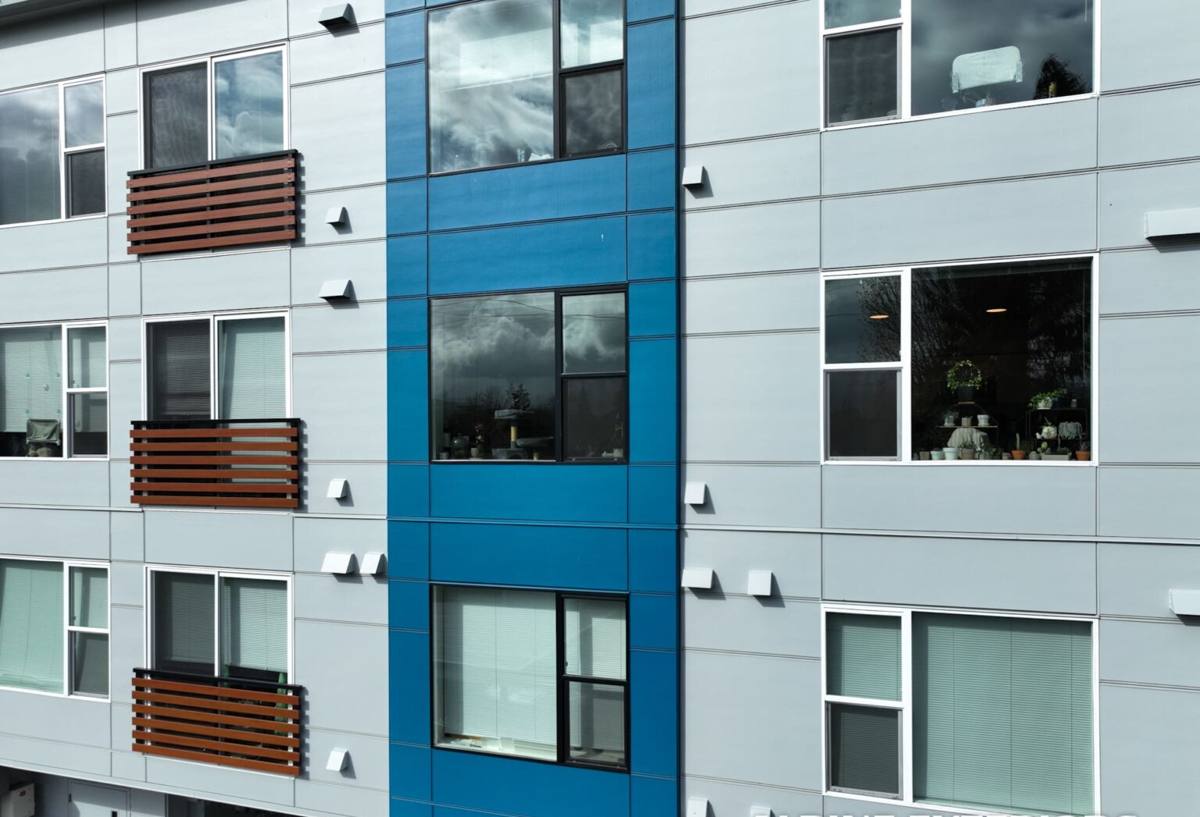
What Laurel's Climate Demands From a New Window Install
Whatcom County sits close enough to Puget Sound and the Strait of Georgia that salt-laden air is a real factor here, even well inland from the immediate shoreline. Combine that with the region's long stretch of driving rain each fall and winter, plus an extended moss season on north-facing walls and shaded elevations, and you've got three separate stressors working on the same window opening year-round.
- Salt air accelerates corrosion on exposed fasteners, hinges, and lower-quality cladding finishes over time.
- Driving rain, especially wind-driven rain hitting a wall at an angle, tests flashing details that vertical rain would never expose.
- Moss and constant damp on shaded siding and trim hold moisture against the wall assembly far longer than a drier climate would, which is exactly where a flawed window opening turns into a slow leak.
None of this means new-construction windows need to be exotic or overbuilt. It means the basics — flashing sequence, sill pan drainage, fastener choice, and sealant selection — have to be done correctly every time, because this climate doesn't forgive shortcuts the way a drier region might.
Getting the Install Right: Flashing, Water Management, and Nail-Fin Basics
The flashing sequence
A correct new-construction window install follows a shingle-lap sequence: sill pan first, then the window itself set into the pan, then side flashing over the nailing fin, then head flashing last, lapped over the weather-resistive barrier above the opening. Every layer has to overlap the one below it so water is always directed outward and down, never trapped behind the cladding. Skipping or reversing any step is the most common cause of concealed leaks in newer construction.
Sill pans and back dams
A sloped sill pan with a back dam is non-negotiable on a home in this climate. If wind-driven rain does get past the exterior cladding — and over enough years, it eventually will at some point on most homes — the sill pan is what keeps that water from running back into the wall cavity instead of draining back out.
Fastener and sealant choice
Given the salt air in this region, we use corrosion-resistant fasteners rated for coastal-adjacent exposure, and we're deliberate about sealant selection — the wrong sealant chemistry against certain frame materials can fail early, which defeats the point of careful flashing work underneath it.
Choosing Frame Materials and Glazing for This Climate
There's no single "best" window material for every home — the right choice depends on budget, the home's design, sun exposure, and how much upkeep an owner wants to take on. Here's how the common options actually perform under Whatcom County conditions:
| Frame Material | Moisture Behavior | Maintenance | Typical Cost Position |
|---|---|---|---|
| Vinyl | Won't rot or corrode; performs well in damp, shaded conditions | Low — occasional cleaning | Lower to mid |
| Fiberglass | Very stable dimensionally; strong resistance to moisture and temperature swings | Low | Mid to higher |
| Wood-clad | Good if cladding and flashing details are flawless; any breach exposes wood core to rot risk | Higher — finish and seal checks needed | Higher |
| Aluminum | Durable but prone to condensation and, near salt air, surface corrosion over time without a quality finish | Moderate | Mid |
On homes in Laurel and the broader Lynden area, we tend to steer clients toward vinyl or fiberglass for most new construction because they hold up with the least maintenance burden against salt air and constant moss-season dampness. Wood-clad windows can still be the right call for a specific architectural look — we just make sure the client understands the ongoing finish maintenance that choice carries in this climate before they commit.
Our New-Construction Window Process
- Rough opening check — verify the opening is square, correctly sized, and properly flashed with weather-resistive barrier before the window ever arrives on site.
- Sill pan installation — sloped pan with back dam, integrated with the barrier below.
- Dry-fit and set — window is set plumb, level, and square, checked against the manufacturer's shim and fastening spec.
- Fin flashing — sides, then head, shingle-lapped in the correct order.
- Interior air seal — a proper interior seal at the rough opening matters as much as the exterior work for keeping the wall assembly dry and controlling condensation.
- Final inspection — operation check, seal check, and a walk-through of flashing details before siding closes the wall up.
Common Mistakes We See in New Builds — and How We Avoid Them
Most of the window problems we get called out to diagnose in newer Whatcom County homes trace back to a handful of repeatable errors:
- Head flashing installed under the weather-resistive barrier instead of over it, which sends water behind the barrier instead of in front of it.
- No back dam on the sill pan, so any water that reaches the sill has nowhere to go but backward into the wall.
- Sealant used as a substitute for correct flashing sequence rather than as a supplement to it — caulk is not a flashing plan.
- Fasteners driven through the nailing fin at the wrong angle or spacing, which can distort the frame just enough to affect long-term operation.
We build our process specifically to avoid these, because on a wall that gets closed in with siding, there's no cheap fix once it's covered — only a costly one, later, after damage has already occurred.
Energy Performance and Code Considerations
Washington's energy code sets minimum performance requirements for new-construction glazing, and those requirements factor into product selection from the start of a build — not as an afterthought once framing is done. For a Whatcom County home, that generally means paying attention to U-factor for heat retention through our long, cool, wet season, along with solar heat gain coefficient depending on the wall's orientation and how much direct sun it actually sees. We help clients pick glazing packages that clear code comfortably while matching how the specific elevation is actually exposed to weather and sun on their lot.
Why a Crew That Already Works Laurel Matters
A window crew that regularly works homes in and around Laurel and greater Lynden has already seen how this specific stretch of Whatcom County weather behaves against real walls — which elevations take the worst of the driving rain, which shaded sides hold moisture and moss longest, and where salt air exposure tends to be more or less of a factor depending on a lot's position and tree cover. That local pattern recognition shows up in small decisions during the install: where we're more conservative with flashing overlap, which fastener spec we default to, and which frame materials we steer clients toward for a given elevation. It's the difference between a crew following a generic install manual and one that's building for the conditions that will actually hit that wall.
Before You Hire — A Quick Checklist
- Ask what the flashing sequence is, in order, before any work starts.
- Confirm sill pans with back dams are standard practice, not an upcharge.
- Ask which frame materials they recommend for your home's specific sun and rain exposure, and why.
- Get the fastener and sealant specs in writing, not just verbally.
- Ask how they handle the interior air seal, not just the exterior weatherproofing.
If you're planning new construction or a major addition in the Laurel area, we're happy to walk the plans or the framed opening with you and talk through the right window and flashing approach for your specific lot and exposure. Reach out for a free, no-pressure estimate using the form below.