 Lynden Siding
 Why Metal Roofing Makes Sense in Sumas
Sumas sits right up against the Canadian border in northern Whatcom County, and it gets the full brunt of what that location brings: wet Pacific air pushing inland, long stretches of driving rain off and on from October through May, and a moss season that can run nearly year-round on shaded roof slopes. Add in the salt-tinged air that carries in from the Strait of Georgia and Puget Sound, and you've got a climate that is genuinely hard on roofing materials. Metal roofing holds up to that combination better than almost anything else on the market, which is why we install more of it every year in the Sumas and greater Lynden area.
The appeal isn't just longevity. A correctly installed metal roof sheds water fast, doesn't hold moss the way asphalt shingles do, and stands up to wind gusts that come through the Nooksack Valley during winter storms. But "metal roofing" covers a wide range of products and installation quality, and that's where a lot of homeowners get steered wrong. This page covers what actually matters for a Sumas home specifically.
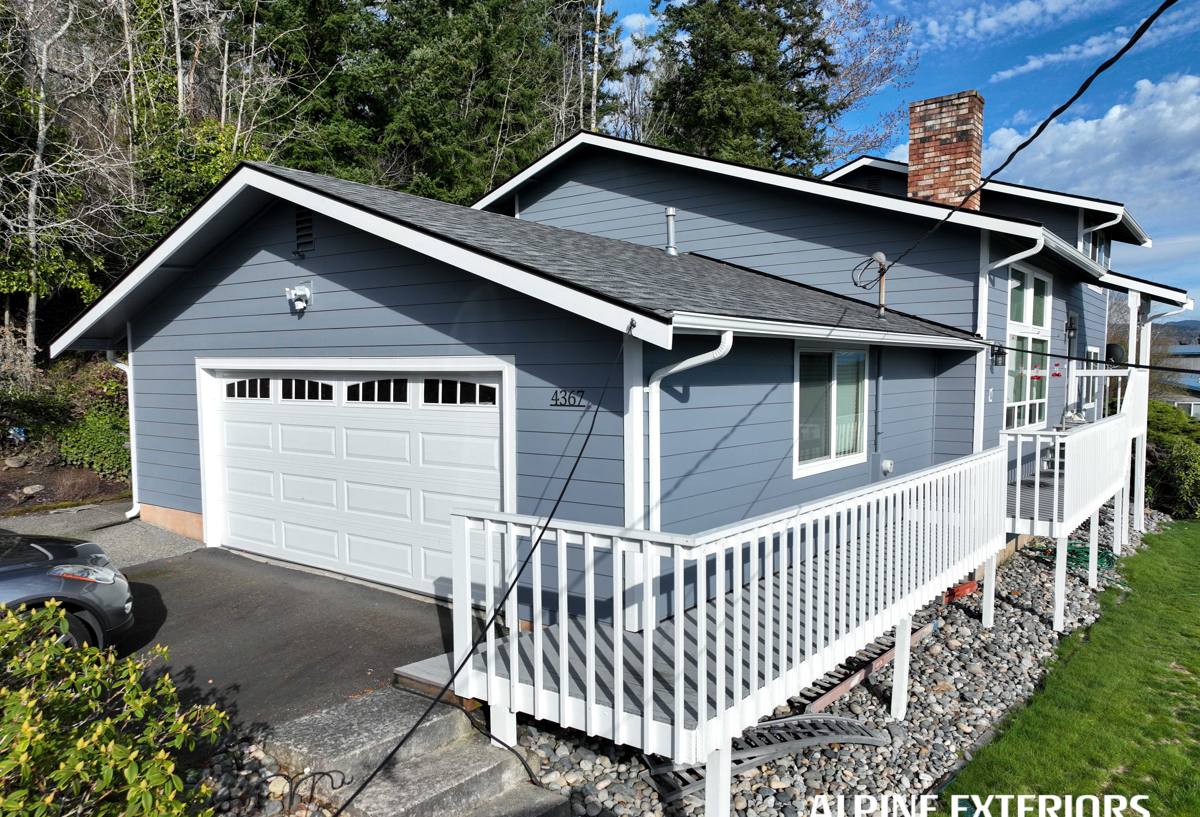
What Sumas Weather Actually Does to a Roof
Moisture and Driving Rain
Whatcom County's rain doesn't always fall straight down. Wind-driven rain off the valley can push water sideways under poorly lapped panels or through undersized fastener penetrations. On a metal roof, the seams, flashing details, and fastener pattern matter more than the panel material itself. A roof that looks fine from the ground can still be letting water in at a ridge cap or a valley if those details were rushed.
Moss and Organic Growth
Shaded roof slopes in this part of Whatcom County stay damp long enough for moss to establish, especially under tree cover or on north-facing pitches. Moss holds moisture against the roof surface, and on shingle roofs that moisture works its way under the granule layer over years. Metal sheds moss growth far more easily because there's no porous surface for spores to anchor into, but a metal roof still needs clean panel laps and good drainage so water isn't sitting anywhere long enough for growth to start.
Salt Air and Corrosion
Sumas isn't oceanfront, but the marine air pattern that moves through the region carries enough salt content to accelerate corrosion on lower-grade metals and exposed fasteners over time. This is a real factor in material selection — not every "metal roof" product on the market is coated or gauged the same way, and the coating system matters more here than it would in a dry inland climate.
What a Correct Metal Roofing Job Involves
A metal roof is only as good as the layers underneath it and the details at every transition point. On every Sumas job, our installation includes:
- Tear-off and inspection of the existing roof deck, with any soft or water-damaged sheathing replaced before anything new goes down
- A synthetic underlayment rated for the panel system, installed with the correct lap direction relative to prevailing wind and water flow
- Ice-and-water shield or equivalent self-adhering membrane at eaves, valleys, and any low-slope transitions where wind-driven rain is most likely to intrude
- Proper panel fastening pattern and spacing per manufacturer spec — not a generalized "close enough" pattern
- Correctly lapped and sealed flashing at every penetration: chimneys, vents, skylights, and wall-to-roof transitions
- Ridge and hip caps installed with ventilation in mind, not just appearance
- A final walk-through checking panel seams, fastener seating, and drainage paths before we call the job done
Skipping any one of these doesn't show up as a problem on day one. It shows up two or three winters later as a leak, a rust streak, or moss creeping back in along a valley — and by then it's a repair job instead of a five-minute fix during install.
Choosing the Right Metal Roofing System
Not every metal roofing product is a good fit for this climate, and we're upfront about the trade-offs rather than pushing whatever's cheapest to install.
| System Type | Best Fit For | Trade-Offs to Know |
|---|---|---|
| Standing seam (concealed fastener) | Most Sumas homes, especially anywhere exposed to driving rain or wind | Higher upfront cost, but no exposed fasteners to work loose or corrode over time |
| Exposed-fastener panel | Outbuildings, shops, lower-budget projects | Fasteners need periodic re-torquing and eventual replacement; more maintenance long-term |
| Stone-coated steel | Homeowners wanting a shingle or shake look with metal durability | More installation-sensitive at cut edges and flashing; requires an experienced crew |
| Aluminum panel systems | Homes closer to marine air exposure | Naturally corrosion-resistant but a softer metal, more careful handling required on-site |
For most Sumas homes, we lean toward standing seam or a quality aluminum system because the concealed fastener design and coating performance line up best with the moisture and salt-air combination this area sees. We'll walk through what fits your specific roof, budget, and pitch during the estimate rather than defaulting to one product for every job.
On Coating Systems
The paint or coating on a metal panel is doing real structural work, not just providing color. A PVDF (Kynar-type) coating holds up to UV and salt exposure noticeably better over a 20-30 year span than a basic polyester coating. We'll show you the actual coating spec for whatever product we're proposing rather than leaving it as a marketing term.
Our Process for a Sumas Metal Roofing Project
- On-site assessment — we look at your current roof, deck condition, slope, shading, and any existing moss or moisture issues before quoting anything
- Written estimate — panel system, underlayment spec, flashing plan, and a clear cost breakdown, no vague allowances
- Scheduling around weather windows — we plan tear-off and dry-in around Whatcom County's rain patterns so your roof deck isn't exposed longer than necessary
- Tear-off and deck repair — any rot or soft sheathing gets addressed before underlayment goes down, not covered up
- Installation — underlayment, membrane at vulnerable points, panels, and flashing installed to spec
- Final inspection and walk-through — we go over the finished roof with you, including maintenance basics specific to metal roofing
Why Local Experience in Sumas Matters
A roofing crew that hasn't worked this specific stretch of Whatcom County doesn't automatically know which roof slopes hold moss longest, how the wind comes through the Nooksack Valley during a winter blow, or how far inland the salt-air corrosion factor really extends. Those aren't things you learn from a manufacturer spec sheet — they're things you learn from doing tear-offs and callbacks in this exact area over years. That local pattern recognition changes real decisions: where we add extra membrane, which flashing details we upgrade beyond the minimum, and which coating system we recommend for a given exposure.
We also know the practical side of working in Sumas and the surrounding Lynden area — permitting expectations, typical roof pitches on homes built in different eras locally, and how to sequence a job around this region's rain rather than fighting it.
Questions Worth Asking Any Roofing Contractor
- What underlayment and membrane spec will be used, and where specifically will membrane be added beyond the minimum?
- Is the fastening pattern and spacing based on the manufacturer's spec sheet for this exact panel?
- What's the coating type on the panels, and what's its expected performance in a marine-influenced climate?
- How will valleys, chimneys, and wall transitions be flashed, and can that be explained in plain terms?
- What warranty covers the material versus the installation labor, and who backs each one?
Cost Factors for Sumas Homeowners
Metal roofing costs more upfront than asphalt shingles, but the comparison isn't apples to apples once you factor in lifespan and maintenance. Rather than quote a number that won't reflect your actual roof, here's what actually drives cost on a real project:
| Factor | Why It Affects Cost |
|---|---|
| Roof pitch and complexity | Steeper roofs and more valleys/dormers mean more flashing detail and labor time |
| Panel system chosen | Standing seam runs higher than exposed-fastener panel; stone-coated steel falls in between |
| Deck condition | Rot or soft sheathing found during tear-off adds repair cost before install can proceed |
| Tear-off vs. overlay | Removing old roofing adds labor but is usually the right call for a long-term metal install |
| Access and site conditions | Steep sites, limited staging area, or multi-story sections affect labor and equipment needs |
We give a written estimate with these factors broken out specifically for your roof, not a generic per-square-foot number that ignores your actual conditions.
Maintaining a Metal Roof in This Climate
Metal roofing is low-maintenance compared to asphalt, but "low" isn't "none," especially in a climate that runs damp for much of the year. A quick seasonal check goes a long way:
- Clear debris and organic buildup from valleys and around penetrations, especially after fall leaf-drop
- Check that gutters are draining properly so water isn't backing up under eave flashing
- Look for any panel fasteners that have worked loose (exposed-fastener systems only) and have them re-seated
- Watch shaded slopes for early moss growth and address it before it spreads
- Have flashing points inspected every few years, particularly around chimneys and skylights
None of this is heavy work, but skipping it entirely for a decade in a climate like Whatcom County's is how small issues turn into deck damage.
If you're weighing metal roofing for a home in Sumas, we're glad to come take a look and give you a straightforward, no-pressure estimate — no obligation, just an honest read on what your roof actually needs. Use the form below to get started.