 Lynden Siding
 Building Decks That Last Around Wiser Lake
Wiser Lake sits in one of the wetter, greener corners of Whatcom County, and that shows up fast on any deck that wasn't built with the local climate in mind. Homes here deal with a long wet season, heavy morning dew off the lake, shade from mature trees, and the kind of steady moss and algae growth that coats anything horizontal for months at a time. A deck built to a generic spec — the kind you'd see in a catalog plan from a drier region — will show rot, cupping, and slick, mossy surfaces well before it should. A deck built for this specific area holds up because every material choice and detail accounts for standing moisture, shaded drying times, and the freeze-thaw swings that hit us most winters.
This page covers what we actually do when we build or replace a custom deck for a home near Wiser Lake: the framing and material decisions that matter here, the drainage and ventilation details that separate a deck that lasts 25+ years from one that needs major repair in 8, and what our process looks like from first look to final walkthrough.
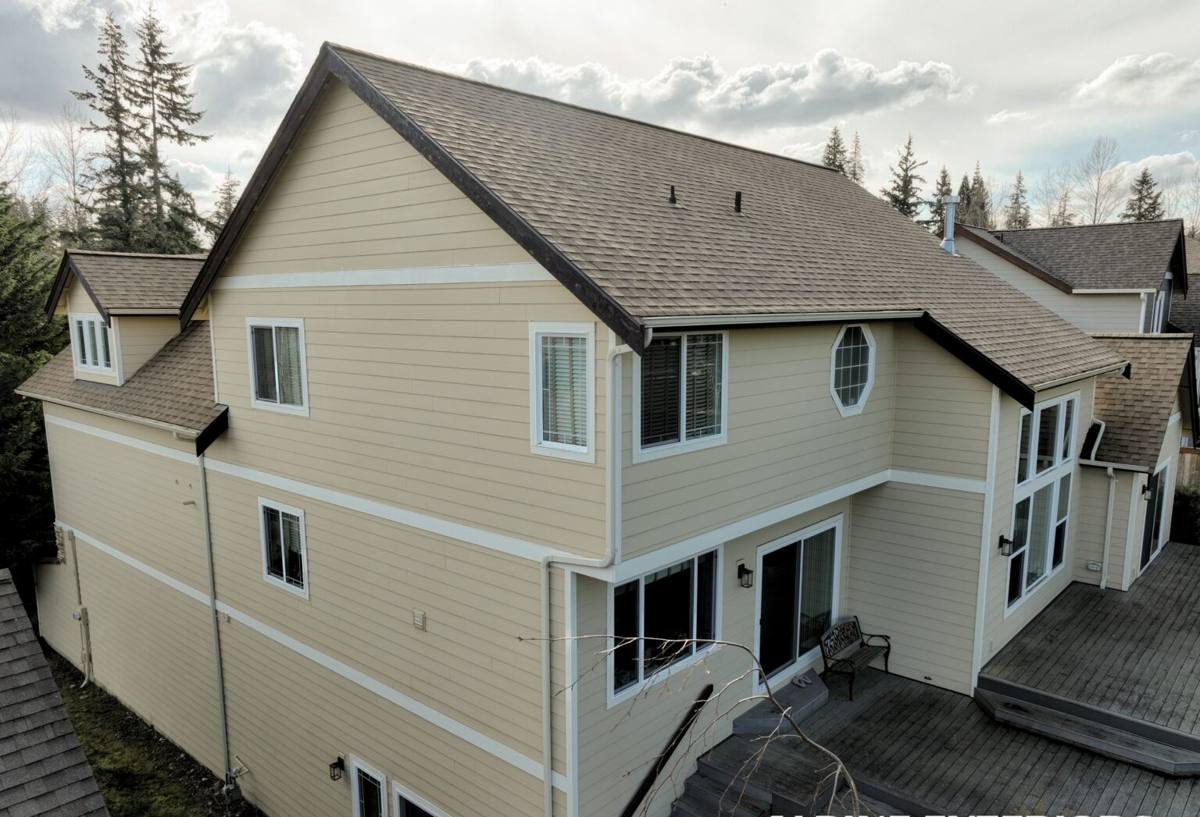
What Wiser Lake's Climate Does to an Ordinary Deck
Lynden and the surrounding Whatcom County lowlands get a long stretch of low-intensity rain from fall through spring, and homes near the lake often sit in lower, shadier lots where surfaces stay damp longer after a storm passes. That combination is hard on decks in a few specific ways:
- Slow drying = wood decay. Untreated or poorly ventilated framing stays wet for days at a time, which is exactly the condition wood rot needs to take hold — especially at ledger boards, joist ends, and post bases.
- Moss and algae buildup. Shaded, damp decking grows a slick green film faster here than almost anywhere else in the state. Beyond looking bad, it's a genuine slip hazard on stairs and ramps.
- Fastener corrosion. Standing moisture plus the mild salt influence some properties get from Puget Sound air accelerates rust on the wrong grade of screws, nails, and joist hardware, which weakens connections from the inside out where you can't see it.
- Freeze-thaw stress. Whatcom County gets enough cold snaps each winter that trapped moisture in end grain or fastener holes can freeze, expand, and split wood fibers over a few seasons.
None of this means a deck can't be built to last near Wiser Lake — it means the build has to plan for water from day one instead of hoping it drains away on its own.
Sun Exposure and Lot Layout Matter Too
Not every lot near the lake has the same exposure. A deck on the lake side of a home, often facing water and open sky, dries faster and gets more UV, which is harder on finishes but easier on rot risk. A deck tucked under tree cover or on the north side of the house dries slowly and grows moss faster, but sees less sun-driven material fatigue. We look at your specific orientation before recommending decking material and finish, rather than applying one answer to every job.
Framing and Structure: Where Most Failures Actually Start
Homeowners usually notice deck problems in the decking boards, but the structure underneath is where the real damage happens first — and it's the part that costs the most to ignore.
What a Correctly Built Substructure Includes
- Pressure-treated framing rated for ground contact where posts meet grade, with post bases that hold the wood off the concrete rather than letting it sit in standing water.
- Joist tape or a comparable flashing membrane on top of every joist, so screw penetrations don't become entry points for water into the wood grain.
- Proper ledger board flashing where the deck attaches to the house — this is the single most common source of hidden rot on older decks in this area, because water works its way behind an unflashed or poorly flashed ledger and rots the rim joist from inside the wall.
- Stainless steel or high-grade coated fasteners and joist hardware, sized for the moisture and mild salt exposure this area sees, not the cheapest code-minimum option.
- Adequate under-deck ventilation and grading so air can move and water drains away from posts and footings instead of pooling.
We treat the substructure as the part of the job that determines the deck's real lifespan. Decking material gets the attention because it's what you see and walk on, but a beautiful deck surface on a poorly flashed frame is a five-year deck wearing a twenty-five-year face.
Choosing Decking Material for a Wiser Lake Property
There's no single "best" decking material — there's a best material for your budget, your sun/shade situation, and how much maintenance you actually want to do. Here's how the common options compare for this specific climate:
| Material | How It Handles This Climate | Maintenance | Typical Lifespan Here |
|---|---|---|---|
| Cedar (real wood) | Naturally moisture- and insect-resistant, but still needs sealing to resist moss staining and moisture uptake in shaded areas | Annual cleaning, re-sealing every 2-3 years | 15-20 years with upkeep |
| Pressure-treated pine/fir | Budget-friendly and structurally solid when detailed correctly, but more prone to cupping and moss growth if not sealed and kept ventilated | Cleaning and re-sealing every 1-2 years | 12-18 years with upkeep |
| Composite decking | Handles constant dampness and shade well; resists rot completely, though it still needs regular cleaning to keep moss and algae film from building up on the surface texture | Periodic washing, no sealing needed | 25-30+ years |
| PVC/capped polymer | Fully sealed surface sheds water and resists staining better than any wood option; best choice for consistently shaded, damp spots near the lake | Occasional washing | 25-30+ years |
For lots with heavy shade or proximity to standing water, we generally steer homeowners toward composite or capped polymer decking for the decking surface itself, while still framing with quality pressure-treated lumber underneath — that combination gives you the low-maintenance, moss-resistant top surface without paying composite prices for the structural frame, where it isn't necessary.
A Note on Cedar
Cedar remains a popular request for its look and because it's a regional wood, and we're glad to build with it. Our honest standard: it needs a real maintenance commitment in a climate this wet, including annual cleaning and resealing on the schedule above. If that upkeep isn't realistic for your household, we'll say so up front rather than let a beautiful cedar deck go gray and mossy within two seasons from lack of maintenance it was never going to get.
Railings, Stairs, and Slip Resistance
Moss doesn't just grow on the main deck surface — it collects on stair treads, railing caps, and any low-traffic edge, and stairs are where a slick surface actually turns into an injury. A few details we build into every custom deck near Wiser Lake:
- Grooved or textured decking boards on stairs and ramps, which shed water and resist the slick moss film better than smooth-faced boards.
- Metal or composite railing systems in shaded, damp areas where wood railing caps would otherwise need constant cleaning to stay safe to grip.
- Stair stringers built from the same rot-resistant material logic as the main frame — stringers see more direct water exposure than joists and fail faster if under-specified.
- Adequate drainage gaps between boards so water doesn't pool on tread surfaces after rain.
Our Process for a Wiser Lake Deck Project
- On-site assessment. We look at your lot's specific sun/shade exposure, drainage patterns, existing structure condition (for replacements), and how the deck will actually be used before recommending materials.
- Design and material selection. We walk through decking, railing, and framing options with honest tradeoffs on cost, maintenance, and lifespan — no upselling to composite if pressure-treated with proper detailing genuinely fits your situation, and no downplaying maintenance if you're set on wood.
- Permitting. Deck projects over a certain size or height typically require a permit through the applicable jurisdiction; we handle that process so you don't have to track it down yourself.
- Demolition (for replacements). We remove the old deck and inspect the ledger connection and any framing that ties into the house, flagging hidden rot or water damage before it's covered up again.
- Framing and flashing. Structure goes in first, with joist tape, ledger flashing, and corrosion-resistant hardware as standard, not an upgrade.
- Decking, railing, and stairs. Surface materials go on last, with attention to fastener spacing and drainage gaps.
- Final walkthrough. We go over maintenance expectations specific to your material choice and your lot's exposure, so you know exactly what upkeep — if any — is ahead of you.
Why a Crew Already Working Wiser Lake Matters
A deck contractor who mostly builds in drier parts of the state will often frame and finish to a spec that's perfectly fine there and undersized here. Crews who work Whatcom County regularly know which ledger flashing details actually stop water intrusion in our rain pattern, which fastener grade holds up against years of damp exposure, and which decking materials are worth the upcharge in a shaded, lake-adjacent lot versus a sunny open one. That local pattern recognition is the difference between a deck that needs its first repair in year six and one that's still solid at year twenty.
We also know the permitting expectations and inspection process for decks in this part of the county, which keeps the project moving instead of stalling on paperwork.
Before You Hire: A Quick Checklist
- Ask specifically how the ledger board will be flashed — a vague answer here is a red flag.
- Confirm the grade of fasteners and hardware being used, not just the decking brand.
- Ask how the design handles drainage and ventilation under the deck, especially if your lot is shaded or low-lying.
- Get the maintenance expectations for your chosen material in writing before you commit to it.
- Confirm permitting is included and who's responsible for pulling it.
If you're planning a new deck or need to replace one that's showing rot, cupping, or heavy moss near Wiser Lake, we're happy to take a look and give you a straightforward assessment. Reach out for a free, no-pressure estimate using the form below.