 Lynden Siding
 Siding Built for Wiser Lake's Water and Moisture Load
Homes around Wiser Lake sit close to water most Whatcom County properties don't deal with, and that changes what a siding job needs to survive. Between the lake's ambient moisture, the region's driving rain events, and a moss season that can stretch from October into May, the wall assembly behind your siding is under near-constant humidity pressure. Add in the salt-tinged air that moves inland from the Strait of Georgia and Bellingham Bay, and you have a combination that's harder on exterior materials than a typical inland Lynden lot. Siding installation here isn't just about appearance — it's about managing water, keeping wood substrate dry, and choosing a product that won't swell, delaminate, or grow moss-friendly texture within a few years of install.
We install exclusively with James Hardie fiber cement, and we've done enough work in and around Wiser Lake to know which details actually matter on this side of the county — not generic siding advice, but what holds up specifically here.
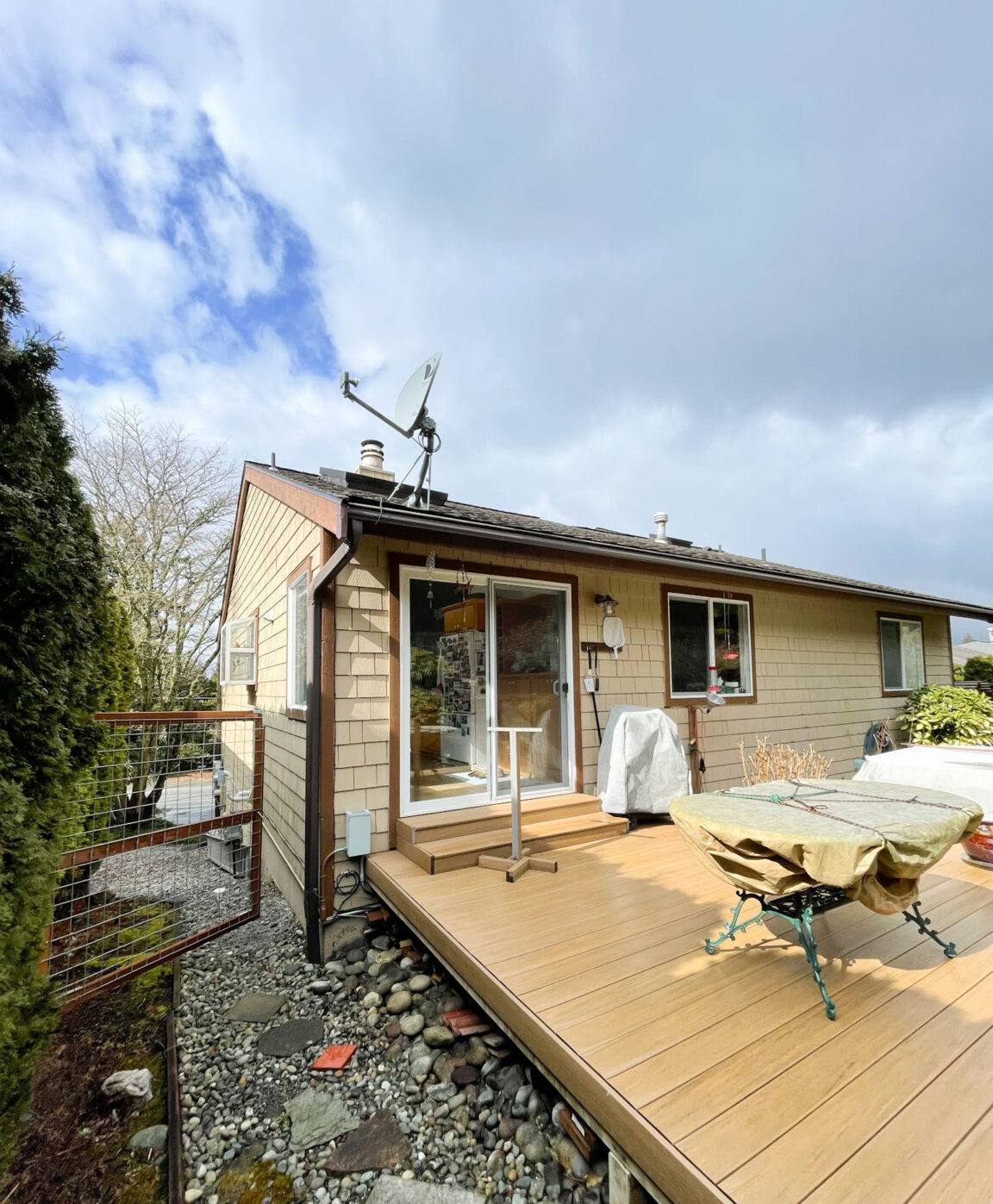
What Wiser Lake's Climate Does to Siding Over Time
Constant Moisture Exposure
Proximity to the lake means higher ambient humidity at the wall surface, especially on north- and west-facing elevations that get less direct sun to dry out after rain. Materials that absorb moisture — untreated wood, some engineered wood products — stay damp longer here than they would a few miles away on higher, drier ground.
Driving Rain and Wind-Driven Water
Whatcom County's weather pattern regularly pushes rain sideways, not just down. That means water gets forced up under laps, around trim, and into any gap in the water-resistive barrier that wouldn't get tested in a calmer climate. Flashing details and lap overlap that would pass in a drier region can fail here within a few seasons.
Moss and Organic Growth
The long moss season isn't just a roofing issue. Moss and algae take hold on any siding surface that stays damp and shaded, particularly on the north side of homes near tree cover or water. Surface texture, paint quality, and how well the siding sheds water all affect how fast that growth establishes — and how hard it is to remove without damaging the finish.
Salt-Influenced Air
While Wiser Lake itself is freshwater, the broader Whatcom County air mass carries salt influence from Puget Sound weather systems moving through. Combined with humidity, this accelerates corrosion on fasteners, flashing, and any metal trim details if they're not rated for the exposure.
Why This Rules Out Some Common Siding Choices
We get asked why we don't install vinyl or engineered wood siding on Wiser Lake homes. It comes down to how those materials handle sustained moisture:
- Vinyl siding expands and contracts more with temperature swings, and its seams and J-channels give wind-driven rain more opportunities to work behind the panel over time.
- Engineered wood products (like LP SmartSide) use wood fiber with a resin binder — well-engineered, but wood fiber-based products are more sensitive to sustained edge and end-grain moisture exposure than fiber cement, and any breach in the factory coating becomes a moisture entry point.
- Untreated wood siding (cedar, primed spruce) needs regular refinishing to keep its moisture barrier intact — a maintenance cycle that's tighter near water than in a drier part of the county, and one most homeowners fall behind on.
James Hardie fiber cement is cement, sand, and cellulose fiber — it doesn't absorb water the way wood-based products can, it won't rot, and it's not a food source for moss the way some organic-based sidings can be over time. That's the whole reason we standardized on it rather than offering a menu of products.
What Correct Installation Looks Like for This Location
The siding product is only half the equation. Around Wiser Lake, the installation details are where most long-term failures actually start:
| Detail | Why It Matters Here |
|---|---|
| Weather-resistive barrier, properly lapped | Wind-driven rain finds any shingle-lap error; barrier must shed water downward at every seam |
| Rainscreen/drainage gap behind siding | Lets incidental moisture behind the panel dry out instead of sitting against the substrate |
| Correct flashing at windows, doors, and penetrations | These are the most common leak points in driving-rain climates |
| Hardie-specified fastener pattern and clearance | Wrong nailing pattern or missing ground clearance shortens the siding's service life regardless of product quality |
| Factory-primed cut edges sealed on site | Any exposed raw edge is a moisture entry point in a high-humidity setting |
| Corrosion-resistant trim and fastener hardware | Standard hardware corrodes faster in this air; matters more here than in dry inland climates |
Skipping any one of these doesn't show up immediately — it shows up in year three or four as staining, soft spots, or lifted laps. That lag is exactly why cutting corners on installation is so easy to get away with short-term and so costly long-term.
James Hardie's HZ5 Product Line and Wiser Lake
James Hardie engineers its HZ (HardieZone) product lines for different climate exposures across the country. Whatcom County, including the Wiser Lake area, falls into the moisture-and-freeze-thaw climate zone Hardie designs its HZ5 line to handle — a formulation and finish system built for regions with sustained damp weather rather than the hot, dry conditions the HZ10 line targets. Using the correctly zoned product is a small decision on paper that has a real effect on long-term moisture performance.
The ColorPlus factory finish is also worth understanding on a lake-adjacent property. Because it's baked on in a controlled factory environment rather than field-applied, it holds color and resists the fading and chalking that field-painted or site-finished siding is prone to — a real advantage given how much UV and moisture cycling this siding will see on an open, lake-facing elevation.
Our Process for Wiser Lake Projects
- On-site assessment: we look at your home's specific exposure — which elevations face the lake, prevailing wind and rain direction, existing moss or moisture staining, and current substrate condition.
- Moisture check behind existing siding: before we quote, we want to know if there's already trapped moisture or sheathing damage, not just what the surface looks like.
- Product and color selection: we walk through Hardie's HZ5 lapboard, shingle, and panel options and ColorPlus palette suited to your home and the surrounding tree/lake context.
- Tear-off and substrate repair: any damaged sheathing or framing gets addressed before new siding goes on — covering a problem is not an option.
- Weather barrier and drainage plane installation: installed and lapped correctly for wind-driven rain, with a drainage gap where the assembly calls for it.
- Hardie installation to manufacturer spec: correct fastening, clearances, flashing, and sealed cut edges throughout.
- Final walkthrough: we go over the finished work with you and explain basic care specific to a lake-proximity home.
Why Local Experience on This Specific Lake Matters
A contractor who's only worked drier inland lots can install Hardie siding competently and still miss the details that matter around Wiser Lake — how far to hold flashing laps for sideways rain, where moss pressure will be worst on your specific lot orientation, or which trim hardware will hold up against the humidity here. We've installed and serviced siding on homes in this immediate area and adjust our approach accordingly rather than applying a one-size-fits-all install.
Working locally also means we're realistic with timelines around weather windows — installation needs a run of dry days to do properly, and we plan Wiser Lake projects around the actual local forecast pattern rather than a generic regional one.
Signs Your Wiser Lake Home May Need New Siding
- Soft or spongy spots when you press on siding, especially near the bottom courses or under windows
- Persistent moss or algae growth that returns quickly after cleaning
- Visible warping, buckling, or separated seams
- Paint that's peeling or bubbling rather than just fading
- Staining or discoloration that tracks with rain direction, suggesting water intrusion
- Rising energy bills that might point to a compromised building envelope
What to Expect Cost-Wise
Every Wiser Lake home is different — square footage, number of stories, current siding removal needs, and trim complexity all move the number. In general, expect fiber cement installation to run higher upfront than vinyl but lower in lifetime cost once you factor in refinishing cycles that engineered wood and untreated wood siding require. We'll give you a specific, itemized number for your home rather than a rough range that doesn't account for your property's actual condition.
If your Wiser Lake home is due for new siding, or you're not sure whether what's on it now is holding up the way it should, we're happy to take a look. A free, no-pressure estimate gives you a clear picture of your home's condition and what correct installation would involve — no obligation, just straight information.