 Lynden Siding
 Windows Built for Acme's Weather, Not Just Any Weather
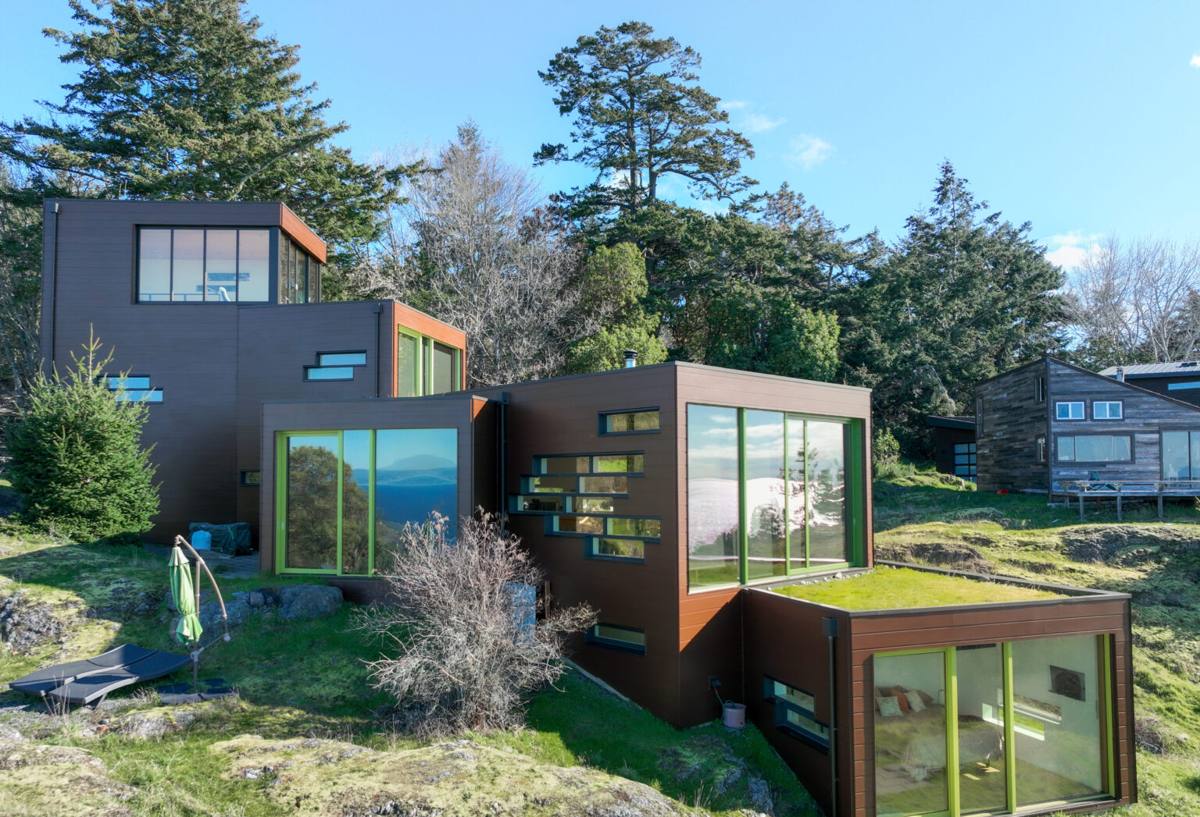
Acme sits in the foothills east of Lynden, close enough to the Nooksack River valley to catch the same wet, marine-influenced weather that defines Whatcom County, but with its own wrinkle: more tree cover, more shade, and more standing moisture on siding and window trim for more of the year. Add in the salt-tinged air that rides inland off the Strait of Georgia and Bellingham Bay, months of driving rain angling in from the southwest, and a moss season that can run from October through May, and you have a climate that is genuinely hard on windows — not because any one storm is severe, but because the exposure is constant and cumulative.
A window that works fine in a dry inland climate can still fail here within a decade if it wasn't selected, flashed, and sealed with this specific environment in mind. This page covers what that means in practice for an energy-efficient window replacement on an Acme-area home.
What Acme's Climate Actually Does to Windows
Moisture Load
Constant damp air and long stretches without direct sun mean window frames, sills, and the wall cavity behind them rarely get a chance to fully dry out. Any gap in flashing or sealant becomes a slow, ongoing intrusion point rather than an occasional nuisance — and slow, ongoing moisture is what rots framing and delaminates cheaper window materials from the inside out.
Driving Rain
Storms here don't just fall straight down; wind pushes rain sideways into the wall assembly, especially on west- and south-facing elevations. That means the flashing detail around a window — not just the window unit itself — is doing a large share of the work keeping water out.
Moss and Organic Growth
Moss and algae thrive in the shaded, moisture-retentive conditions common around Acme properties. On window sills, exterior trim, and especially wood cladding around openings, organic growth holds moisture against the surface and accelerates decay if it isn't shed or cleaned off periodically.
Salt-Influenced Air
While Acme is further from open saltwater than Lynden's western neighborhoods, the region still sees salt-laden air move inland, especially with onshore weather systems. Over years, this contributes to corrosion on unprotected metal hardware — hinges, locks, and lesser-grade fasteners — inside window assemblies.
What "Energy-Efficient" Actually Means for This Job
Energy efficiency in a window isn't one spec — it's a combination of factors that need to work together for our climate specifically. Here's what we're actually evaluating on an Acme home:
| Factor | Why It Matters Here |
|---|---|
| U-factor | Measures heat loss through the window. Lower is better for our long, mild-but-damp heating season where homes run heat more days than they run AC. |
| Solar Heat Gain Coefficient (SHGC) | Controls how much solar heat passes through. Moderate SHGC glass helps capture what sun Acme does get without overheating south-facing rooms in summer. |
| Air infiltration rating | Measures how much air leaks around the sash. A tight rating matters more here than in drier climates, since leaky seals also let in moisture-laden air. |
| Frame material | Determines long-term moisture resistance and how much maintenance the frame will need under constant damp exposure. |
| Glazing (double vs. triple pane) | More panes improve insulation value and reduce condensation risk on interior glass during cold, humid stretches. |
None of these numbers mean much in isolation. A window with an excellent U-factor but a frame material that traps moisture will underperform its rating within a few years once seals and finishes start breaking down.
Frame Materials: What Holds Up in This Climate
We install a range of frame materials, and we're upfront with Acme homeowners about the trade-offs of each rather than pushing one product as a cure-all.
- Vinyl — Good moisture resistance and no repainting, but quality varies widely between manufacturers; we only install lines with UV-stable formulations and reinforced corners, since cheaper vinyl can warp under repeated wet-dry cycling.
- Fiberglass — Dimensionally stable in changing moisture and temperature, strong resistance to the damp-cold cycling common here, and takes paint well if you want a custom color. Generally a higher upfront cost.
- Composite — Blends wood-fiber strength with better moisture resistance than raw wood; a reasonable middle ground for homeowners who want a more traditional look without the maintenance burden of solid wood.
- Wood, clad exterior — Attractive and traditional, but the exposed wood interior and trim require real maintenance discipline in a climate this wet; we recommend this option selectively and explain the upkeep honestly before installing it.
We steer most Acme customers away from bare, unclad wood exteriors and low-grade vinyl, not because those products are inherently bad everywhere, but because our standard is that a window on this property has to tolerate near-constant dampness and shade with minimal upkeep — and those two options ask the most of the homeowner to hold up long-term.
What a Correct Installation Involves
The window unit is maybe half the job. The other half is how it's installed into the wall, and that's where most premature failures actually start — not with the glass or the frame, but with flashing and sealant work that was rushed or done out of sequence.
Our Process
- Assessment — We inspect the existing window opening, sill condition, and surrounding siding or trim for any existing moisture damage before quoting the job. On older Acme homes, this step sometimes turns up rot that needs addressing before a new window can be properly seated.
- Removal — Old units are removed carefully to avoid damaging the rough opening, with the framing checked again once the old window is out.
- Flashing and sill pan — This is the step that determines whether the window stays dry for the next 20 years. We install a sloped sill pan and layered flashing so any water that does reach the opening drains outward, not into the wall.
- Setting the window — Shimmed level and plumb, then fastened per the manufacturer's schedule — skipping fasteners or over-driving them are both common shortcuts that shorten a window's service life.
- Air sealing — Low-expansion foam or backer rod and sealant around the frame perimeter, sized correctly so it seals without bowing the frame.
- Exterior trim and sealant — Trim is reinstalled or replaced and sealed with a sealant rated for our climate's UV and moisture exposure, with attention to any areas prone to moss and algae buildup.
- Interior finish — Interior trim, casing, and paint or stain are finished to match the home.
What to Check Before You Sign Off on Any Window Job
- Sill pan or sloped flashing installed under every window, not just caulk over the old opening
- Manufacturer's fastening schedule followed, not "close enough"
- Weep holes (if applicable) left clear and functional
- Exterior sealant rated for UV and continuous moisture exposure
- Written warranty covering both the product and the labor/installation separately
- Interior and exterior trim sealed with no visible gaps once finished
Signs Your Current Windows Are Already Working Against You
Homeowners often wait until a window is visibly failing before calling, but there are earlier warning signs worth acting on in a climate like this one:
- Condensation forming between panes (a sign the seal has failed and the insulating gas or air gap is compromised)
- Soft or discolored wood trim around the frame
- Persistent moss or dark staining at the sill that returns quickly after cleaning
- Drafts you can feel near the frame edge, even with the window latched
- Difficulty opening, closing, or locking — often a sign the frame has swollen or warped from moisture
Any one of these can usually be addressed on its own, but when several show up together it's often more cost-effective to replace the window than to keep patching it.
Why It Matters That We Work Acme Specifically
Acme isn't downtown Lynden, and it isn't Bellingham. It's a smaller community with its own microclimate — more shade from tree cover, more sustained dampness, and homes that see a different weathering pattern than open, sun-exposed lots closer to town. A crew that already works this area knows which elevations on a typical Acme lot take the worst of the driving rain, where moss tends to establish first, and which older flashing details common to homes out here tend to need extra attention during a window swap. That's not something you learn from a spec sheet — it's from doing the work in this specific pocket of Whatcom County repeatedly.
We also understand the practical side of working in a more rural, tree-covered community: access for material delivery, working around septic and well locations that don't always show up on a quick site visit, and scheduling around the wetter months when window work needs tighter weather windows to keep an open wall cavity dry.
Energy Efficiency Beyond the Window Itself
A new, well-rated window can underperform if the surrounding wall, siding, and trim aren't doing their part. When we're on-site for a window job, we're also looking at:
| Surrounding Factor | Why We Check It |
|---|---|
| Siding condition around the opening | Damaged or poorly sealed siding near a window undermines the window's own moisture protection. |
| Attic and wall insulation | New windows reduce heat loss at the glass, but if insulation elsewhere is thin, overall energy gains will be limited. |
| Existing caulking and weatherstripping on adjacent openings | Old, cracked sealant nearby can let in the same moisture a new window is designed to keep out. |
We won't try to upsell unrelated work, but we will tell you honestly if something adjacent to the window is going to limit the benefit of the upgrade.
What This Typically Involves, Cost-Wise
Every home and every opening is different, so we don't quote sight-unseen, but a few honest cost factors worth knowing going in:
- Frame material is usually the single biggest cost driver — vinyl is generally the most affordable, fiberglass and clad wood run higher.
- Full-frame replacement (removing down to the rough opening) costs more than an insert replacement but is often the right call when there's existing rot or flashing needs correcting — which is common on older homes out here.
- Number of openings and any custom sizing or shapes affect total cost.
- Trim and siding repair around the opening, if needed, is a separate line item we'll flag before starting.
We'll walk through these factors with you directly during a site visit rather than quoting a number over the phone without seeing the actual condition of your windows.
Get a Straight Answer on What Your Windows Need
If you're dealing with drafts, fogged glass, stuck sashes, or trim that just won't stay dry no matter how often you clean it, it's worth having someone look at the whole picture — window, flashing, and surrounding trim together — rather than guessing at what's actually failing. We offer free, no-pressure estimates for Acme-area homeowners, and we'll tell you plainly what we find, including if a full replacement isn't actually necessary yet. Use the form below to get started.