 Lynden Siding
 Composite Decking Built for Deming's Weather, Not Just Deming's View
Deming sits in a part of Whatcom County where the weather does most of the talking. Long wet stretches in fall and winter, heavy morning dew even in summer, and shaded yards under conifers that never really dry out between storms. A deck built here has to survive conditions that a lot of national decking guides simply don't account for. That's the gap we fill: composite decking installed by a crew that already knows what this specific stretch of Whatcom County does to a deck over five, ten, and twenty years.
Composite decking has earned its place in this climate because it doesn't rely on paint, stain, or sealant to keep water out. That matters when a deck can go weeks without a fully dry day. But composite is only as good as the install underneath it — and that's where most of the problems we get called out to fix actually start.
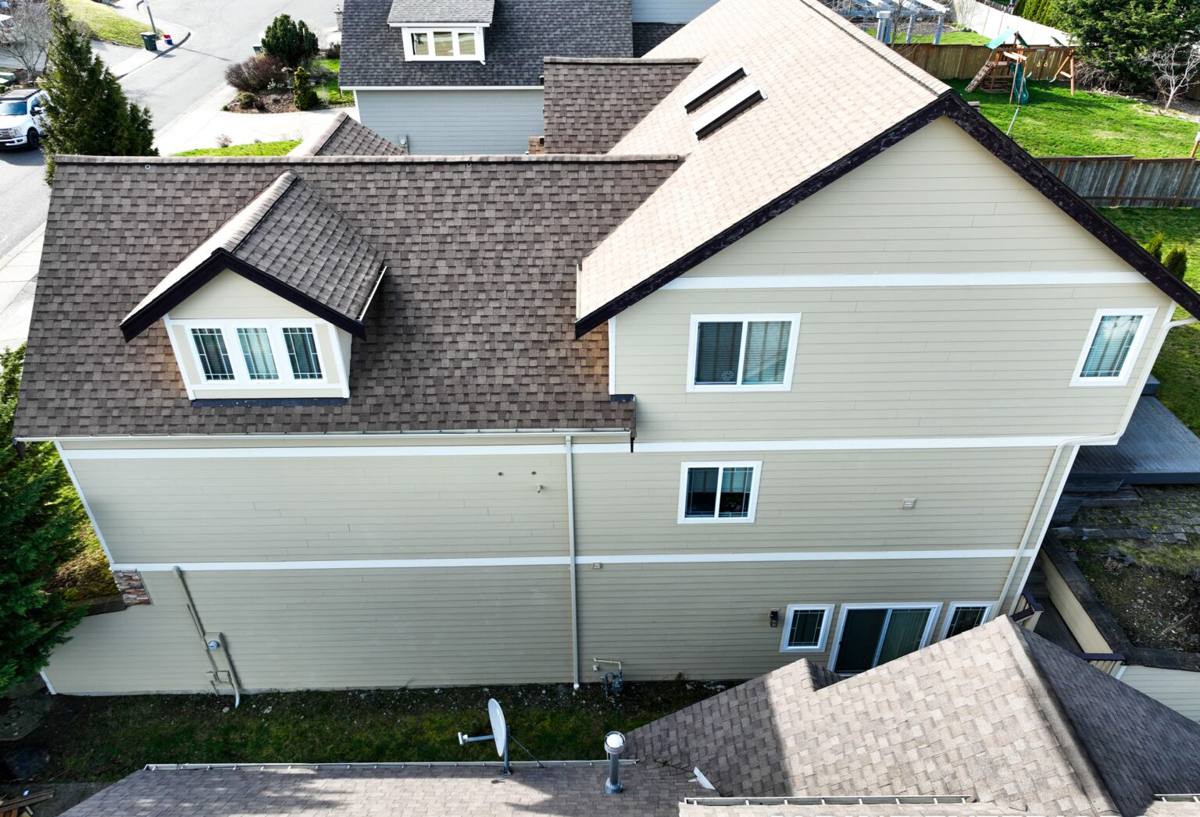
What the Local Climate Actually Does to a Deck
Whatcom County's marine-influenced weather brings a mix of driving rain, damp air off the water, and long stretches of gray, low-sun days — the kind of conditions that keep surfaces wet and give moss and algae plenty of time to take hold. In Deming specifically, tree cover and proximity to the river valley mean decks often sit in more shade and more standing humidity than a deck out in open farmland closer to town. That combination — rain, shade, and slow drying — is exactly what moss and mildew need.
The three things we design around
- Driving rain and wind-blown moisture that gets pushed sideways into rim joists, ledger boards, and fastener points, not just straight down onto the deck surface.
- Moss and algae growth on any surface that stays damp and shaded for more than a day or two at a time — decking boards, but also the framing underneath if airflow is poor.
- Slow-drying substructure — joists and beams that never fully dry out between rain events, which is a wood-rot problem long before it's ever a decking-surface problem.
None of these are solved by picking a better decking board alone. They're solved by how the whole system — framing, flashing, ventilation, board choice, and fastening — works together.
Why Composite Makes Sense Here — and Where It Doesn't Solve Everything
Composite decking boards are engineered from wood fiber and plastic, which means they don't absorb water the way solid wood does, and they don't need annual staining or sealing to hold up. In a climate where a deck might not see three consecutive dry days for months, that's a real advantage. It also means less surface for standing moisture to soak into and freeze during a cold snap.
What composite doesn't do is eliminate the need for good drainage, airflow, and flashing underneath. A composite deck installed over a substructure that traps water will still develop mold on the underside, still rot at the ledger connection, and still grow moss on any low spot where water pools on the surface. The board is only one part of a system — the framing and installation details underneath decide whether that system actually works in this climate.
What a Correct Composite Deck Build Actually Involves
Substructure first
We use pressure-treated or naturally durable framing, sized and spaced to the manufacturer's engineering specs — not stretched to save a few boards. Joist spacing that's fine for a dry climate can be too wide here, letting boards flex and trap water at the seams over time.
Ledger and flashing
Where the deck attaches to the house, proper flashing is non-negotiable. This is the single most common failure point we see on older decks in this area — water working its way behind an unflashed or poorly flashed ledger board and rotting the rim joist from the inside, invisible until the deck starts to feel spongy.
Ventilation and drainage
Composite decking needs airflow underneath just as much as wood does, sometimes more, since it doesn't wick moisture the way wood fibers do — it just sits on top of whatever's below. We keep the substructure clear of debris, grade for drainage, and in lower or shaded yards we'll talk through whether a below-deck drainage system makes sense to keep the space underneath usable and dry.
Fastening and board gapping
Hidden fastener systems keep the surface clean and reduce the tiny gaps around screw heads where moisture and debris collect. Gapping between boards is set to the manufacturer's spec for our humidity and temperature range — too tight and boards can't expand and contract properly; too loose and you get more surface for wind-driven rain and debris to work into.
Composite vs. Wood vs. PVC: An Honest Comparison for This Climate
| Factor | Wood (cedar/treated) | Composite | PVC (capped) |
|---|---|---|---|
| Moisture resistance | Moderate — depends entirely on ongoing sealing | High — engineered to resist absorption | Very high — fully synthetic surface |
| Moss/algae resistance | Low without regular cleaning and treatment | Good, especially capped composite boards | Very good |
| Annual maintenance | Sanding, staining, sealing most years | Occasional wash, no staining | Occasional wash, no staining |
| Upfront cost | Lowest | Mid-range | Highest |
| Feel underfoot / natural look | Most natural | Close to natural, wide style range | More uniform, synthetic look |
| Typical warranty structure | Manufacturer warranty on lumber only, if any | 25-50 year limited warranty, varies by line | Often lifetime limited warranty |
We install composite for most Deming projects because it lands in the sweet spot for this climate: meaningfully lower maintenance than wood without the higher cost and more synthetic look of full PVC. Every material has trade-offs — we'll walk through them honestly for your specific yard, sun exposure, and budget rather than push one line of product.
Our Process, Start to Finish
- On-site assessment — we walk the yard, check drainage patterns, sun and shade exposure, and the condition of any existing deck or ledger connection.
- Design and material selection — board style, color, and railing options laid out against your budget and how the space actually gets used.
- Permitting — most deck projects in Whatcom County require a permit; we handle that paperwork so it's not on you.
- Framing and flashing — the substructure work described above, done to spec, before a single composite board goes down.
- Decking, fastening, and finish details — board installation, hidden fasteners, stair and railing work, and final trim.
- Walkthrough — we go over the finished deck with you, including what maintenance (if any) it actually needs going forward.
Maintenance: What a Composite Deck Still Needs in This Climate
Low-maintenance doesn't mean no-maintenance, especially with the moss and organic debris load in this part of the county. A little seasonal attention keeps a composite deck looking and performing like new for decades.
- Sweep off leaves, needles, and organic debris regularly — this is the single biggest driver of moss and staining on composite boards.
- Rinse or wash the deck surface a couple of times a year with a soft-bristle brush and mild soap; avoid pressure washers on composite unless set to a low, wide-fan setting.
- Check and clear gaps between boards where debris tends to pack in, since trapped organic matter is what actually feeds moss and mildew.
- Keep gutters and downspouts near the deck clear so runoff isn't dumping directly onto or under the deck surface.
- Inspect railings, stairs, and ledger flashing once a year, ideally before the fall rains set in.
- Trim back overhanging branches where possible to cut down on shade and debris buildup.
Cost Factors for a Deming Composite Deck
| Factor | How it affects cost |
|---|---|
| Deck size and shape | Larger footprints and multi-level or angled designs add material and labor time |
| Height and access | Elevated decks need more substructure, railings, and often stairs |
| Board tier | Composite lines range from entry-level capped boards to premium multi-tone finishes |
| Substructure condition | Existing rot, poor drainage, or an unflashed ledger adds repair scope before decking begins |
| Railing and stair style | Composite or metal railing systems cost more than basic wood balusters |
| Site access | Tight or sloped lots near the river valley can add labor and equipment time |
We'll give you a real, itemized number after seeing the site — not a phone-quote guess that changes once we open up the substructure.
Why a Crew That Already Works Deming Matters
A lot of decking problems in this area trace back to a crew or a set of specs written for a drier climate. Joist spacing pulled from a generic install guide, ledger flashing skipped because "it doesn't rain that much where the crew usually works," drainage details left out because the yard they normally build in doesn't hold water the way a shaded Deming lot can. None of that is obvious until the deck's a few years old.
Working this part of Whatcom County regularly means we've already seen how moss builds on a north-facing deck near the tree line, how ledger boards fail on older homes without proper flashing, and how a below-deck drainage system changes the usability of the yard underneath. That's not something you get from a manufacturer's install manual — it's from building and repairing decks in this exact climate, year after year.
Get a Straightforward Estimate
If you're weighing a new composite deck or replacing a tired wood deck in Deming, we're happy to come take a look and give you a straight answer on what it needs and what it'll cost — no pressure, no upsell. Use the form below to request a free estimate.